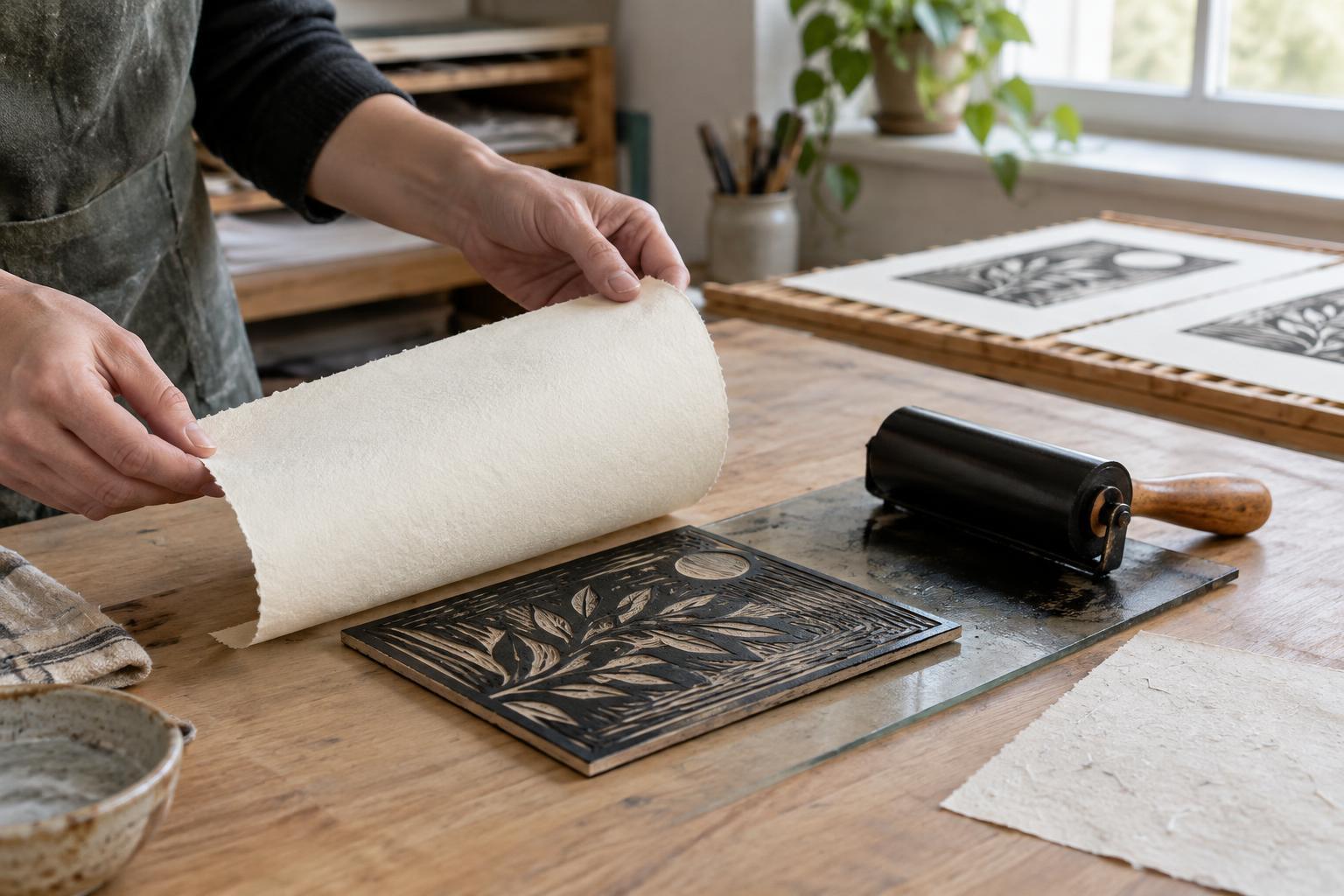
Paper and InkA clean plate or block can still produce speckled prints if loose fibers reach the ink. Learn how to spot paper dust, prepare sheets gently, and keep a small print run tidy without damaging the paper surface.
Read article · 4 min↗
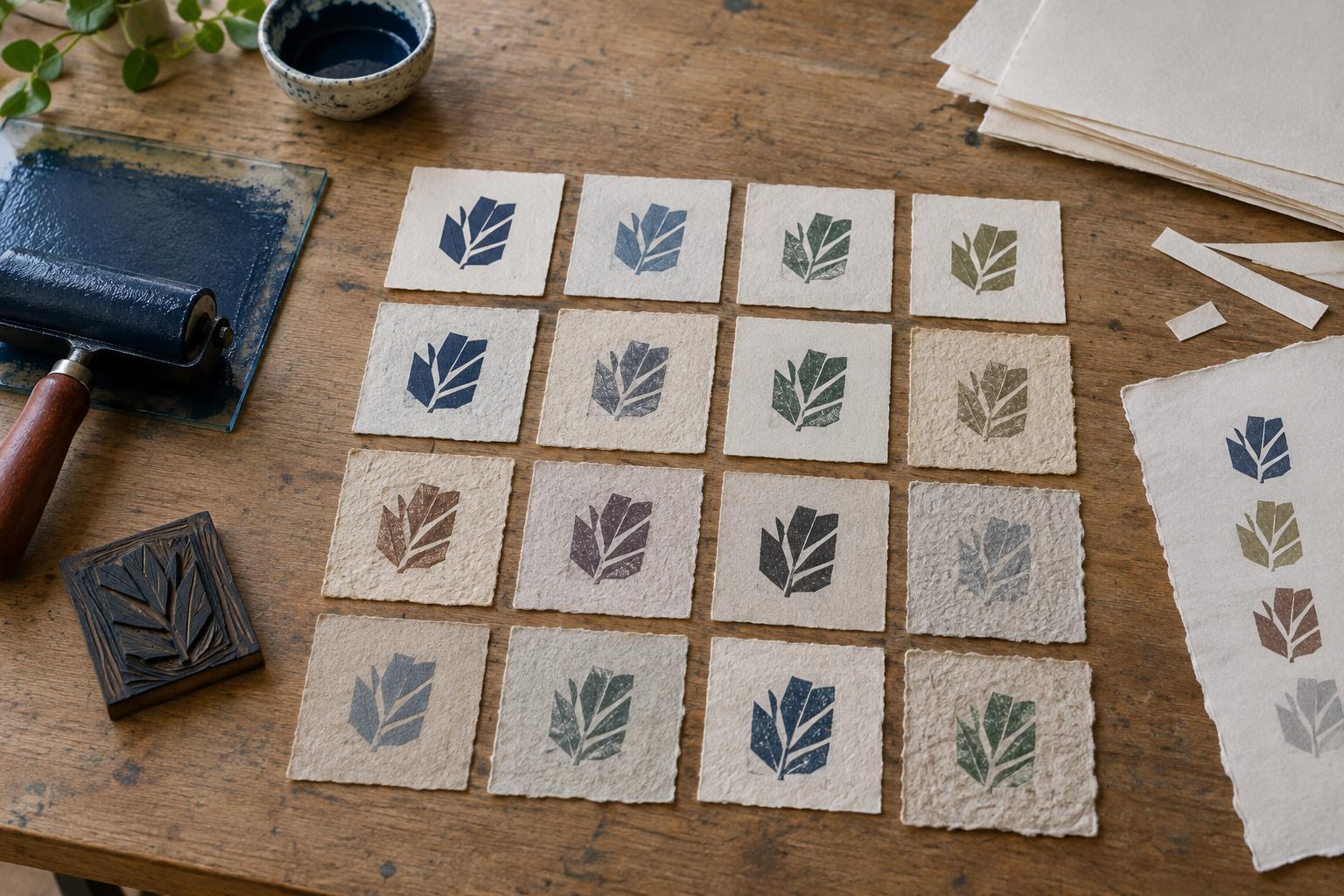
Paper and InkA small test grid can show how a paper and ink combination behaves before you commit to an edition. Learn how to compare impressions, drying, handling and color while keeping your tests easy to repeat.
Read article · 4 min↗
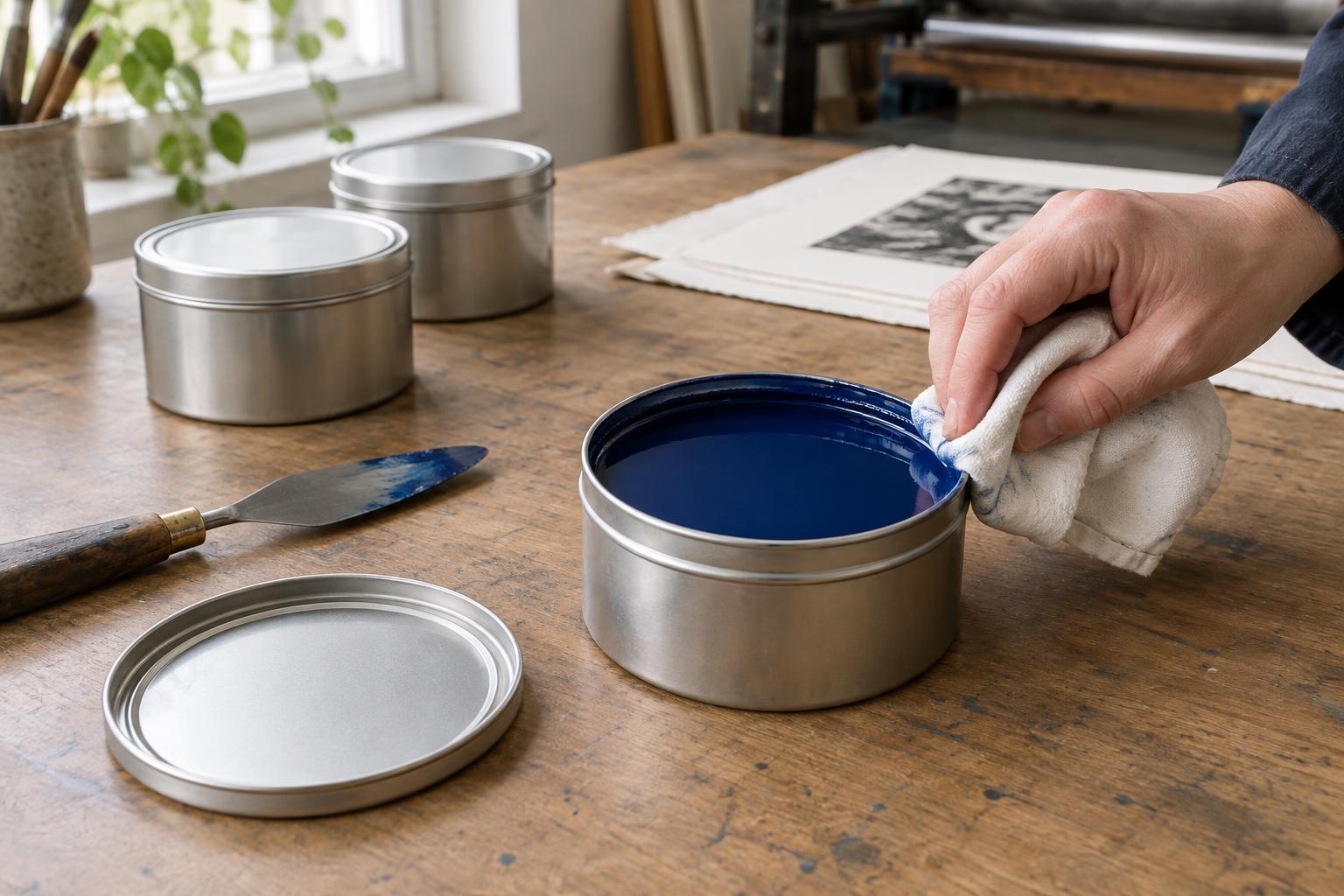
Paper and InkA dry layer on top of a can of printing ink is frustrating, but careful handling can help slow it down. Learn how to clean rims, reduce air exposure, choose suitable containers, and store water-based and oil-based inks without contaminating your next print.
Read article · 4 min↗
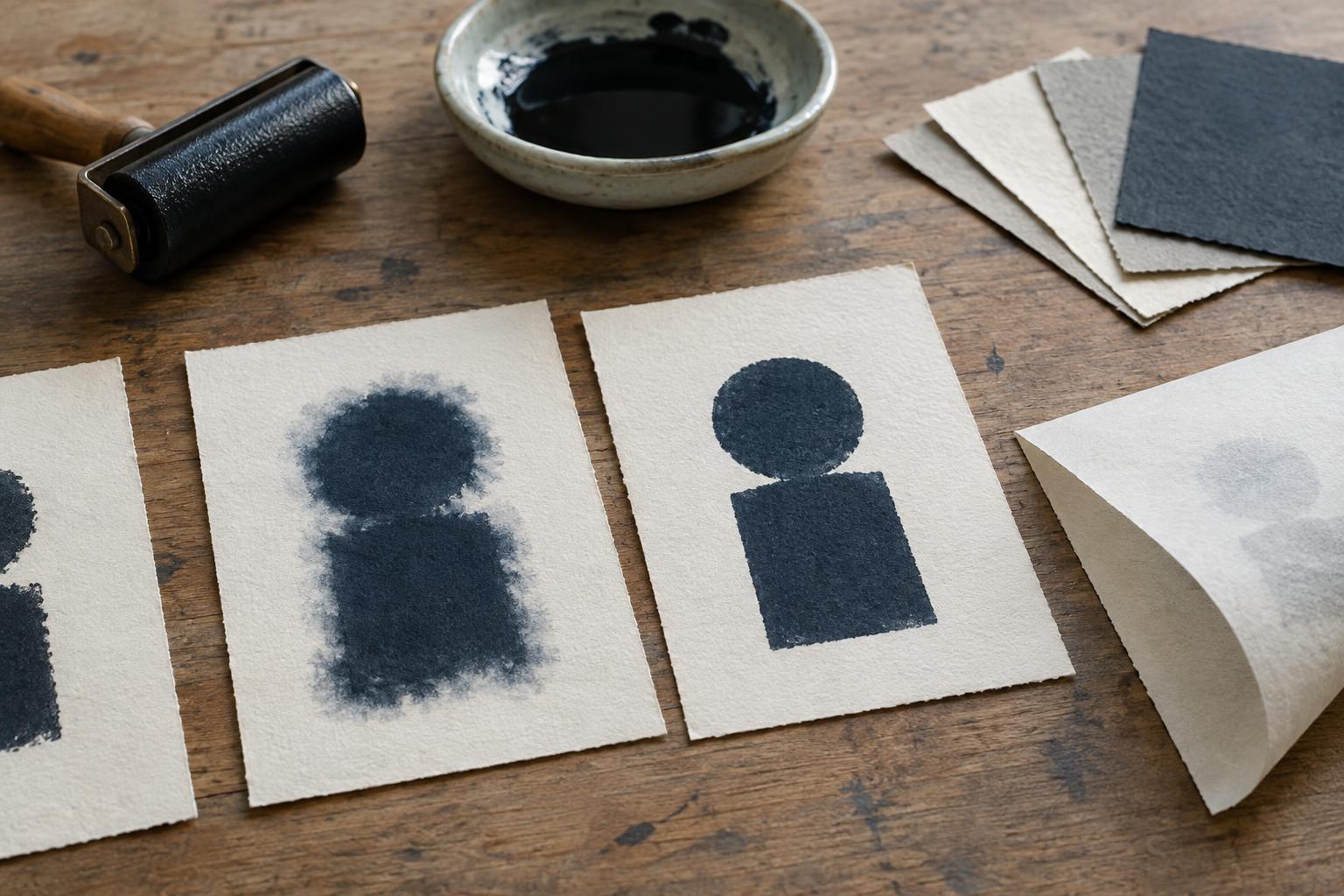
Paper and InkSoft, wandering edges and ink showing through a sheet can have different causes. Learn how paper absorbency, ink consistency, moisture and printing pressure affect a print, then use small tests to find a cleaner combination.
Read article · 4 min↗
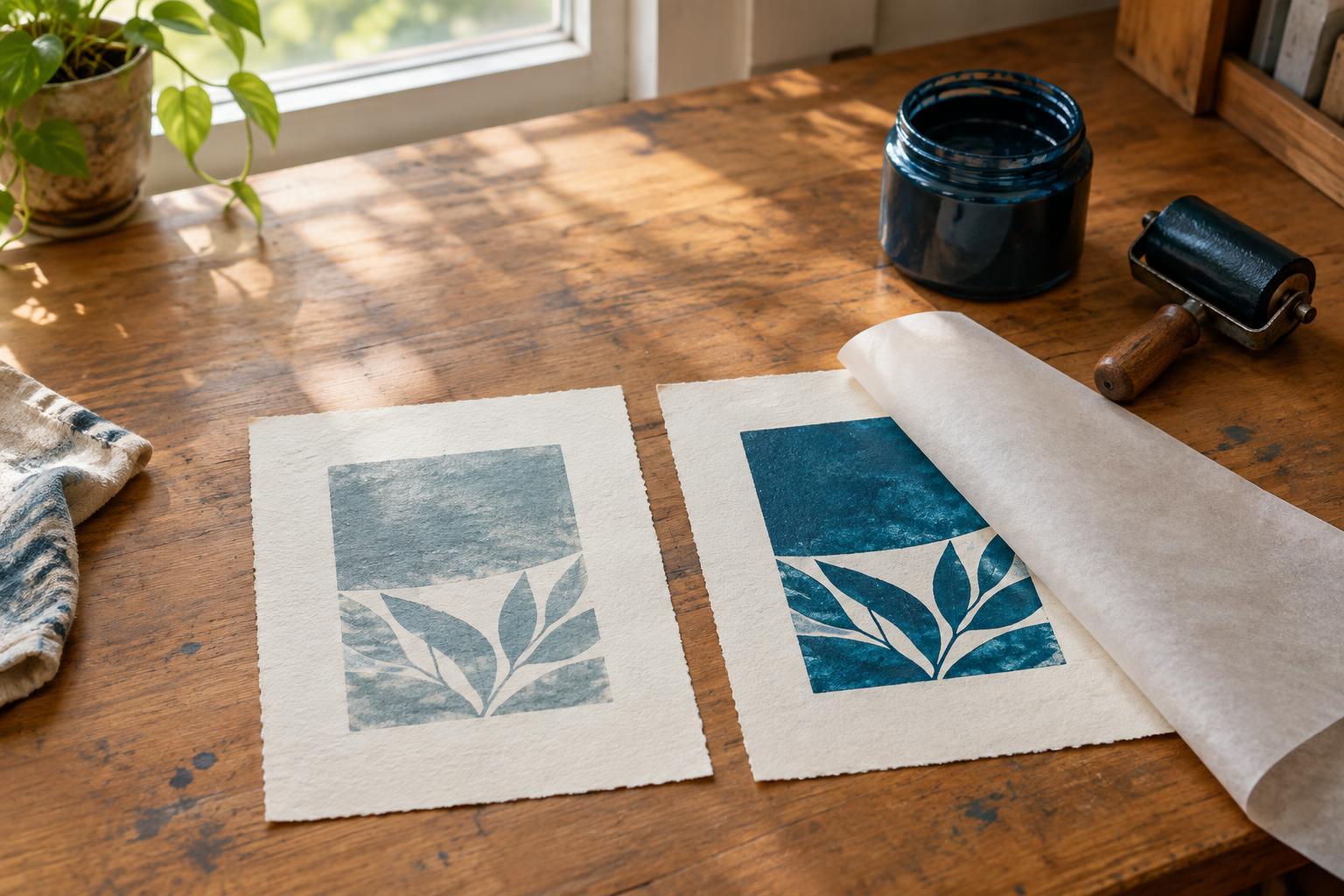
Paper and InkA simple side-by-side exposure test can show how a printing ink changes in light. Learn how to prepare matching swatches, protect a control sample, compare results and understand the limits of a home test.
Read article · 4 min↗
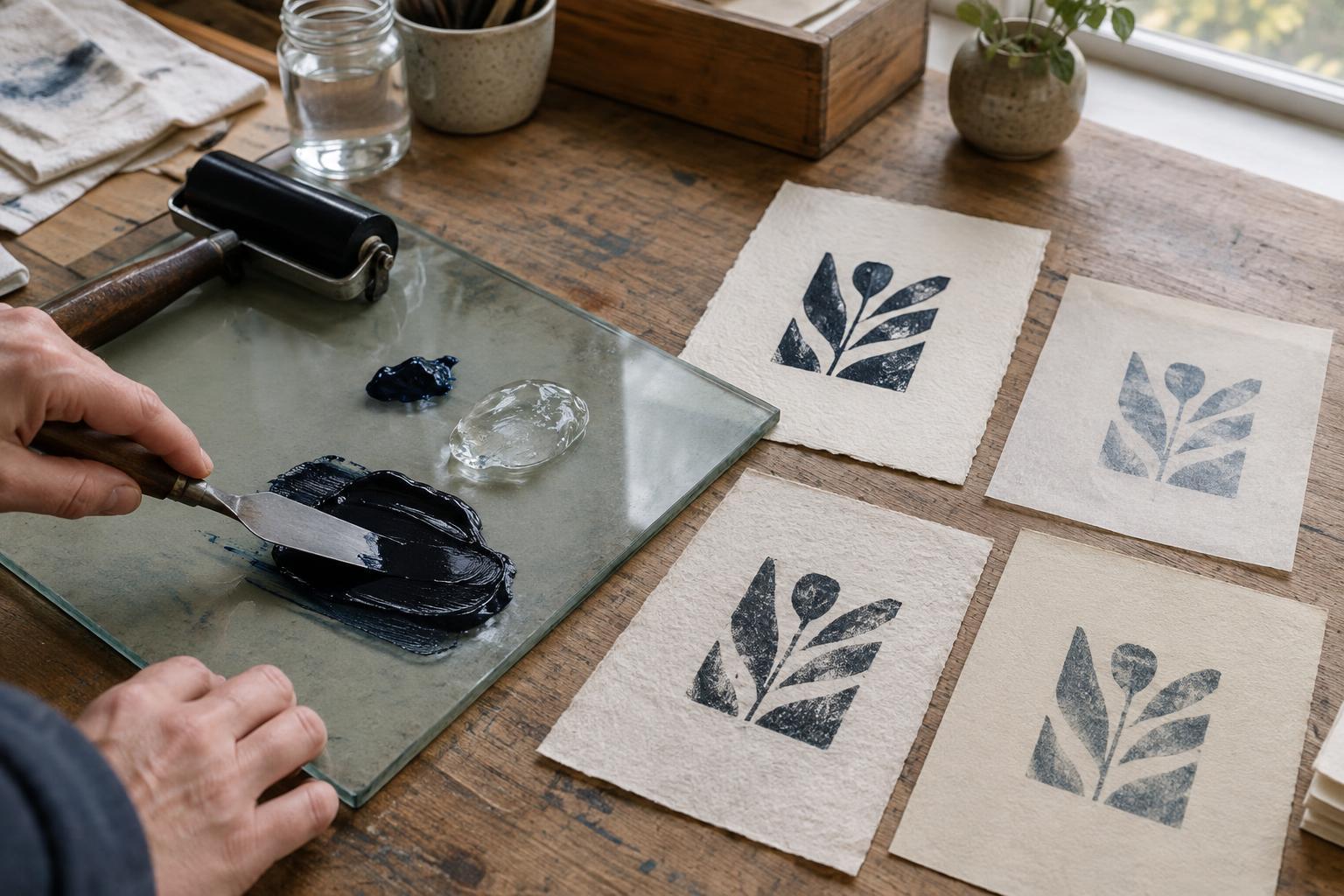
Paper and InkInk extenders and modifiers can help you adjust transparency, working time and handling, but small changes can have a large effect on a print. Learn how to choose a compatible product, make controlled test mixes and judge the result on the paper you plan to use.
Read article · 4 min↗
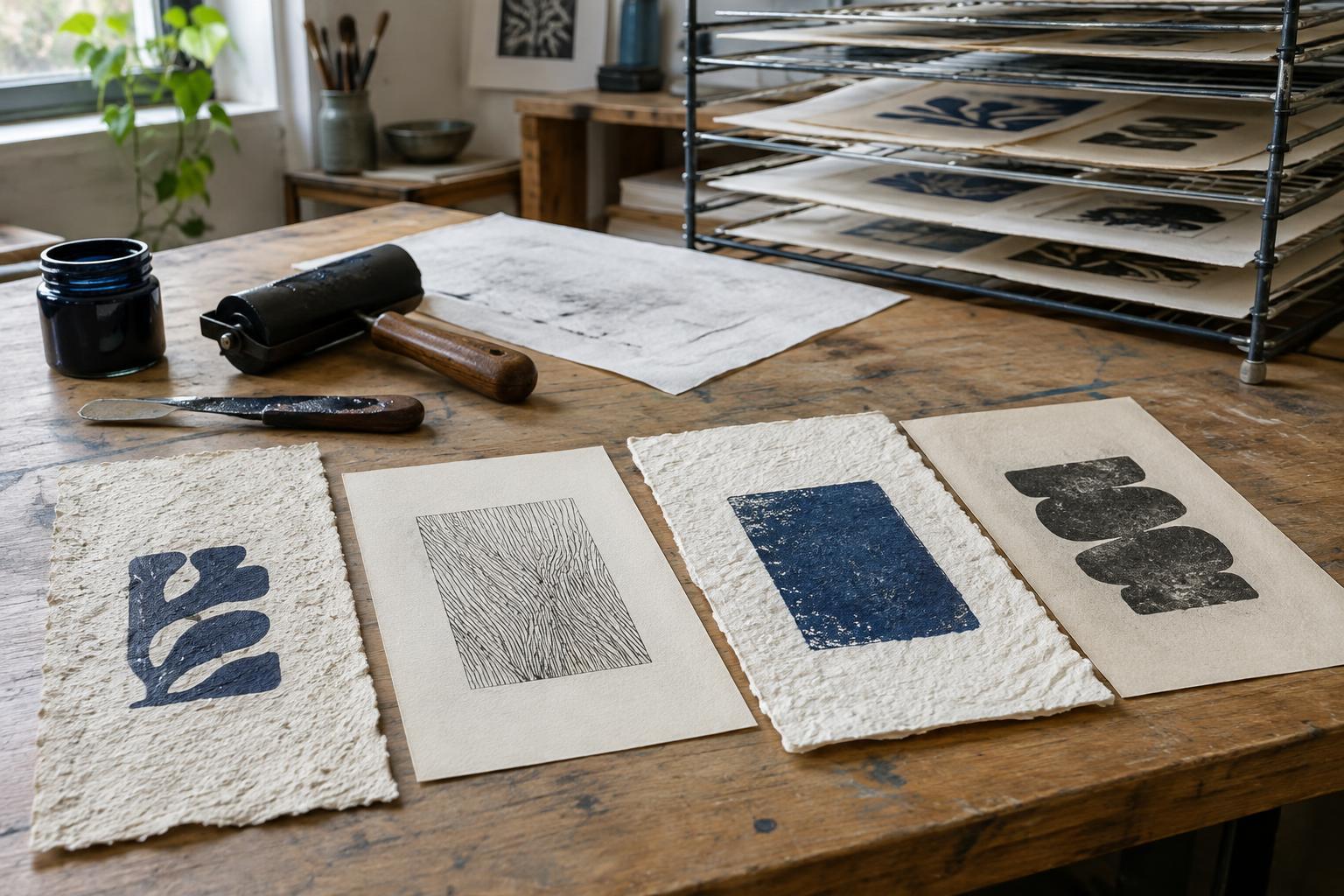
Paper and InkAn ink that dries by soaking in, losing water or solvent, or curing through exposure to air will behave differently on paper. Learn how to match paper to relief, intaglio, and screen printing inks, then test the combination before committing to an edition.
Read article · 4 min↗
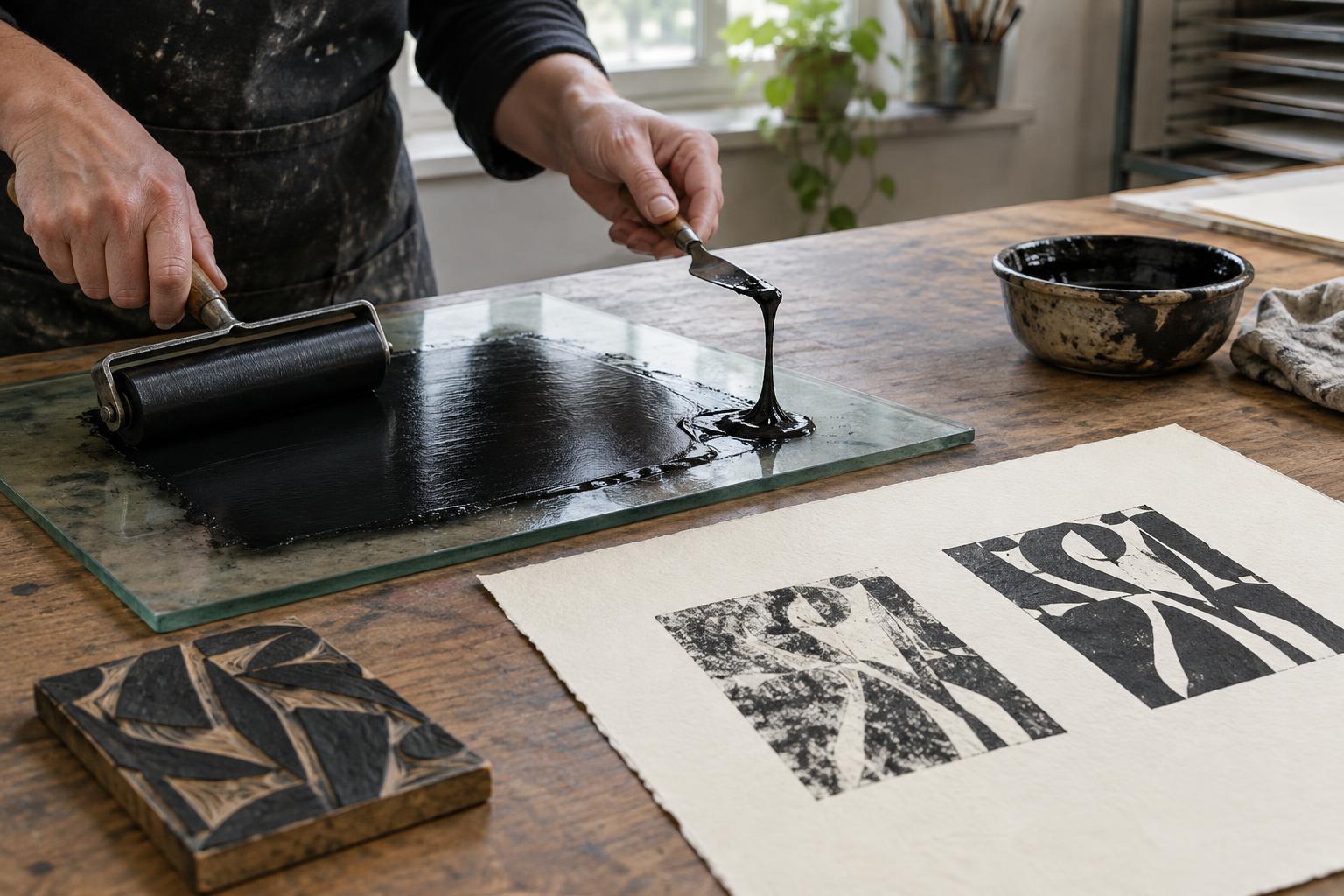
Paper and InkAn ink can look thick on the slab yet pull away from paper easily—or feel sticky while rolling out thinly. Learn how tack and viscosity differ, what they change in relief and intaglio printing, and how to make useful adjustments without losing track of your results.
Read article · 4 min↗
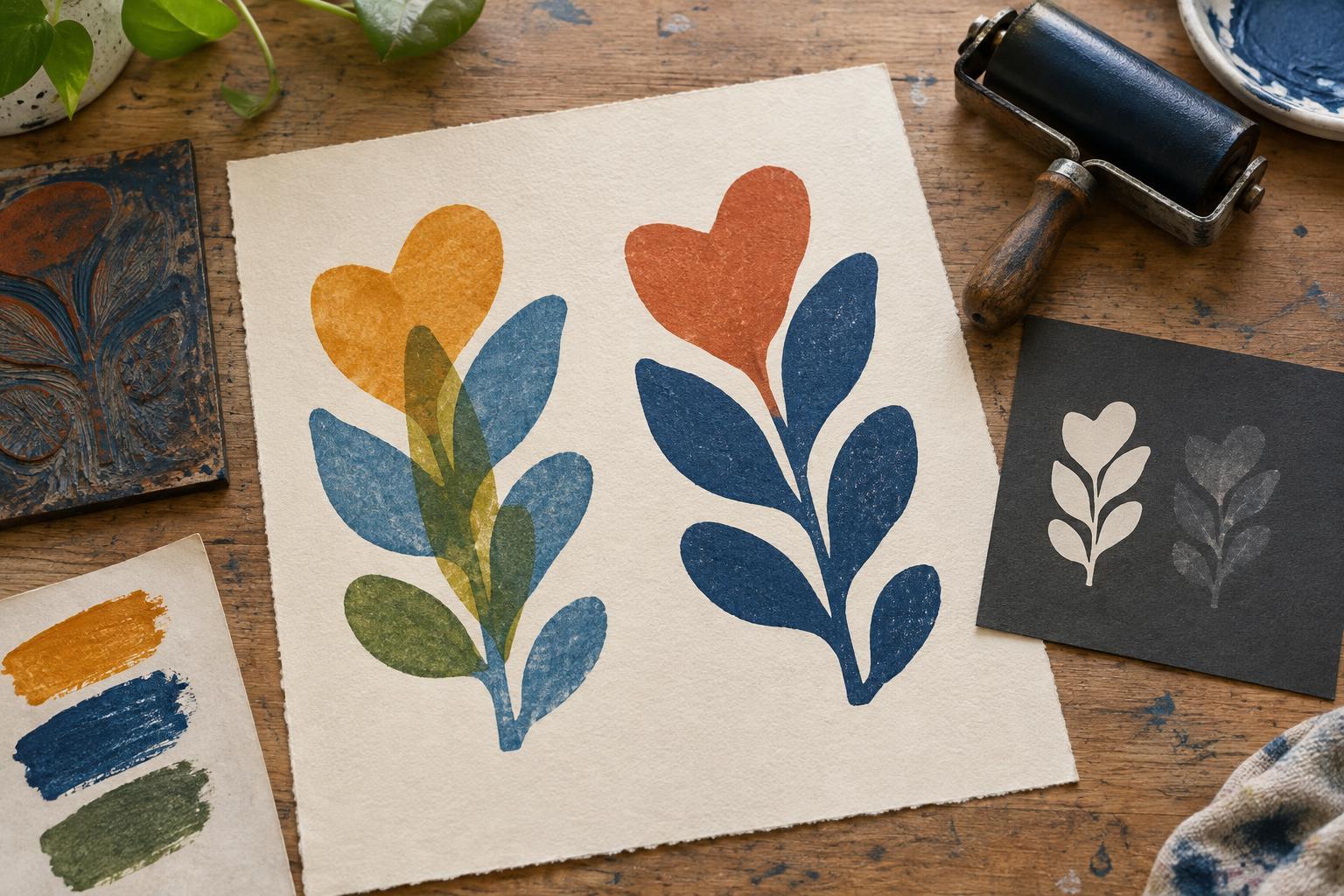
Paper and InkTransparent and opaque inks can produce very different results from the same plate or block. Learn how each handles overlapping colors, dark paper and fine detail, then make a simple test print before committing to an edition.
Read article · 4 min↗
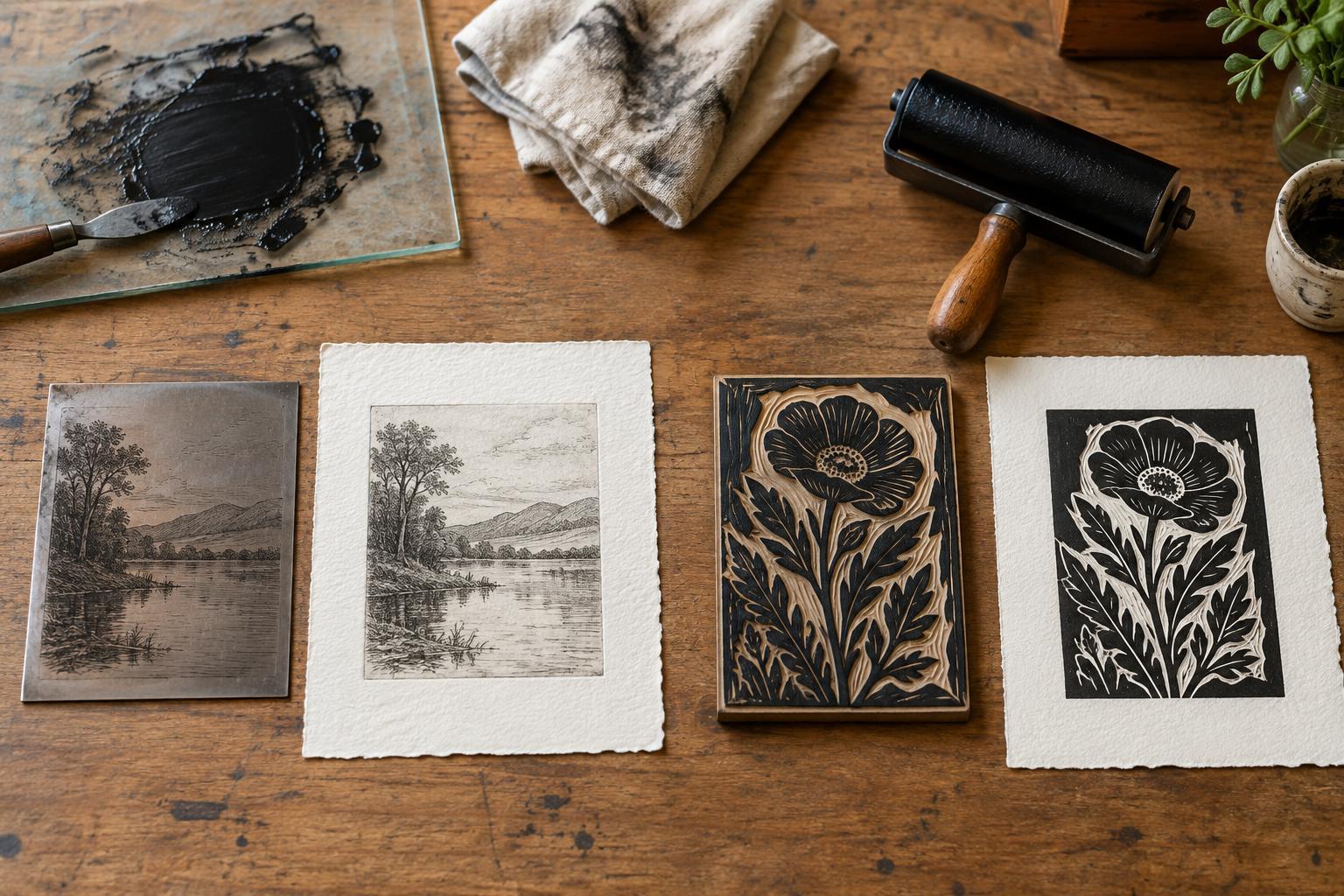
Paper and InkIntaglio ink must stay in recessed marks while the plate surface is wiped clean. Relief ink must roll evenly onto raised surfaces without flooding the cuts. Learn how those different jobs affect ink body, application, paper choice, and troubleshooting.
Read article · 4 min↗
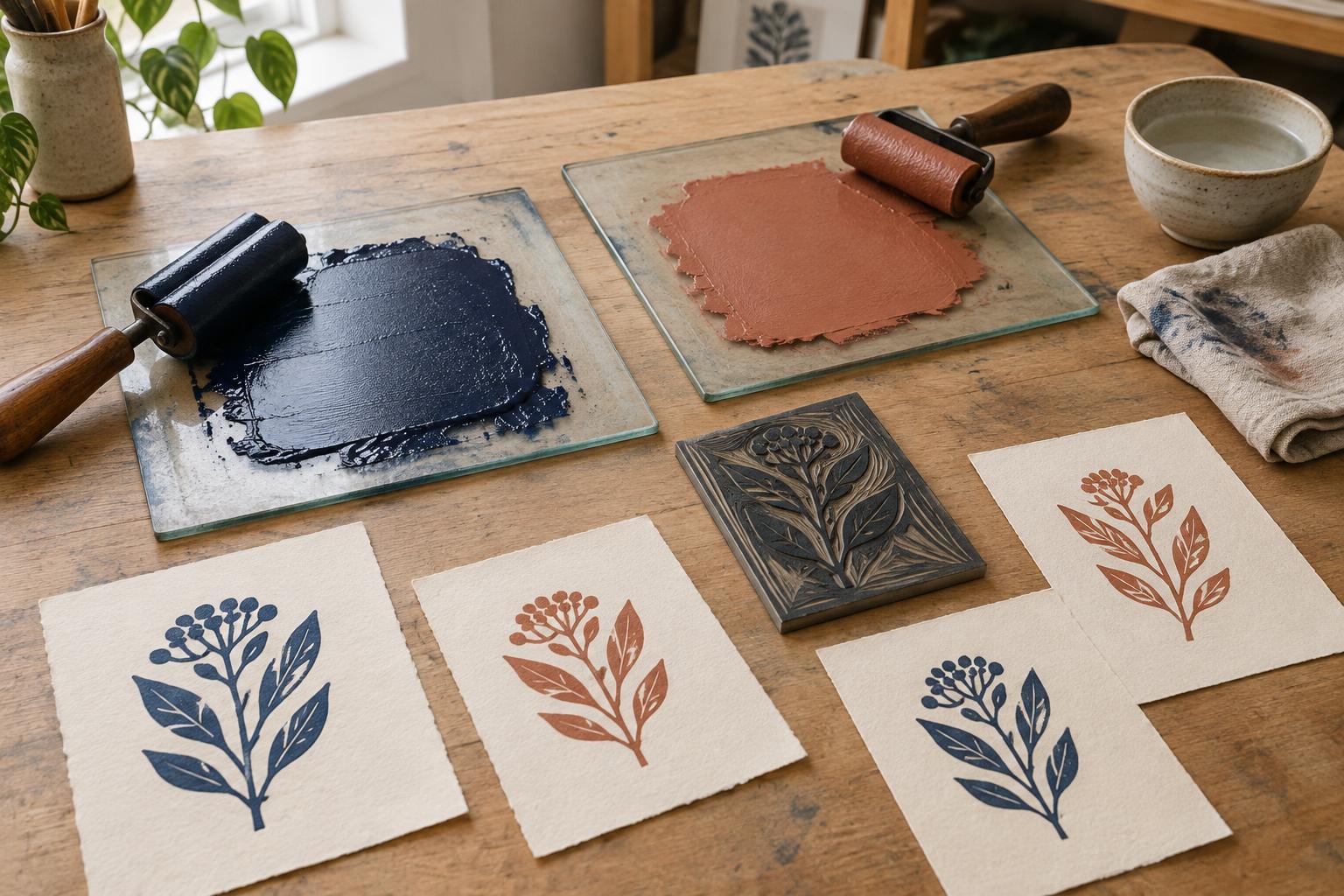
Paper and InkChoosing your first relief ink need not be complicated. Learn how oil-based and water-based inks differ in working time, printing, paper choice, drying and cleanup—and try a simple test to see which suits your setup.
Read article · 4 min↗
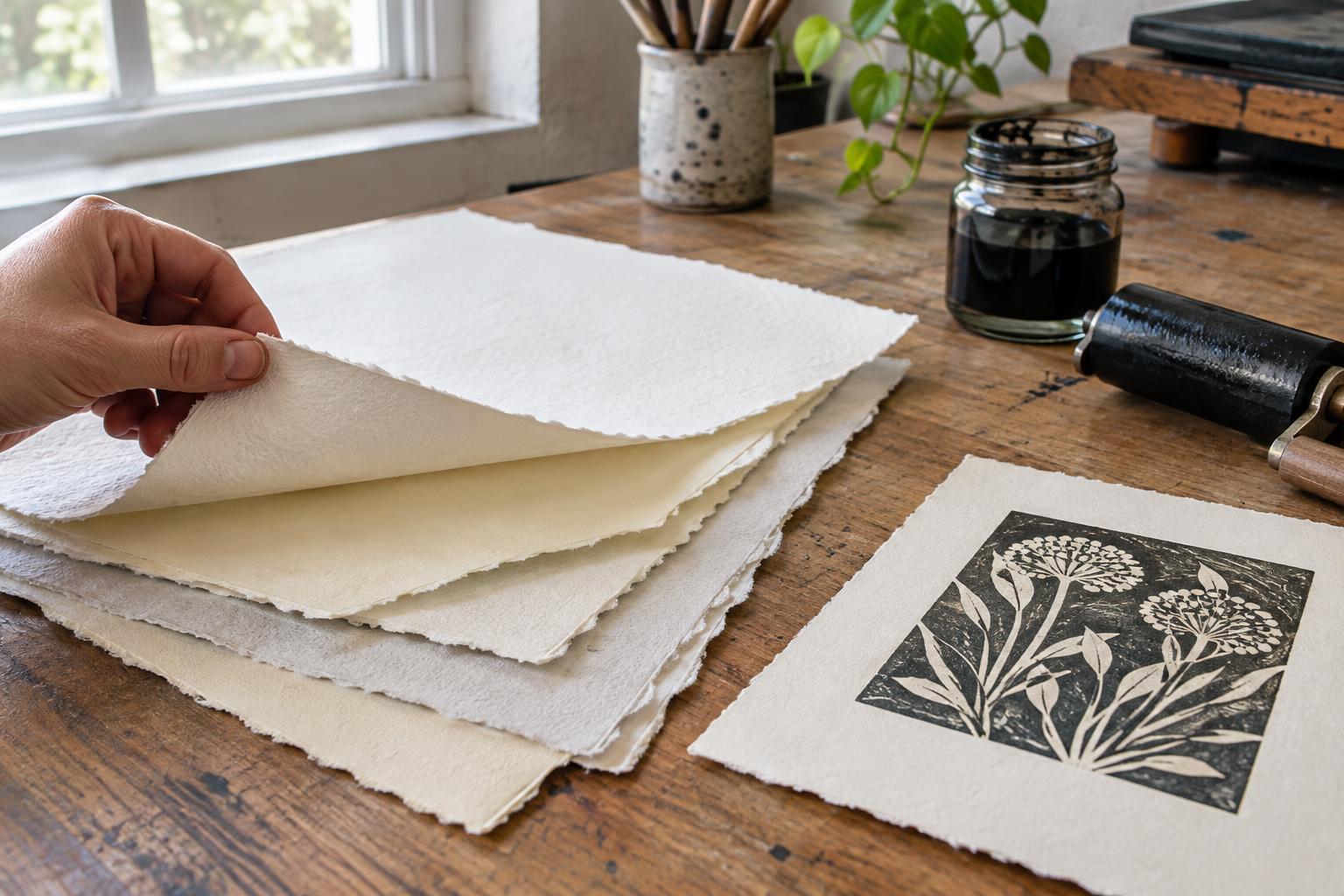
Paper and InkPaper labels can sound like promises about the future of a print. Learn what acid-free, buffered and archival usually describe, where those terms fall short, and how to choose paper that suits your ink and process.
Read article · 4 min↗
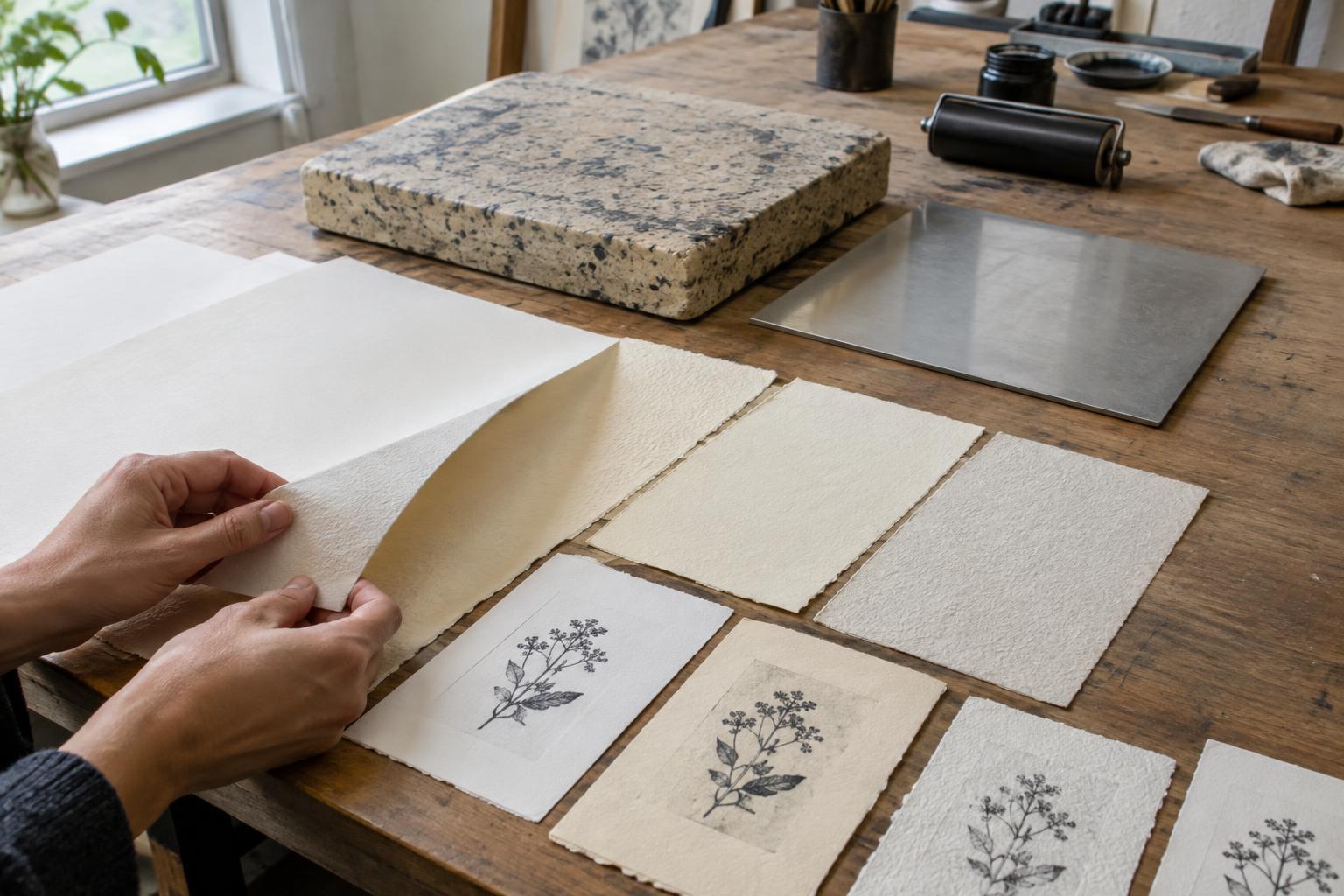
Paper and InkThe paper you choose affects how a lithograph prints, feels and holds up to handling. Learn how surface, sizing, weight and sheet consistency matter for both stone and plate lithography, then use a simple proofing routine to compare options.
Read article · 4 min↗
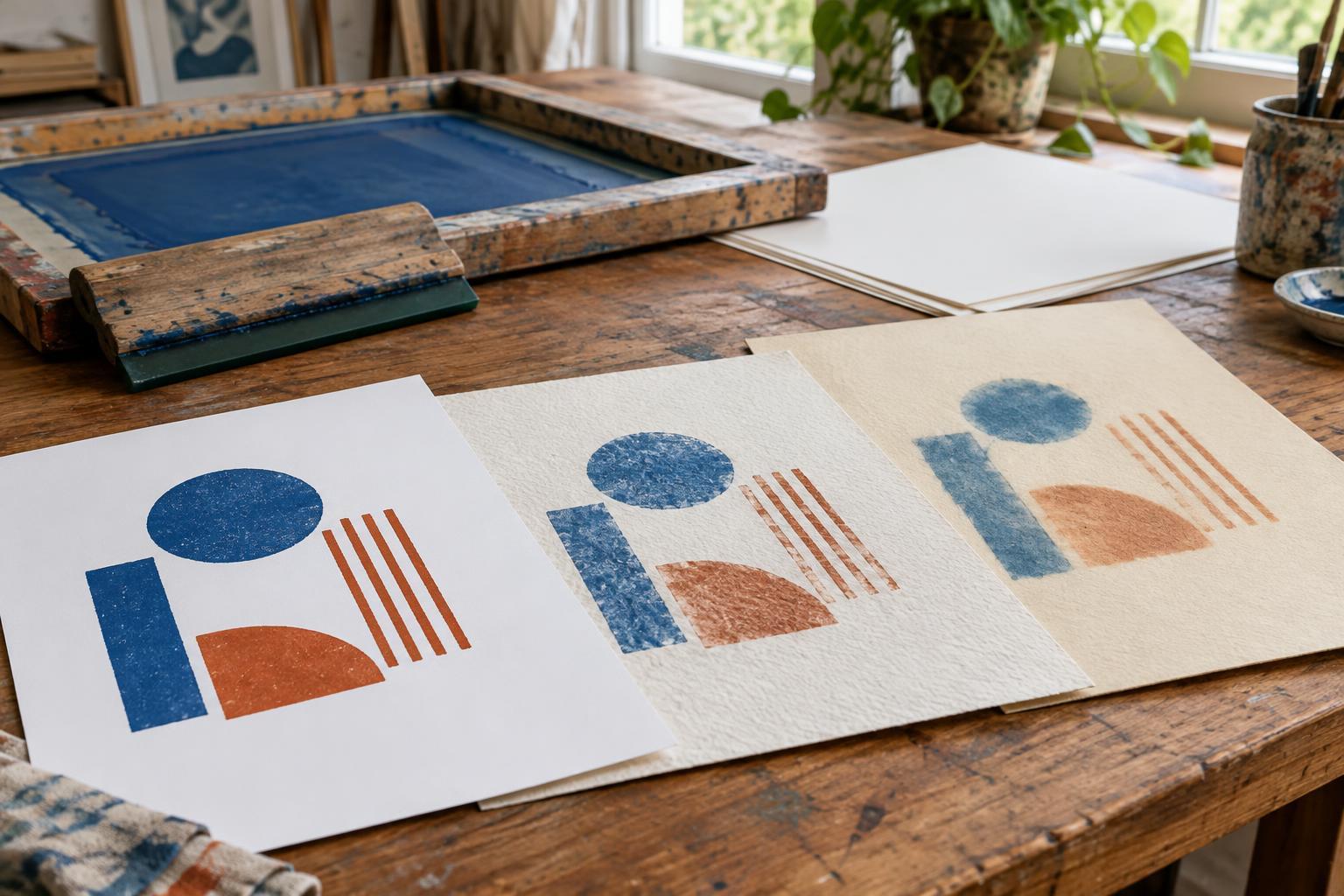
Paper and InkThe right paper supports clean impressions, reliable registration and the look you want from an edition. Learn how surface texture, absorbency, weight and paper handling affect screenprints, then use a simple test to choose with confidence.
Read article · 4 min↗
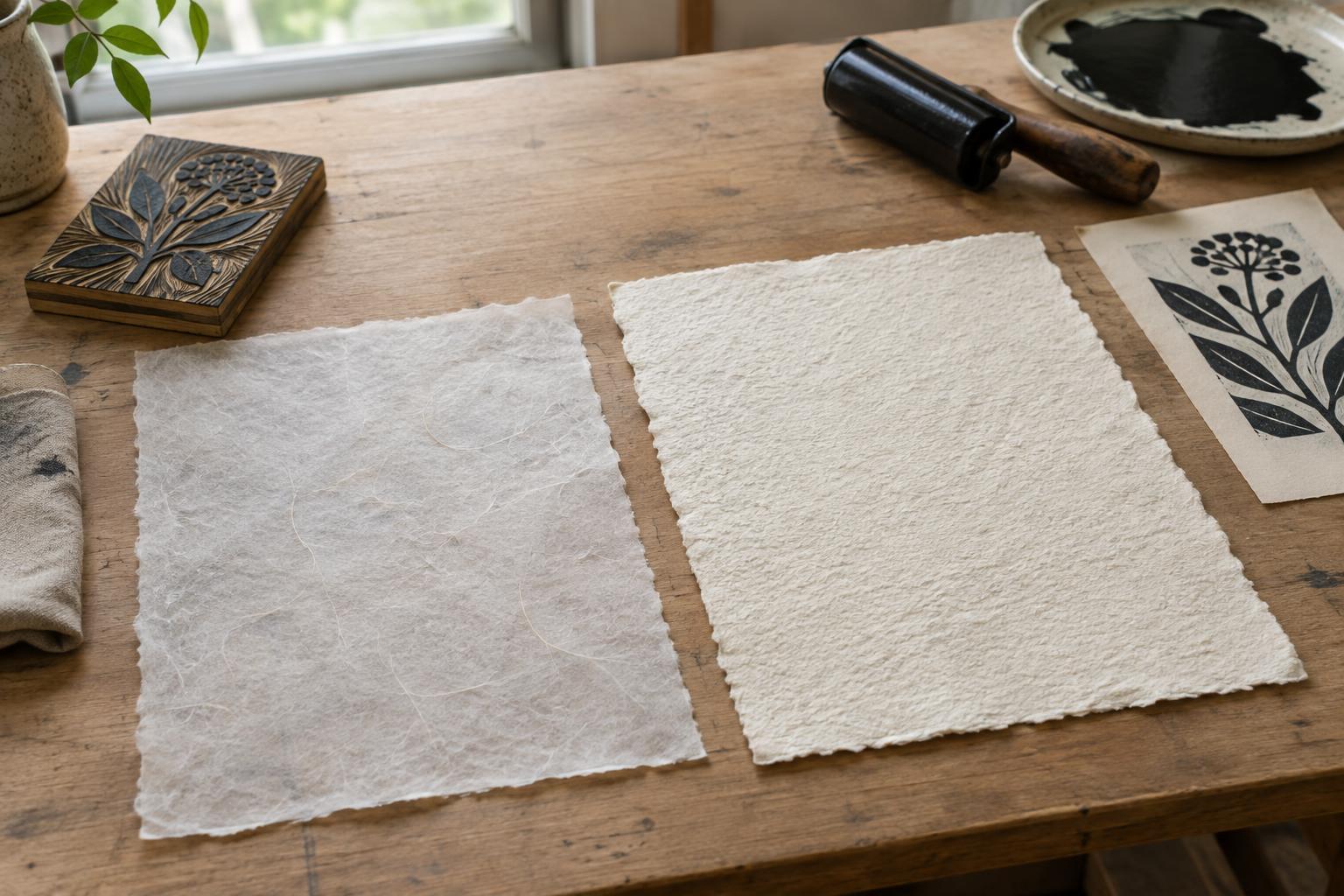
Paper and InkWashi and Western printmaking papers can differ in fiber, weight, surface and response to moisture. Learn how those differences affect relief, intaglio and other printing methods—and how to choose a sheet by testing it rather than relying on its label.
Read article · 4 min↗
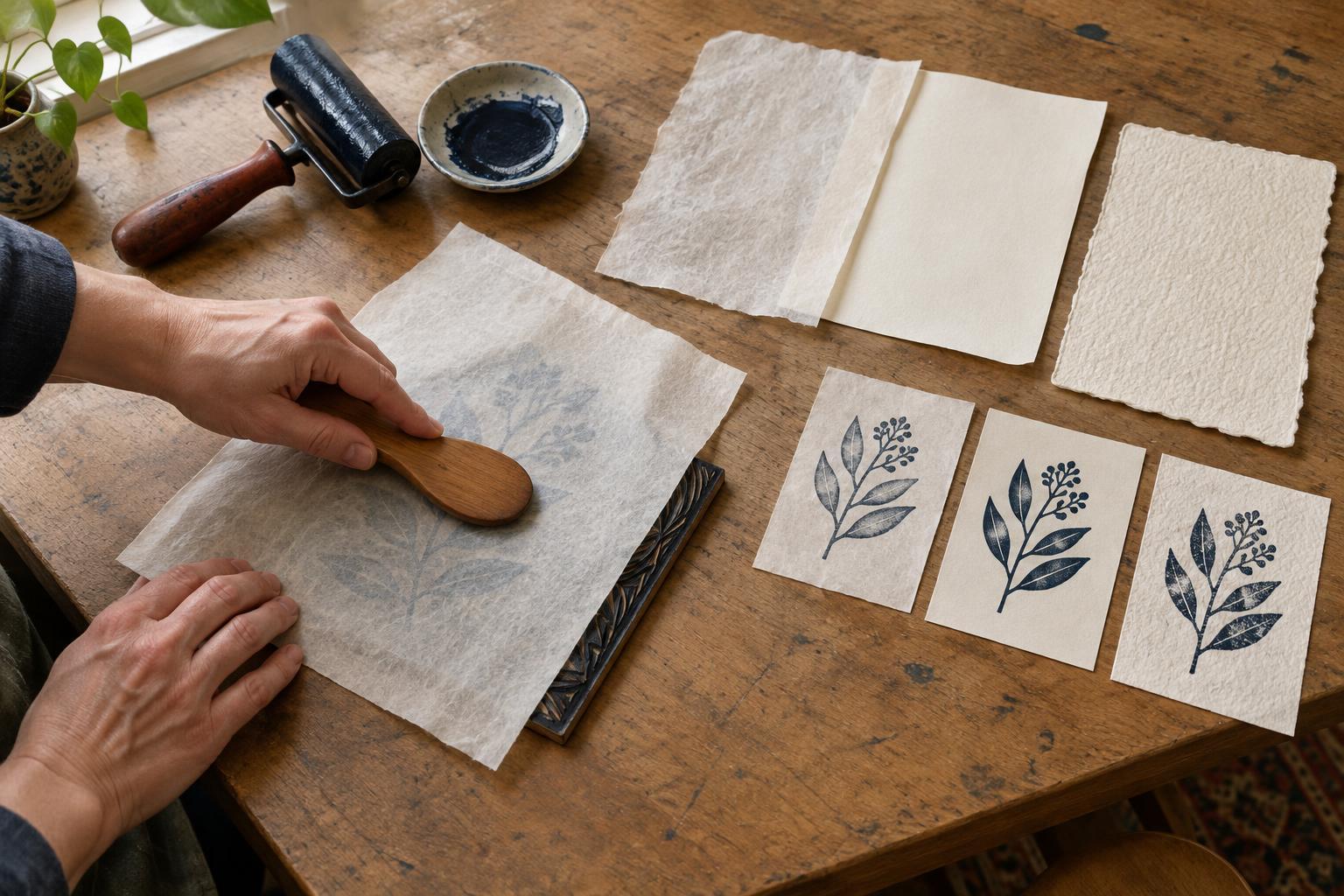
Paper and InkWithout a press, paper choice can make the difference between an even relief print and a patchy one. Learn how weight, surface, sizing, and flexibility affect hand burnishing, then use a small test to find a paper that suits your block and ink.
Read article · 4 min↗
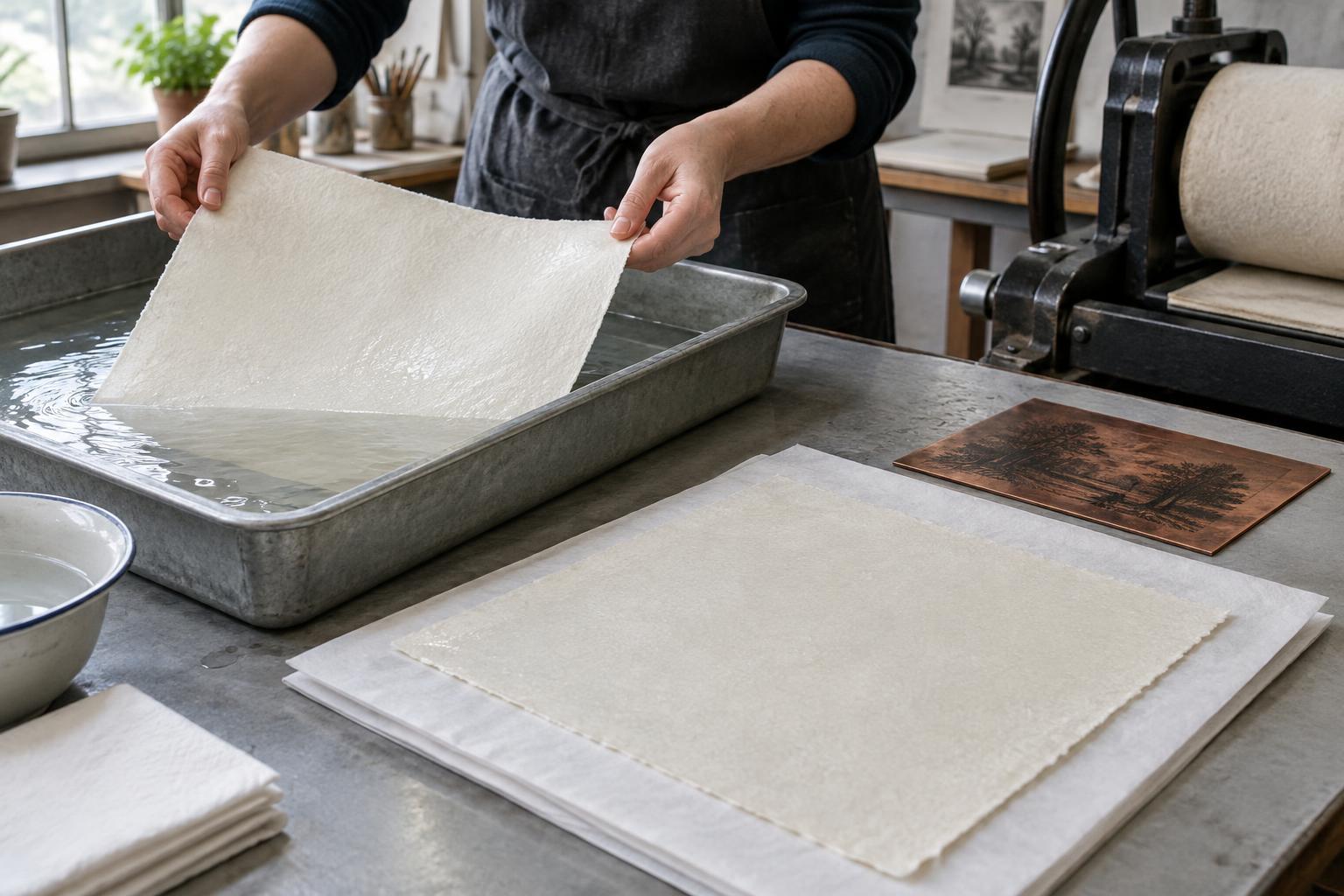
Paper and InkDamp paper can help an intaglio plate print clearly, but too much water makes sheets difficult to handle and can blur detail. Learn a repeatable method for soaking, blotting, resting and testing paper before it goes through the press.
Read article · 4 min↗
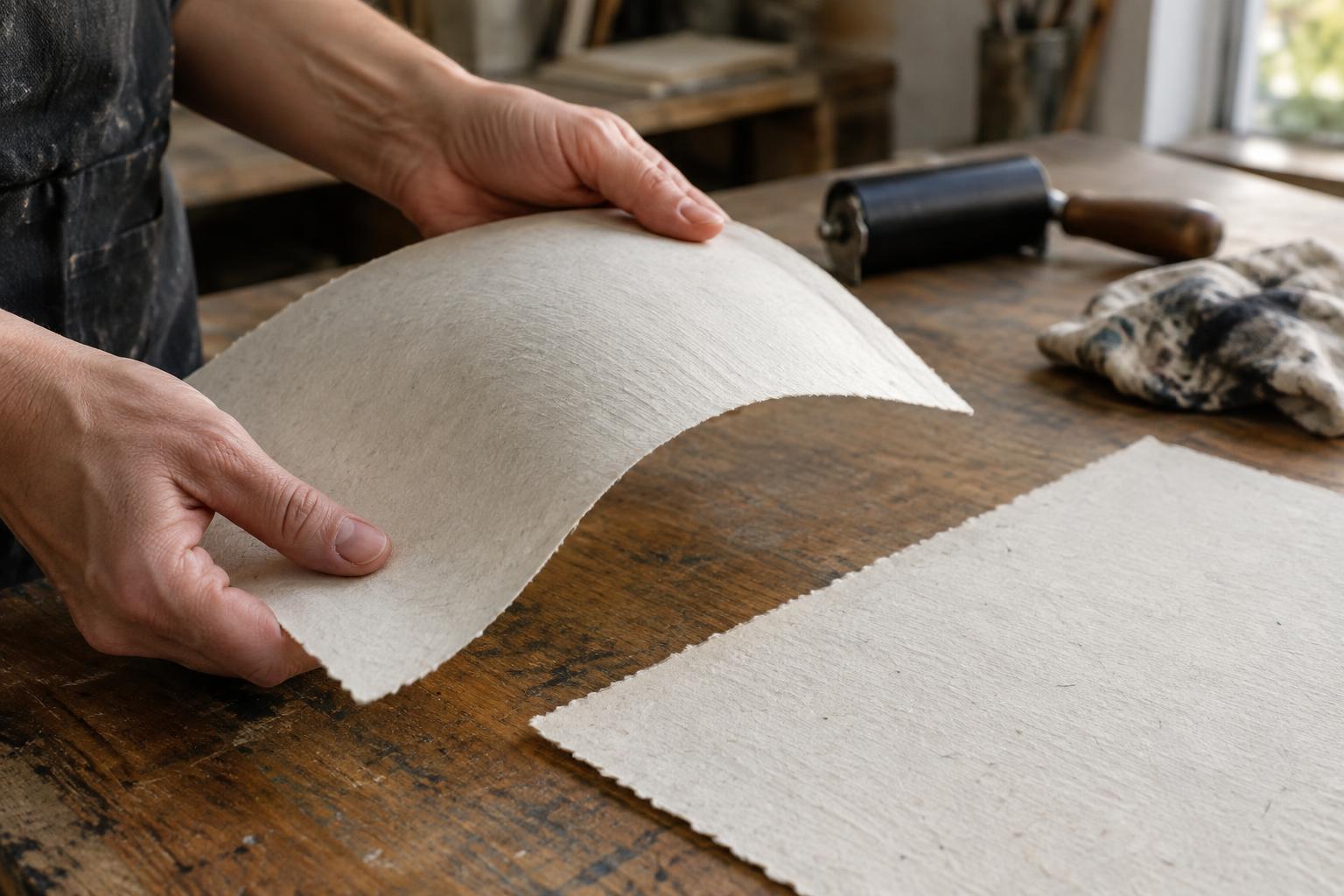
Paper and InkPaper grain can affect folding, tearing, dampening and registration. Learn what grain direction means, how to test an unfamiliar sheet, and when it matters most in printmaking.
Read article · 4 min↗
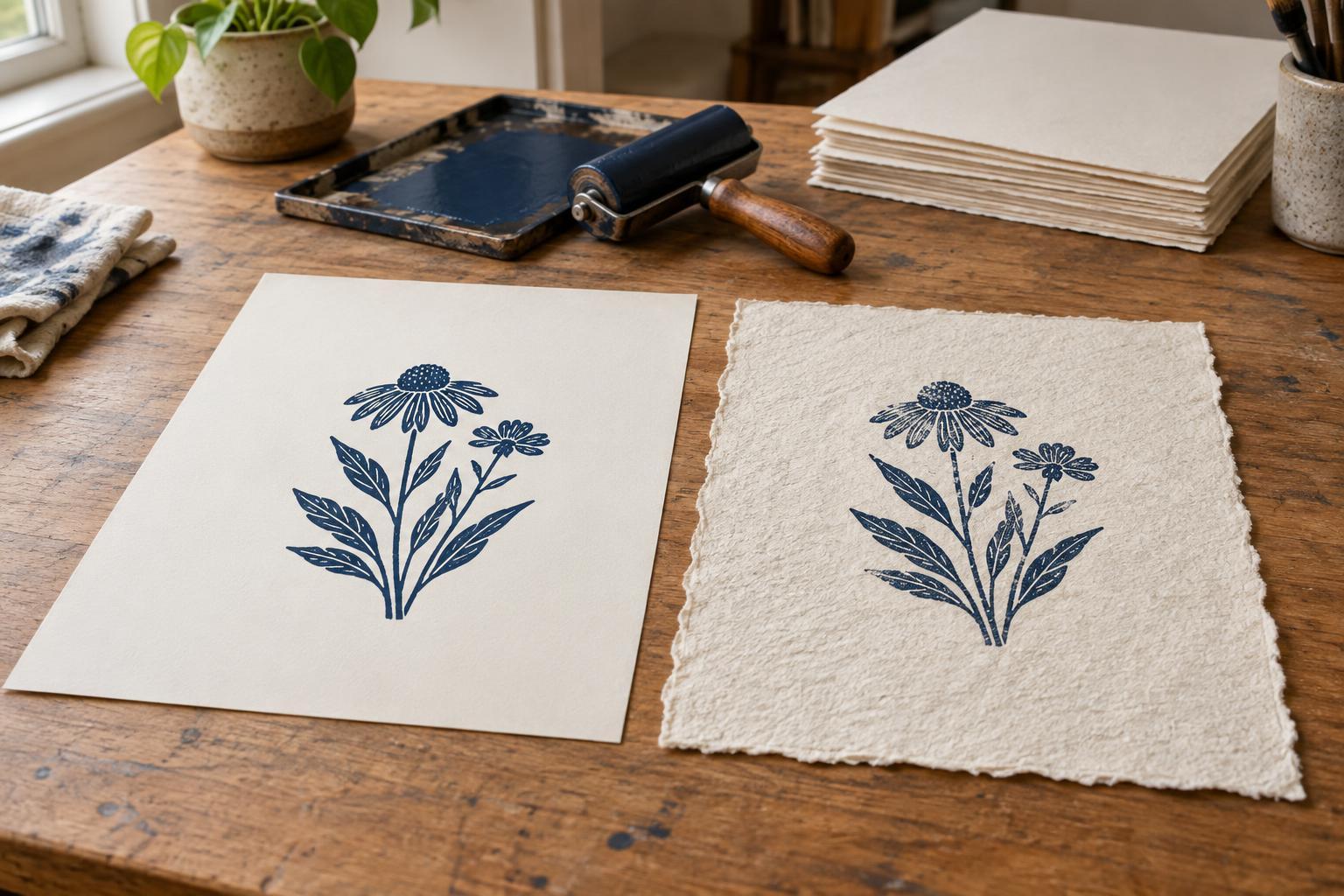
Paper and InkPaper texture affects how ink transfers, how fine details appear, and how a finished print feels in the hand. Learn when to choose a smooth sheet, when texture adds character, and how to test paper before committing to an edition.
Read article · 4 min↗
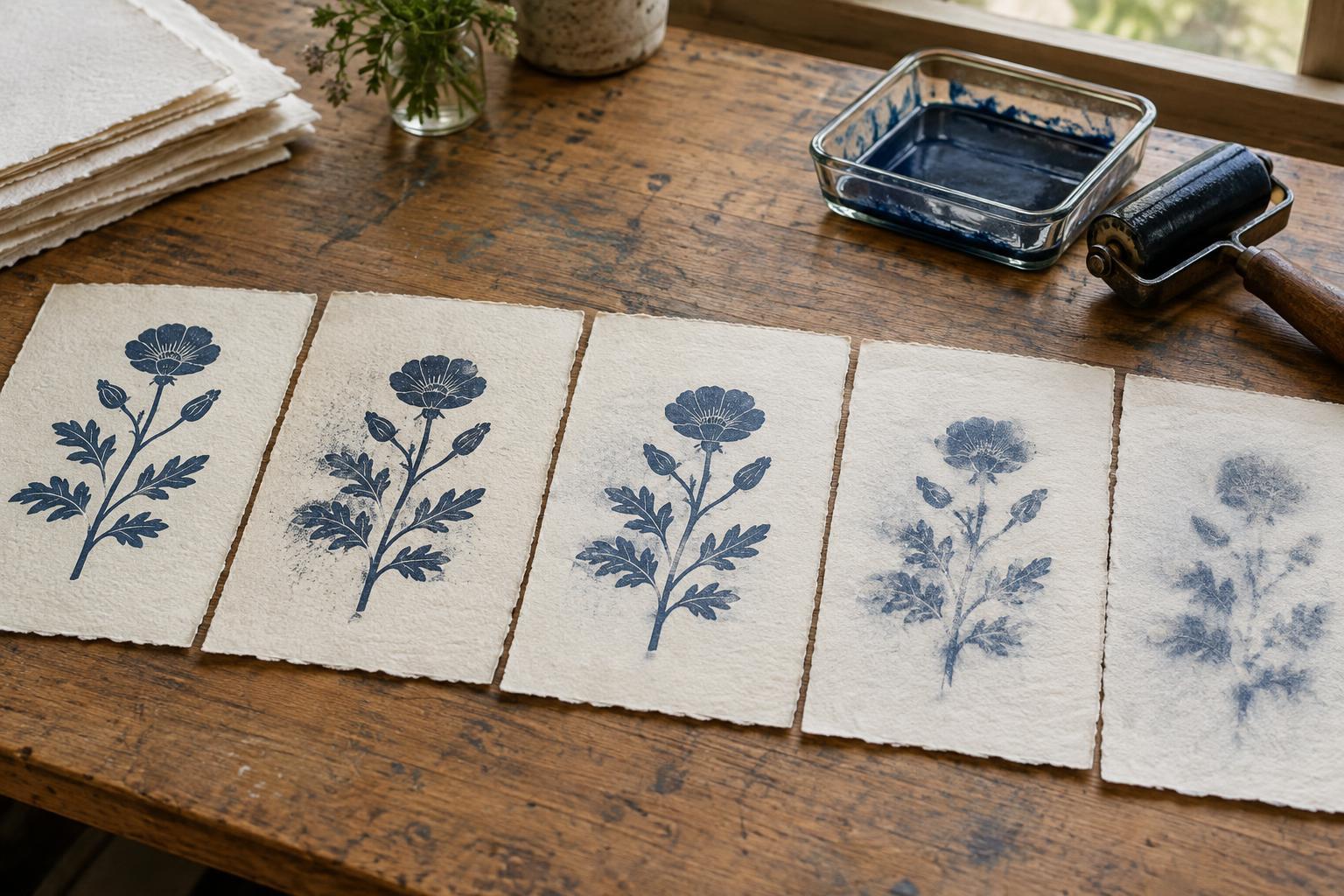
Paper and InkSizing changes how readily paper takes up liquid, which can affect ink edges, color and drying. Learn how to compare papers and choose a surface for relief, intaglio and water-based printmaking.
Read article · 4 min↗
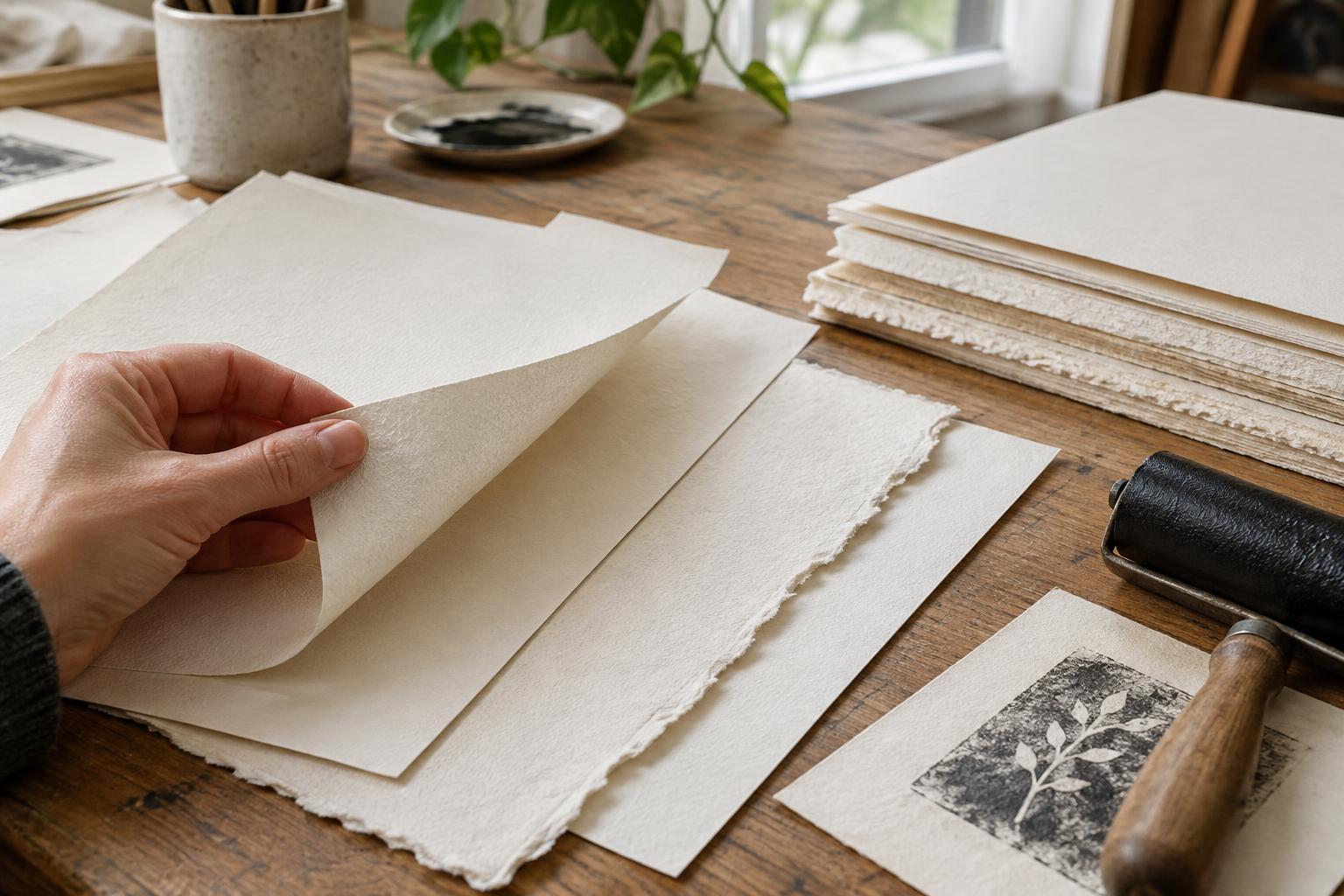
Paper and InkPaper weight is useful, but it cannot tell you everything about how a sheet will print. Learn what GSM measures, why two papers of the same weight can feel different, and how to test a sheet for your ink and process before committing to an edition.
Read article · 4 min↗
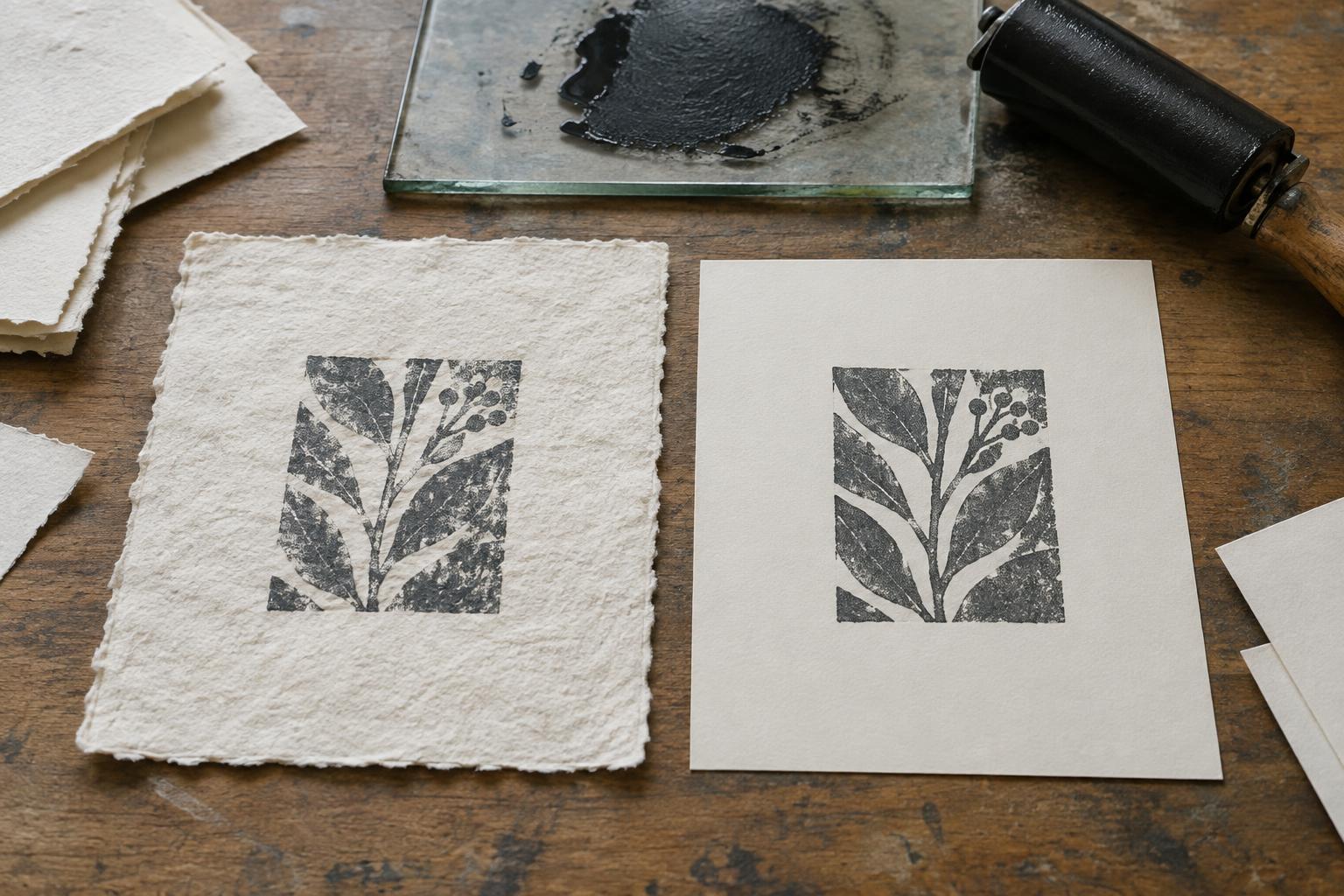
Paper and InkCotton rag and wood-pulp papers can both make excellent prints, but they may behave differently under pressure, moisture and ink. Learn which properties matter for relief, intaglio and other methods, and how to test a sheet before committing to an edition.
Read article · 4 min↗