Two traditions, many kinds of paper
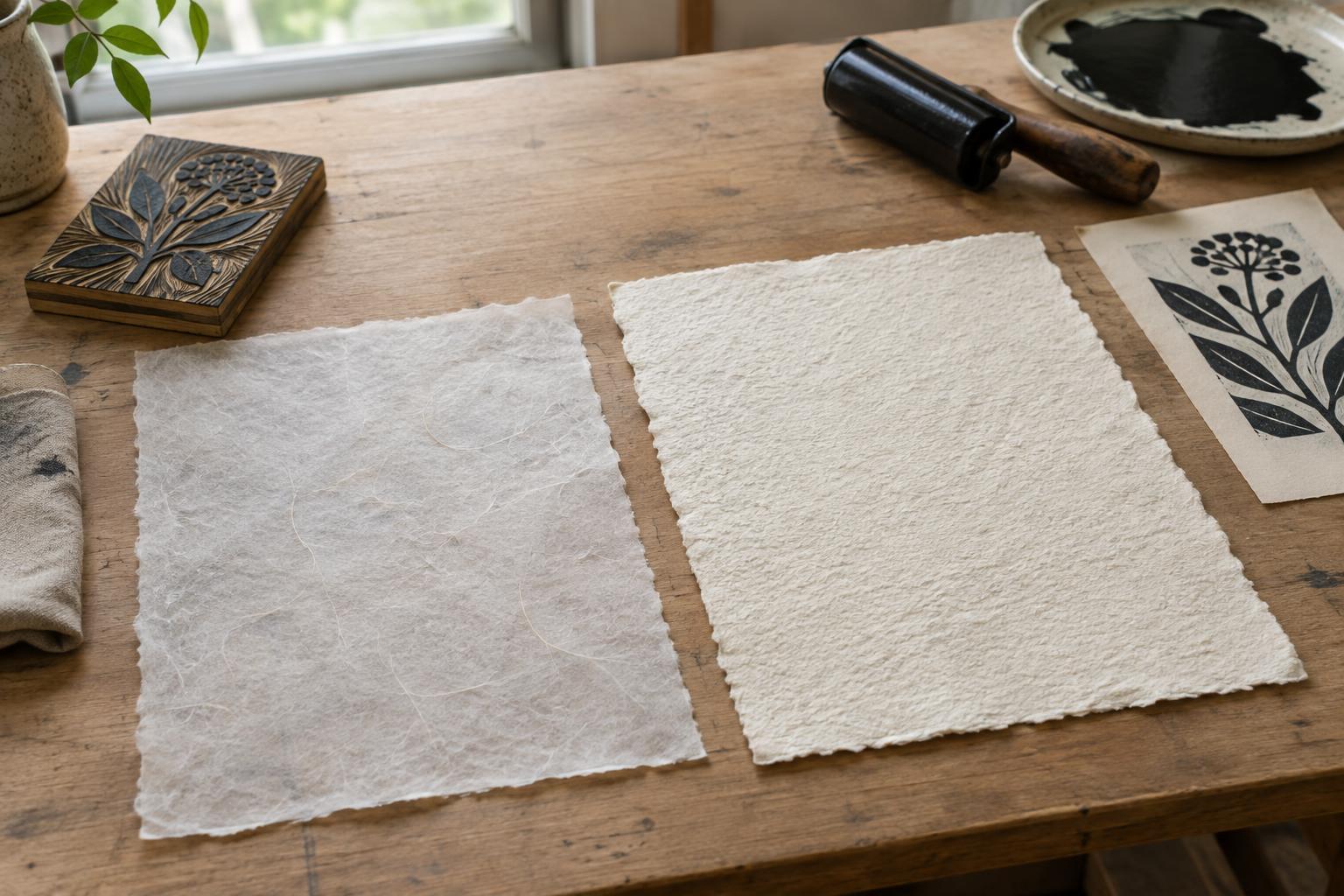
Washi is a broad term for Japanese paper, not a single texture or weight. Printmakers may encounter thin, translucent sheets as well as heavier, more substantial ones. Many traditional washi papers use long fibers from plants such as kozo, mitsumata or gampi. Those fibers can give a light sheet surprising strength, but the feel and behavior depend on the particular paper and how it was made.
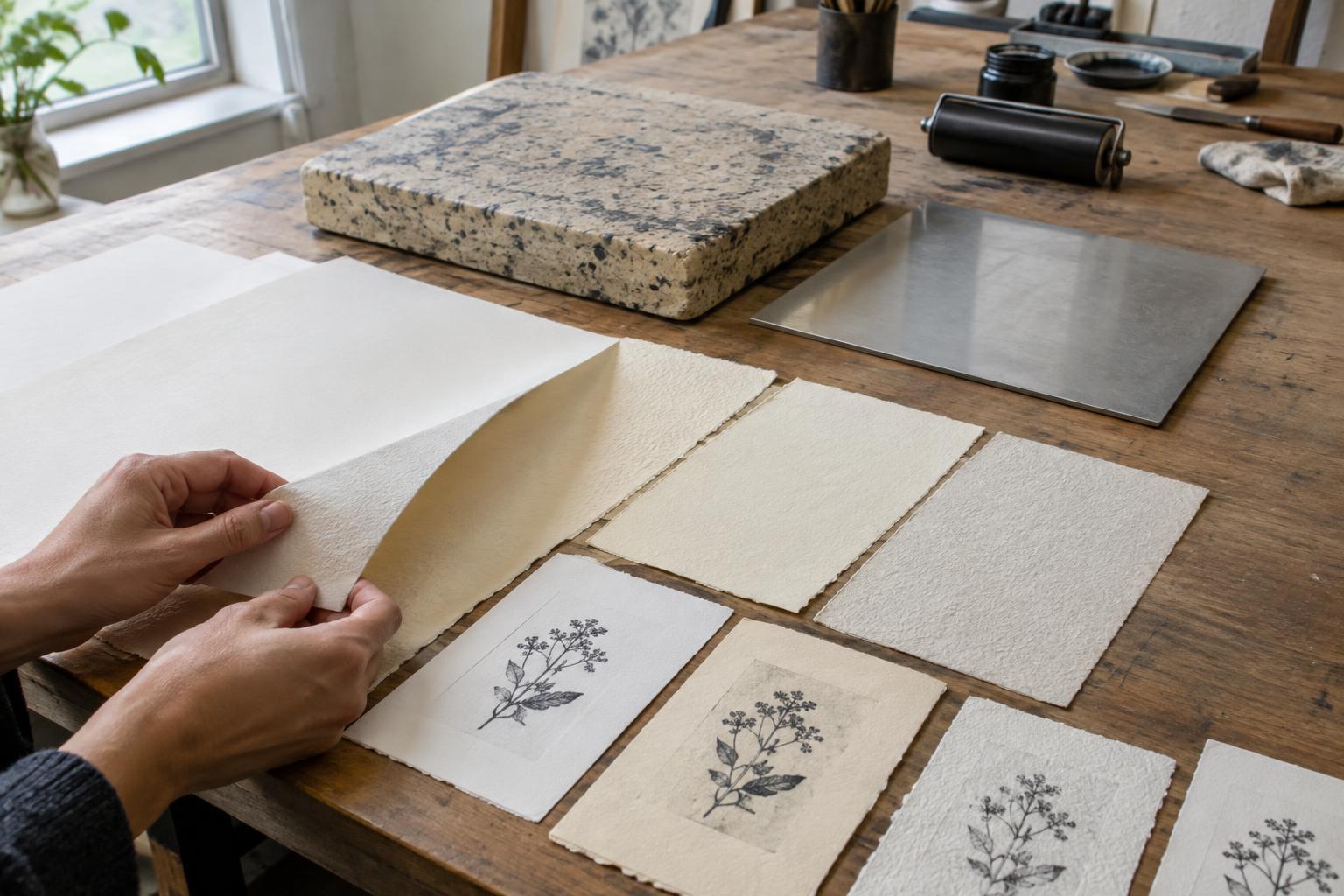
Western printmaking paper is just as varied. Common options include cotton rag papers and sheets made with high-quality wood pulp. They may be smooth or textured, soft or firm, and lightly or heavily sized. The useful comparison is therefore not “thin East versus thick West.” It is between two specific sheets under the conditions of your process. Look at the fiber description, weight, surface and sizing information when available, then make a small test print.
Fiber, weight and the feel of the sheet
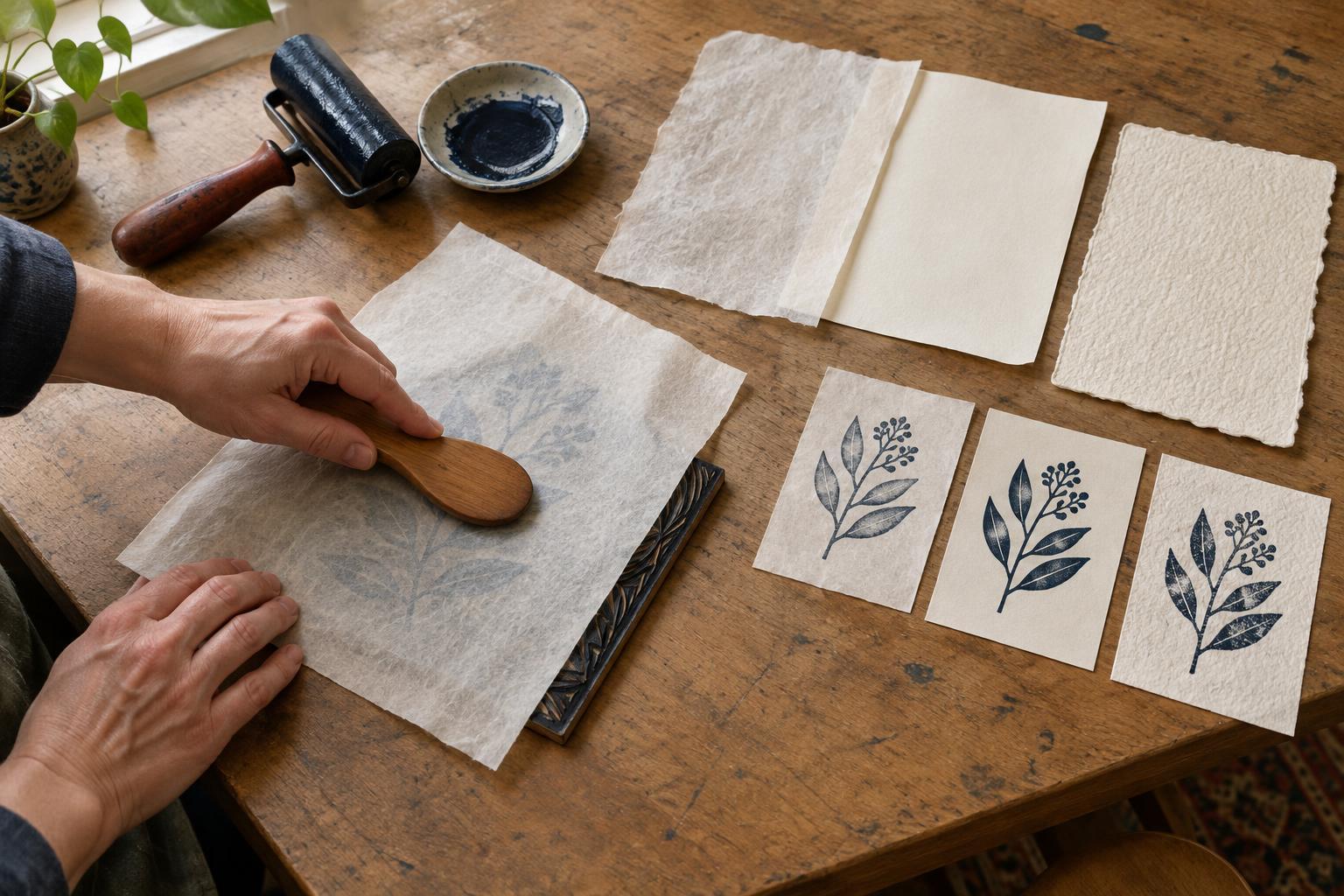
A thin kozo-based washi may bend easily while resisting a clean tear across its long fibers. That combination makes some washi especially useful for hand printing and for chine-collé, where a fine sheet is adhered to a heavier support during printing. Thinness can also let light through the paper, an effect worth considering if the print will be mounted over a colored backing. Not every washi is thin, however, and delicate surfaces can still scuff or crease.
Western papers often offer more bulk and cushioning, qualities that can help a plate or block leave a strong impression. A soft cotton sheet, for example, may conform to an intaglio plate when properly dampened. A firmer sheet may be preferable when you want a crisper surface or less visible embossing. Weight is a useful clue, but it does not tell the whole story: two papers of similar weight can feel and print very differently.
Sizing, absorbency and ink
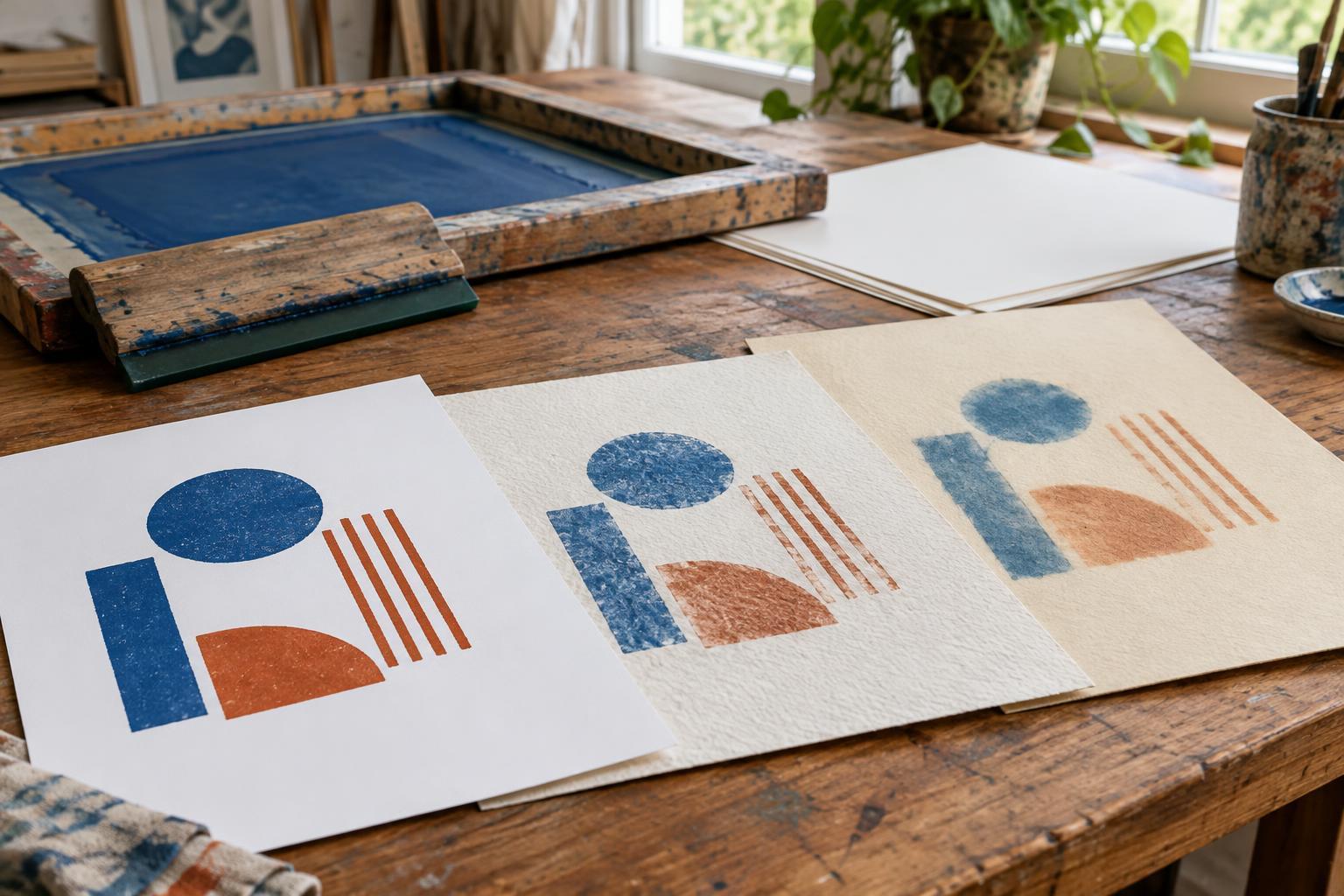
Sizing changes how readily a sheet takes up liquid. Some papers are sized to limit absorbency; others are more receptive. This matters with water-based inks, washes and paste, but it can also affect how cleanly an impression appears. On a very absorbent sheet, a wet application may spread more than expected. On a strongly sized surface, it may sit near the top. Neither response is inherently better: choose the one that supports the edges, color and texture you want.
Ink transfer also depends on the paper’s surface and the pressure you apply. A smooth, fine sheet can reveal small details from a well-inked relief block, while a pronounced texture may interrupt broad areas of color. With oil-based ink, allow for the fact that drying and appearance can vary with ink formulation and paper. Test a spare strip or small corner before committing to an edition, and judge the result after the print has had time to settle.
How the choice changes your printing process
For relief printing by hand, a flexible washi can be appealing because pressure from a baren or spoon may transfer ink without a press. Place a clean sheet beneath the print to protect its back, and check for unwanted movement before rubbing across a large block. For intaglio, many printers begin with a Western paper designed to tolerate dampening and press pressure. A thin washi may still have a role in intaglio, particularly as a chine-collé layer, but it should be tested with the plate, adhesive and support paper together.
Moisture deserves special attention. Some papers change size, wrinkle or become fragile when damp; others handle soaking or misting more predictably. Follow any guidance supplied for the specific sheet, and begin with modest moisture if you are unsure. When planning an edition, keep your preparation consistent from print to print. Switching between dry and damp sheets—or between different batches of paper—can change the impression even when the block and ink remain the same.
A simple way to choose
Cut a few test pieces from each candidate paper and label them before printing. Use the same image, ink application and pressure for each, then compare fine lines, solid areas and any embossing. If your project involves water, test the dampening method as well. Note whether the sheet curls, stretches, tears at an edge or releases cleanly from the block or plate. These observations will be more useful than choosing by origin alone.
Finally, consider how the finished print will be handled and presented. A translucent washi may benefit from careful backing or mounting; a heavier Western sheet may have enough presence to stand on its own. If long-term storage matters, ask suppliers about fiber content and paper permanence rather than assuming either tradition guarantees it. The best choice is the sheet that prints reliably, suits your intended presentation and gives the image the character you want.