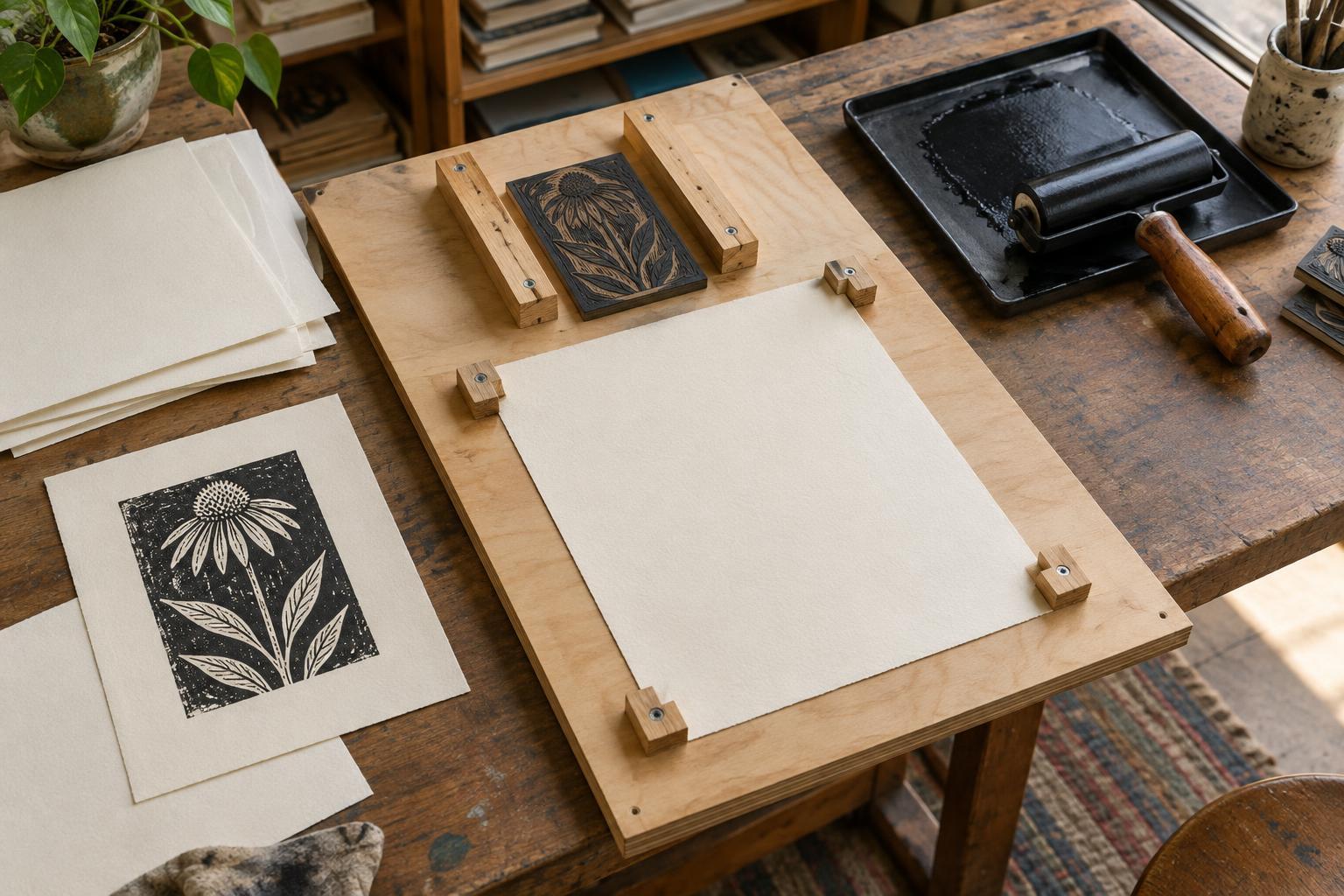
Studio PracticeA simple registration station helps keep paper and blocks in the same position throughout a print run. Learn how to set up guides, test alignment and preserve your layout between sessions.
Read article · 4 min↗
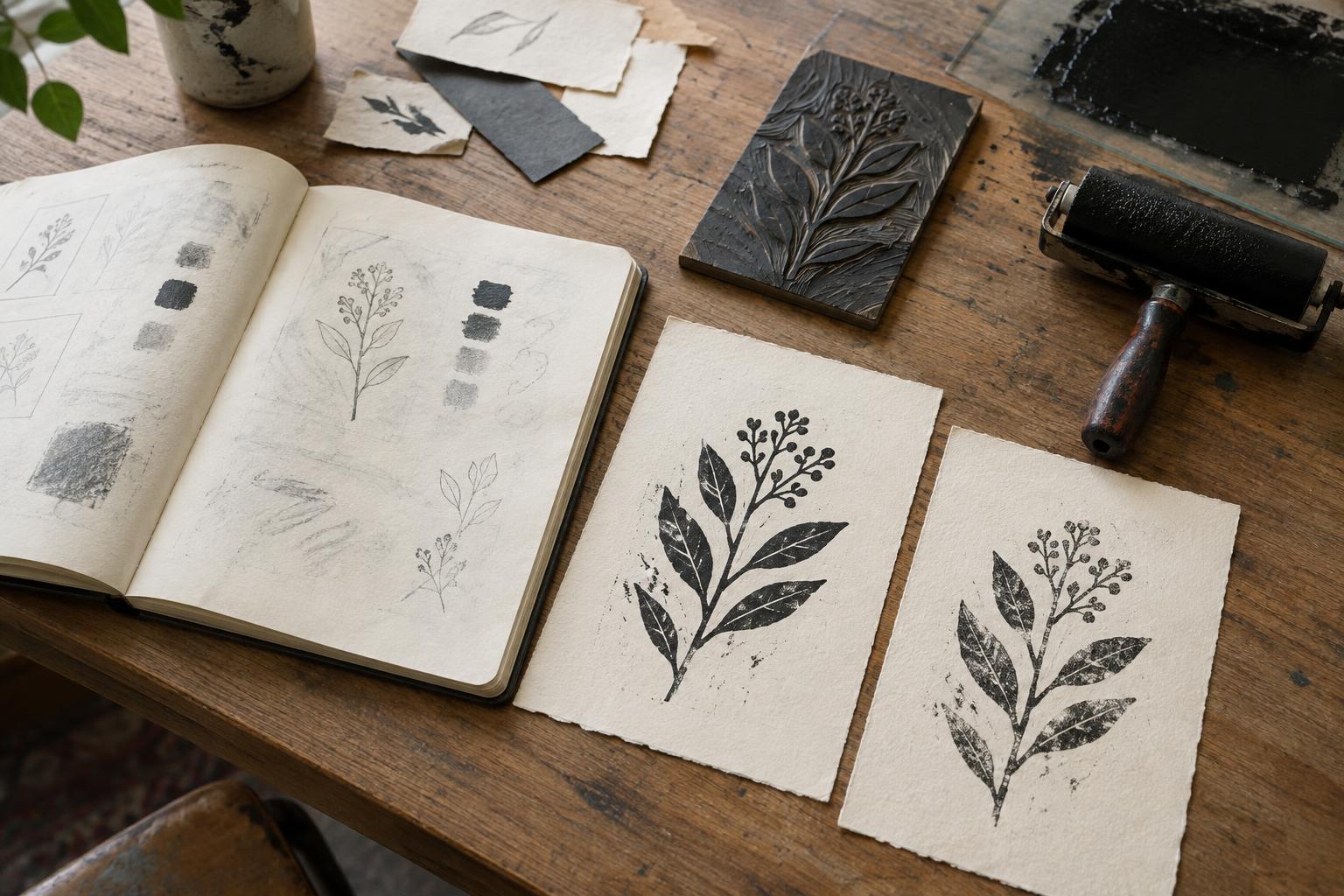
Studio PracticeA simple session log can help you repeat a successful print, diagnose an uneven one and restart a project after a break. Learn what to record, how to keep notes manageable and how to use test prints as part of the record.
Read article · 4 min↗
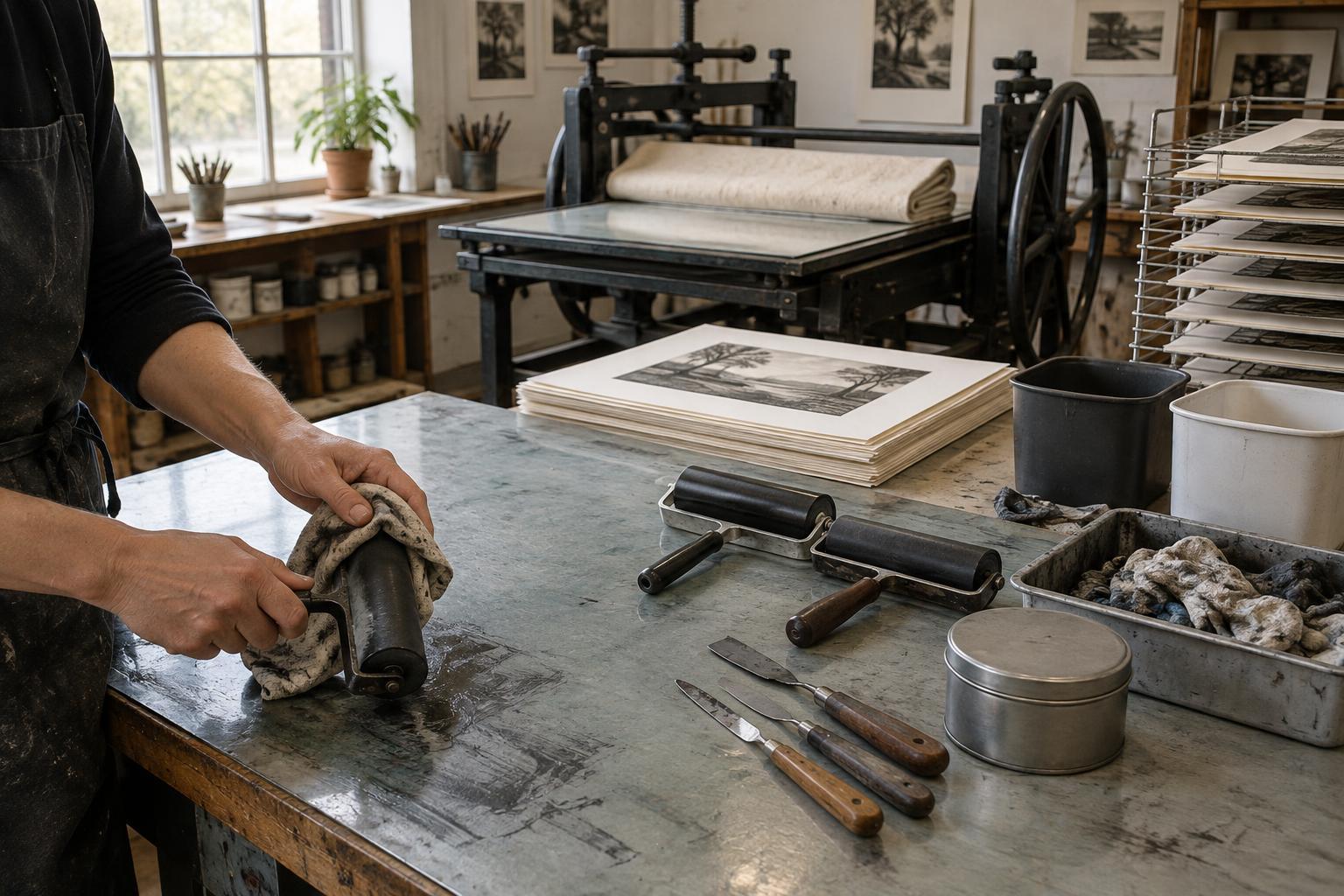
Studio PracticeA repeatable shutdown routine protects tools, keeps shared workspaces usable and makes the next printing session easier. Use this checklist to clean according to your materials, sort waste and leave the press and work area ready for another day.
Read article · 4 min↗
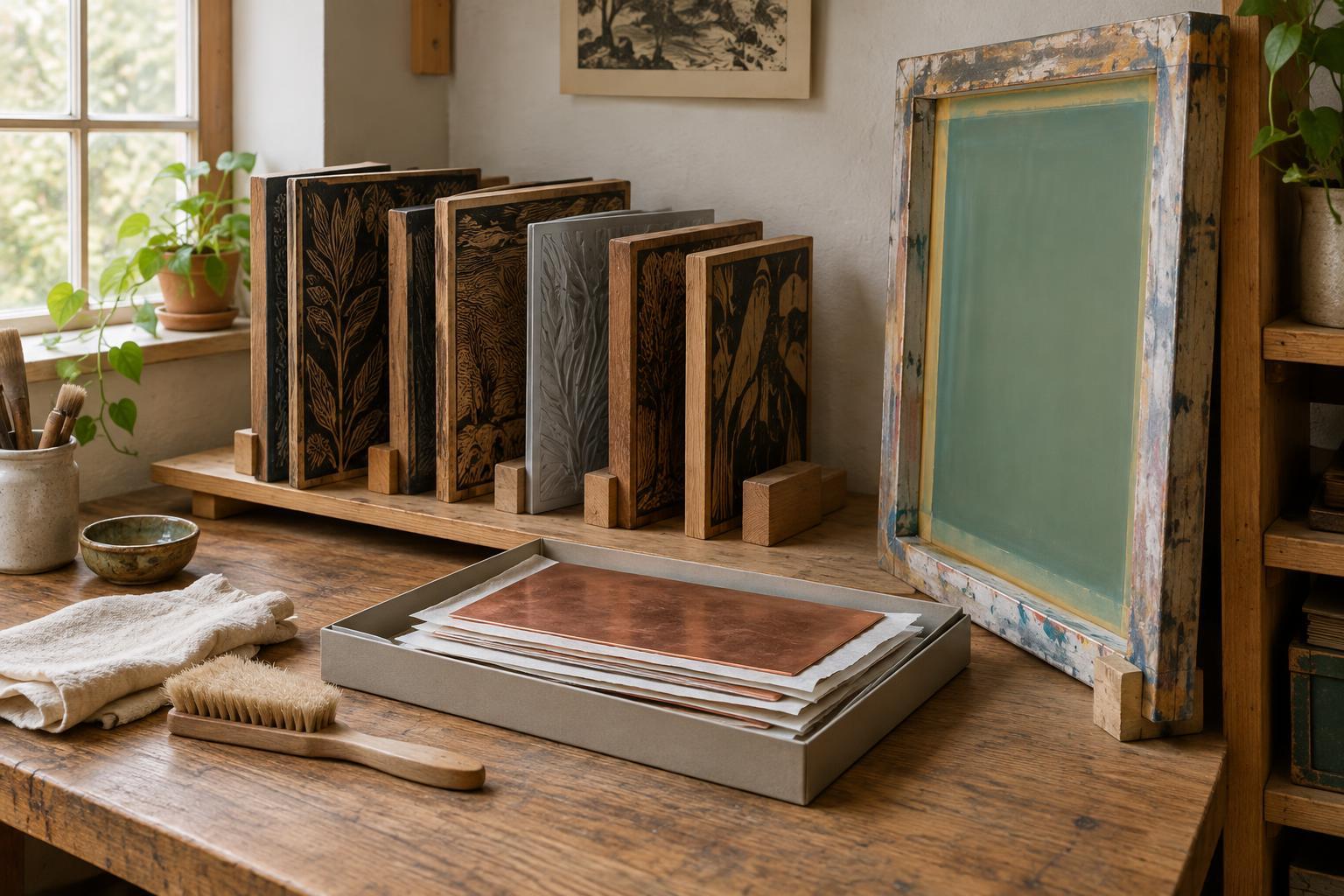
Studio PracticeA print matrix can spend far more time on a shelf than on the press. A simple routine for cleaning, drying, labeling and supporting blocks, plates and screens helps make the next printing session easier—and reduces avoidable damage in the meantime.
Read article · 4 min↗
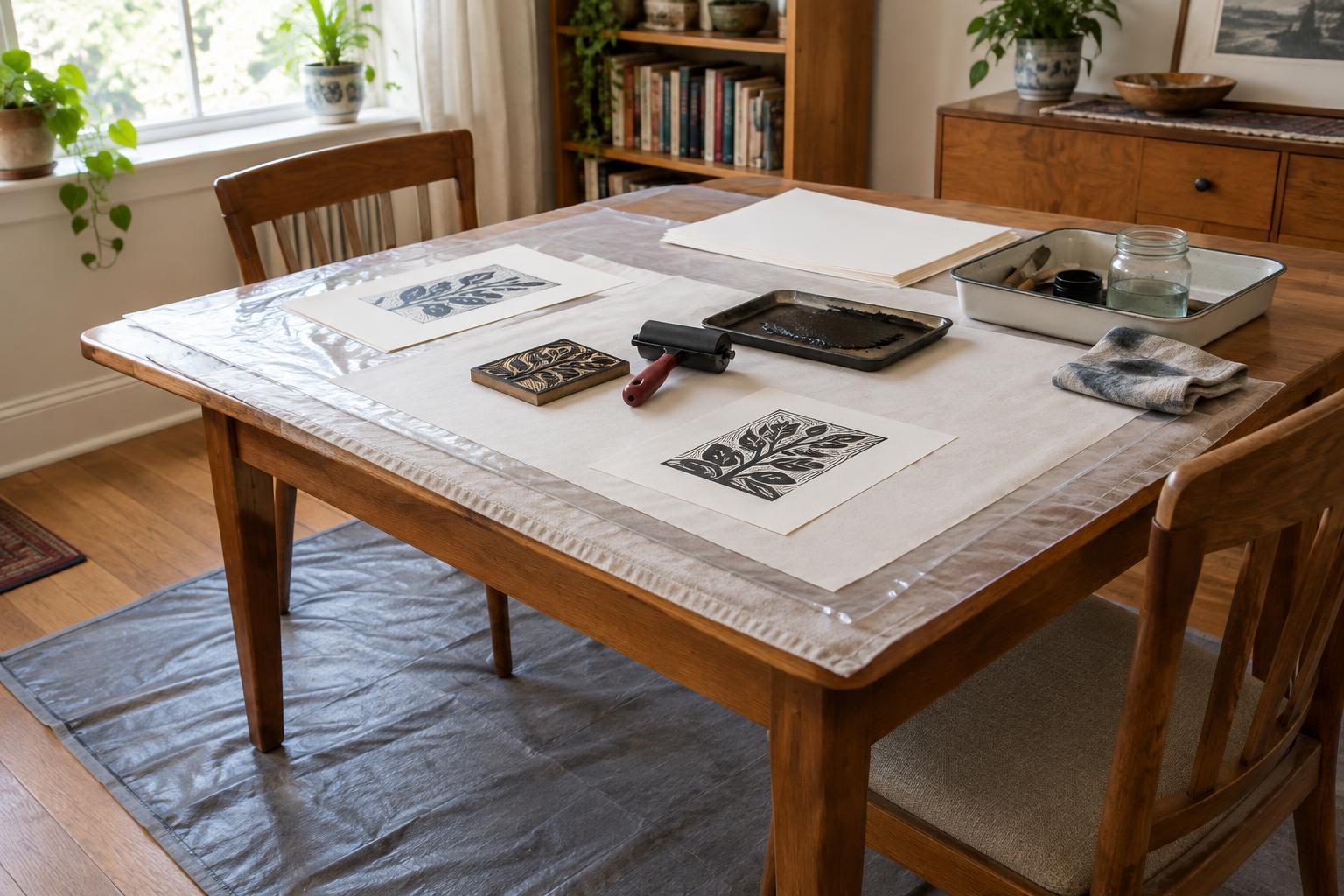
Studio PracticeA temporary printmaking setup can protect household surfaces without taking over the room. Learn how to layer a worktable, contain ink and water, safeguard the floor, and pack everything away after a session.
Read article · 4 min↗
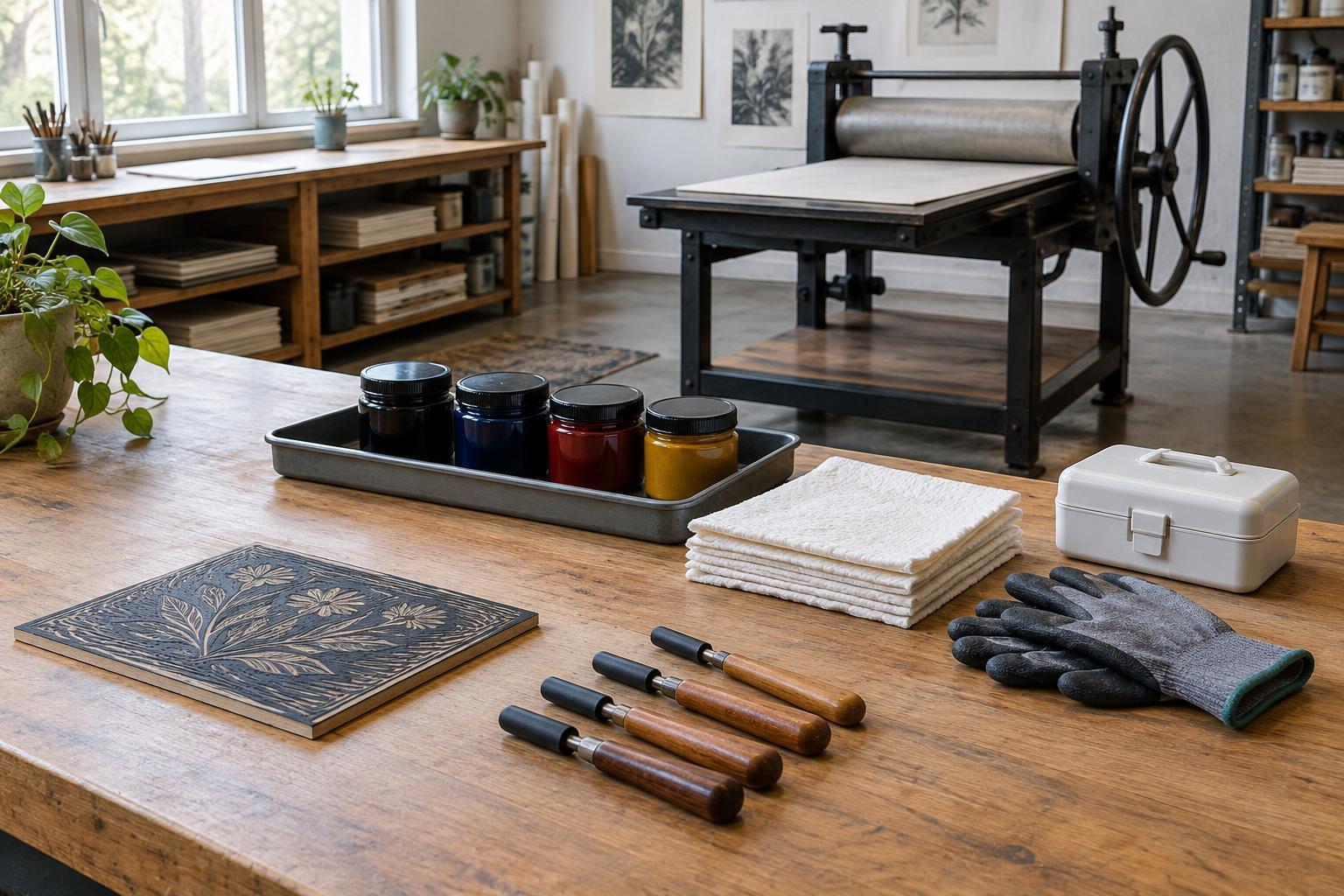
Studio PracticeA safer studio starts before anything goes wrong. Learn how to arrange tools and materials, prepare for spills and cuts, and make a simple emergency plan that works in a shared or home printmaking space.
Read article · 4 min↗
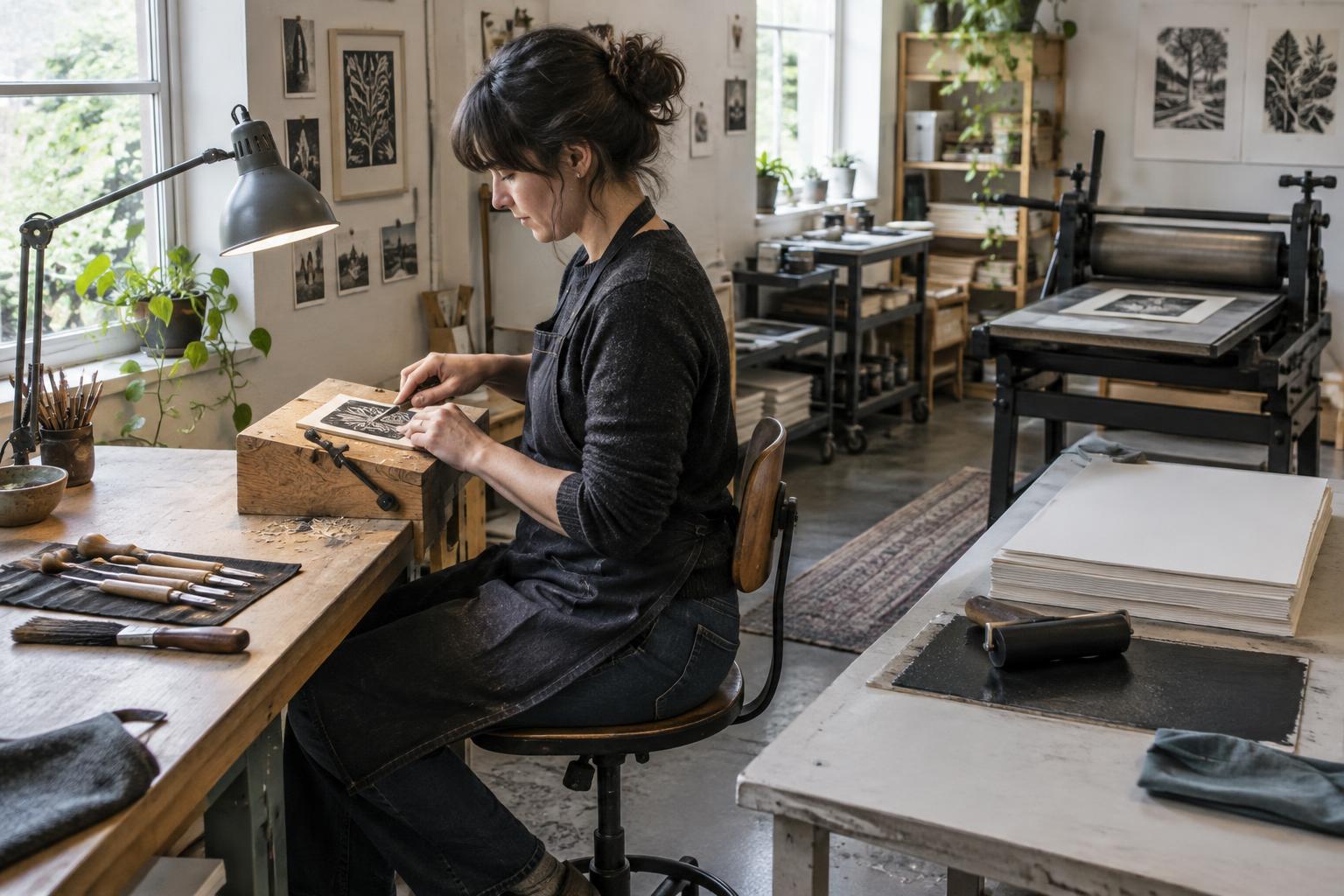
Studio PracticeA printmaking workstation should support the task at hand, whether you are carving a small block or printing an edition. Learn how to adjust height, lighting, tool placement and workflow so you can work more comfortably without losing control of your materials.
Read article · 4 min↗
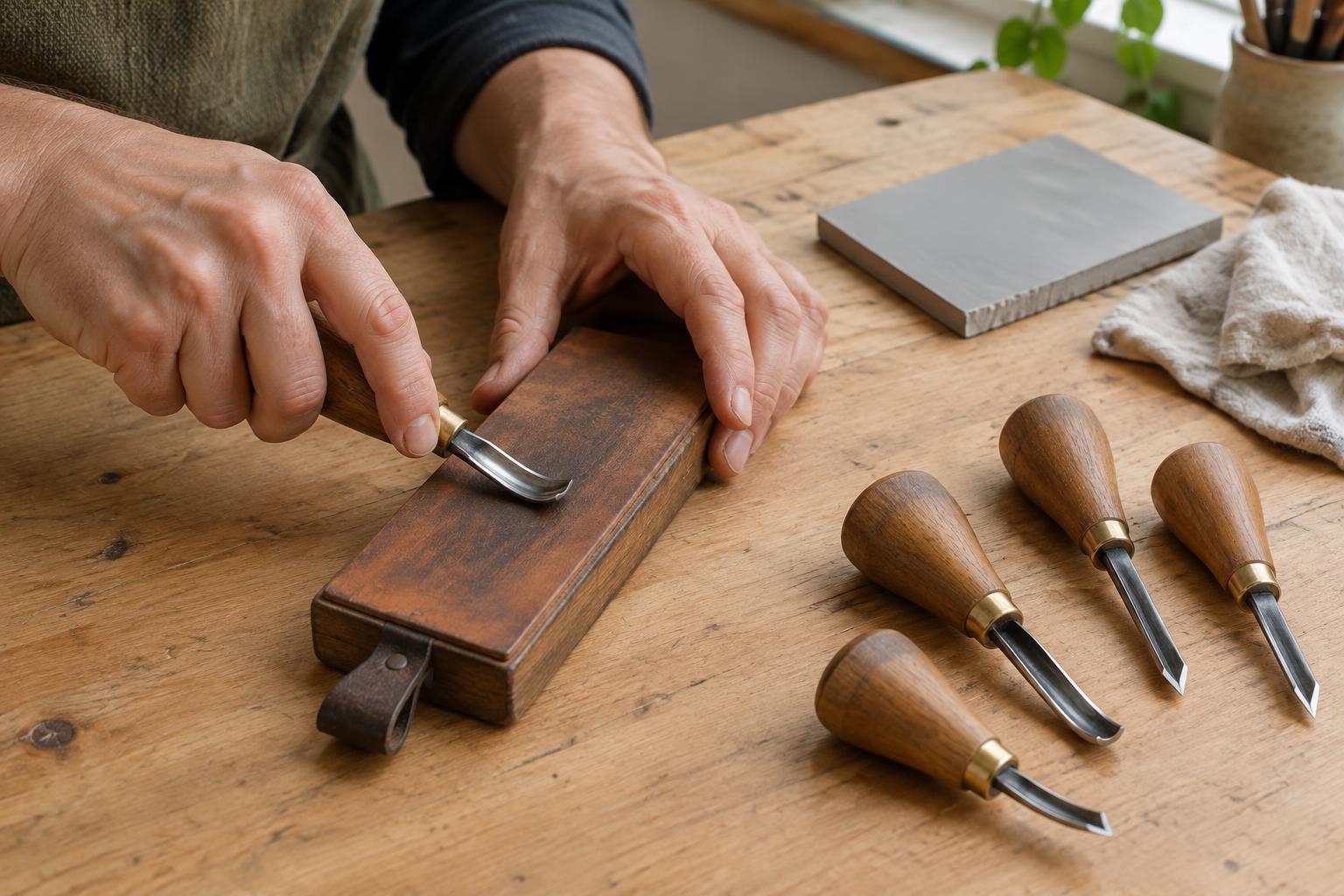
Studio PracticeA sharp gouge is easier to guide and more predictable in the lino. Learn how to check an edge, hone common blade profiles, store tools carefully, and recognize when a gouge needs more than routine maintenance.
Read article · 4 min↗
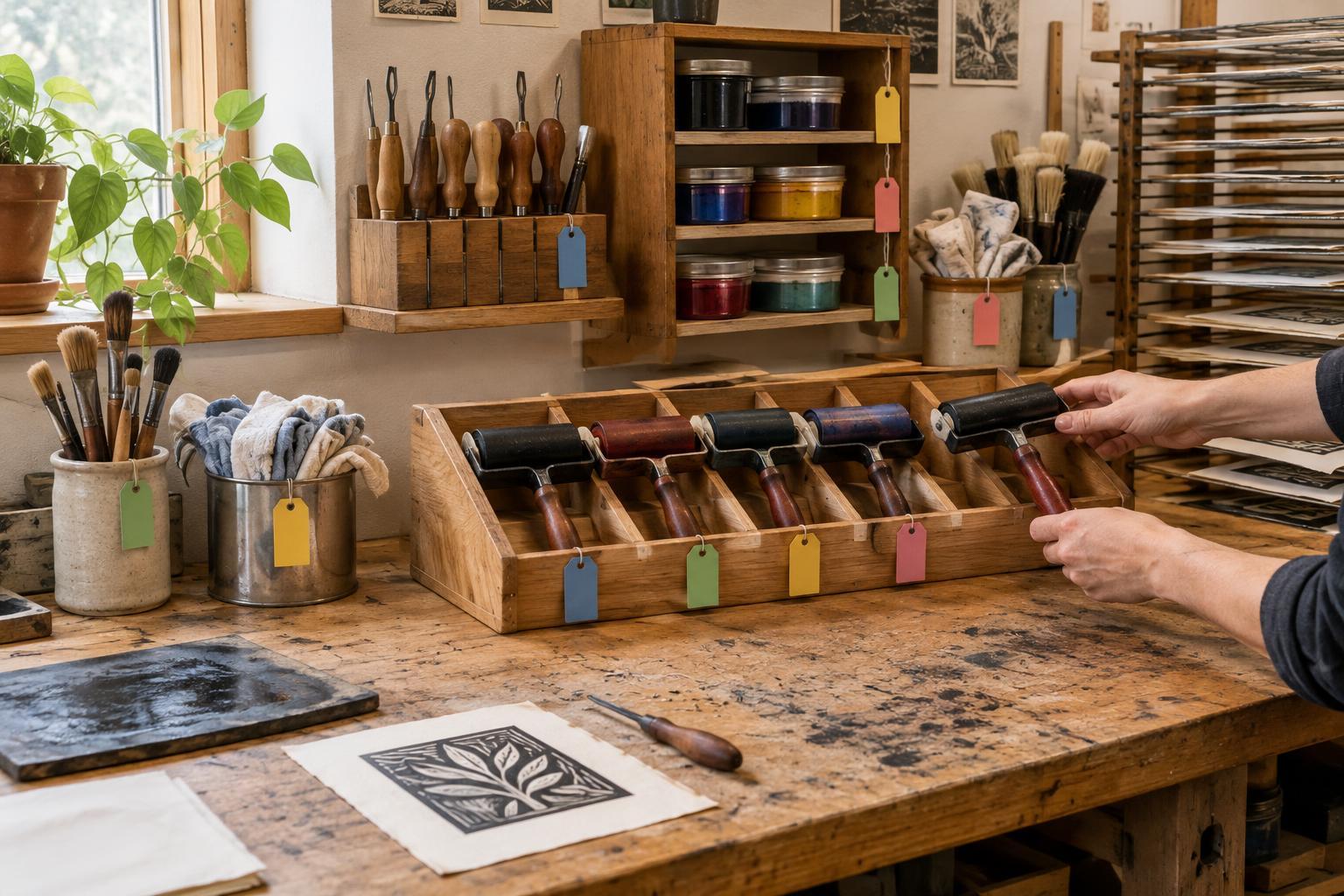
Studio PracticeA shared printmaking studio works better when tools have clear homes and labels tell people how to use, clean, and return them. Build a practical system for storage, ink separation, cleanup, and regular upkeep without making the space difficult to use.
Read article · 4 min↗
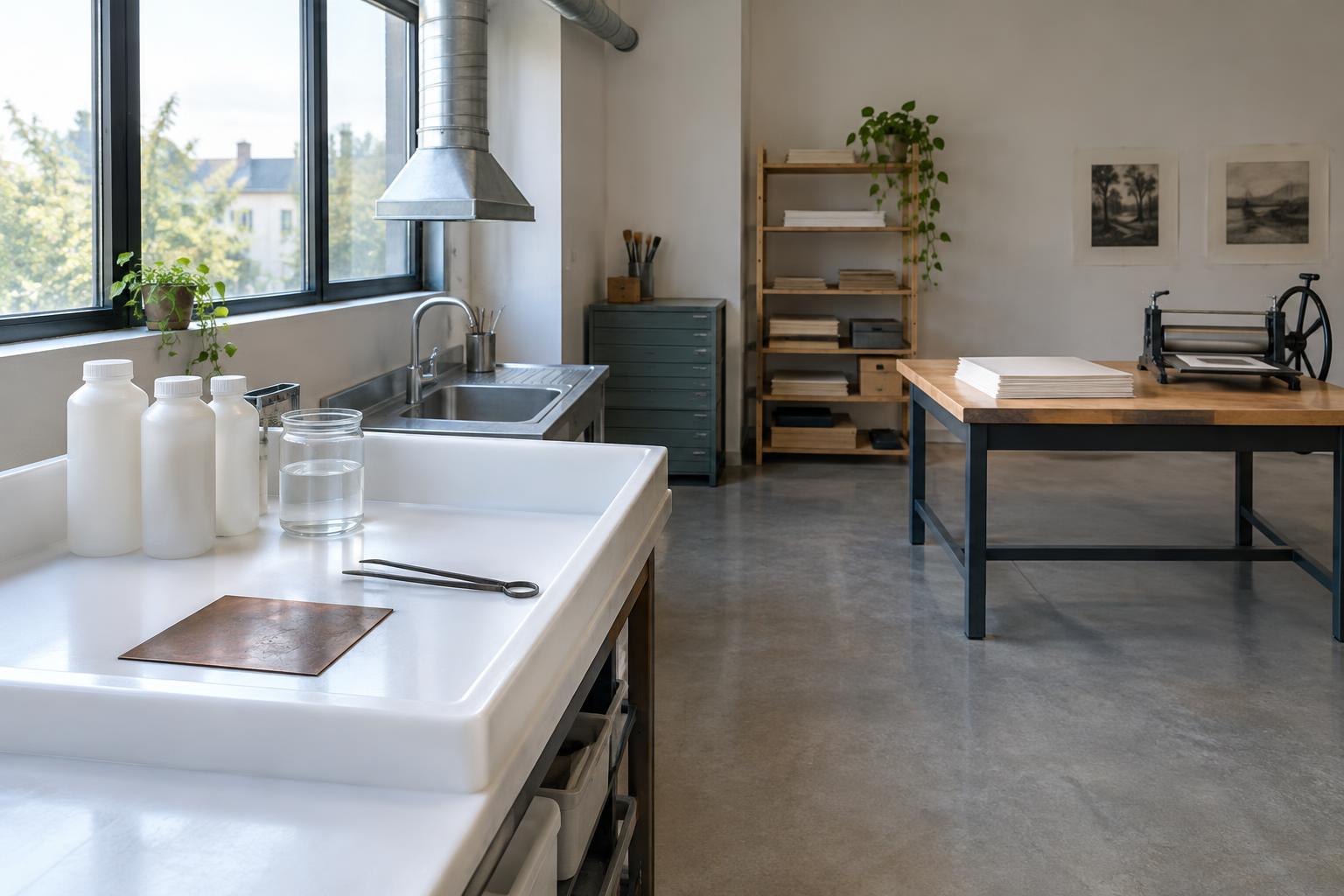
Studio PracticeA well-planned etching area keeps corrosive liquids away from clean paper, makes spills easier to contain and gives each task a clear place. Learn how to choose a suitable surface, organize the workflow and set boundaries for safe studio use.
Read article · 4 min↗
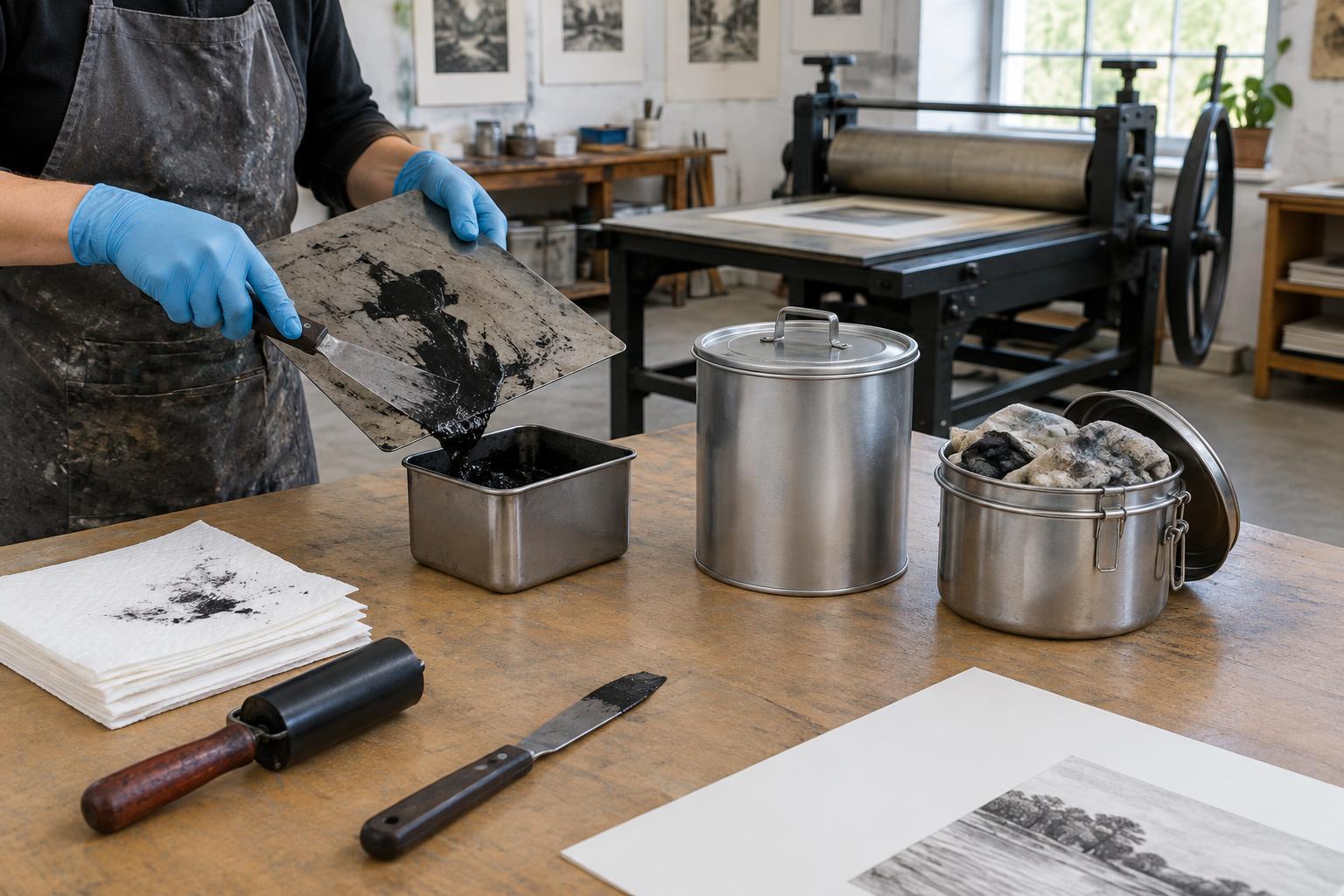
Studio PracticeA practical studio routine for keeping ink residue, used solvent and cleaning rags out of drains and ordinary bins until you know how they should be handled. Learn how to reduce waste at the press, separate materials during cleanup and plan for disposal under local rules.
Read article · 4 min↗
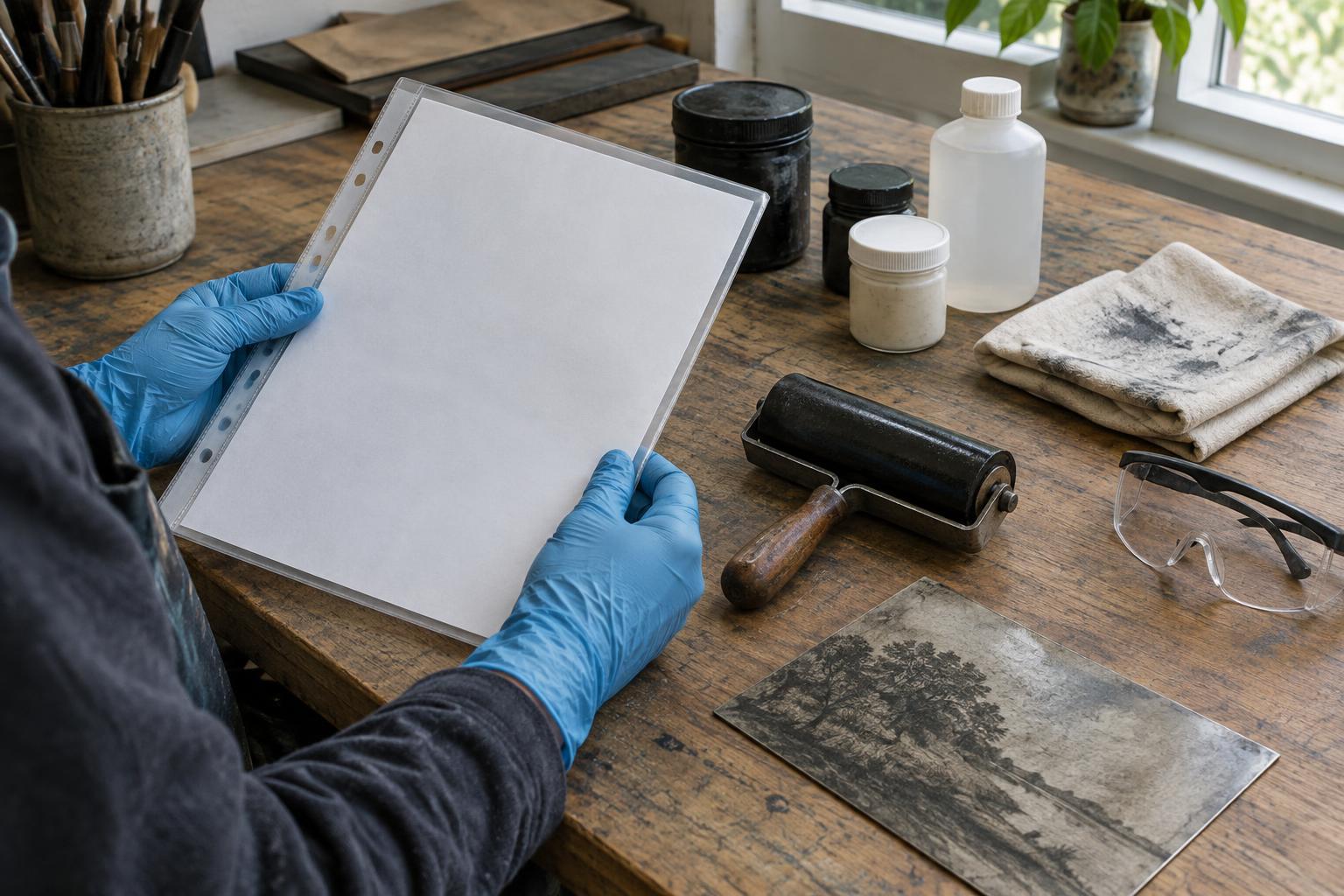
Studio PracticeA Safety Data Sheet can help you choose, use and store studio materials more thoughtfully. Learn which sections to read first, how to connect hazard information to printmaking tasks, and how to keep useful records at the workbench.
Read article · 4 min↗
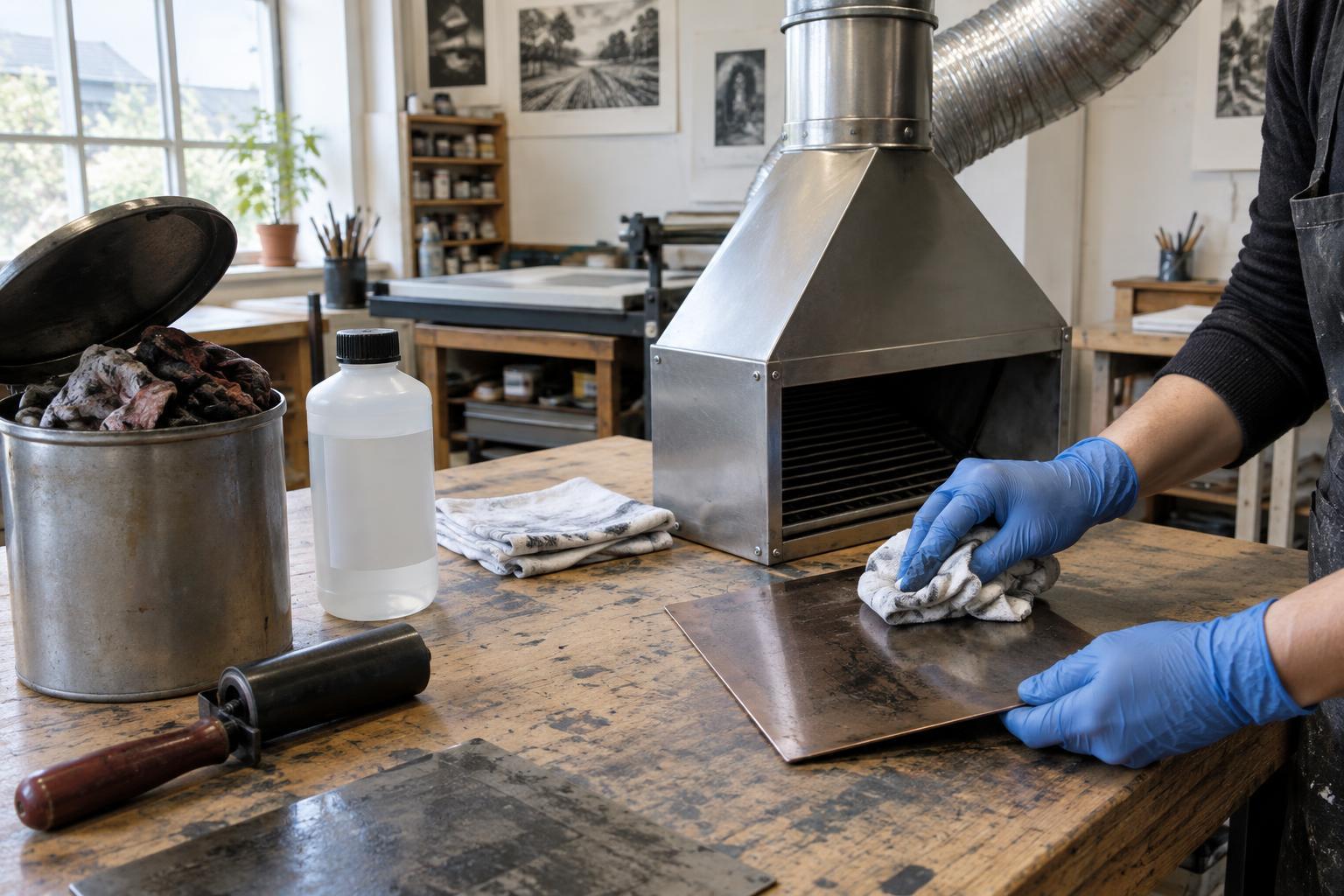
Studio PracticeSolvent wiping, ink cleanup and spray products can release vapors or airborne droplets into a printmaking studio. Learn how to reduce emissions, capture them near the task and recognize when a workspace needs a different process or qualified ventilation advice.
Read article · 4 min↗
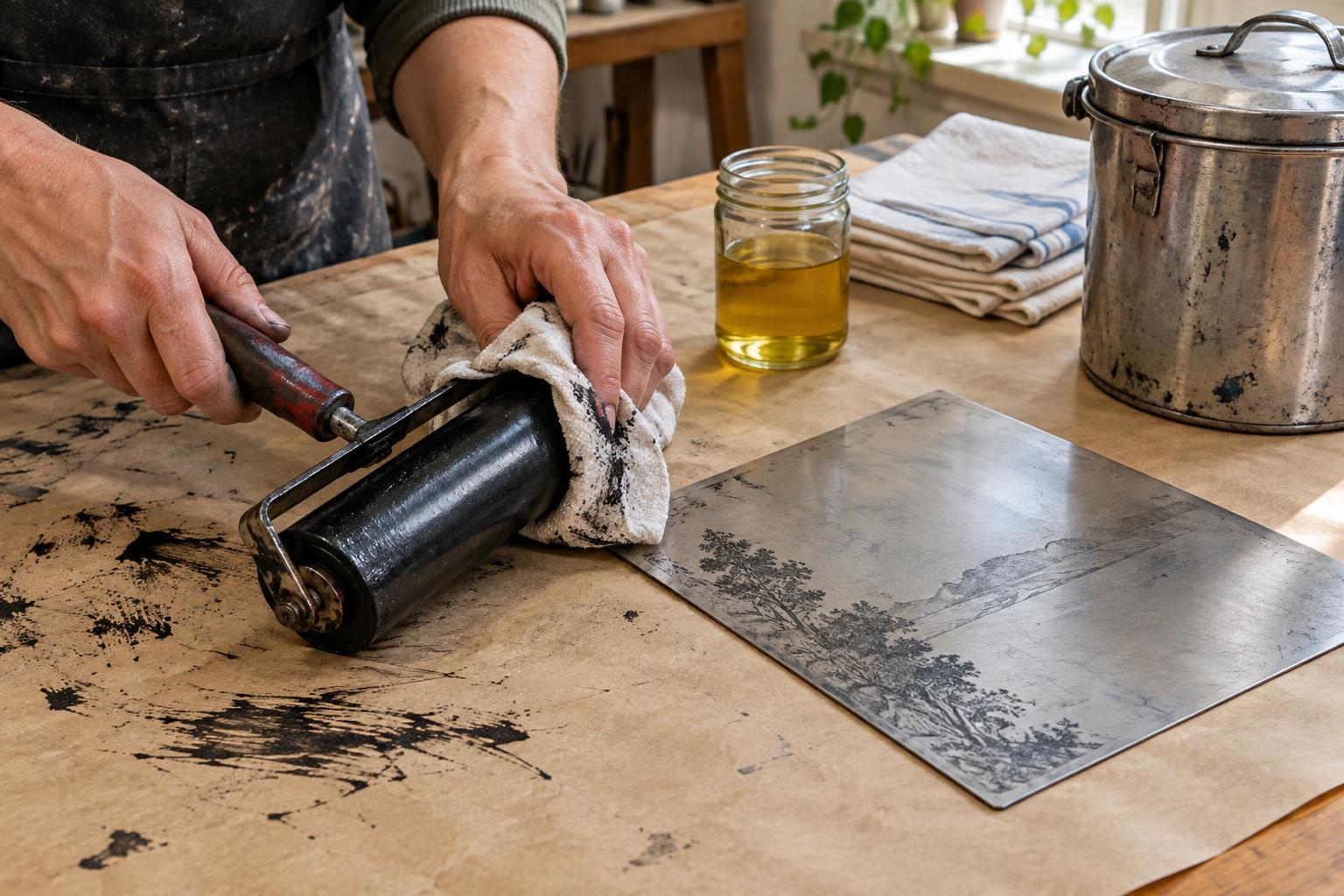
Studio PracticeA repeatable cleanup routine can keep oil-based ink off your tools without relying on solvent washes. Learn how to lift fresh ink, clean plates and brayers, manage oily rags, and leave the workspace ready for the next session.
Read article · 4 min↗
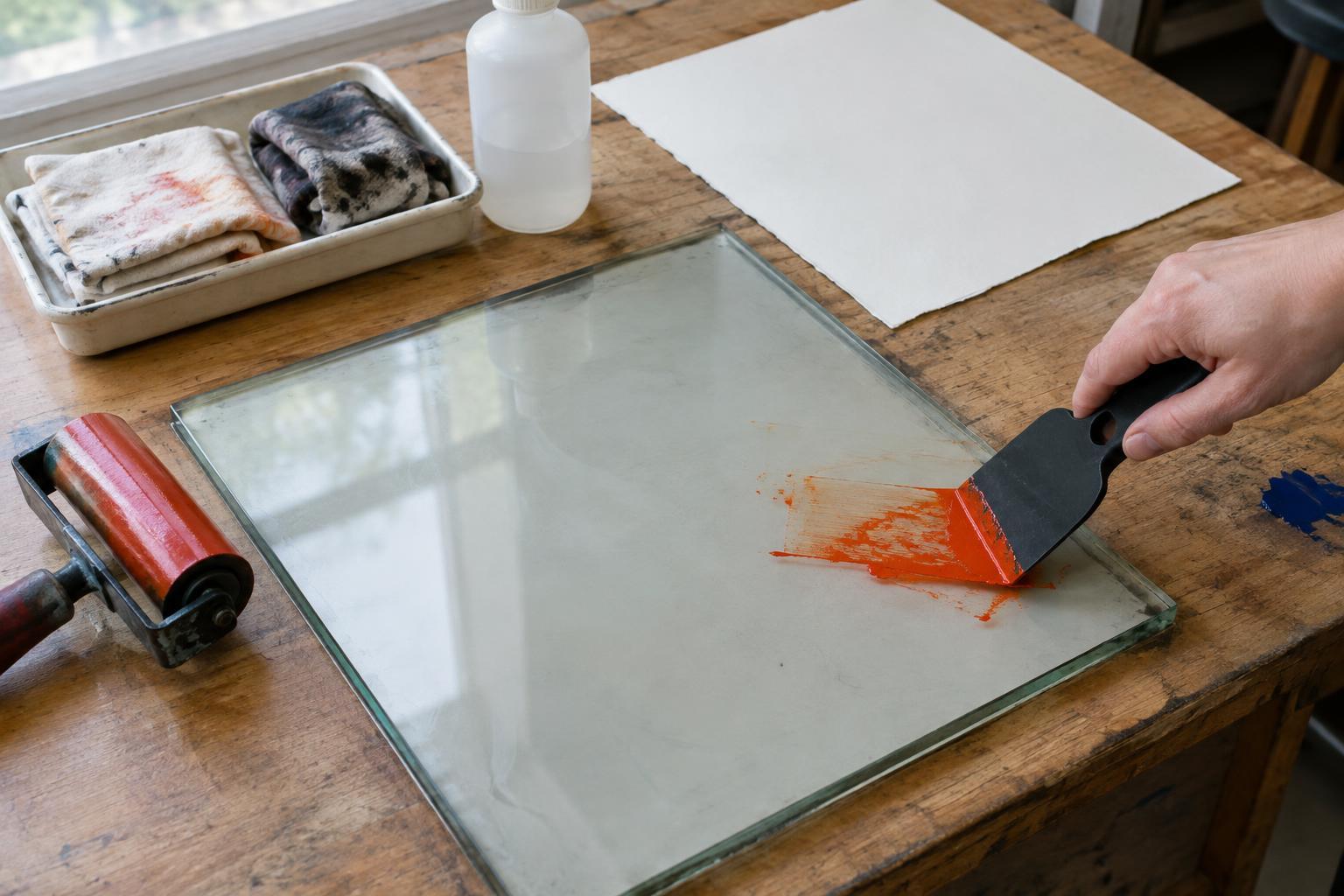
Studio PracticeA clean slab keeps the next ink color from turning muddy. Learn a practical between-color routine for lifting leftover ink, cleaning the roller, checking for residue and keeping cleanup materials organized.
Read article · 4 min↗
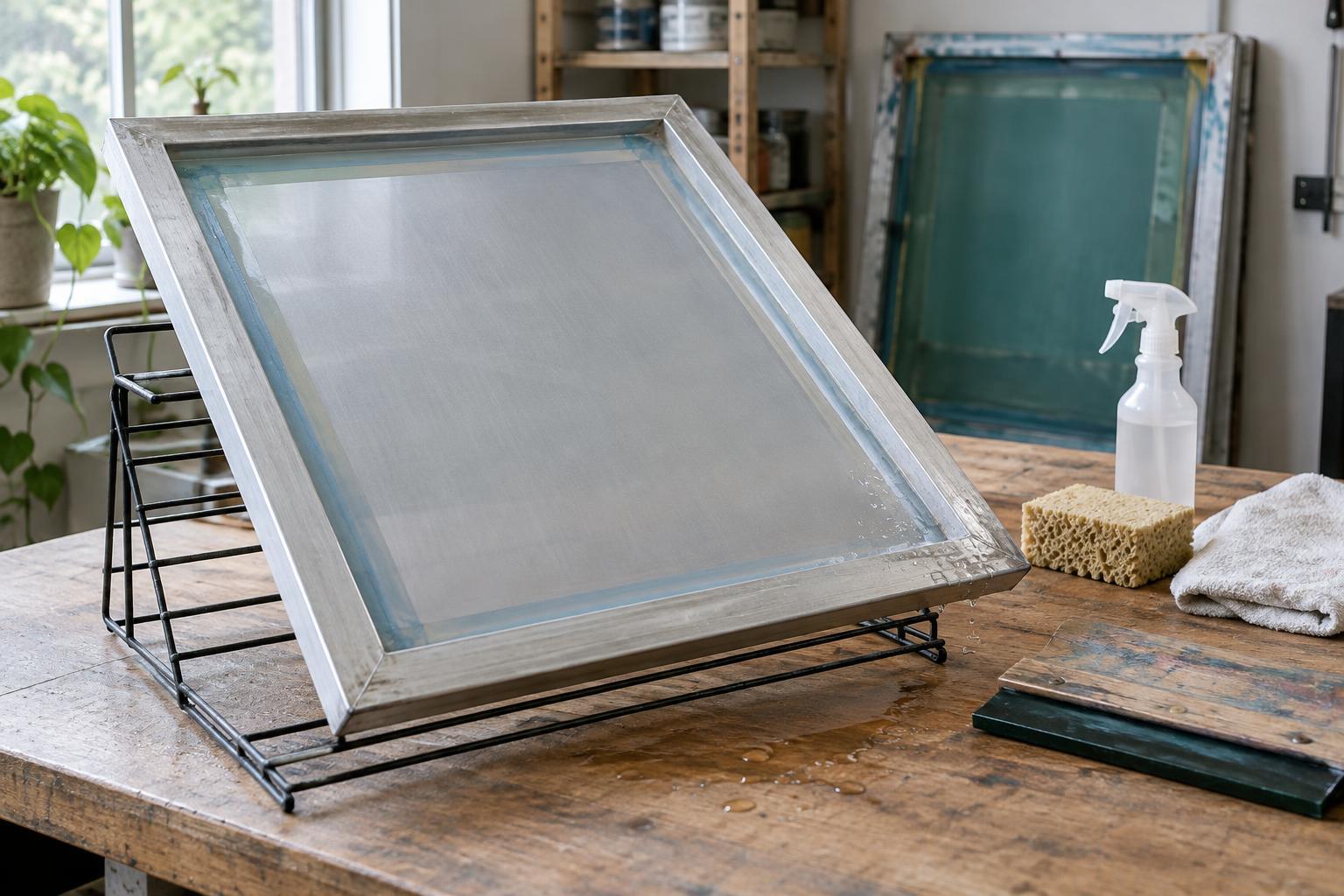
Studio PracticeA screen that looks clean can still hold ink in its mesh or moisture along its frame. Learn a practical routine for cleaning, drying, checking and storing screens between sessions, whether you plan to reuse a stencil or reclaim the screen.
Read article · 4 min↗
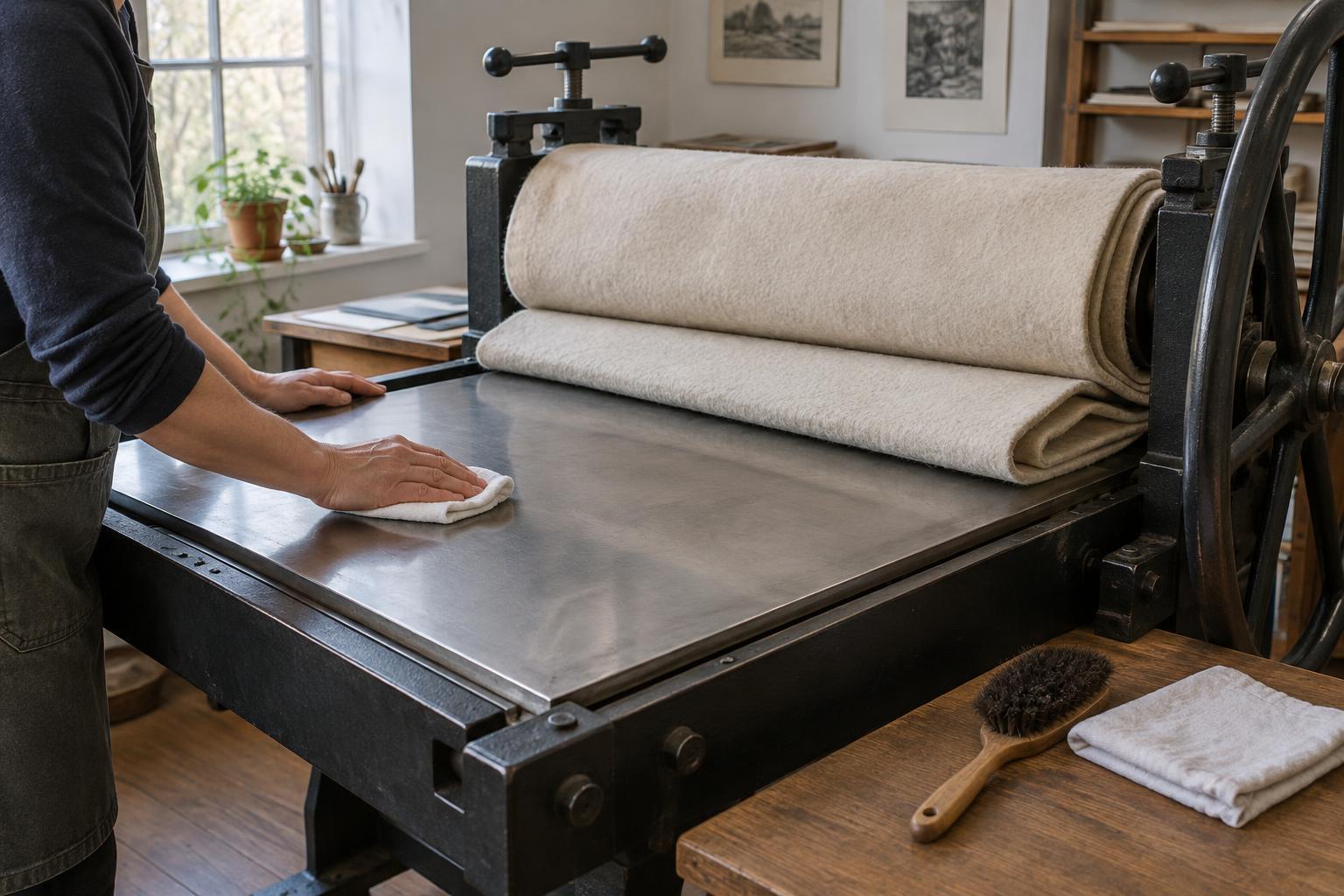
Studio PracticeA practical routine for keeping an etching press bed clean, blankets in good condition, and impressions consistent—from quick checks between prints to end-of-session storage.
Read article · 4 min↗
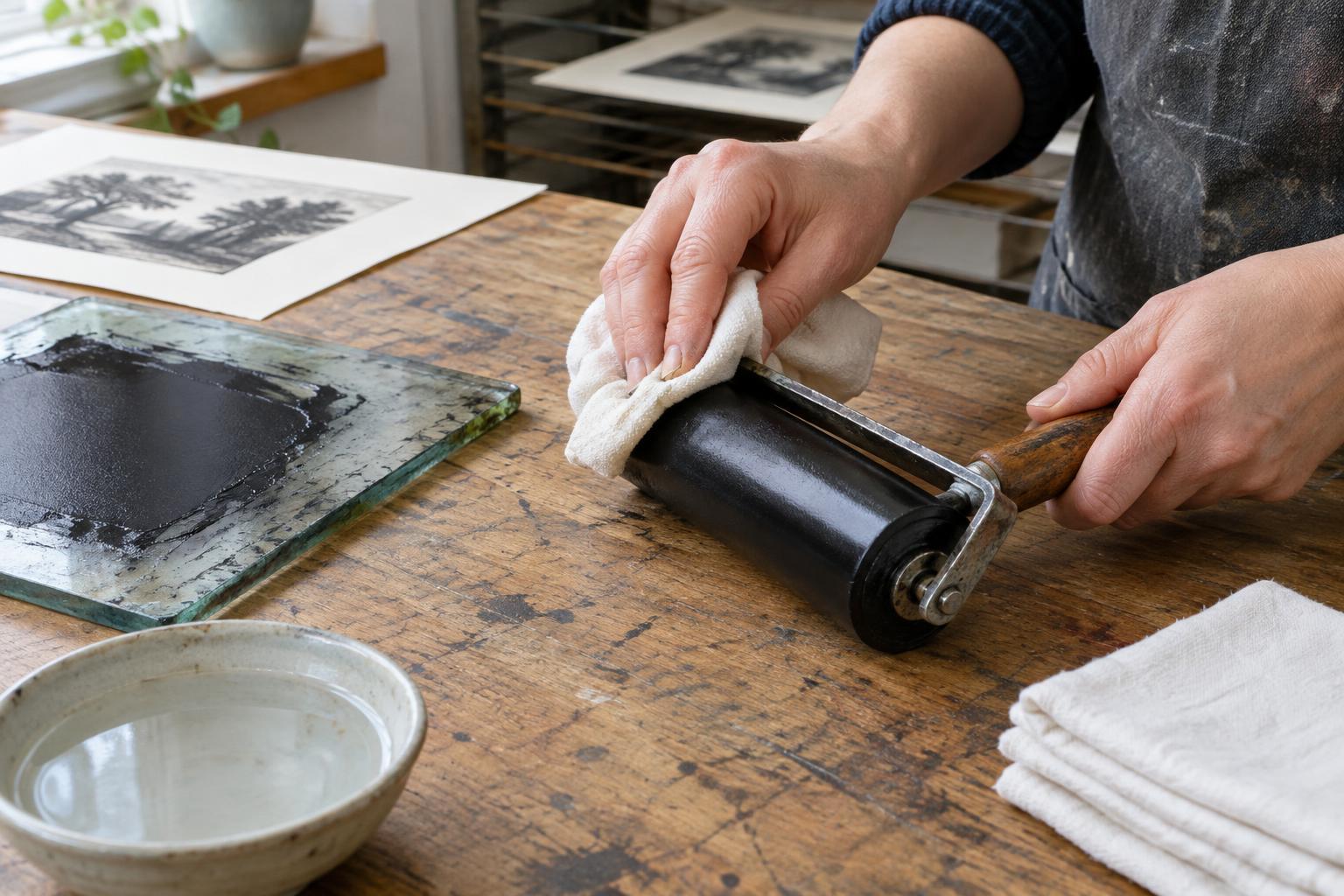
Studio PracticeA brayer is easier to clean when you start before the ink dries and match the method to the ink. This practical studio routine covers removing excess ink, cleaning the roller and frame, drying, and storing the brayer without harming its surface.
Read article · 4 min↗
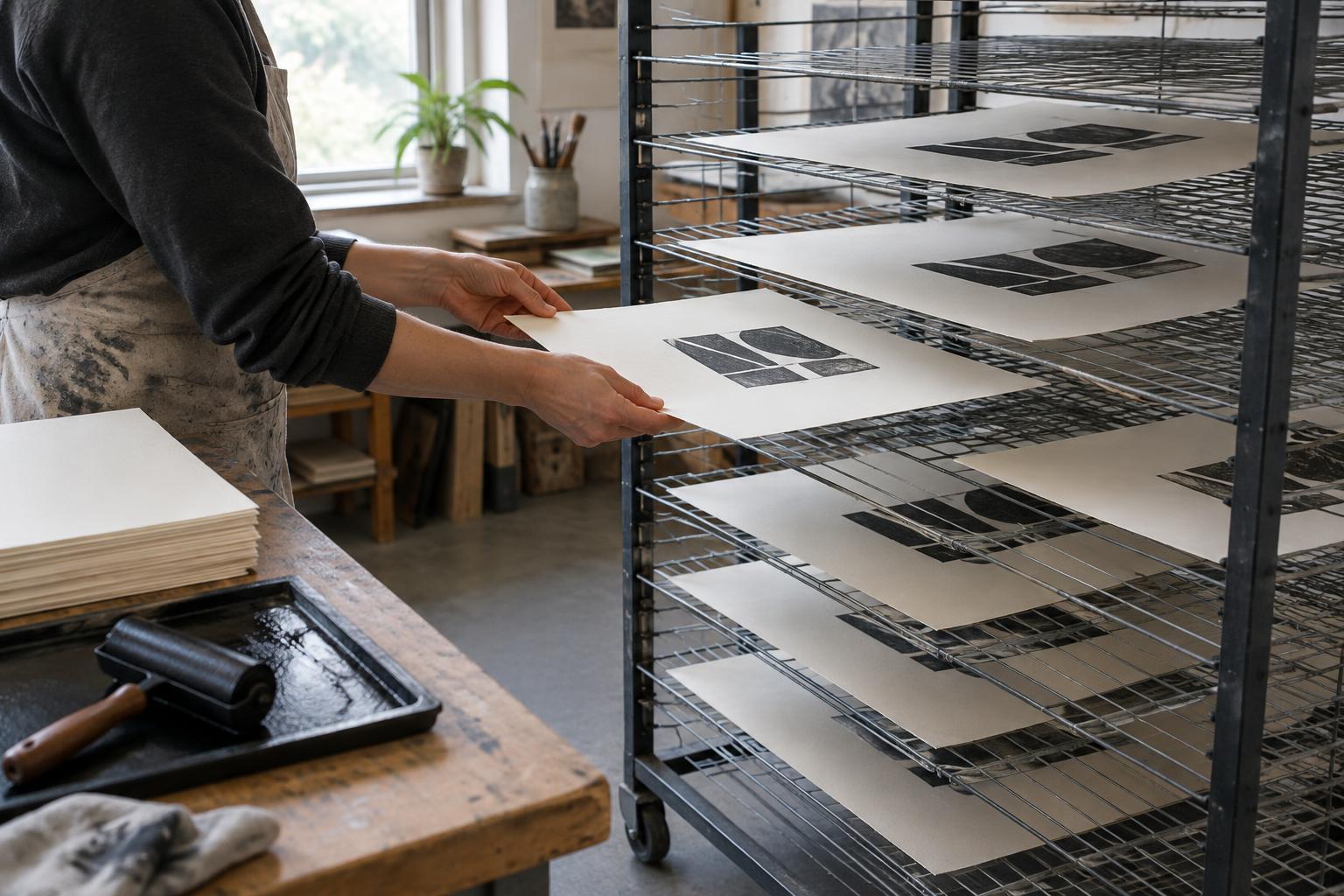
Studio PracticeA good drying rack gives each fresh print a clean place to rest without blocking the next pull. Learn how to choose a rack, position it in your studio, load prints safely and keep an edition organized while the ink dries.
Read article · 4 min↗
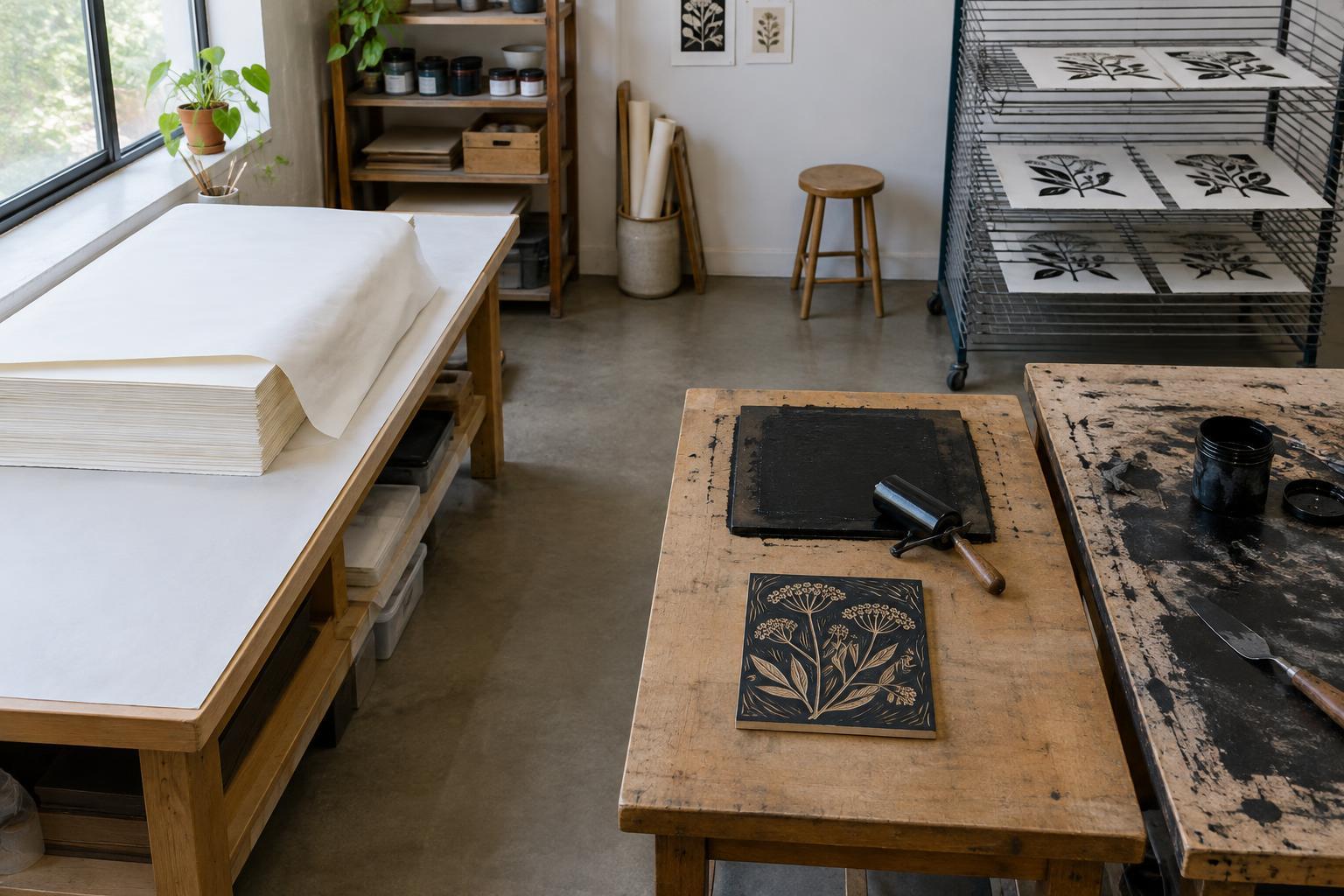
Studio PracticeAn ink mark on a fresh sheet can undo careful printing. Set up clean and inky zones, plan how paper moves between them, and use simple handling habits to reduce unwanted marks during a print session.
Read article · 4 min↗
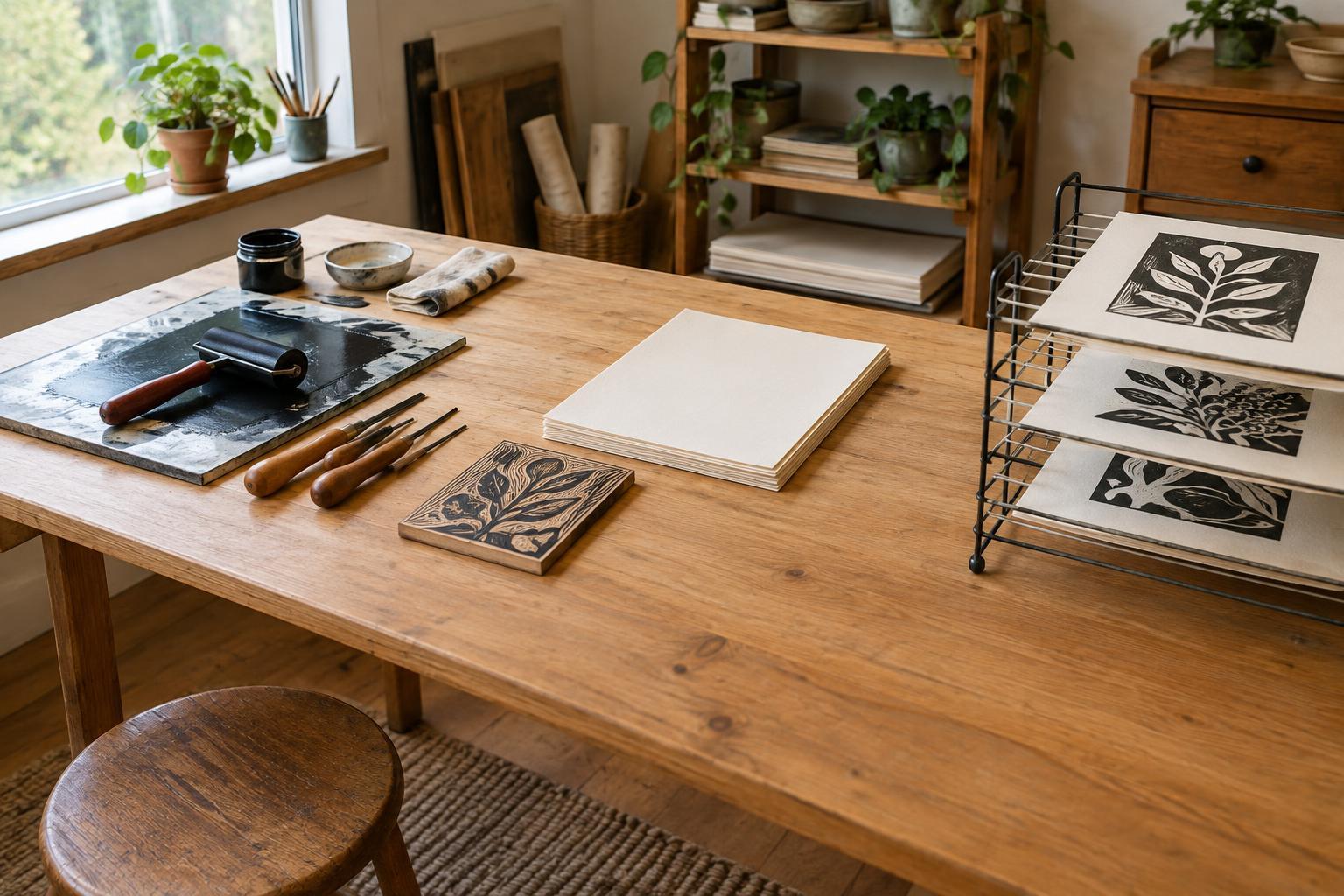
Studio PracticeA smooth printing session starts before the first sheet is inked. Use this practical checklist to prepare tools, clear a workable surface and make room for prints to dry, whether you work at a kitchen table or in a shared studio.
Read article · 4 min↗
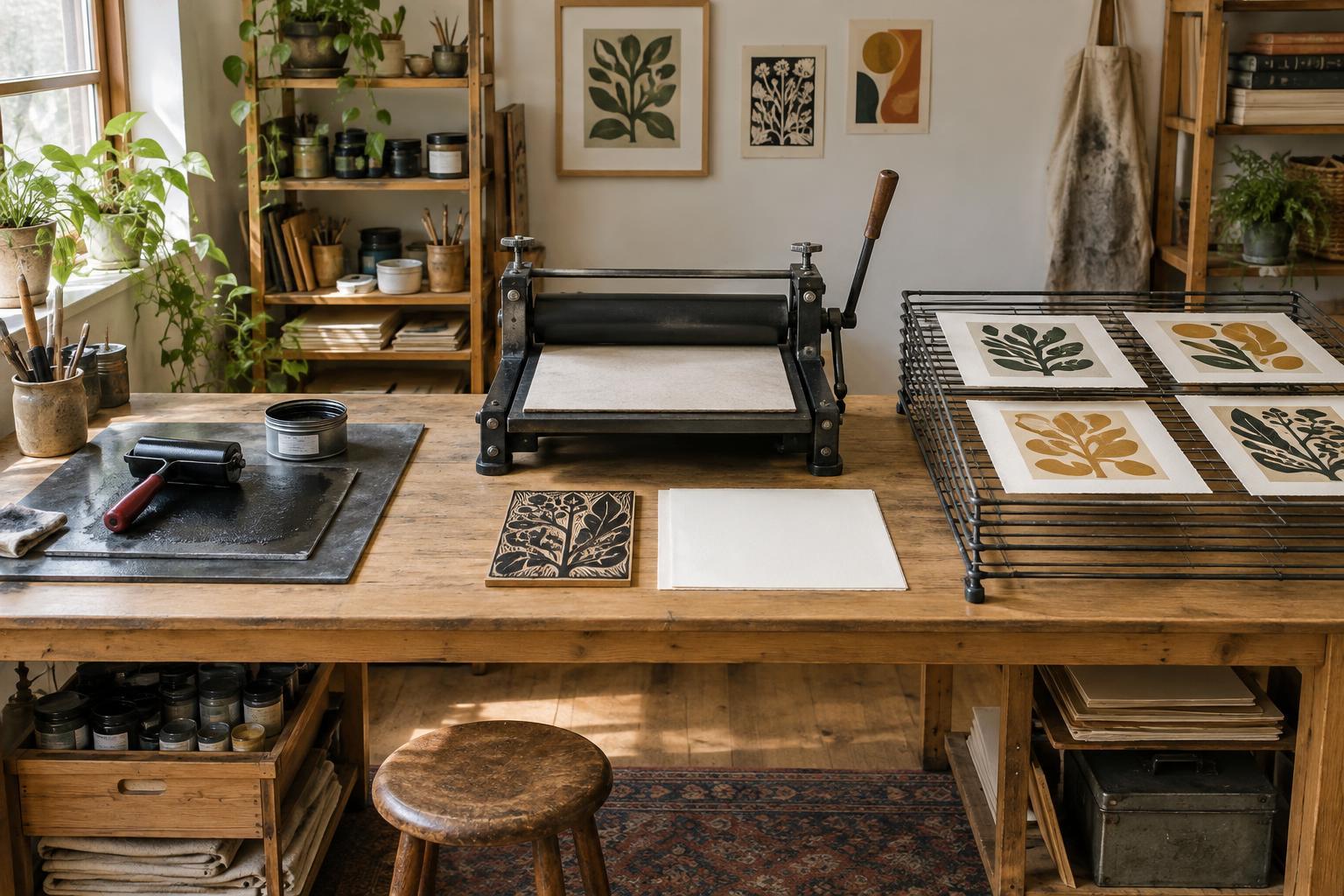
Studio PracticeA small printmaking space works better when each stage has a place of its own. Learn how to arrange inking, printing and drying zones, even if your studio is a single table.
Read article · 4 min↗