Start with a waste plan, not a sink
Printmaking cleanup produces several kinds of waste: leftover ink, ink-coated wipes, used solvent, wash water and rags. They should not all go into one bin or down one drain. What you can do with each material depends on its ingredients and your local disposal rules, so check product labels and safety data sheets before you begin. If you share a studio, follow its waste procedures as well.
Set up a small, clearly marked collection area away from food, heat and sources of ignition. Keep suitable containers nearby so you can put waste where it belongs as you work, rather than carrying a dripping plate across the room at the end of a session. If a product’s disposal instructions are unclear, set the waste aside in a labeled, compatible container and ask your local waste authority or collection service how to handle it.
Collect ink before washing tools
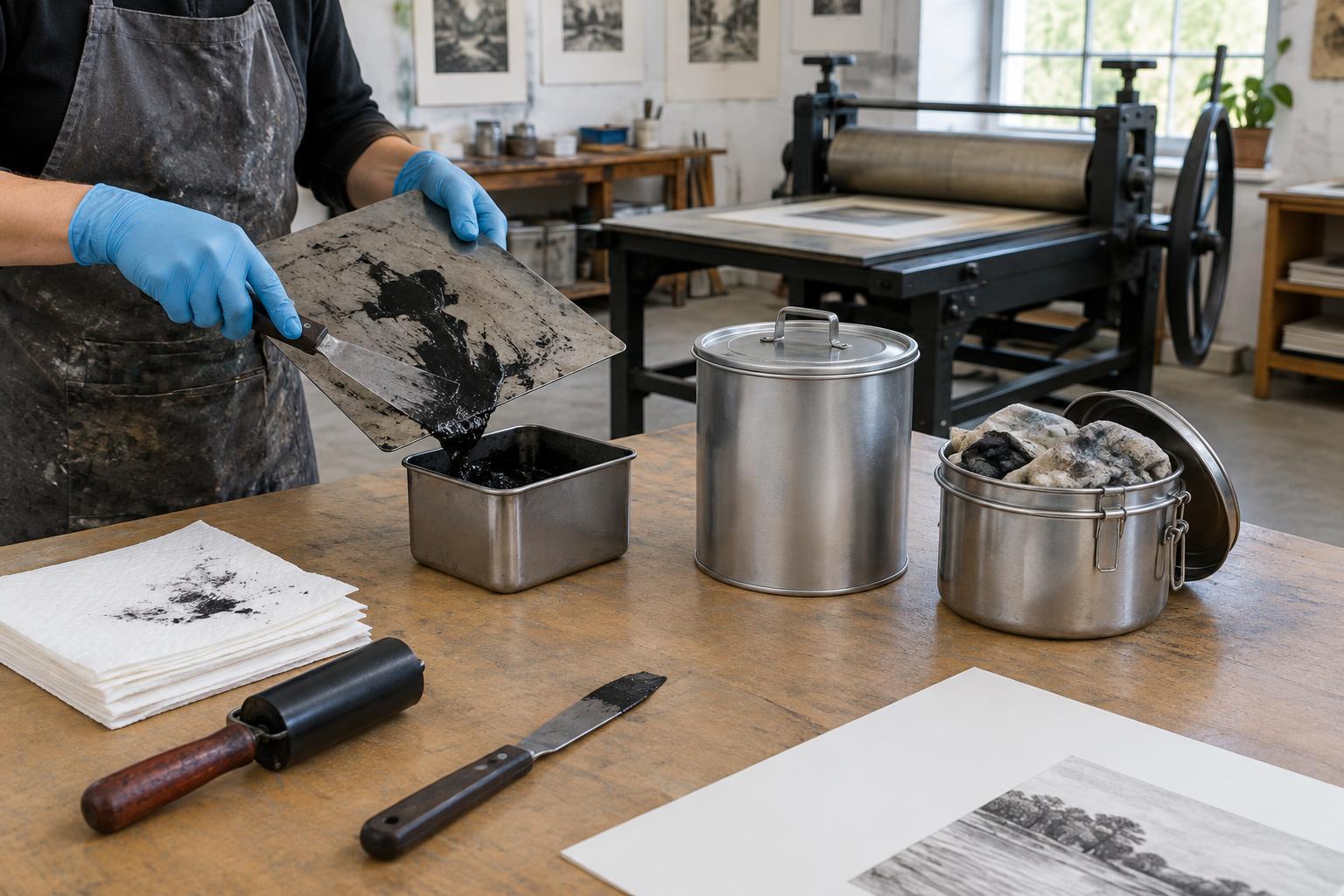
The simplest way to reduce messy waste is to remove as much ink as possible while it is still on the slab, plate or roller. Return clean, usable ink to its original container only if you can do so without contaminating the supply. Scrape the remaining ink onto a disposable card or other collection surface, then transfer it to a container reserved for that ink waste. Wipe the thin film left behind before moving to any liquid cleaner.
Keep different ink types separate unless their manufacturer’s guidance and your disposal provider say they can be combined. Water-based does not automatically mean drain-safe: pigments, binders and cleaning additives may affect how the wash water should be handled. Likewise, letting a residue dry does not by itself establish that it belongs in household rubbish. Collect solids and wash water according to the product guidance and local rules.
Use and store solvent waste carefully
If your process calls for solvent, use only what you need for the final stages of cleaning. A small amount on a wipe is easier to control than a puddle poured over a slab. Work with the ventilation and protective equipment specified for the product, and keep solvent away from flames, sparks and hot equipment. Never use evaporation as a disposal method.
Collect spent solvent in a compatible container intended for that use, with a secure lid and a clear label identifying its contents. Keep it separate from ink solids, water-based wash water and other chemicals unless your waste provider directs otherwise. Do not mix unknown liquids: mixing can make both handling and disposal more difficult. Store containers upright and protected from knocks and leaks while you arrange an appropriate collection or drop-off.
Give contaminated rags their own container
Rags and wipes deserve special attention because they may carry both flammable solvent and ink ingredients. Some oils used in inks or cleaning can generate heat as they cure; a pile of oil-contaminated rags can pose a fire risk. Do not leave used cloths heaped on the bench, tucked under the press or mixed with ordinary paper waste.
Place contaminated rags promptly in a waste container appropriate to the materials on them, such as a designated fire-safe rag container where required. Follow the product instructions and your studio’s fire-safety procedures for storage and removal. Do not improvise by packing solvent-soaked cloths into an unapproved jar or leaving them outdoors to dry. Label the container, empty it on the required schedule and confirm whether its contents need a special-waste collection.
Make cleanup easy to repeat
A reliable routine is more useful than a complicated system nobody follows. Label collection points for ink solids, used solvent, wash water and contaminated rags as needed for your process. Keep lids on containers when they are not in use, check periodically for leaks and arrange disposal before containers are full. Record what products you use so you can identify the waste later, especially in a shared studio.
At the end of a printing session, scrape first, wipe second and use liquid cleaner only where needed. Wash reusable tools according to their material and the cleaner’s instructions, without assuming the rinse can go down the drain. Before putting any residue in general rubbish or arranging a drop-off, verify the rule that applies locally. That small pause makes the next session easier to start and keeps uncertain waste out of the wrong place.