Start with a walk-through of the work
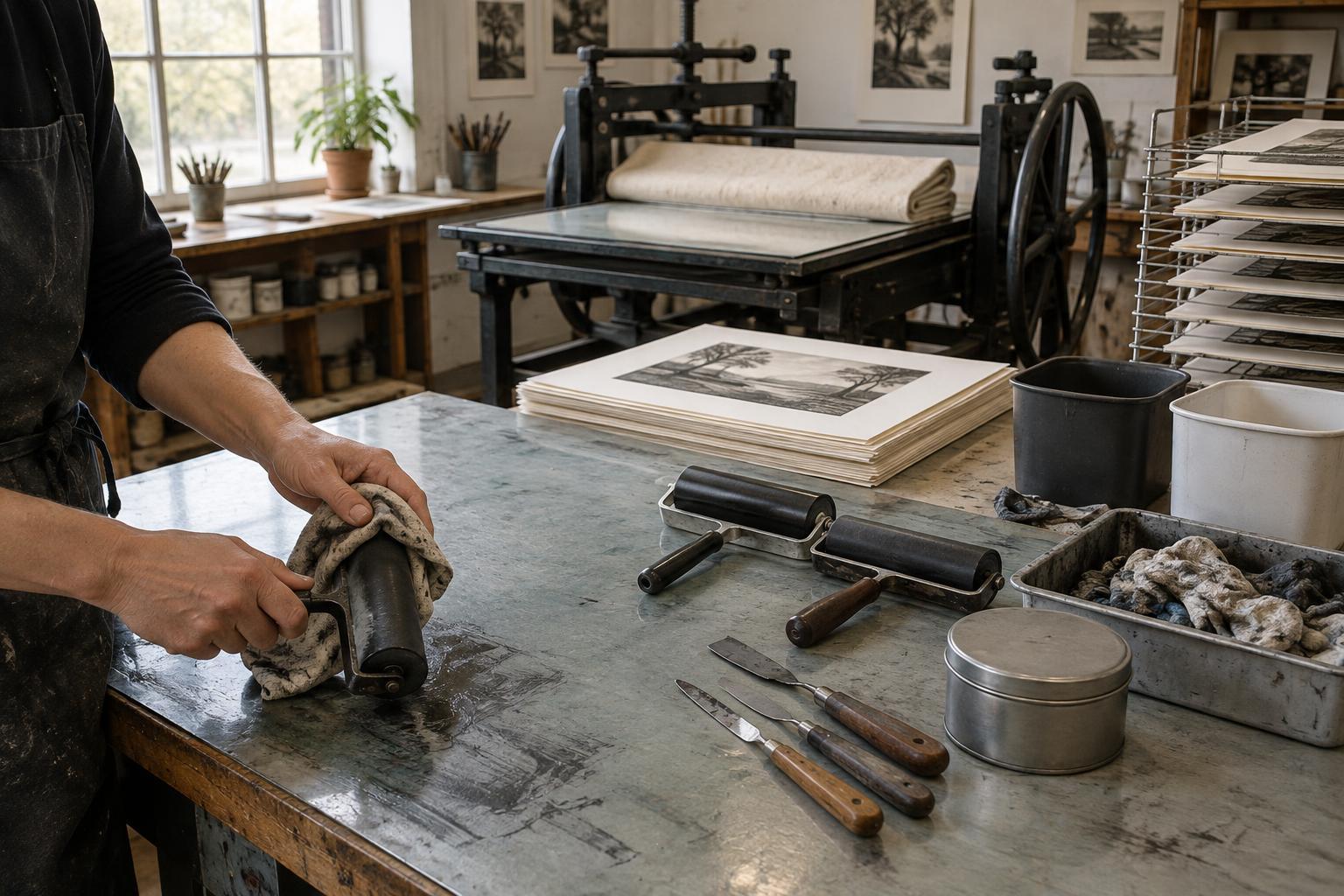
A printmaking studio can change character over the course of a day. Carving leaves sharp tools and loose scraps on the bench; inking brings slippery surfaces and cleaning materials; printing adds heavy equipment and sheets of paper that need somewhere clean to land. Before buying safety supplies, walk through each task as though you were carrying a wet print. Look for crowded paths, poorly lit cutting areas, trailing cords and places where a spill might reach electrical equipment.
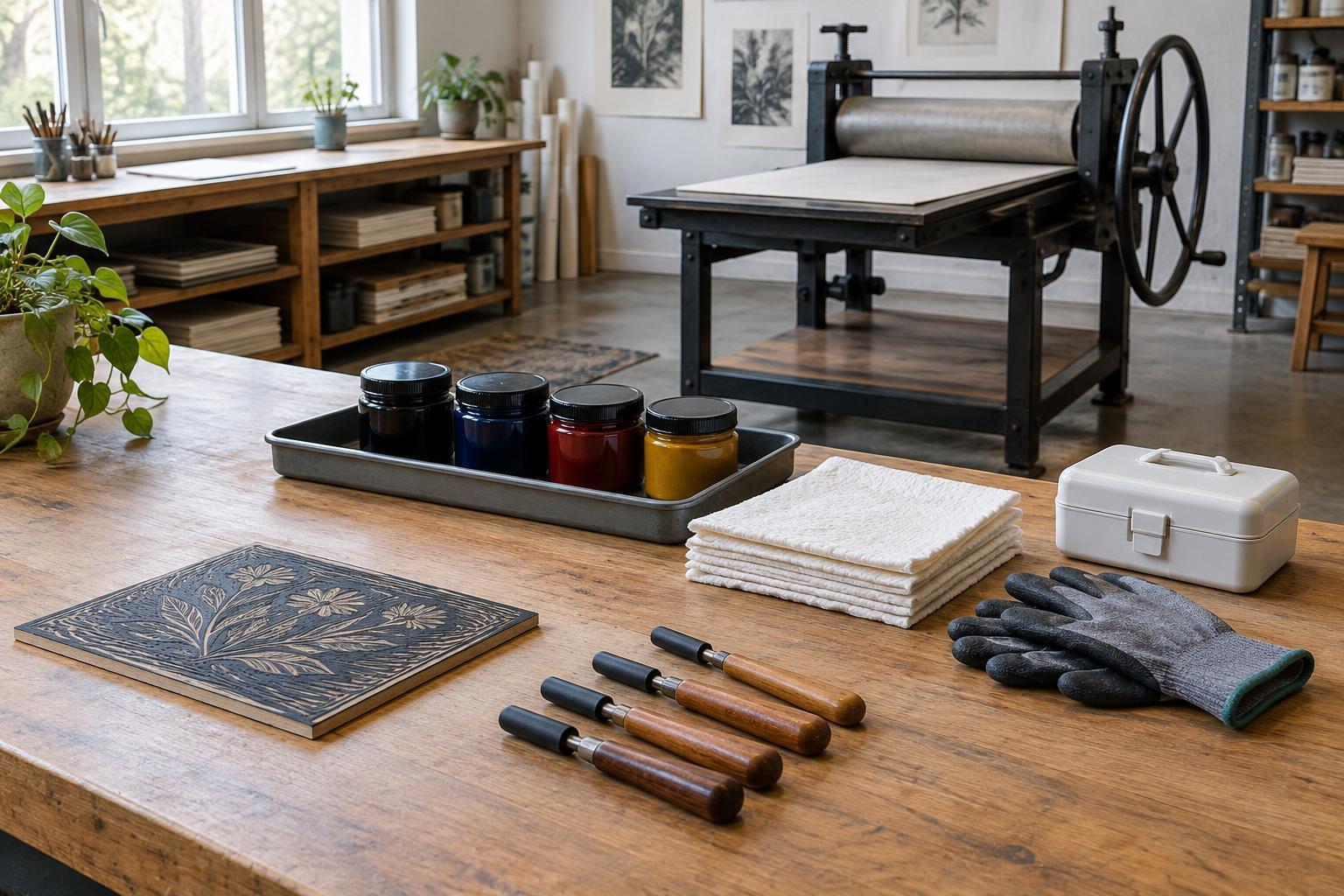
Give sharp tools a stable place away from the edge of the table. Keep floors and press approaches clear, and arrange the workspace so nobody has to reach across a blade or a wet tray. A designated area for food and drinks helps prevent accidental contact with studio materials. In a shared studio, make the layout understandable to a newcomer, not just to the person who set it up.
Make essential information and supplies easy to find
Place a stocked first-aid kit where people can reach it without crossing the main work area. Check it periodically and replace used or expired contents. Identify where clean running water is available, and keep a phone accessible. Post the studio address and local emergency contact details in a visible place; under stress, even familiar information can be hard to recall. If the space has a fire extinguisher or other emergency equipment, make sure access stays clear and users know its intended purpose.
Keep product labels legible and retain the safety information supplied with inks, cleaners and other materials. If you transfer a product into an allowed secondary container, label it clearly rather than relying on memory. These instructions matter because different products call for different responses to skin contact, eye exposure or a spill. Do not assume that a cleaner is harmless because it smells mild, or that water will be appropriate for every substance.
Plan for spills before opening a container
Set up a small spill station suited to the materials you actually use: absorbent material recommended for those products, disposable gloves where appropriate, a way to collect waste and a container for used cleanup materials. Store liquids upright with lids closed, preferably in a tray or another form of secondary containment. Pour only what the session needs into working containers. Keeping containers away from the edge of a crowded inking table can prevent a minor bump from becoming a major cleanup.
When a spill occurs, pause nearby work, warn others and keep people from walking through it. Follow the product label or safety instructions for cleanup and disposal. Do not wash unknown substances into a sink or combine them with other cleaners. If a spill is large, produces concerning fumes, reaches electrical equipment or exceeds the studio’s supplies and training, leave the area and seek appropriate help rather than improvising. Keep used rags and absorbents according to the product’s disposal guidance; some materials require particular storage precautions.
Reduce cutting and press hazards
For carving, cut away from hands and use a bench hook, clamp or other suitable support to keep the block steady. Put tools down in a predictable place instead of leaving them under paper or inked cloth. A tidy bench makes it easier to notice a dropped blade before someone reaches for it. If a cut happens, stop work, keep ink and other materials away from the injury, and use the first-aid kit according to your training. Seek medical help for a serious injury or bleeding that does not stop.
Presses introduce a different risk: moving parts and pressure can catch fingers, sleeves or loose items. Explain the controls and pinch points before anyone uses a press, especially in a shared workspace. Keep the operating area uncluttered and stop the machine before trying to correct a misaligned stack or retrieve an object. If equipment becomes unsafe, take it out of use until it can be checked rather than allowing the next printer to discover the problem.
Rehearse a simple response plan
An emergency plan need not be elaborate to be useful. Everyone who works in the studio should know how to alert others, where to find supplies, how to leave the space and whom to contact. Agree on a meeting point outside if evacuation is necessary. For a home studio, consider whether a visitor could find the exit and give the location to emergency responders. Keep doorways clear even when prints are drying or an edition is being packed.
Review the plan when you add a new material, change the layout or bring in unfamiliar equipment. After a minor incident, note what made the response easier or harder: Was the spill kit reachable? Was the container labeled? Did anyone know how to stop the press? Addressing those small gaps is part of studio practice, not a distraction from making prints. A prepared space gives artists more room to concentrate on the work itself.