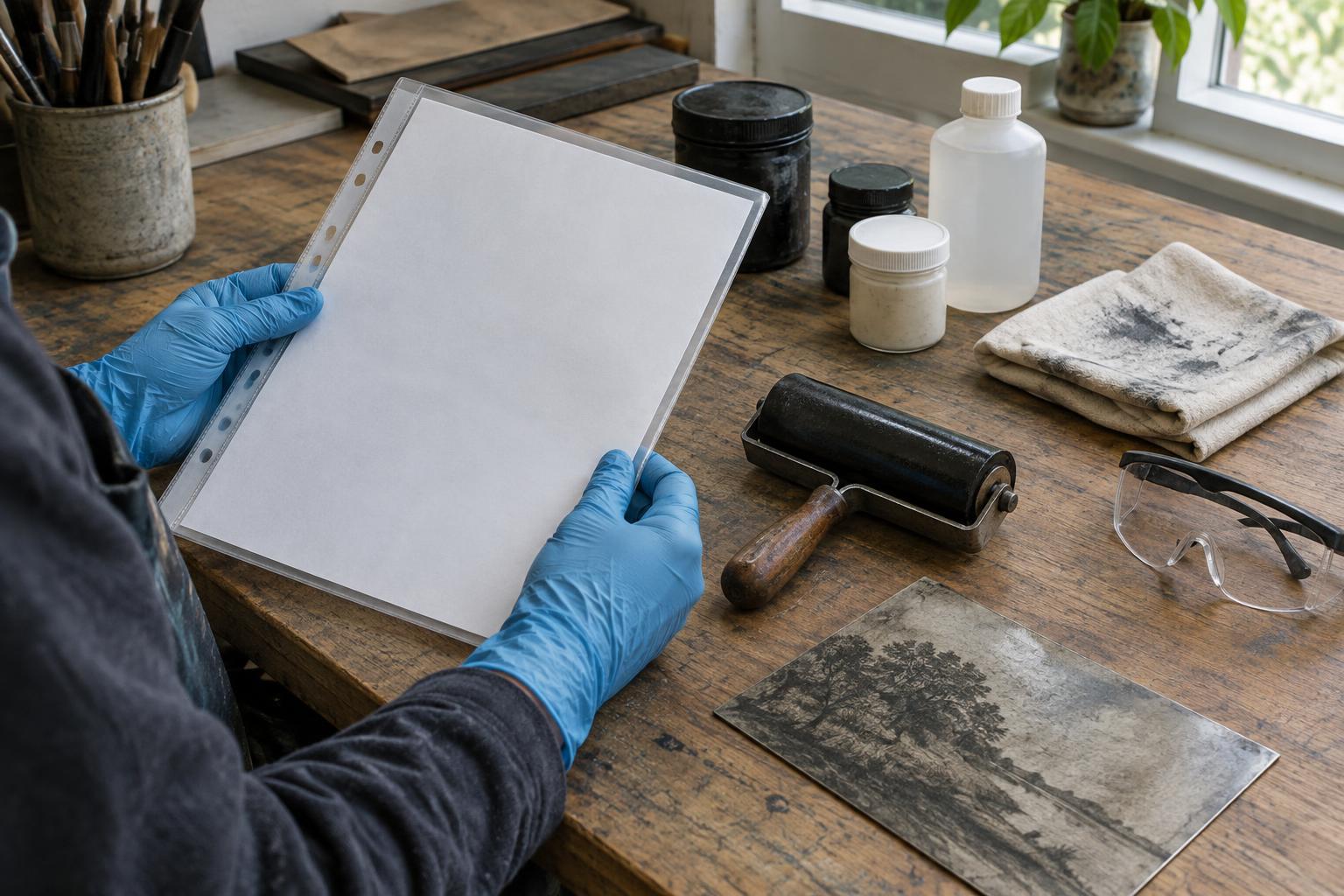
Start with the exact product
A Safety Data Sheet, or SDS, describes a product’s hazards and gives guidance for handling it. It is worth reading before bringing a new ink, cleaner or ground into the studio, rather than waiting until a spill or irritation occurs. An SDS complements the container label and product instructions; it does not replace careful judgment about the task you are doing.
Match the sheet to the product name and manufacturer on your container. Similar-sounding products may have different formulations, and a sheet for one brand of wash-up solvent should not stand in for another. Check whether the sheet identifies the product’s intended use and whether you have a current version supplied for that product. Keep the container labelled so the information remains connected to it after it leaves the shop shelf.
Find the hazards that matter to your process
Begin with Section 2, Hazard Identification. Look for statements about flammability, skin or eye irritation, inhalation hazards and other relevant concerns. The absence of a dramatic warning is not a promise that every way of using a product is harmless. Exposure also depends on how much you use, how long you work, and whether you brush, roll, spray, heat or wipe the material.
Section 3, Composition, may identify ingredients or ingredient groups, though it may not give a complete recipe. Section 9, Physical and Chemical Properties, can offer practical clues, such as whether a liquid is volatile or has a listed flash point. For example, wiping a plate with a cleaner across an open bench creates different conditions from keeping that cleaner in a closed container. Read those details alongside the stated hazards rather than treating any single number as a complete safety verdict.
Compare sheets when choosing materials, but compare the proposed uses too. An ink handled with a brayer, an aerosol coating and a ground applied with a brush can create different routes of exposure. A material that fits one process may call for a different setup in another.
Turn exposure guidance into a studio routine
Section 8, Exposure Controls and Personal Protection, is a useful bridge between the sheet and your workbench. Note its guidance on ventilation, gloves and eye protection, then check that the specific equipment you plan to use is suitable for the product and task. “Wear gloves” is not enough information by itself: glove materials vary in their resistance to chemicals. If the sheet is unclear, consult the supplier before relying on a particular glove or respirator.
Walk through your process from opening the container to the final wipe-down. Where could liquid splash during ink mixing? Could cleaner evaporate while soaked rags sit uncovered? Will sanding, spraying or heating change the exposure described for ordinary application? Reduce avoidable contact by dispensing only what you need, closing containers promptly and keeping food and drink away from the work area. Do not assume an open window or an ordinary dust mask addresses every vapor or mist concern.
Plan for spills, storage and disposal
Several other sections become easier to use when read as a set. Section 7 covers handling and storage; check it before deciding where to keep inks, grounds and cleaners or whether products can share a cabinet. Section 10 discusses stability and materials to avoid. Follow product directions and do not mix cleaners or other chemicals in the hope of making a stronger solution.
Section 5 covers firefighting measures, while Section 6 addresses accidental releases. They can help you plan for small, foreseeable mishaps: where to keep suitable absorbent material, how to prevent a spill from spreading, and when a situation is beyond a routine studio cleanup. Section 13 provides disposal considerations, but local requirements and the nature of contaminated rags, wipes or liquids also matter. Do not pour a material down the drain simply because it was used in a small quantity.
Make the sheets easy to use
Keep SDSs in an accessible folder, digital collection or both, organized under the names printed on your containers. A short studio note for each product can point to the most relevant precautions: where it is used, what protection the process calls for, how it is stored and how waste is collected. Review the note whenever you change a technique or substitute a product.
Finally, locate Section 4, First-Aid Measures, and the emergency contact information before you need them. If an exposure or spill occurs, follow the product-specific directions and seek appropriate help rather than improvising. Reading an SDS is not about memorizing sixteen sections. It is about asking clear questions before work begins and keeping the answers within reach while you print.