Why a clean press matters
An etching press puts considerable pressure on everything in its printing stack: the bed, plate, damp paper, blankets, and any protective sheets. A stray grain of grit or dried ink can mark a sheet, transfer to a blanket, or create an unwanted indentation. Cleaning as you work is easier than tracking down the cause of a mark after several prints.
Before cleaning, identify what your press bed is made from and check any care guidance supplied with the press. Metal, plastic, and composite beds may call for different cleaning products. Likewise, felt blankets vary in thickness and finish. When guidance is available, use it rather than assuming that a method suitable for one press will suit another.
Check the bed between impressions
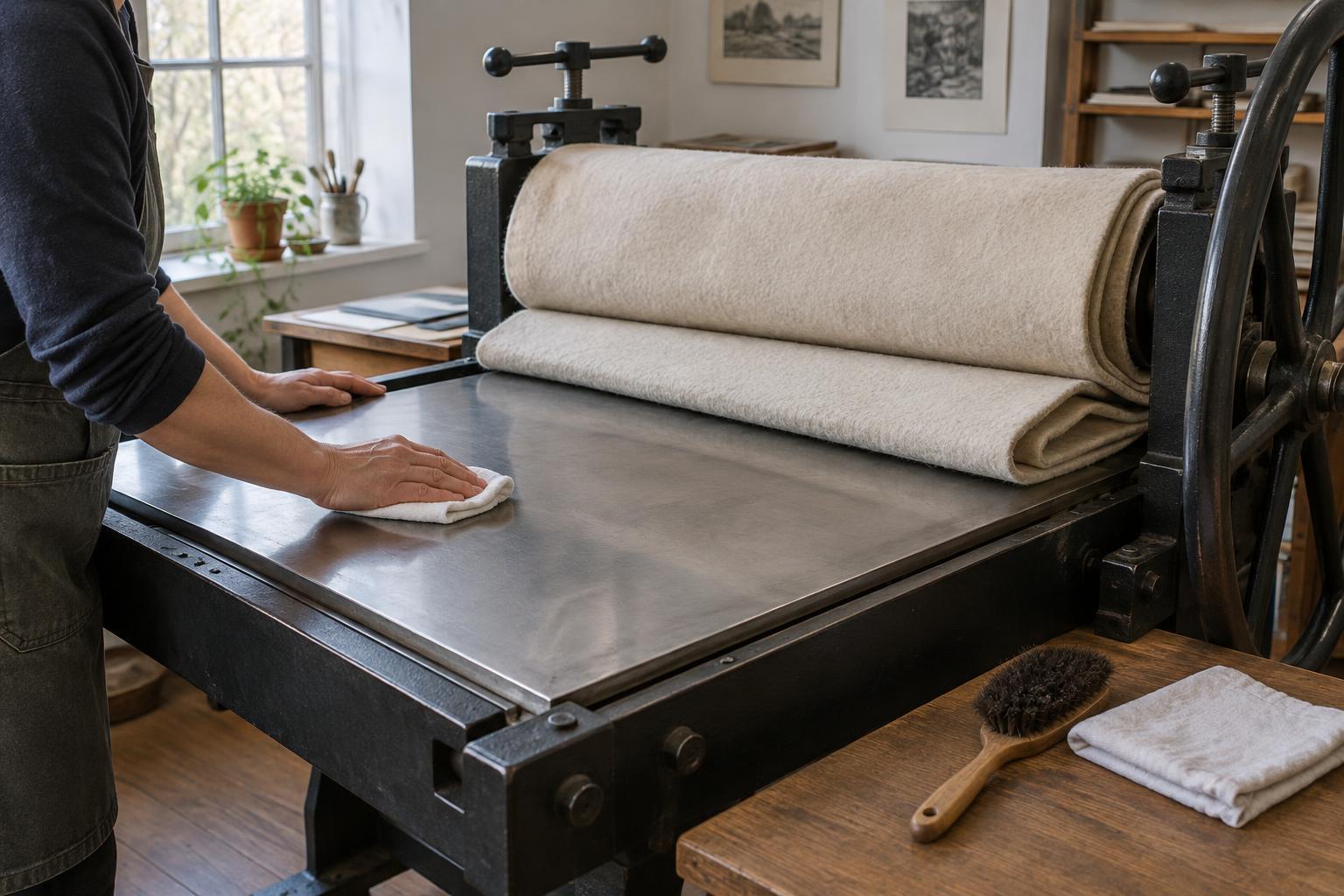
Begin with a clear work surface and clean hands. Before laying down a plate, brush or wipe loose debris from the bed with a soft, dry, lint-free cloth. Look closely at the area where the plate and paper will sit, as well as the bed edges where scraps can collect. Remove tape fragments, bits of paper, and any ink left by a previous printing stack.
If the bed needs more than a dry wipe, use a cleaner appropriate to its material, applied to a cloth rather than poured onto the press. Wipe away any residue and let the surface dry fully before printing. Avoid abrasive pads or scraping tools that could damage the bed. If you find a raised spot, corrosion, or damage you cannot remove safely, pause and consult the press maker or a qualified technician before running a plate over it.
Protect the blankets from ink and moisture
Keep blankets in a consistent order and note which side faces the print. This makes it easier to notice a new stain or change in texture. Use clean protective sheets where your process calls for them, and check that the back of each plate is free of ink and grit before it enters the press. Protective sheets help, but they do not replace regular inspection: ink can travel farther through a stack than expected.
After printing, lift the blankets rather than dragging them across the bed. Shake out or gently brush away dry paper fibers, then inspect for damp patches, embedded particles, and stains. Deal with a fresh mark before the next impression, following the blanket maker’s cleaning guidance. Avoid soaking felt or using strong solvents unless the maker specifically recommends it; either can alter the blanket’s surface or leave residue. If a blanket becomes wet, allow it to dry thoroughly before stacking or storing it.
Make pressure checks part of maintenance
Blankets compress with use, and an uneven or worn blanket may affect how pressure reaches the plate. Look for thin areas, hard ridges, tears, or patches that remain noticeably flattened. Do not try to compensate for a damaged blanket simply by tightening the press. That may obscure the problem while putting unnecessary strain on the printing stack.
When an impression changes unexpectedly, first check that the plate, paper, and packing match your previous setup. Then inspect the blankets and bed for debris or wear. Record the blanket order and pressure setting that work for a particular type of print, especially in a shared studio. Small notes can make a change in performance easier to spot without treating a pressure setting as universal for every plate.
Finish with a simple shutdown routine
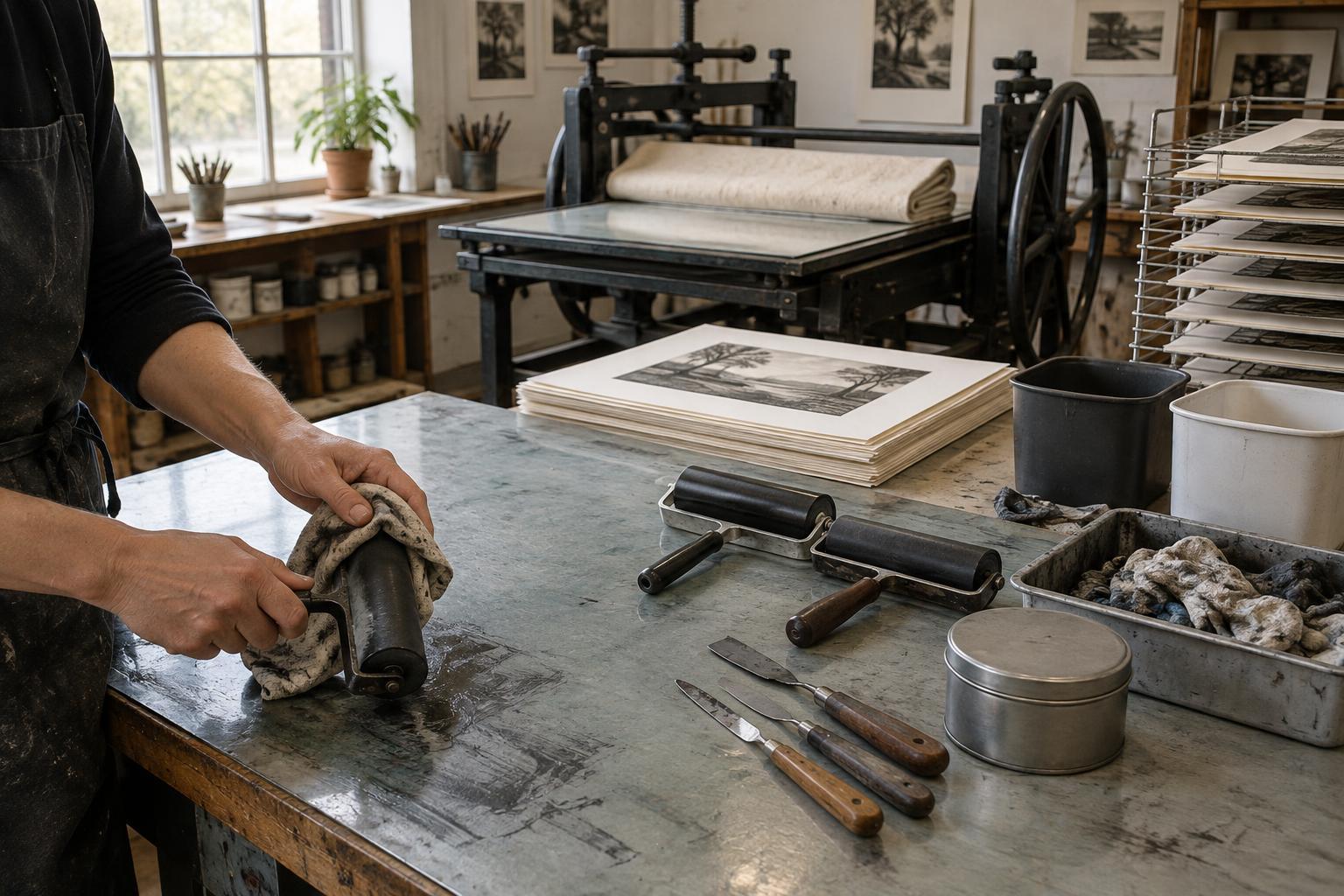
At the end of a session, remove the printing stack and wipe the exposed bed. Check beneath and around the blankets for scraps, and clean up ink before it dries in awkward places. If the press has metal parts that require lubrication or rust protection, follow its maintenance instructions and keep any product away from the printing surface, paper, and felt.
Store blankets clean, dry, and supported so they are not left folded sharply or trapped under pressure. Keep the press area free of loose tools that might fall onto the bed. A final visual check takes little time and gives the next printer a reliable starting point. For a busy studio, a brief written checklist beside the press can make this routine easier to share.