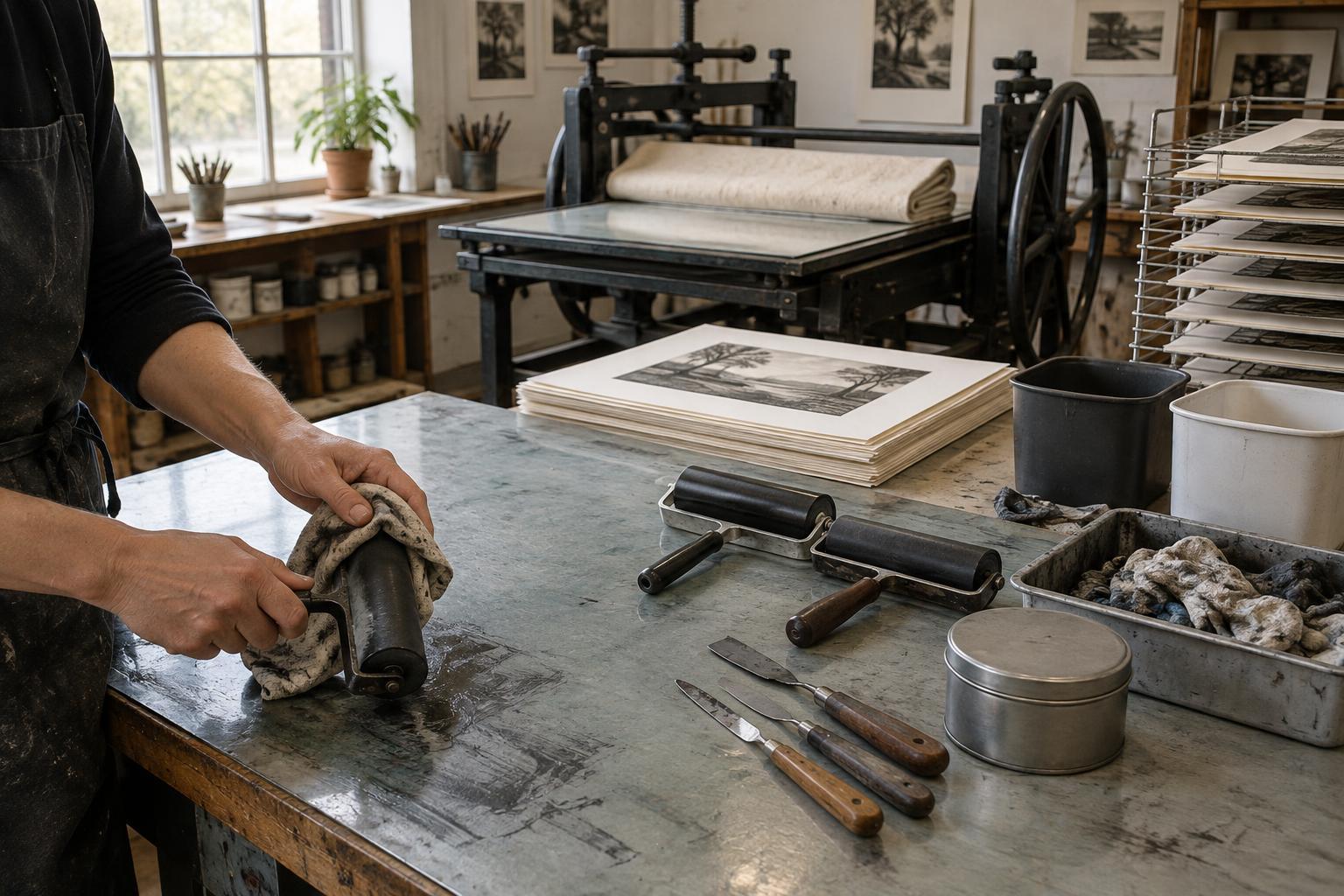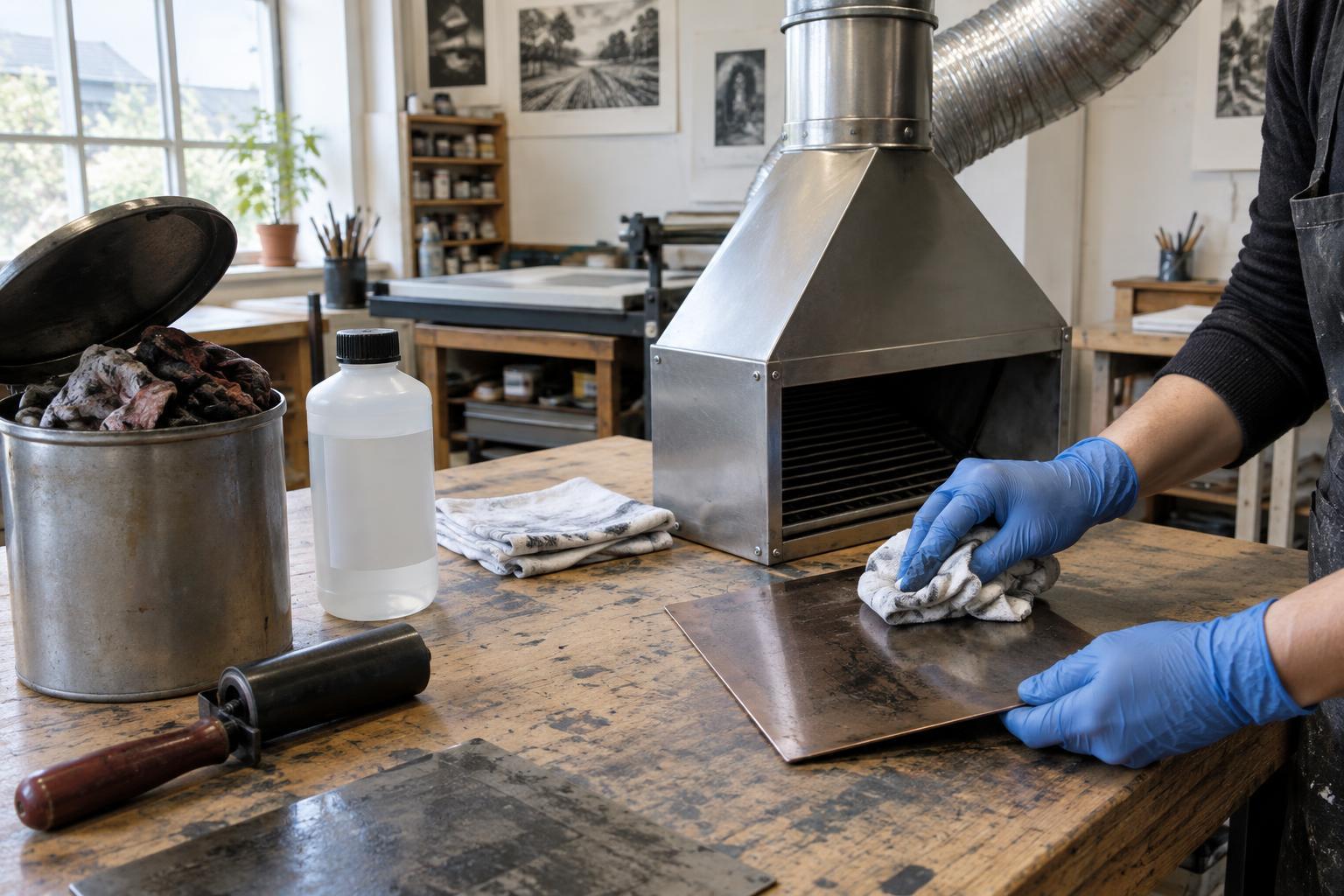
Start with the materials and tasks
Ventilation planning begins with what you actually do in the studio. Wiping a plate with solvent, washing a screen, opening an ink container and applying a spray product can release different mixtures of vapors, mists or fine droplets. Read each product label and safety data sheet before use, paying particular attention to ventilation instructions, flammability warnings and recommended handling. Do not assume that a familiar product is harmless because its smell seems mild—or that a strong smell reliably tells you when exposure is too high.
Make a short inventory of the tasks that produce fumes or overspray, how often they happen and where they happen. Include cleanup and waste handling: an open rag bin or a tray of used solvent can continue releasing vapor after printing stops. If you share a studio, consider people working nearby as well as the person using the product. This inventory helps you decide which tasks need a dedicated work area, a different material or a better way of capturing emissions.
Reduce emissions before trying to move air
The simplest ventilation problem is the one you avoid creating. Where the technique allows, consider less hazardous cleaners, smaller quantities, non-spray application methods or products formulated for the process you use. Test any substitution on a small project first: changing a cleaner or ink can affect drying, registration or the printed surface. Keep lids on containers between uses, dispense only what you need and avoid leaving solvent-soaked materials exposed on the bench.
A spray can may feel convenient for applying an even coat, but it disperses material beyond the artwork. If brushing, rolling or another non-spray method will give an acceptable result, it may be easier to contain. Do not treat an open window, a desk fan or an ordinary room air purifier as a complete solution for solvent or spray work. Moving contaminated air around the room is not the same as removing it.
Capture contaminants where they are produced
General room ventilation brings in fresh air and removes stale air, but it may not protect someone leaning over a solvent tray. Local exhaust is intended to draw contaminated air away from the breathing zone at the point of use and discharge it safely. Its effectiveness depends on the position of the opening, the task and the direction of airflow. A fan that pulls fumes across your face before they reach an exhaust point can make conditions worse.
Spray products create overspray as well as possible vapors, so they call for equipment suited to the particular product and operation. A filter that catches droplets does not necessarily remove solvent vapor; a particle-only air cleaner does not do that job either. Ventilation systems also need a suitable supply of replacement air to work as intended. Because exhaust design can involve fire safety, discharge locations and building requirements, seek advice from a qualified ventilation professional before installing or modifying a system. Avoid improvising with household fans or electrical equipment around flammable vapors.
Make safe operation part of studio routine
Ventilation only helps when it is running during the task and for any additional time specified by the equipment or product guidance. Keep work within the area the system is designed to capture, and do not block exhaust openings with drying racks, boxes or tools. Check the manufacturer’s instructions for filter changes and maintenance. A simple studio log can record inspections, unusual odors, reduced airflow and repairs, so a problem does not become an accepted part of the workspace.
Store products as their labels direct, close containers promptly and collect used wipes and other waste in suitable containers rather than leaving them in open piles. Keep ignition sources away from flammable products, and follow applicable rules for storage and disposal. Respirators and gloves may be needed for some operations, but a respirator is not a replacement for source control and appropriate ventilation; selection, fit and use require product-specific guidance.
Know when to pause the process
A small studio, shared room or temporary workspace may not be suitable for every solvent or spray technique. Pause a task if the exhaust is not working, fumes spread into adjoining areas, overspray settles outside the intended work zone or you cannot confirm that the equipment is appropriate for the product. Do not rely on the absence of odor as proof that conditions are safe.
When in doubt, move the task to a properly equipped facility, choose a non-spray alternative or ask a qualified ventilation or workplace-safety specialist to assess the setup. Good studio practice is not just a powerful fan: it is a combination of informed material choices, contained work, effective capture and habits that keep the system working print after print.