Separate the wet area from the printmaking workflow
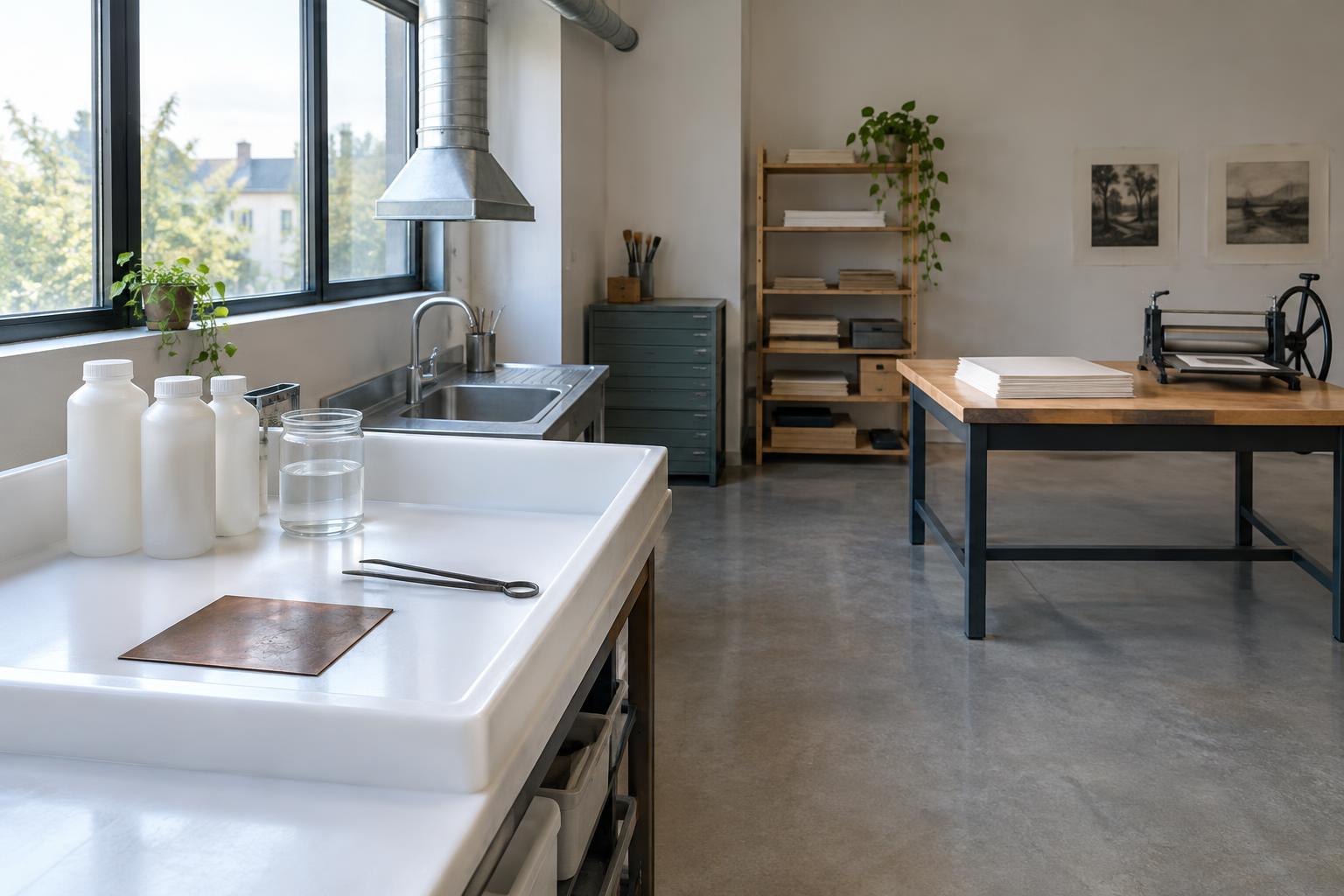
Etching involves several activities that do not belong on the same bench. A plate may move between preparation, immersion in an etchant, rinsing, drying, inking and printing. Give the corrosive-liquid stage a dedicated wet area, away from the press, paper storage, food and personal belongings. Even a small studio benefits from a clear boundary: it reduces the chance that a damp plate, glove or tool will carry residue onto a clean surface.
Sketch the route a plate will take before arranging furniture. Keep the distance between the etching container and its designated rinse area short, with an unobstructed path and enough room to handle a plate without reaching over other supplies. Reserve a separate dry surface for notes, drawings and edition records. If the room cannot accommodate distinct wet and clean zones, consider using a shared facility equipped for the process rather than improvising around a crowded desk.
Choose surfaces for the actual chemicals in use
An acid-resistant work area is not simply a table covered with plastic. Materials that tolerate one etchant or cleaning product may not tolerate another, and seams, exposed wood edges and metal fittings can become weak points. Identify every solution you plan to use, then check its safety data sheet and the container or surface manufacturer’s compatibility guidance. Avoid treating a generic “chemical-resistant” label as a promise that a surface suits every etching bath.
A stable, level bench with an intact, nonporous top is easier to inspect and clean than a patched work surface. Place the etching container inside a compatible secondary tray large enough to catch drips and foreseeable splashes. Keep containers below eye level and away from bench edges. A loose sheet of covering may protect against minor marks, but it can wrinkle, slip or hide liquid beneath it; it should not substitute for a sound bench and proper containment.
Plan ventilation and emergency access first
Ventilation requirements depend on the materials and process. An open window or household fan should not be assumed to provide adequate control, and a fan that blows across a tray may spread mist or fumes toward the worker. Before using an etchant, follow its safety data sheet and seek guidance from a qualified studio manager or safety professional about appropriate ventilation for the room. If the necessary controls are unavailable, do not proceed with that material there.
Keep access to running water, suitable eye-rinsing facilities and the room exit clear. Know the location of the first-aid equipment and how to obtain help before opening a container. Appropriate eye protection and chemical-resistant gloves should be selected for the specific substances being handled; an apron or other protective clothing may also be needed. Protection is a backup to a well-designed workspace, not a reason to work over an unprotected sink or at a cramped table.
Give every container and tool a defined place
Use clearly labeled, compatible containers with secure lids, and keep them in compatible secondary containment when stored. Labels should make the contents unmistakable; a reused drink bottle is never an appropriate storage vessel. Set aside dedicated tools for the wet area so that tongs, brushes or measuring items do not migrate to the inking table. Keep the instructions and safety data sheets for the materials available to everyone who uses the space.
Arrange the bench so that only the items needed for the current task are within reach. Leave space to set down a plate without balancing it on the rim of a tray. Paper towels or other cleanup supplies should be accessible, but spill response should follow the product guidance and the studio’s procedures. Do not assume that an unknown spill can be safely wiped up or neutralized. Establish a plan for collecting and disposing of used solutions and contaminated materials according to local requirements; do not pour them away by default.
Test the layout before making a print
A dry run can reveal problems without introducing a corrosive liquid. With empty, closed containers, practice carrying a plate from the preparation area to the tray and onward to the rinse and drying areas. Check whether doors, stools, cords or another person could interrupt the route. Confirm that the tray stays steady, labels remain visible and clean hands can reach the notebook without crossing the wet zone.
Finally, make a short closing routine part of studio practice: secure containers, inspect the bench and tray, clean tools according to their material guidance and return plates to the appropriate area. An acid-resistant workspace is maintained through those habits as much as through its surfaces. When the setup makes each step obvious, artists can spend less attention navigating clutter and more attention on the plate and the print.