Start the shutdown before the final print
A good shutdown begins while the last print is still drying. Set aside enough time to clean without rushing, and keep clean paper away from the inked work area. Put unfinished prints on a clearly identified drying rack or in a safe flat space. If you share the studio, note which items are still wet so the next person does not mistake them for abandoned work.
Before opening a cleaner or rinsing a tool, check what ink and other materials you used. Water-based and oil-based inks may need different cleaning methods, and a product labeled water-washable does not necessarily mean every residue belongs down a drain. Follow the product instructions and your studio’s waste rules. If a suitable cleaning method is unclear, set the item aside safely and ask rather than improvising with a stronger solvent.
Clean tools and surfaces in a sensible order
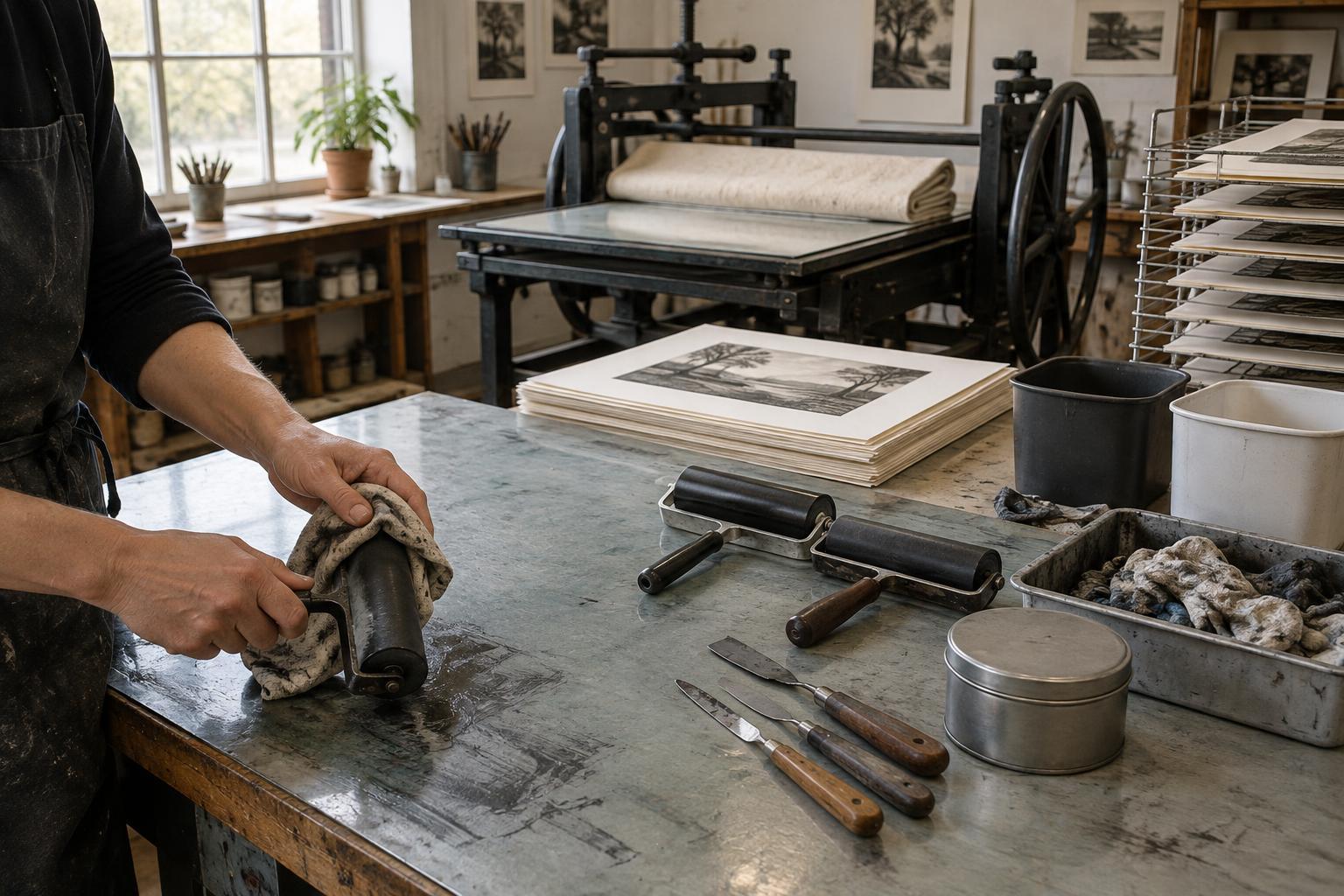
Remove excess ink from plates, brayers and mixing surfaces before washing them. A scraper, scrap card or reusable rag can collect material that would otherwise spread across the sink or bench. Clean from the least messy area toward the most heavily inked one, using the method appropriate to each tool. Pay attention to brayer edges, the joints of carving tools and the corners of inking slabs, where residue is easy to miss.
Wipe handles and controls only with methods suitable for the equipment; avoid soaking parts that should stay dry. Check the table surface, sink surround and floor for smears or slippery spots. Return clean tools to their assigned places once they are dry enough for storage. Leave damp cloths spread out only where the studio permits them to dry safely, rather than piling them into a drawer.
Sort waste instead of treating it as one bin
Keep ordinary paper scraps separate from ink-contaminated wipes, solvent waste, used blades and other materials that require special handling. Mark containers clearly so a tired printmaker can choose the right one at the end of a long session. Do not pour leftover ink, cleaner or wash water into a drain unless the product directions and local rules specifically allow it. A shared studio should have a written procedure for materials it accepts and for anything that must be taken elsewhere.
Rags or wipes used with certain oils or solvents can present a fire risk if handled incorrectly. Follow the product label and studio procedure for their storage and disposal; do not leave them crumpled on a bench or mixed with general rubbish. Close containers as directed, check that labels remain legible and flag any full or damaged waste container for the person responsible for it.
Leave the press and equipment ready to use
After the printing area is clean, remove loose paper, packing scraps and other debris from around the press. Inspect blankets, rollers, beds and registration aids for fresh ink, tears or misplaced items. Return settings to the studio’s agreed resting position rather than guessing at a universal setting for every press. Turn off electrical equipment according to its instructions, and make sure portable tools are stored where they cannot fall or snag a cable.
A shutdown check is not a repair session. If a press feels unusually stiff, a cord is damaged or a tool has a loose part, stop using it and record the problem. Do not reach into moving machinery or attempt adjustments that require training. In a shared space, a visible “do not use” note and a message to the studio lead are more useful than leaving the next printer to discover the fault during setup.
Do one final walk-through
Look at the studio from the doorway before leaving. Are prints named and positioned to dry? Are lids closed, blades secured, tools put away and walkways clear? Check taps, lights, ventilation and doors according to the studio’s closing procedure. A short written checklist near the exit makes this easier to repeat, especially when several people have worked in the room.
Finish by noting anything the next session needs: a low supply, a waste container nearing capacity, a wet print that must not be moved or equipment awaiting attention. The aim is not a spotless room at any cost. It is a studio where materials are accounted for, hazards are not passed along unnoticed and the next printmaker can begin with a clear workspace.