Why paper labels need a closer look
A printmaking sheet has two jobs: it must take an impression well, and it should remain in good condition for as long as the maker intends to keep or share the print. Labels such as “acid-free,” “buffered” and “archival” can help narrow the options, but they do not tell you everything about how a paper will print or age. They describe different properties, and manufacturers may use the same word with different levels of detail.
The most useful approach is to treat a label as the start of a conversation with the paper, not the end of it. Ask what fibers it contains, whether it has an alkaline reserve, how its surface is sized, and whether its weight and texture suit your method. Then make a small test print. A sheet with excellent long-term qualities is still the wrong sheet for a project if it takes the ink poorly or cannot withstand the press.
Acid-free describes a condition, not a guarantee
“Acid-free” generally means a paper is not acidic when it is made or tested. This matters because acidity can contribute to discoloration and weakening over time. But the phrase alone does not explain how the sheet was made, how much lignin its fibers contain, or how it will respond to its surroundings. A paper may begin in good condition and still change if its materials or storage conditions encourage deterioration.
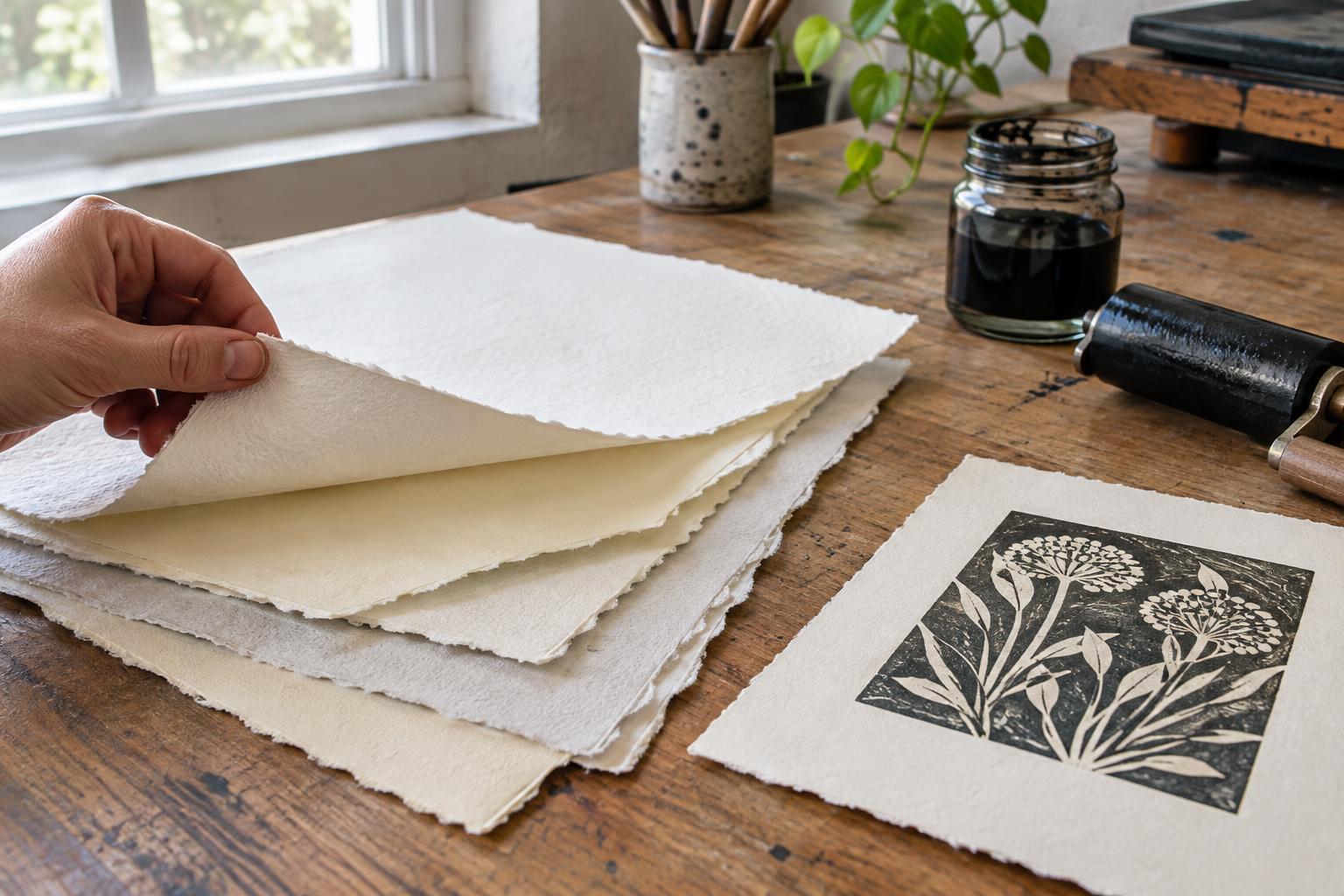
Fiber information gives the label more context. Cotton and well-prepared wood pulp can both be used in papers intended for lasting work; the important question is how the fibers were processed and what else is in the sheet. If a supplier provides a detailed specification, read it alongside the acid-free claim. If information is limited, keep expectations modest and test the paper for the project at hand.
Buffered means the paper has an alkaline reserve
A buffered sheet contains an alkaline material, often calcium carbonate, intended to help neutralize acids that may form or enter the paper. Buffering is common in papers made for long-term use. It is not the same thing as a hard surface, heavy weight or resistance to water: a soft printmaking paper can be buffered, while a sturdy-looking sheet may not be.
Buffered paper is not automatically the best choice for every image. Some dyes, pigments or alternative photographic processes can be sensitive to an alkaline environment, so an unbuffered sheet may be preferable for those materials. If your process has specific paper requirements, follow the material maker’s guidance and test a sample before committing an edition. For conventional printmaking inks, consider buffering alongside more immediate concerns such as ink transfer, drying and the feel of the finished print.
Archival is a broad word
“Archival” suggests that a material is suitable for keeping, but on its own it is not a complete specification. On a paper wrapper, it might refer to fiber content, acidity, buffering or a combination of qualities. It does not promise that a finished print will last indefinitely. Ink, adhesives, mounting materials, handling and storage all affect the result.
Look for precise descriptions rather than relying on the word alone. A product listing that identifies the fibers, states whether the sheet is buffered, and describes its surface gives you more to work with than a single prominent “archival” claim. The same caution applies to presentation: a well-chosen sheet can still be damaged by an unsuitable backing board, tape placed on the image, damp storage or prolonged exposure to strong light.
Choose for the print, then plan for its care
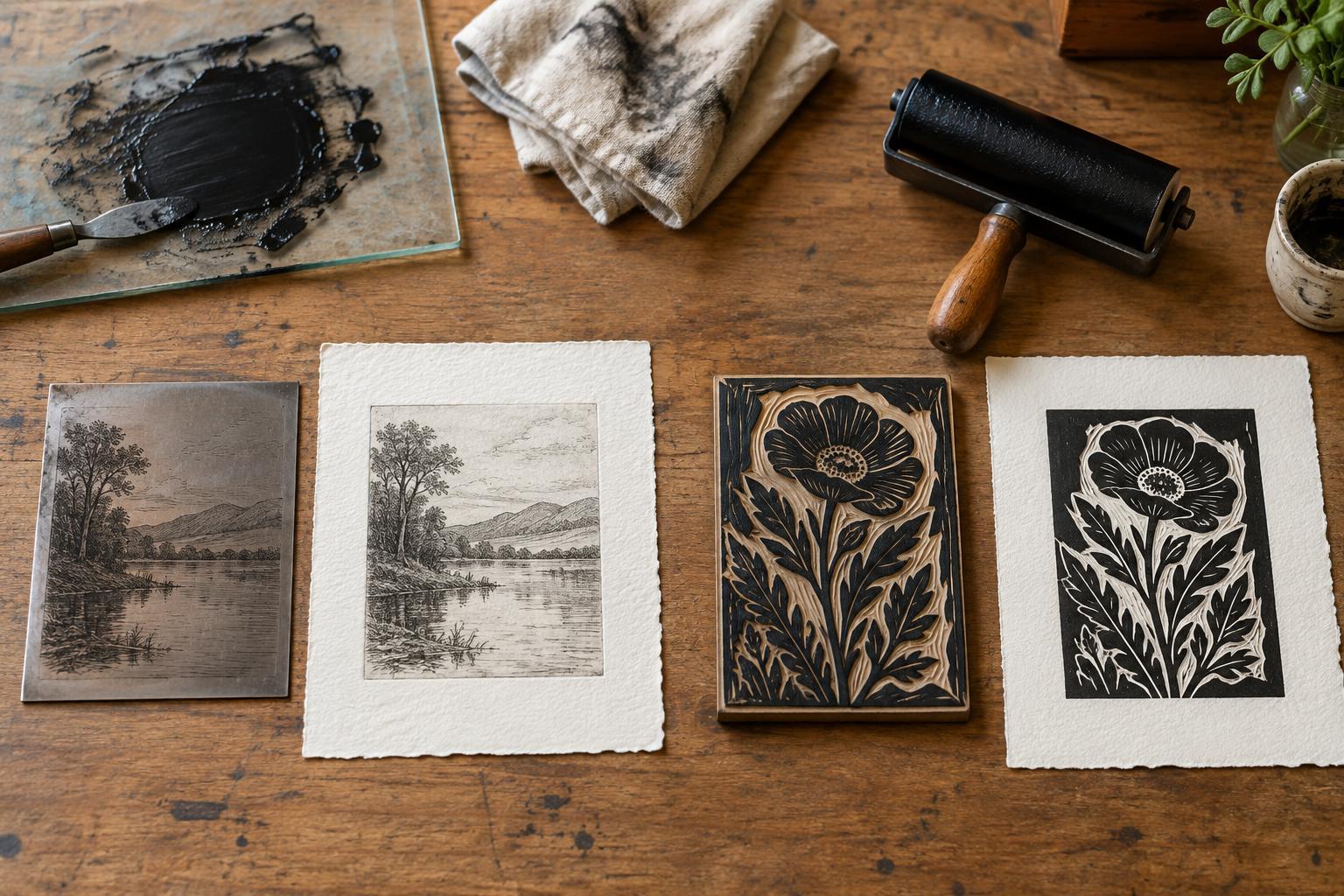
Start with the way you print. For relief printing, try a few sheets to see how readily they take an even impression by hand or press. For intaglio, check whether the paper can be dampened and pressed without losing the surface character you want. For screen printing, pay attention to how the ink sits on the sheet and whether the paper remains flat enough for registration. Paper weight and texture influence each of these decisions, but a test print reveals more than a label can.
Keep a note with your tests: paper name, fiber information if available, buffered or unbuffered status, ink, method and any dampening used. When you find a combination that works, those notes make it easier to plan an edition consistently. Store unused sheets clean, flat and dry, and let finished prints dry fully before stacking or interleaving them. Long-term care is a series of material and handling choices, not a single word printed on a wrapper.