Why intaglio paper needs moisture
In intaglio printing, ink sits in the recessed lines and textures of a plate. Dampening the paper softens its fibers so that, under press pressure, the sheet can reach into those recesses and pick up ink. A suitably damp sheet may also take a clearer plate mark. The aim is not to print on dripping-wet paper: excess surface water can interfere with ink transfer and make the sheet stretch or tear.
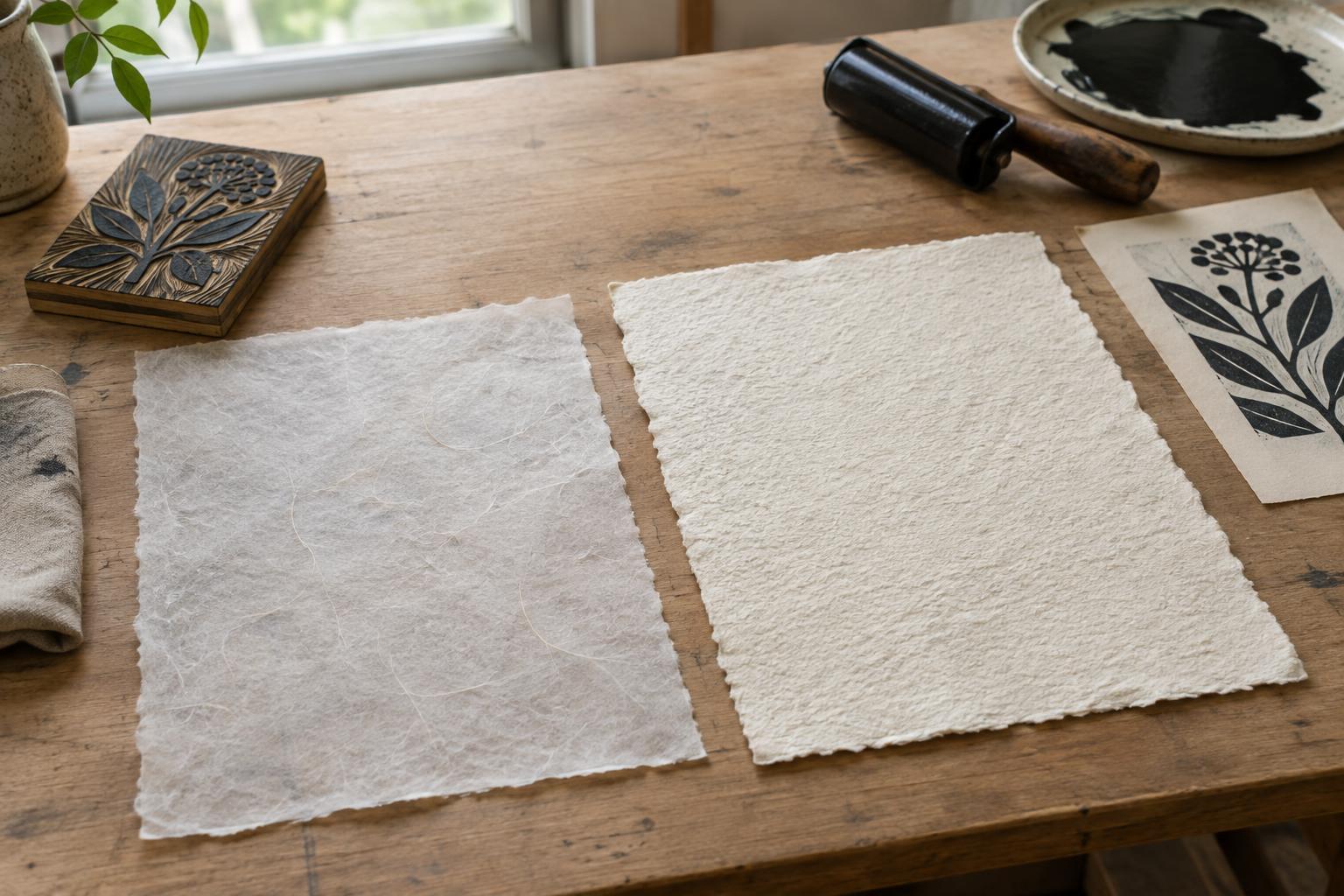
Different papers absorb water at different rates. A sturdy, unsized or lightly sized printmaking paper may become pliable fairly quickly, while a heavily sized sheet may take longer to wet evenly. Start with the paper maker’s guidance if you have it, then make a small test print. The plate, ink and press settings also affect the result, so no single soaking time suits every project.
Set up a clean soaking and blotting area
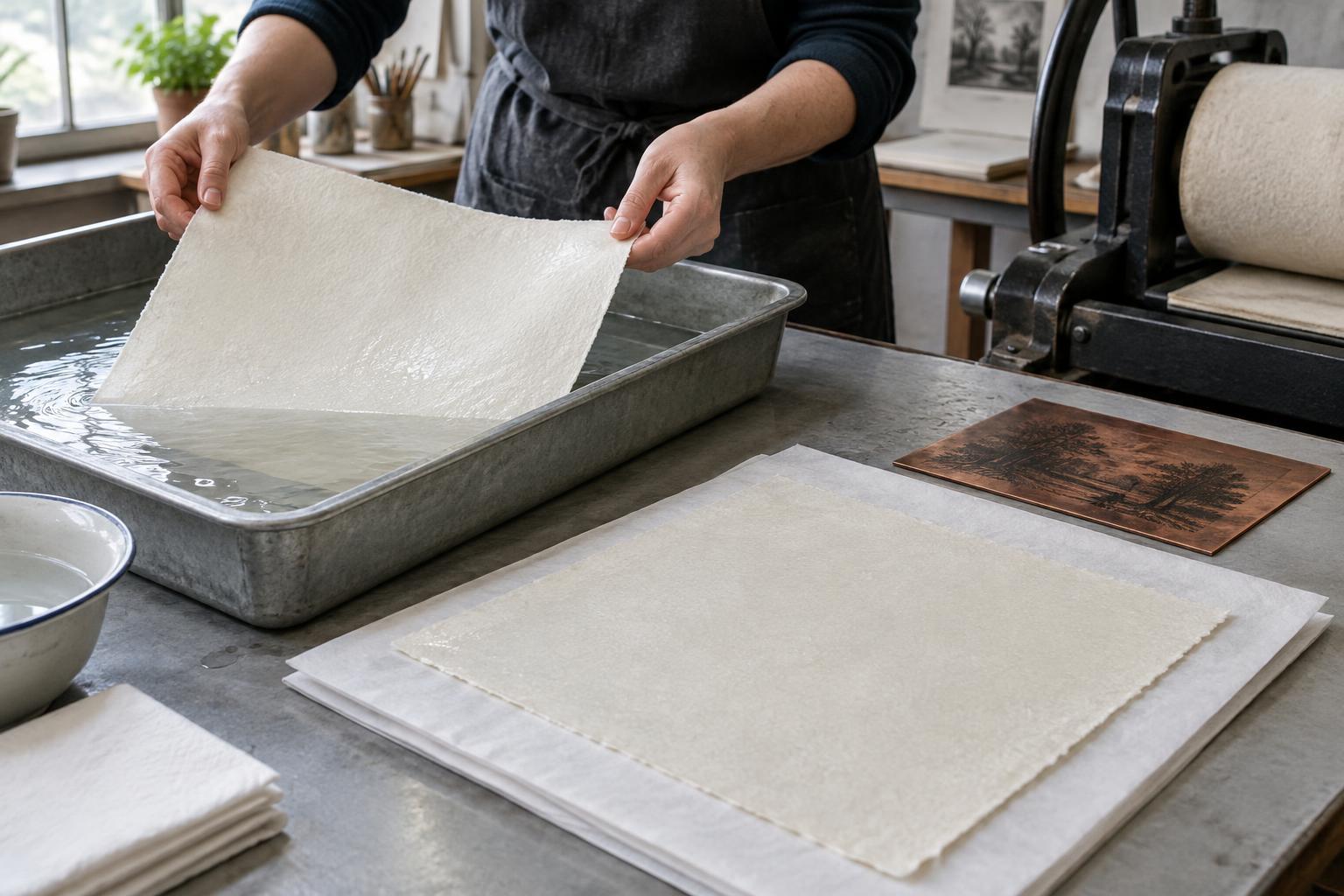
Prepare a clean tray or basin large enough for the sheet to lie flat, along with clean water, blotters or absorbent towels, and a flat surface where the paper can rest. Keep ink, plate-cleaning materials and food away from the water. Clean hands make a difference: damp paper readily picks up marks, and a fingerprint that is easy to overlook before printing may be noticeable in the finished impression.
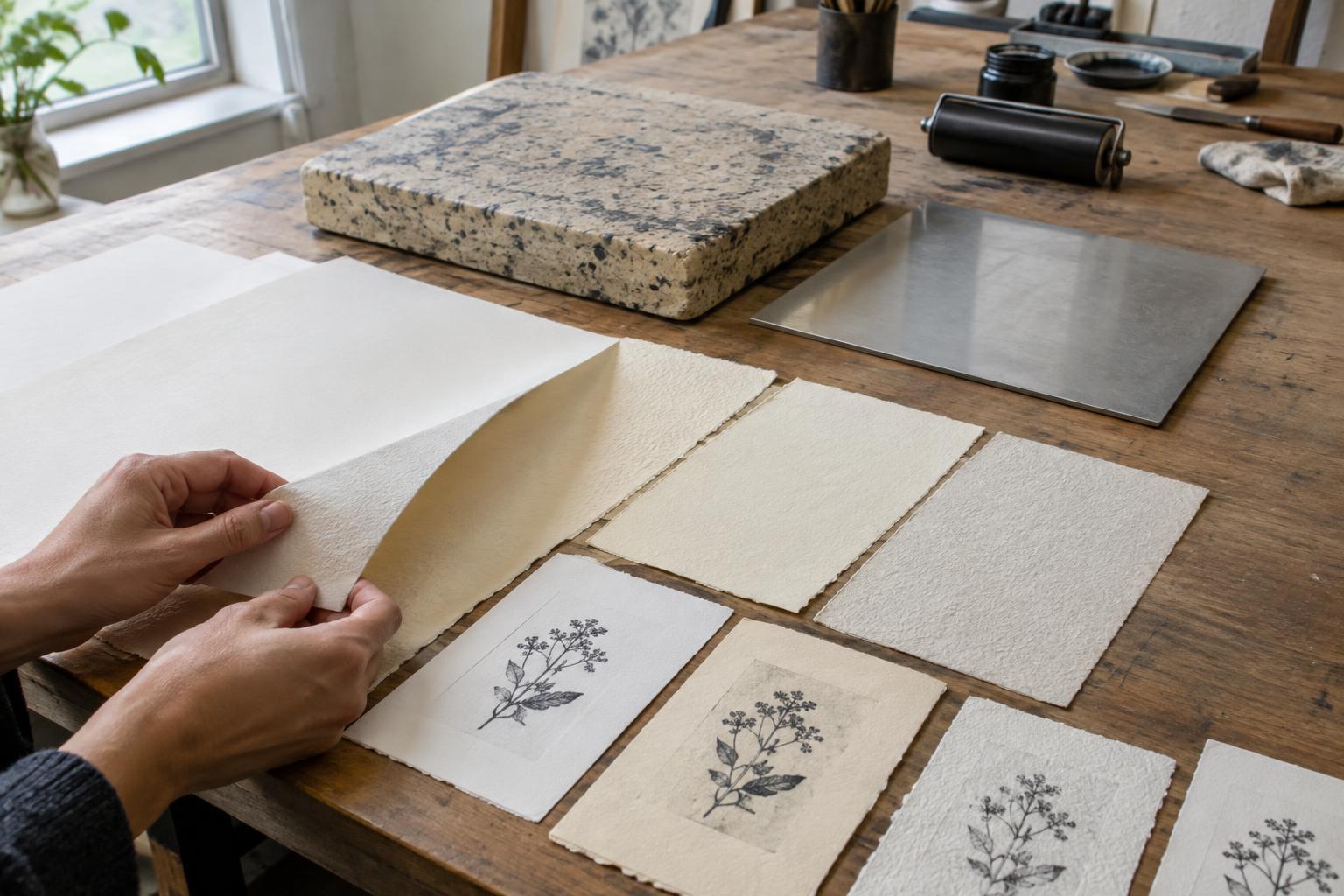
Cut or tear paper to size before wetting it, allowing margins around the plate. If the paper has a preferred printing side, mark it discreetly in a margin while the sheet is dry. Arrange the workspace so you can move a softened sheet from the tray to the blotters and then to the press without folding it or brushing it against a dirty surface.
Soak, blot and let the moisture settle
Lower one sheet into the water, easing out trapped air so the whole surface becomes wet. Let it soak until it feels evenly flexible rather than stiff in patches. Lift it by supporting two corners or an edge, and allow water to drain back into the tray. Avoid pulling a heavy, wet sheet by one corner, which can distort it.
Place the sheet between clean blotters or absorbent towels and press gently and evenly. Do not rub the surface. The goal is to remove visible water while leaving moisture within the paper. If you are preparing several sheets, stack them between blotters and cover the stack so the edges do not dry much faster than the centers. Give the sheets a little time to rest; this helps moisture become more even throughout each sheet.
Check the sheet before it reaches the press
Paper ready for printing usually feels cool and supple, with no shine or droplets on its surface. It should bend without feeling fragile or limp. A simple check is to touch a clean fingertip to a margin: the surface should feel damp, not slick. If it looks wet, blot it again. If an edge has dried while the center remains damp, return the sheet to a covered stack for a more even result.
Use a test impression to judge the preparation. Weak or broken lines can have several causes, including insufficient moisture, wiping choices or press pressure; change one factor at a time rather than assuming the paper is at fault. If the image looks smeared or the sheet sticks to the plate, check for excess surface water. Note what you observe so you can prepare the rest of the edition consistently.
Keep moisture consistent through an edition
For a short printing session, prepare only as many sheets as you can keep evenly damp. Return each waiting sheet to the covered stack after checking it, and replace blotters that become saturated. If you pause, inspect the top and outer sheets before resuming; exposed edges often dry first. Reblot a sheet that has become too wet rather than placing it directly on an inked plate.
After printing, dry impressions flat between clean, dry blotters, changing the blotters when necessary. Handle fresh prints carefully so neither the inked image nor the plate mark is crushed. A brief record of the paper used, how it was dampened and how the test print behaved can make the next session easier. Consistent moisture is a practical goal, not a fixed formula: let the sheet and the impression guide small adjustments.