What paper grain direction means
In many machine-made papers, fibers tend to align more strongly in one direction as the sheet is formed. That direction is called the grain. A sheet with its grain running along its longer edge is grain long; one with grain along its shorter edge is grain short. Grain describes the structure of the paper, not the direction of a visible surface pattern. A textured sheet may look directional without revealing which way its fibers run.
Grain is useful to know because paper does not always behave the same way in both directions. It may bend and fold more readily with the grain, while moisture-related expansion is often more noticeable across it. The difference can be subtle, especially in a small sheet. Handmade papers and some other papers may have little consistent directional grain, so the aim is to learn how a particular stock behaves rather than force every sheet into a label.
Find the grain with a gentle bend test
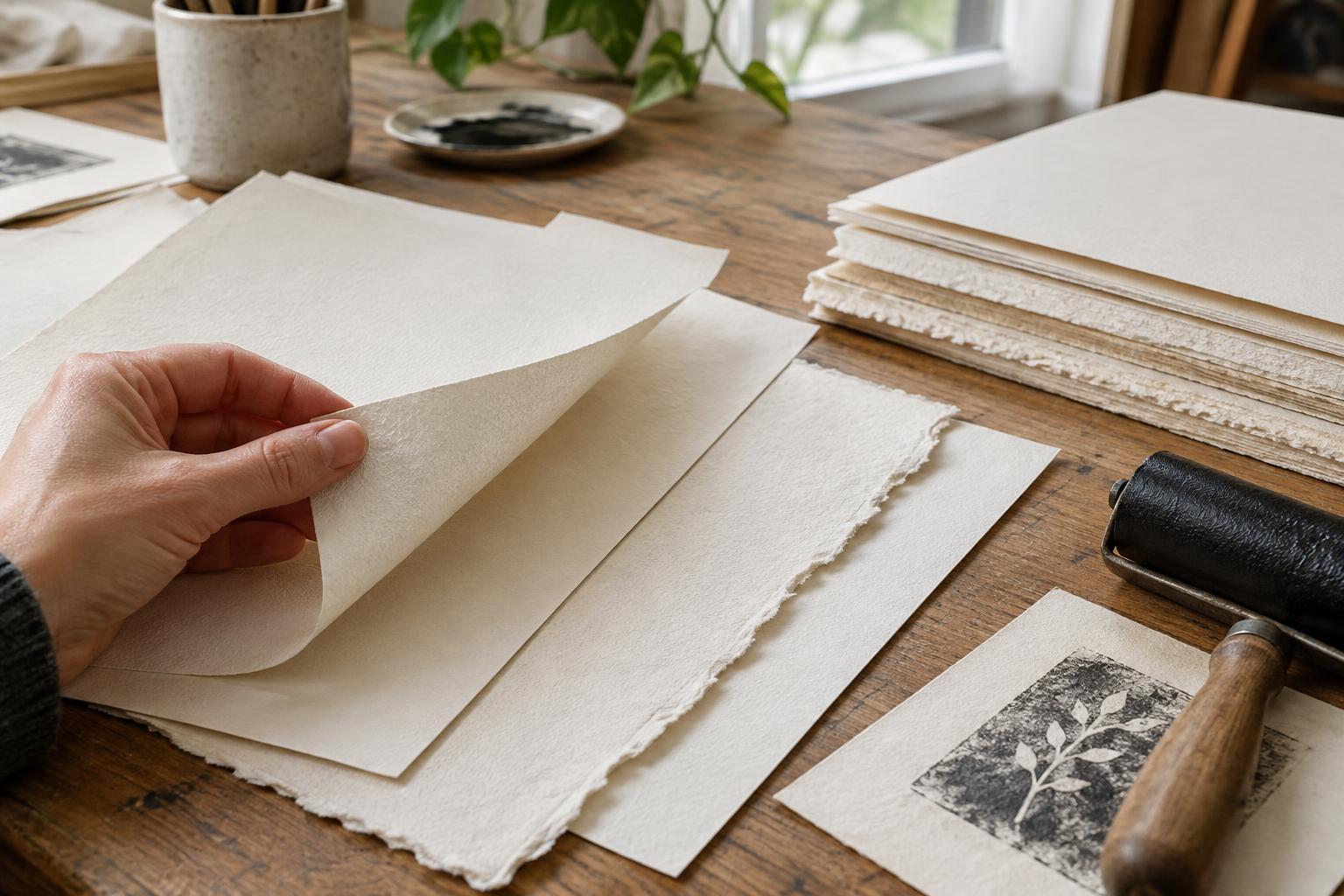
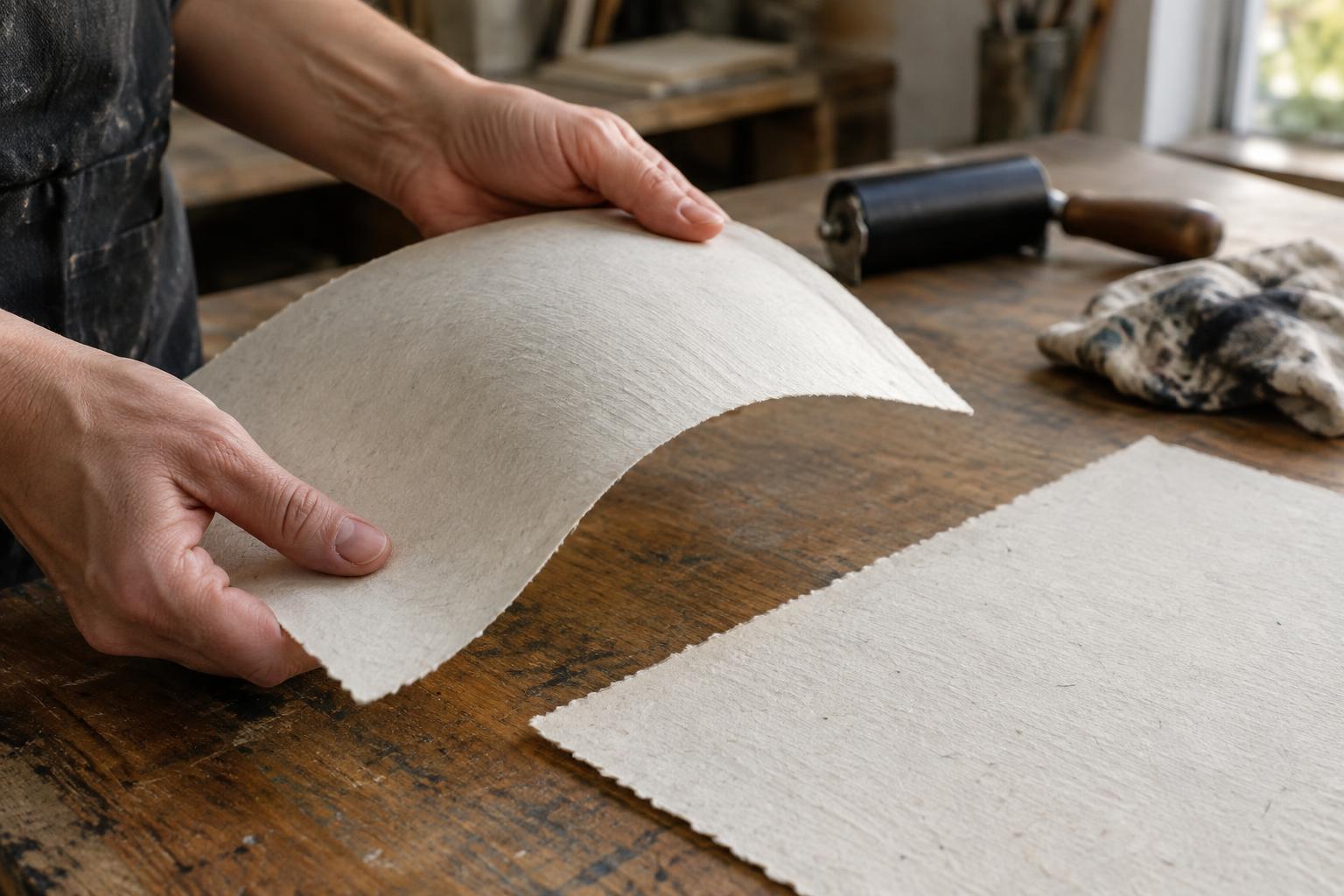
Hold opposite edges of a dry sheet and bring them toward each other, allowing the paper to form a loose curve without making a crease. Note how much resistance you feel. Turn the sheet a quarter turn and repeat. The easier bend usually curves around an axis that runs with the grain: if the top and bottom edges come together more easily, the grain generally runs from side to side. Try the test several times with light pressure; stiffness from heavy sizing or thick paper can make the difference hard to feel.
If you have an offcut, a fold test can help confirm the result. Make two short folds, one in each direction. The fold made parallel to the grain will often lie flatter and feel less resistant. Use a scrap rather than a sheet reserved for printing, and do not treat cracking as a definitive test: coatings, dryness and paper thickness also affect folds. A controlled tear on an offcut offers another clue, since paper often tears more cleanly along its grain.
Why grain matters when paper gets wet
Many printmaking processes involve damp paper, water-based ink or both. As paper takes up moisture, it can expand; as it dries, it contracts. Because the change may be greater across the grain, a sheet can shift dimensions unevenly. That matters when an image must align with a plate, block, stencil or second color. Grain is only one factor: the paper’s composition, sizing, thickness and amount of water also influence the result.
For a multi-layer print, prepare a few test sheets exactly as you intend to prepare the edition. Mark their grain direction on a removable note, then dampen, print and dry them using your planned method. Check whether the image area or registration marks move in a way that affects the next layer. Keeping paper orientation and moisture preparation consistent throughout an edition is usually more valuable than seeking a universal rule about which direction must face the press.
Plan folds, tears and the final format
Grain becomes especially important when a print will be folded into a card, booklet or portfolio component. A fold parallel to the grain generally opens and closes more smoothly and is less likely to resist the intended shape. Before cutting a large sheet into smaller pieces, sketch the finished layout and mark both the image direction and the fold. This can prevent a tempting cutting plan from leaving every final piece with a stiff cross-grain fold.
For deckled or hand-torn edges, try tearing a spare strip in both directions. One direction may give a straighter, more predictable edge, while the other produces a different character. Neither is automatically better for an artwork. The test simply lets you choose deliberately and repeat the effect across an edition. If the paper has a watermark or a noticeably different front and back, account for those features alongside grain when laying out cuts.
Make grain part of your paper notes
When you open a new pack, test a sheet before cutting the rest. Write “grain long” or “grain short” on the wrapper, or add an arrow to a studio sample with a note explaining what the arrow means. Keep an offcut labeled with the paper name and any useful observations about dampening, folding and printing. If a supplier lists grain direction, that information can be a starting point, but testing your own sheet helps when stock has been trimmed or separated from its packaging.
You do not need to reorganize every print around grain. A single-color image on dry paper may show no practical difference. But when a project involves precise registration, substantial dampening or a finished fold, a brief grain check is an inexpensive way to avoid surprises. Treat it as one part of learning your materials: test the paper, record what you notice and let the requirements of the print guide your choice.