What sizing does to paper
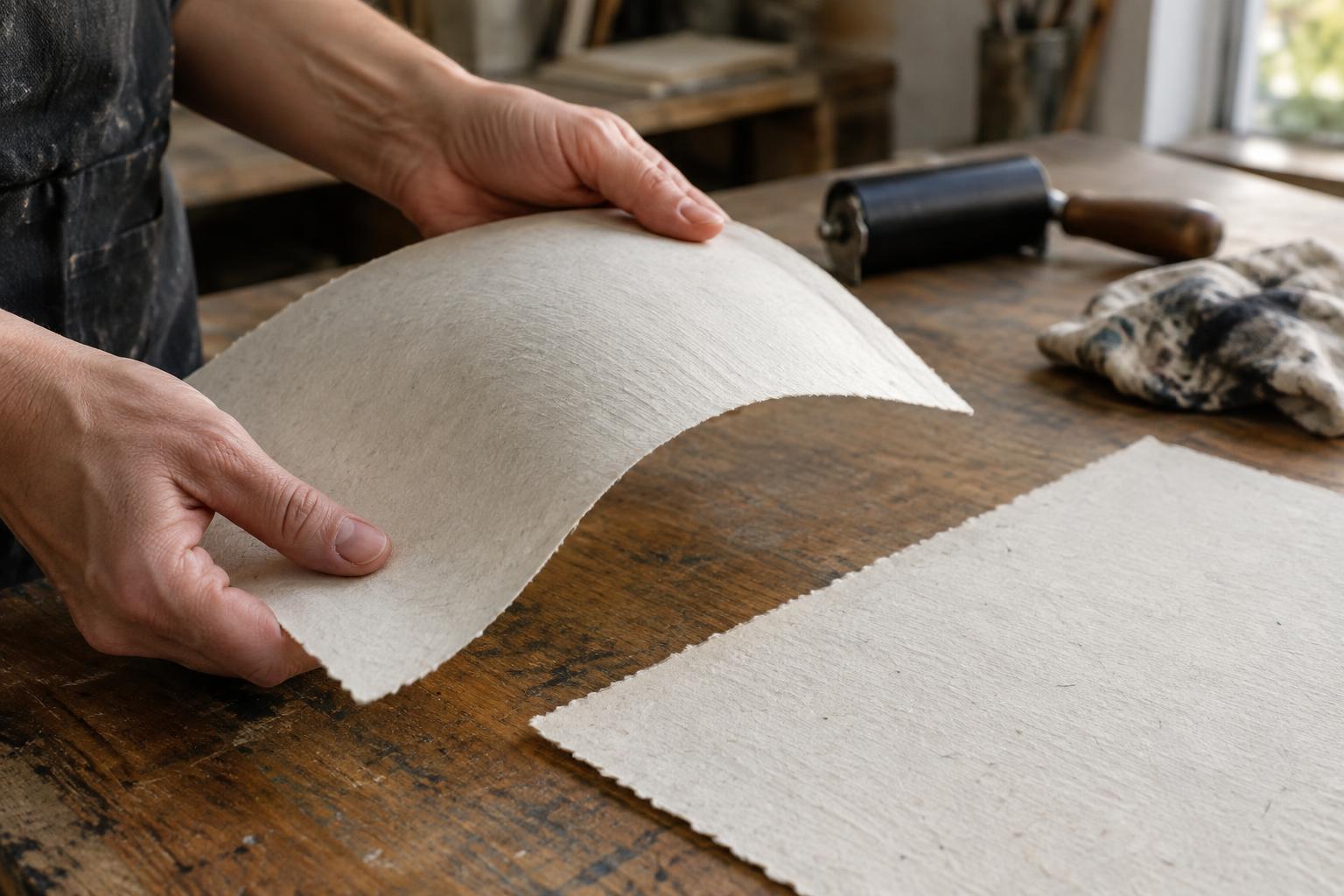
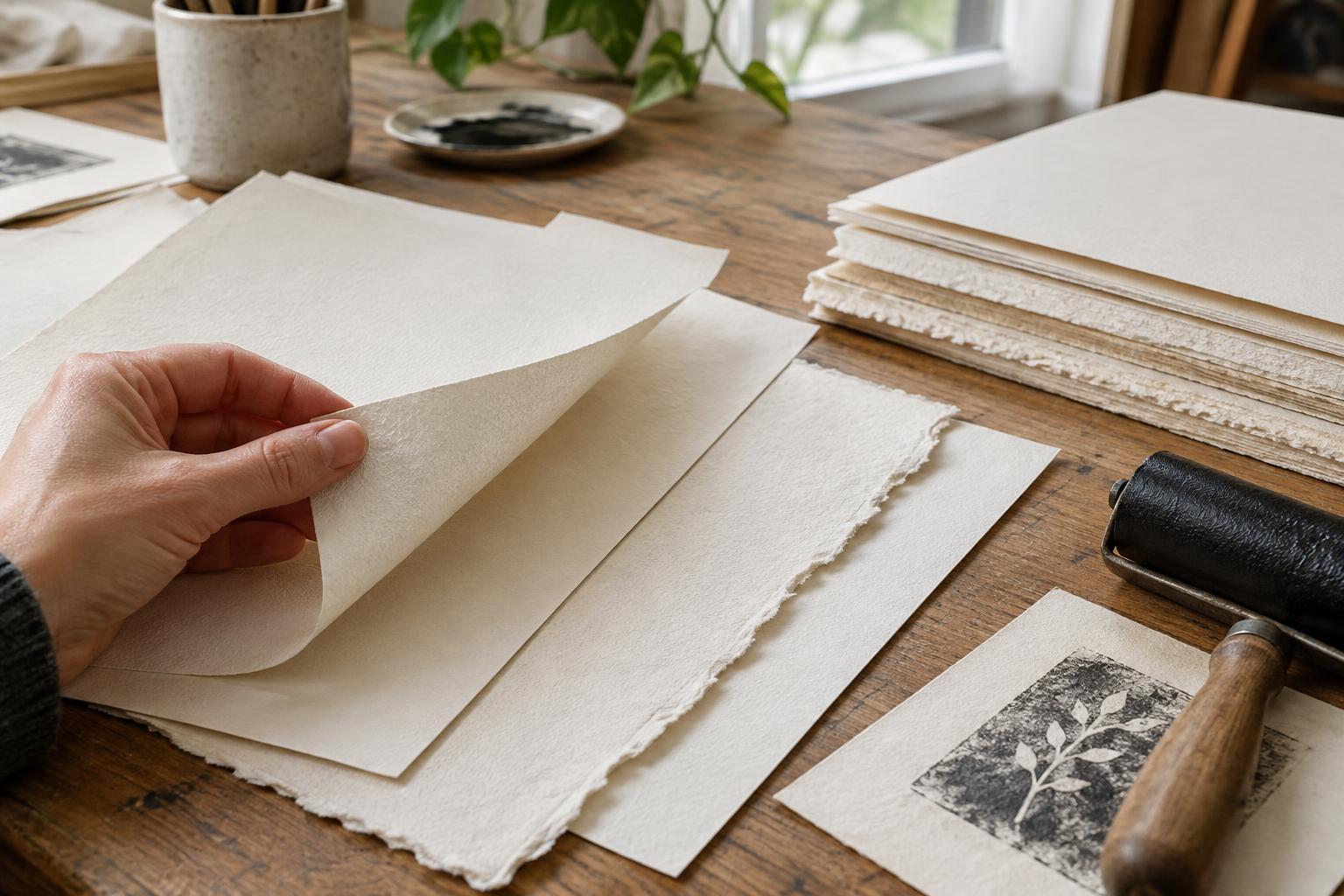
Paper sizing is a treatment that limits how quickly liquid enters the fibers. It may be added while paper pulp is made, applied to the surface of a sheet, or both. A lightly sized sheet tends to absorb water readily; a more strongly sized surface generally keeps liquid near the top for longer. Sizing is only part of the story, though. Fiber, surface texture, thickness and the pressure used to print also affect the result.
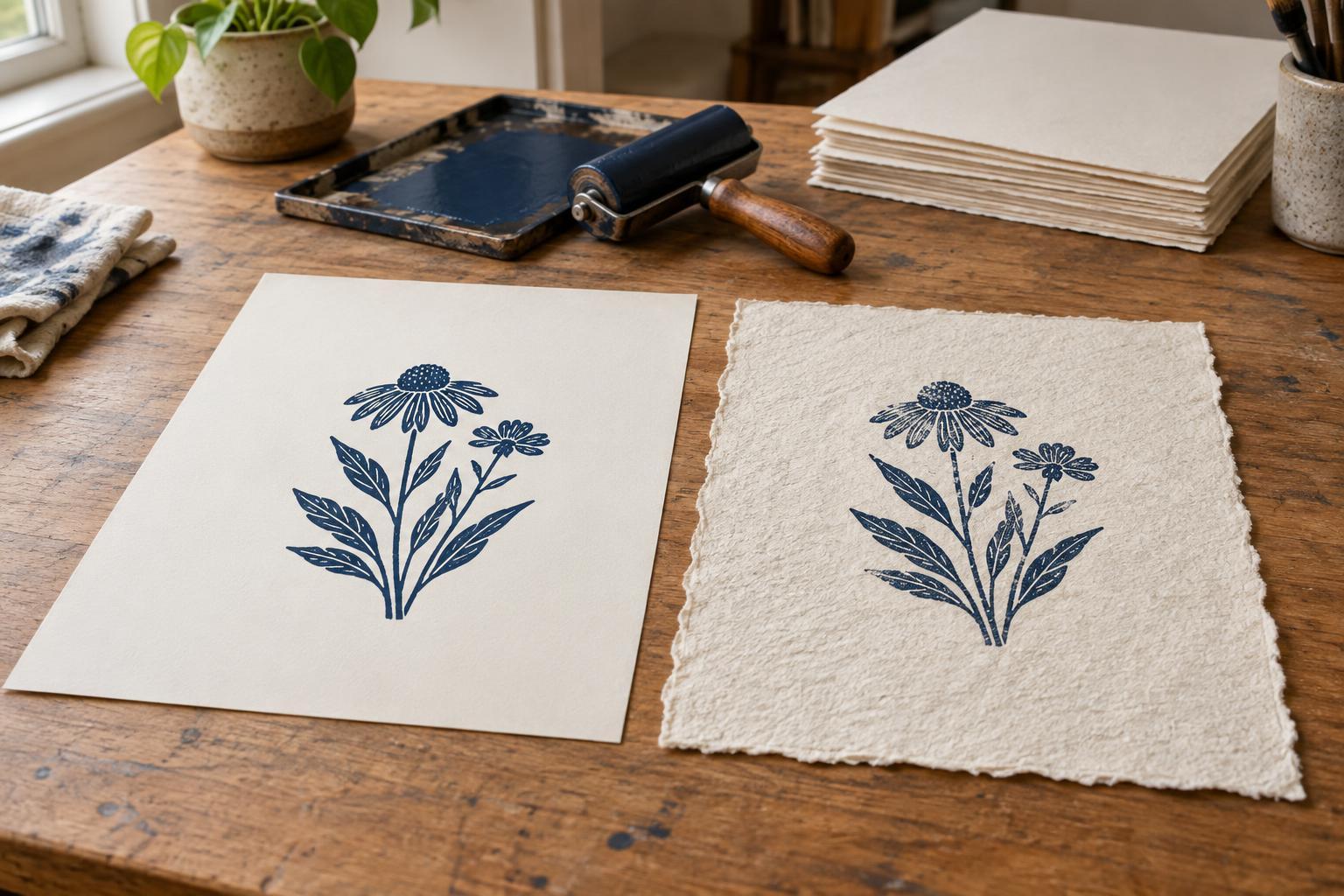
For a printmaker, the useful question is not whether a paper is “good” or “bad” at absorbing ink. It is whether its absorption suits the ink and method at hand. A sheet that gives a soft, open impression with one ink may produce unwanted spreading with another. Learning to recognize that difference can save an edition from inconsistent color or detail.
How sizing changes the printed mark
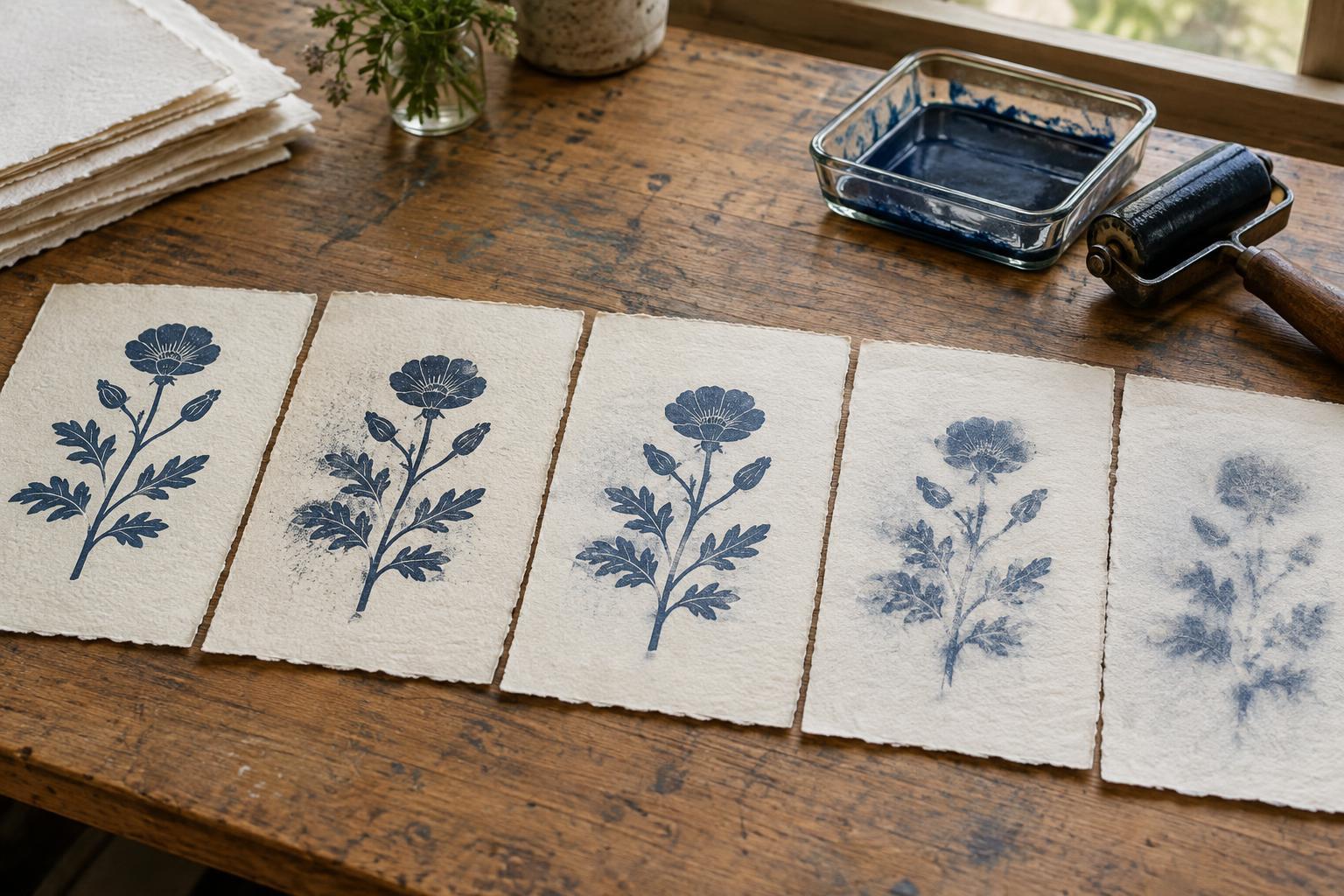
With a thin, water-based ink, an absorbent paper may pull moisture away from the ink quickly. Fine lines can lose definition if liquid spreads into surrounding fibers, particularly on a soft or textured surface. A more resistant surface may hold those edges more clearly, but the ink can remain wet on top longer and be easier to smudge during handling. Neither outcome is automatic: ink thickness and the amount applied matter just as much.
Oil-based inks behave differently because they do not rely on water as their carrier. They can still penetrate or stain a porous sheet, and the vehicle may form a visible halo around a heavily inked area. On a less absorbent surface, ink may sit more prominently and take longer to become safe to handle. If clean margins matter, test the exact ink and paper together rather than assuming a paper’s label predicts the outcome.
Match the sheet to the process
In relief printing, ink is transferred from the raised parts of a block. A relatively smooth paper can help preserve small shapes and even fields of color. An absorbent sheet may give a pleasing, softer appearance, but it can also make an already thin ink look dull or uneven. Before changing paper, check that the block is inked consistently and that the impression receives even pressure.
Intaglio printing asks paper to reach into recessed lines under pressure. Printers often dampen suitable papers to make them more flexible for this purpose. Sizing affects how a sheet takes up that moisture, but over-soaking or blotting inconsistently can obscure the comparison between papers. For a fair test, prepare each sample the same way. Monotype and other direct, painterly methods leave more room for preference: rapid absorption may suit a diffuse mark, while a less absorbent surface may allow a crisper transfer.
Run a small paper-and-ink test
Cut a few pieces from each candidate paper and mark the backs with the paper name and orientation. Make the same small image on every piece: include a fine line, a solid area and a lightly inked passage. Keep the ink mixture, inking method and pressure as consistent as you can. If you plan to print on damp paper, dampen all samples using the same method and compare them only after they have dried.
Look at the edge of each mark, the density of the solid area and any spreading into the margin. Gently check a separate corner or test strip for smudging at intervals rather than touching the image itself. Once the prints are fully dry, compare their colors and surface appearance again. A quick note beside each sample will be more useful later than trying to remember which sheet looked best on printing day.
Choose for the whole edition
A successful test print should match more than the appearance you want. Consider how easily the paper registers, whether it withstands repeated handling, and how much drying space the ink will need. If you intend to print several layers, test those layers together: a first impression may change how the surface accepts the next one.
Keep one approved sample as a reference when you begin the edition. If impressions start to look different, compare the paper as well as the ink and pressure. Sizing offers a helpful way to understand why two sheets respond differently, but the printed sample remains the best guide to your particular combination of paper, ink and process.