What GSM tells you
GSM means grams per square metre: the weight of a standard area of paper. A higher GSM sheet contains more mass per unit area than a lower GSM sheet. That makes the number a useful starting point when comparing papers, but it is not a direct measure of thickness, stiffness or quality. A heavy sheet may still be soft and flexible, while a lighter one may feel firm.
Paper labels can help narrow your choices, not settle them. Before buying enough for an edition, consider how the sheet will be inked, pressed, lifted, dried and stored. A paper that feels pleasant in the hand might reveal too much texture in a fine image; another might print beautifully but be awkward to handle while damp.
Why weight and thickness differ
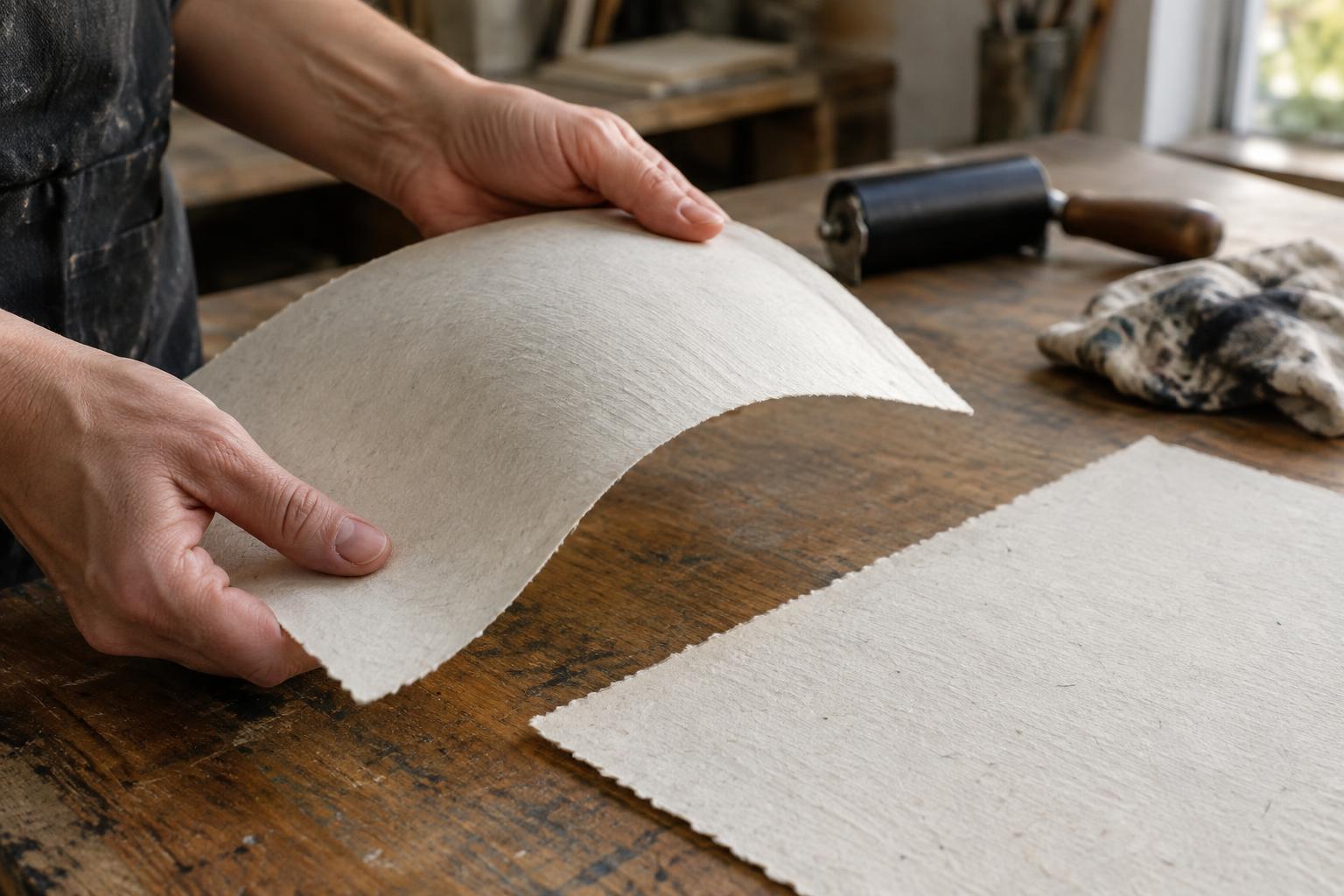
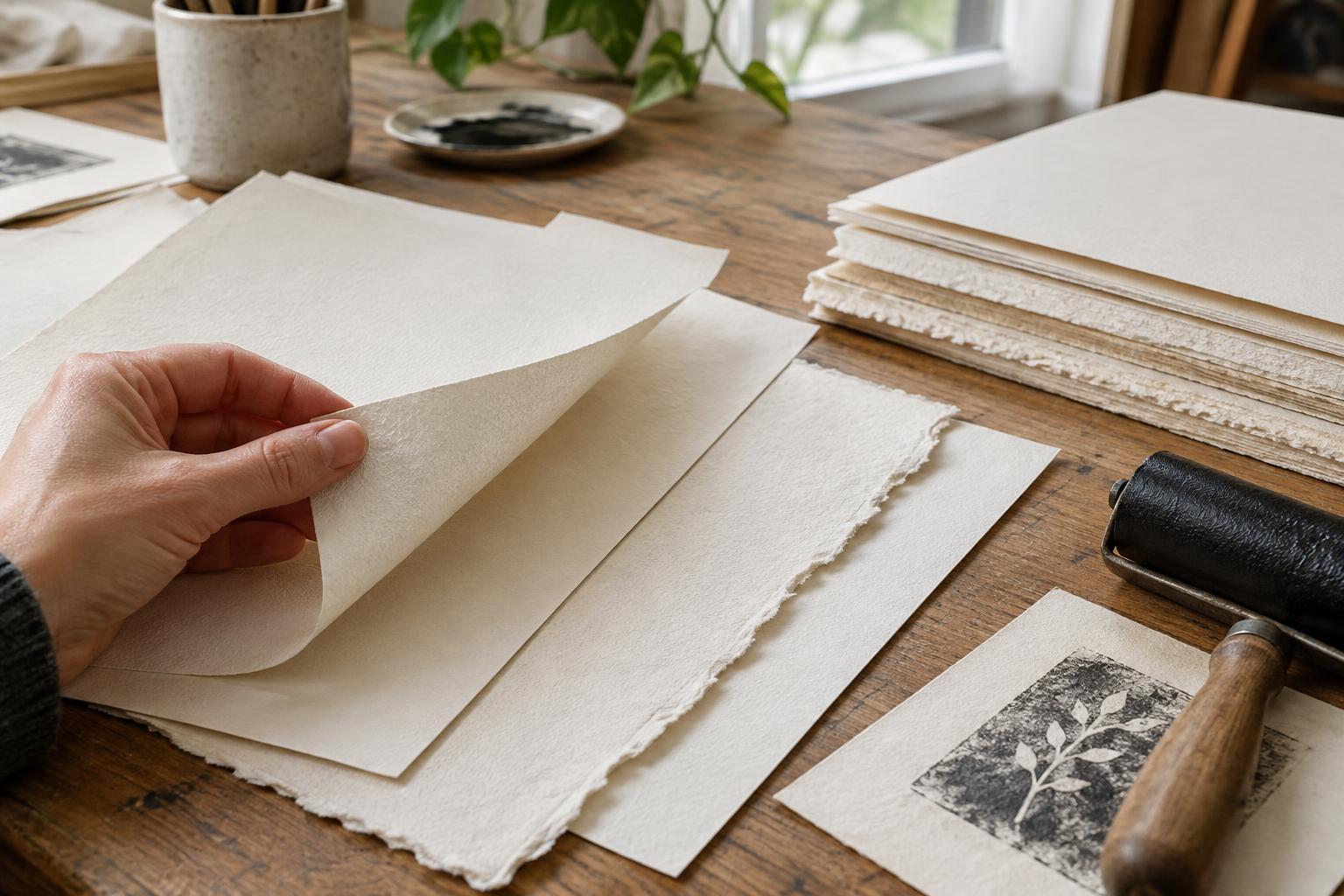
Thickness is the distance between the two faces of a sheet. It is sometimes called caliper, and a supplier may list it separately from GSM. Two papers with the same GSM can have different thicknesses because their fibres are formed and compressed differently. A dense, smooth sheet can be relatively thin; a more open, softly formed sheet can feel thicker at the same weight.
That difference matters at the press. A soft sheet may compress around the edges of an intaglio plate and accept an embossed plate mark, while a harder sheet of similar weight may respond differently. For relief printing, surface smoothness and flexibility can matter more than thickness alone, especially when printing by hand. Treat these as tendencies to test, not rules guaranteed by a number on a label.
Look beyond the number
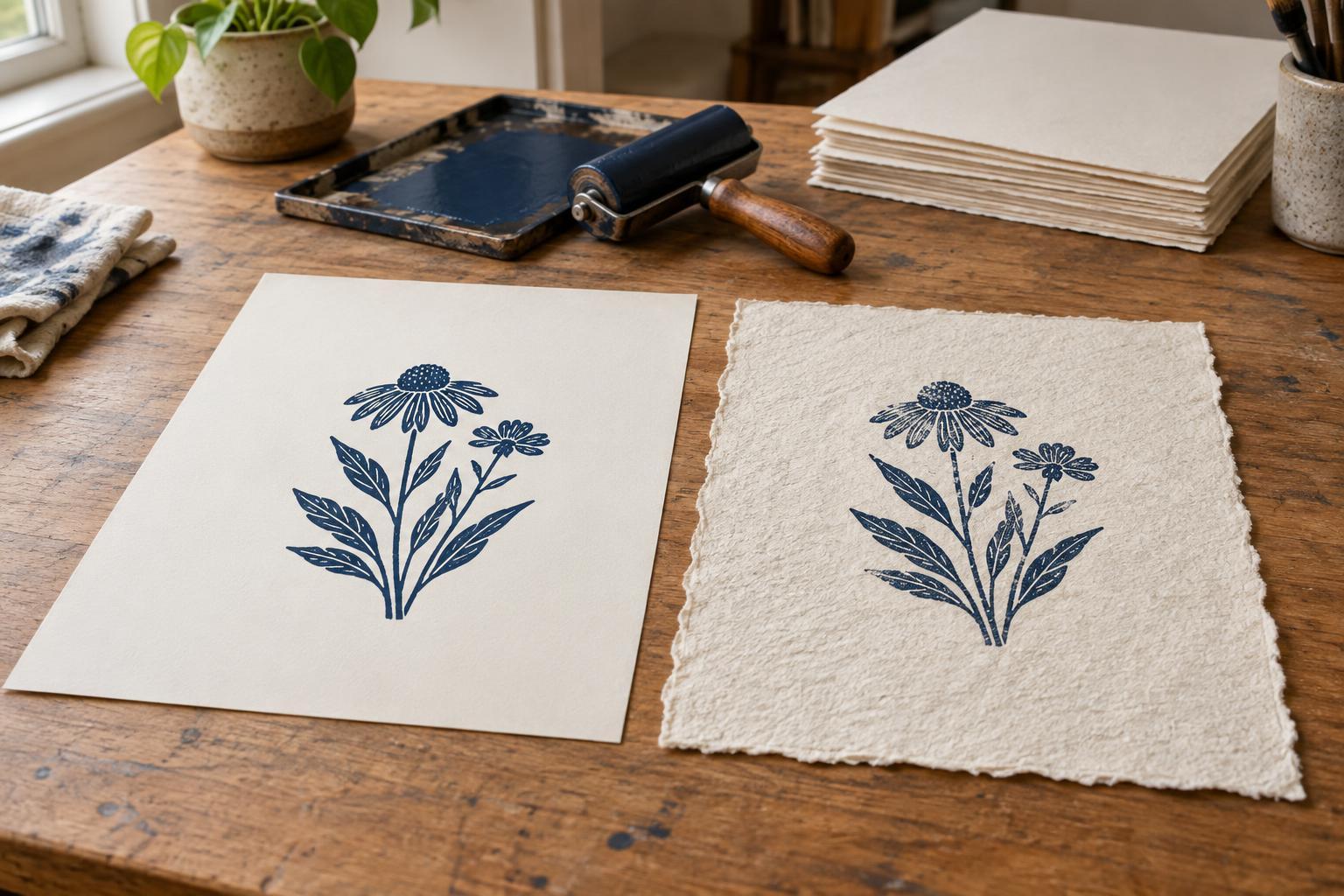
Surface texture affects how readily ink reaches the paper. A smooth surface can help preserve small marks and even areas of colour; a textured surface may leave tiny unprinted gaps or contribute a texture of its own. Neither result is inherently better. The choice depends on whether you want the paper to disappear behind the image or take a visible part in it.
Sizing also changes how a sheet behaves. Sizing is a treatment that limits absorbency, applied within the sheet, at its surface or both. A more absorbent sheet may take up moisture or ink quickly, while a more strongly sized surface may keep marks sharper. The interaction depends on the ink, pressure and printing method. If long-term presentation matters, ask a supplier about the paper’s composition and permanence rather than assuming a high GSM guarantees durability.
Match handling to the printing method
For a hand-printed relief block, try a sheet you can hold steady and rub without fighting its stiffness. Lightweight papers can work well when they stay flat enough for registration and can be lifted without tearing. Heavier papers can also work, but they may need more consistent pressure to make full contact with the inked block. Test the smallest details and the broadest inked area; each exposes a different problem.
Intaglio papers are often dampened so they can mould into the plate’s recessed lines under pressure. Here, the paper must tolerate moisture as well as printing and drying. Some sheets expand noticeably when wet, which can complicate registration across multiple passes. Keep damp sheets covered between impressions, handle them with clean hands and dry finished prints consistently. For any process, check the guidance for your press, ink and paper before changing pressure or adding moisture.
Make a small paper test before an edition
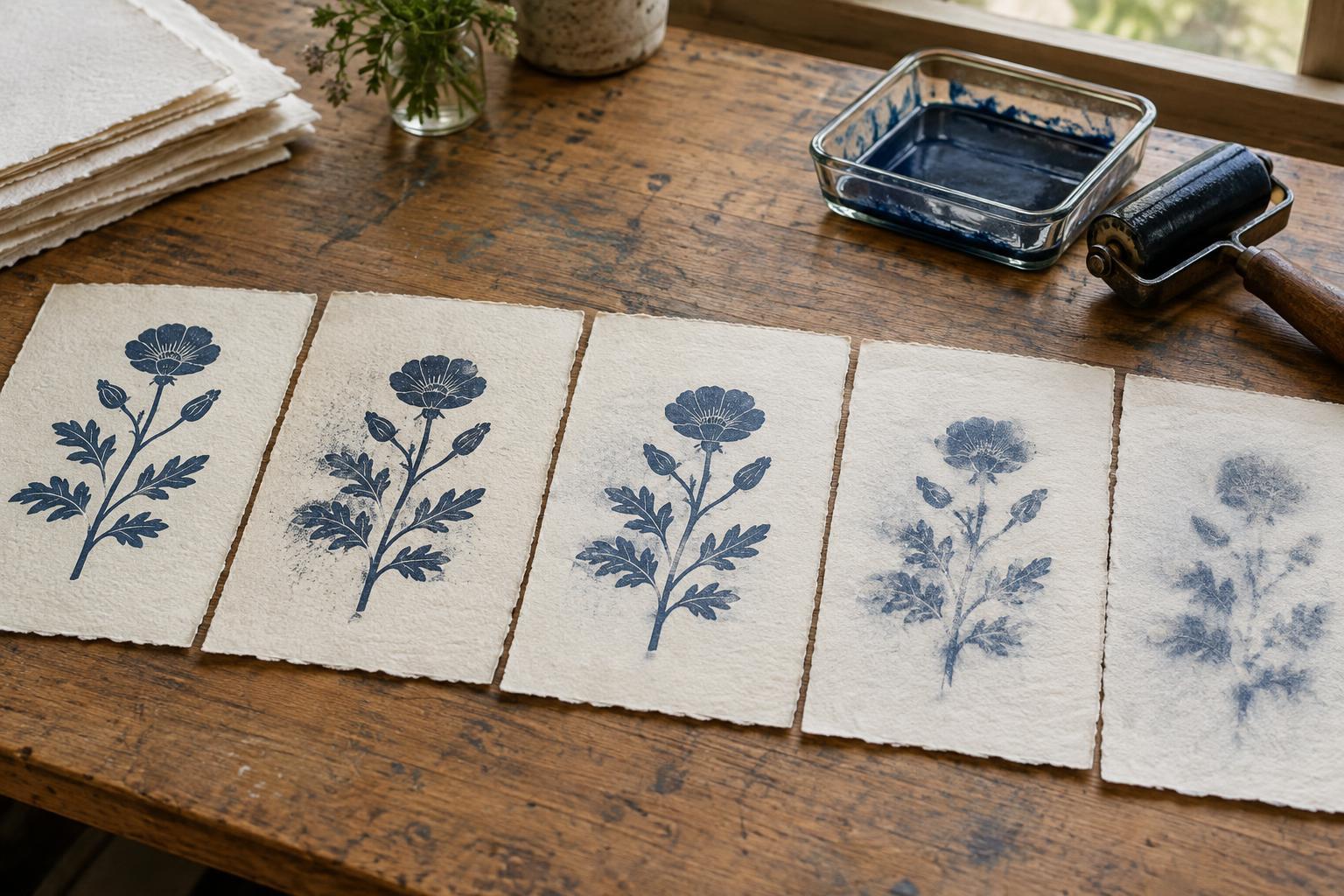
Cut sample sheets large enough to include an image area and margins. Label each sample with the paper name, GSM and any available thickness information. Using the same block or plate, ink and printing approach, make trial impressions on each sheet. Note how easily the paper registers, whether it picks up fine lines and solid areas, and how it behaves when you lift it from the printing surface.
Let the samples dry before judging them. Compare changes in flatness, the clarity of marks, the feel of the surface and the appearance of the ink. If your process uses damp paper, record how you prepared each sheet so you can repeat the result. Choose a paper you can handle reliably through the whole workflow, not simply the one with the most impressive weight. Keep a labelled test print as a reference when planning the rest of the edition.