Two printing surfaces, two jobs for the ink
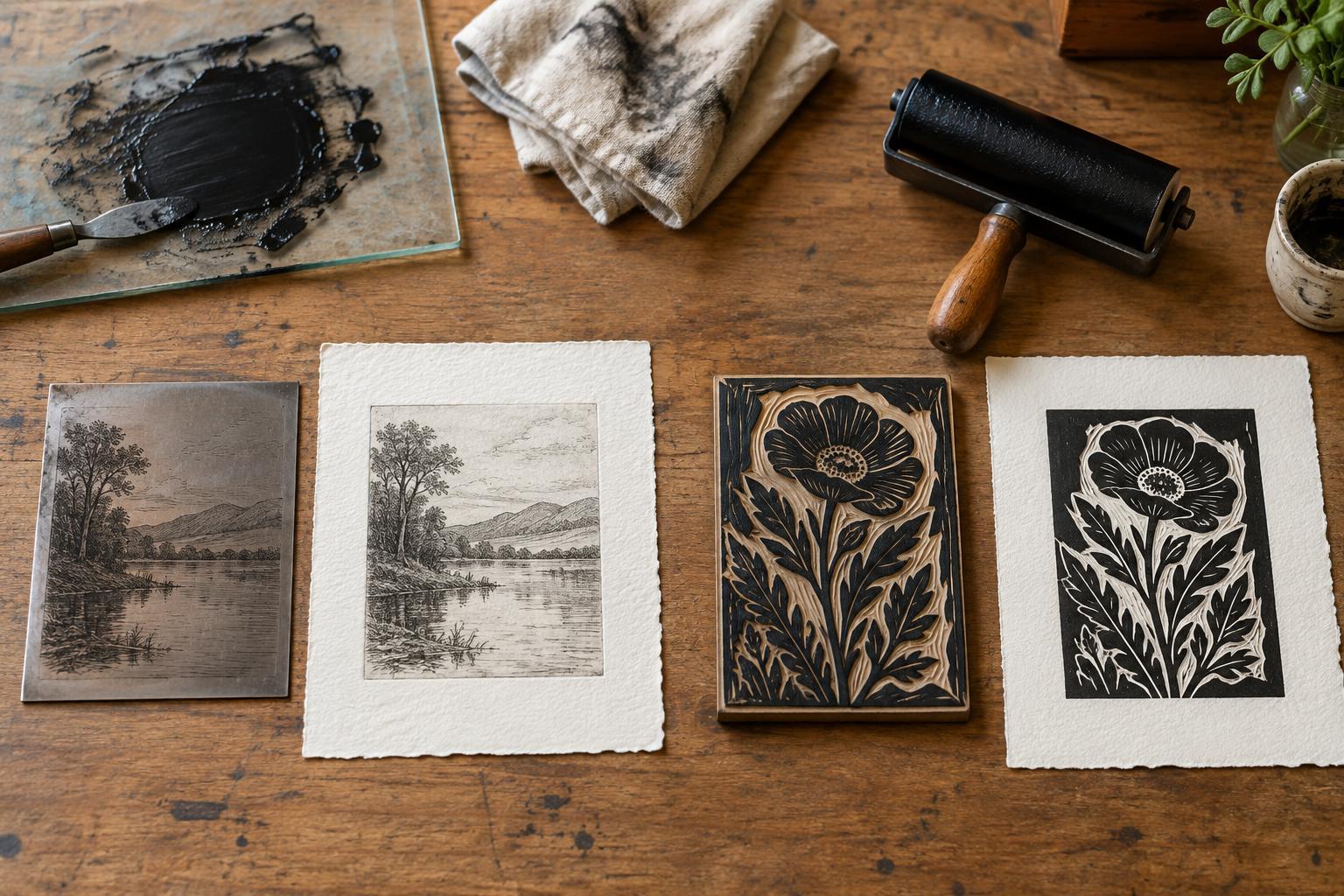
The difference begins with where the printable image sits. In intaglio, etched, engraved, or otherwise incised marks lie below the plate surface. Ink is worked into those recesses, and most of the ink on the surface is wiped away. Under pressure, paper meets the ink held in the marks. In relief printing, the image sits on the raised surface of a block or plate. A roller deposits ink there while the cut-away areas should remain clear.
These methods ask ink to behave in almost opposite ways during application. Intaglio ink needs to enter fine marks, remain there during wiping, and release onto paper during printing. Relief ink needs to spread into a controlled film on a roller, transfer to the high points, and avoid slipping into carved areas. Neither label guarantees one exact consistency: inks vary by maker, pigment, formulation, and intended printing method.
Body, flow, and tack in the studio
An ink’s body is the way it holds its shape and moves when pushed. Tack describes its pull or stickiness as surfaces separate. These qualities are easier to recognize at the slab than to judge from a label alone. An ink that spreads readily may be pleasant to push across a plate, but if it lifts too easily during wiping, shallow intaglio marks can lose definition. A very stiff ink may stay in the marks yet take more effort to work into delicate lines.
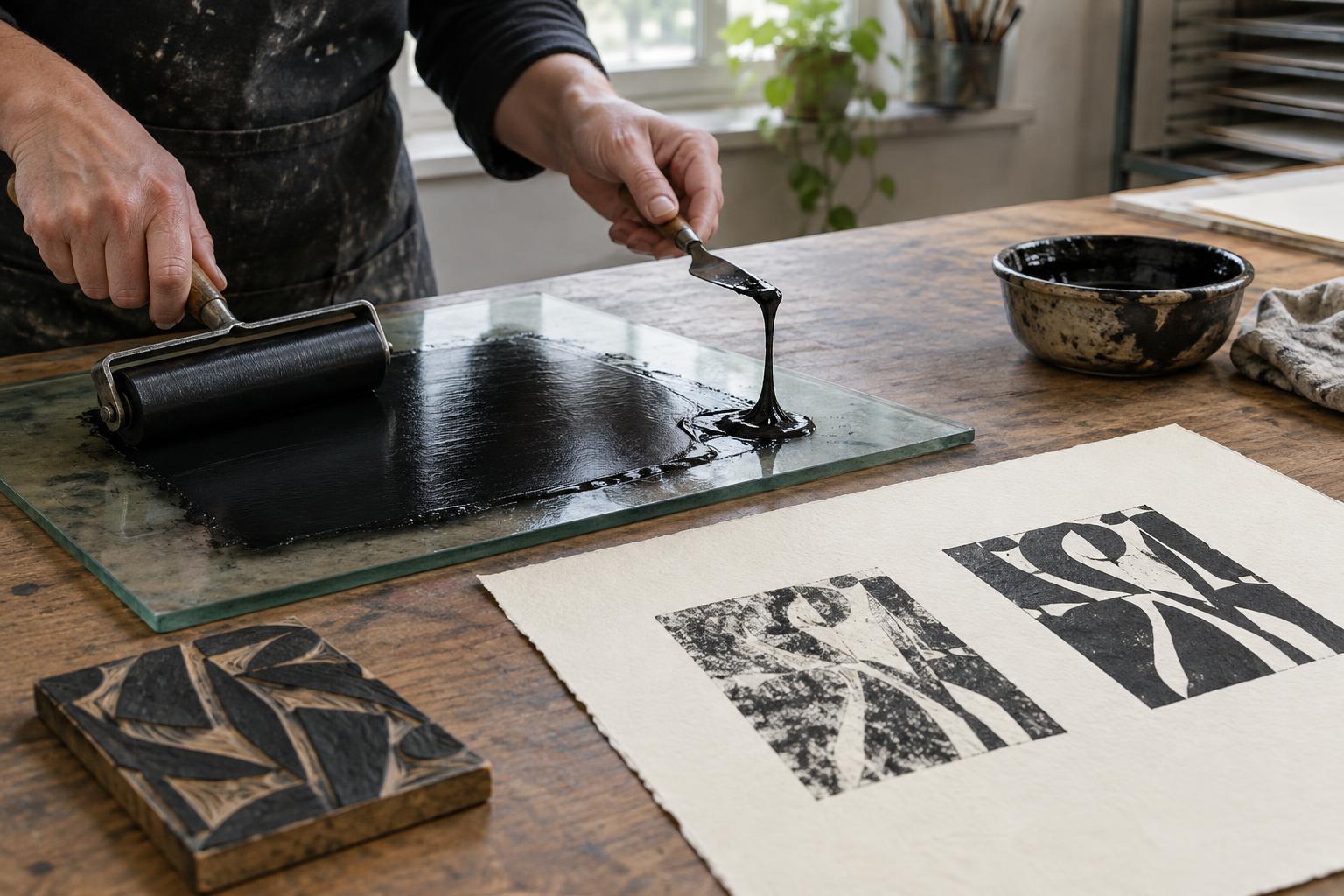
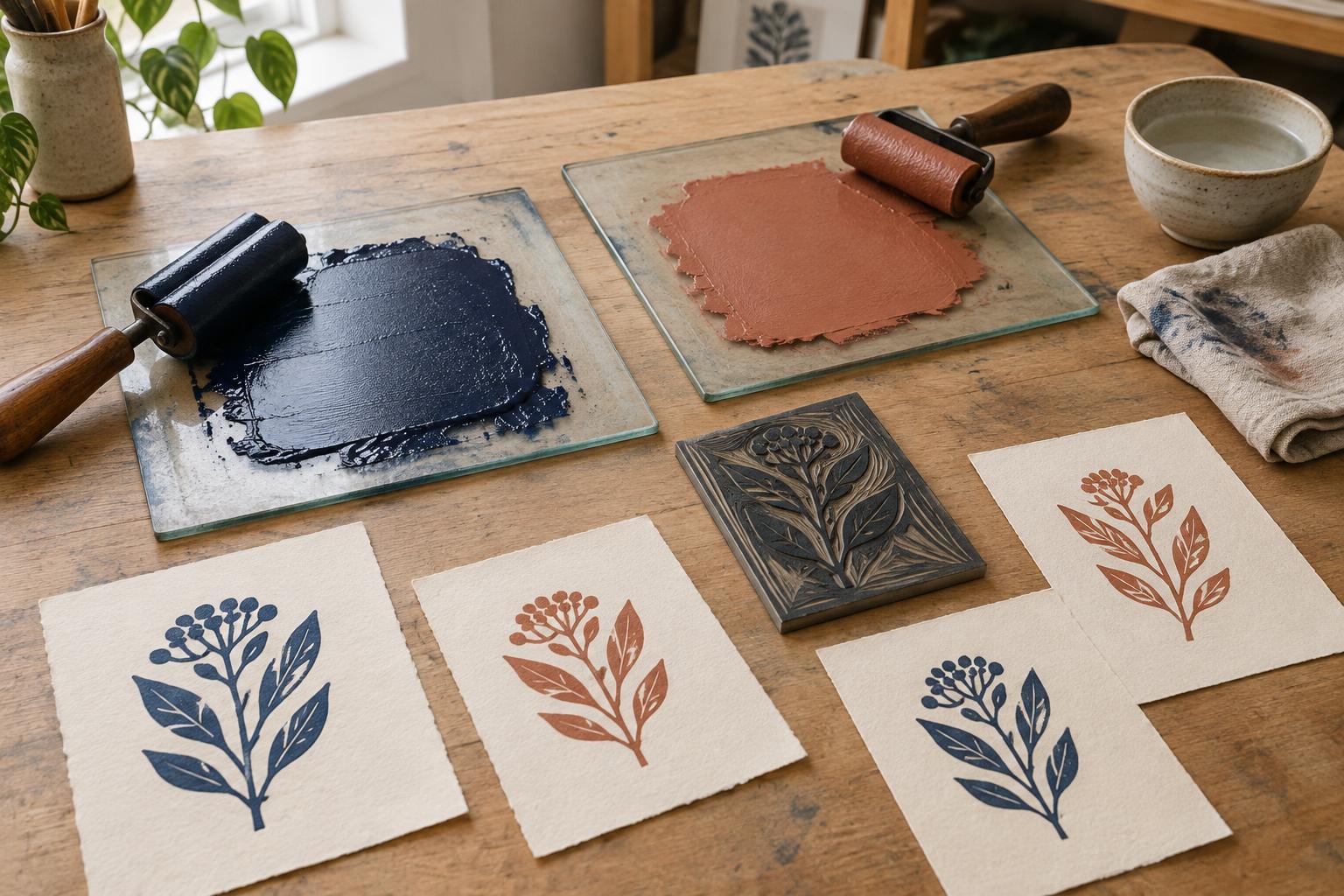
For relief printing, the useful test is the film a brayer lays down. If the ink is too loose for the block and roller, it may gather at edges or enter narrow cuts. If it is too stiff or tacky, the roller may leave a patchy film or struggle to release ink evenly. The amount of ink on the slab matters as much as its consistency: even a suitable relief ink can fill carved detail when applied too heavily.
Paper changes what you see
Ink does not act alone. Intaglio is commonly printed with paper that has been dampened and then blotted. Damp paper is more flexible, helping it reach into recessed marks under the press. Too much surface moisture, however, can interfere with a clean impression. The useful degree of dampness depends on the paper, plate, ink, and pressure, so a small test is more reliable than a fixed rule.
Relief printing is often done on dry paper, though artists choose papers and moisture levels to suit a particular process. A smooth sheet may pick up fine surface detail more readily, while a textured sheet can produce deliberate variations. An absorbent paper may make a thin ink film look quieter than it did on the block. Before changing the ink, check whether uneven coverage follows the paper texture, the roller, or the carved surface.
Water-based and oil-based are separate choices
“Intaglio” and “relief” describe printing methods; “water-based” and “oil-based” describe different approaches to ink formulation. They are not interchangeable pairs. You can find inks formulated for either method with different vehicles and cleanup requirements. The ink’s label is the best starting point for its intended use, compatible modifiers, drying behavior, and cleanup procedure.
Avoid assuming that a few drops of water or oil will fix an unfamiliar ink. An incompatible addition can upset its balance or make results harder to repeat. If an ink is too stiff or too loose, use a modifier recommended for that product, and test a small portion before changing the whole tin. Keep cleanup materials appropriate to the ink, and follow the product’s safety directions, particularly when ventilation or gloves are called for.
A simple comparison test
To learn how two inks differ, prepare a small intaglio plate with both broad and fine marks, plus a relief block with open areas and narrow cuts. Print each with an ink intended for its method, using the same paper for initial comparisons where practical. Note how easily the intaglio ink enters the marks, how it responds to wiping, and whether fine lines print. For the relief ink, watch the film on the roller, the coverage on broad areas, and any ink creeping into cuts.
Change one variable at a time on the next impression: the ink quantity, wiping pressure, roller loading, paper, or printing pressure. That approach makes a disappointing print useful evidence. Pale intaglio lines do not automatically call for more ink, just as filled relief cuts do not automatically call for a different brand. Understanding what each ink is being asked to do gives you a better place to begin.