Why woodcuts suited the printed book
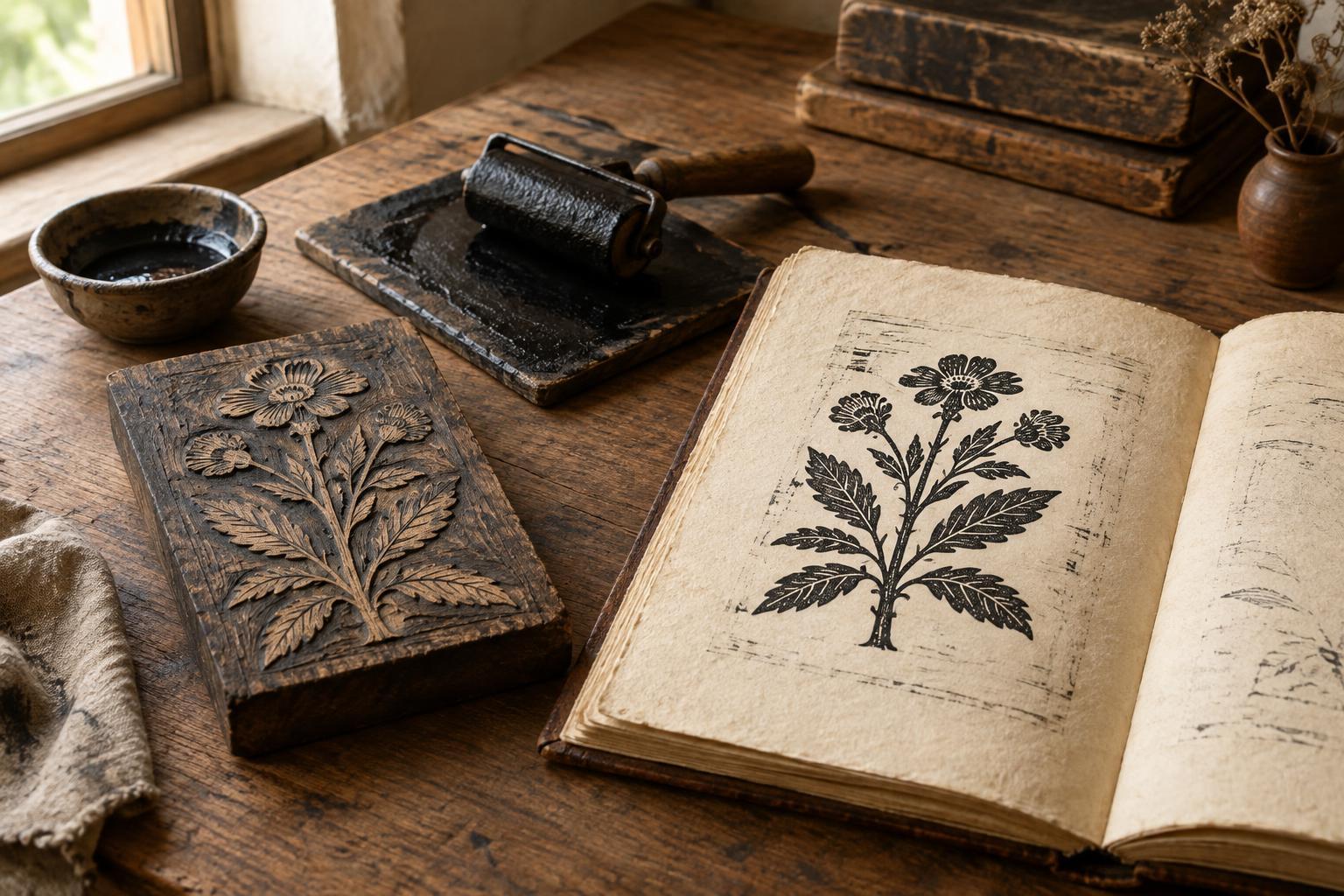
In the early centuries of European printing, woodcuts offered a practical way to put pictures beside words. A woodcut is a relief print: the printer inks the raised surface of a carved block while the cut-away areas remain mostly white. Movable metal type also prints from a raised surface. Because both could be printed by similar means, a workshop could place a woodblock among pieces of type and print image and text on the same sheet.
That compatibility shaped the look of many illustrated books from the fifteenth and sixteenth centuries. Images could introduce a chapter, identify a person or place, clarify a subject, or help a reader navigate a long text. A picture did not always have to depict a passage exactly. A workshop might use an existing block where its general subject seemed suitable, so the relationship between image and words deserves a close look.
From drawing to carved block
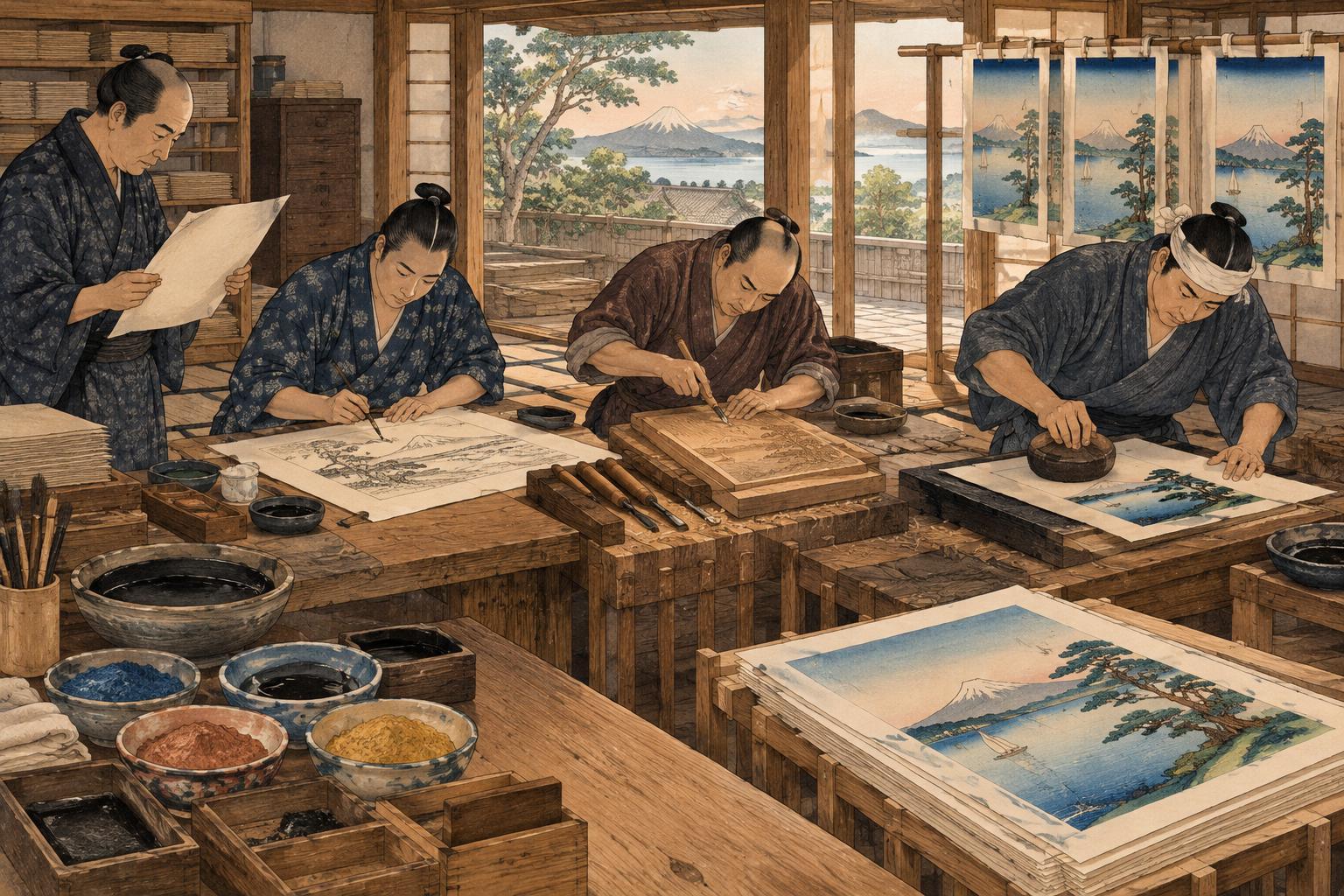
A woodcut began with a design, but designing and cutting were not necessarily the same job. In a workshop, one person might draw the image while a specialist cut it. The cutter removed wood from areas intended to stay light, leaving lines and shapes standing at the original surface. Once inked, those raised areas printed dark. Lettering within the image had to be planned in reverse if it was to read correctly on the page.
Many book woodcuts favored clear outlines and strong contrasts that would remain legible at a modest size. A cutter could use closely spaced lines to suggest shadow, texture, or depth, but very fine details were harder to preserve through repeated printing. The appearance of a surviving image reflects more than the original drawing: the cutter’s decisions, the block’s condition, the ink, and the printing all played a part.
Printing and assembling an illustrated page
A printer had to plan where an image would sit before setting the surrounding text. Blocks might occupy a full page, fit within a column, or leave room for a caption. Type and image needed to meet the paper evenly enough to produce a readable impression. Differences in height or pressure could leave parts of a woodcut faint or make other areas print too heavily.
The sheets were then folded and assembled into a book. A viewer encountering a woodcut today sees one stage of a larger process: paper selection, page layout, printing, and binding all affected the result. Some copies were also colored by hand after printing. Color could make figures easier to distinguish or give a copy a more elaborate finish, but it was not necessarily identical from one copy to another.
Reuse, variation, and the limits of an image
Carving a block took time, so reuse could be attractive. The same image might appear in more than one place in a book, or a block might serve a later publication. Repetition is therefore a useful clue, not automatically a mistake. An image of a ruler, a city, or a familiar scene may represent a type of subject rather than a precise portrait or location.
Early European illustrated books were not all made in one way. Blocks varied in size, detail, and purpose; workshops differed in their resources and choices. Even copies of the same printed text can differ if an image was added, omitted, colored, or printed with a different block. When studying a page, it helps to ask what the picture shows, where it appears, and how closely it responds to the nearby words before treating it as a record of a specific event.
What a printmaker can learn from the page
For a modern printmaker, an early illustrated page is a lesson in designing for context. Notice how a dark shape holds its place among lines of type, how an open area gives the eye a rest, and whether a border separates the picture from the text. Consider what would still be clear if the impression were lighter or the paper more absorbent.
You can explore these choices without trying to reproduce a historic book. Make a small relief block with a simple subject, then print it beside a short passage of text. Try changing the spacing, scale, or amount of detail while keeping the image the same. The exercise shows why a book woodcut was never just an isolated picture: it was part of a page made to be printed, handled, and read.