A workshop built for public images
The Taller de Gráfica Popular, often shortened to TGP and translated as the People’s Graphic Workshop, was founded in Mexico City in 1937. Leopoldo Méndez, Pablo O’Higgins and Luis Arenal were among its founders. The workshop brought artists together around a practical question: how could printed images take part in public discussions rather than remain chiefly in galleries or private collections?
The TGP emerged in the decades following the Mexican Revolution, when questions about land, labor, education and national identity remained prominent. Its artists also responded to events beyond Mexico, including the rise of fascism. These concerns gave the workshop a political purpose, but not a single fixed style. Members made posters, leaflets, illustrations and prints that could circulate through different settings and reach different audiences.
How technique served the message
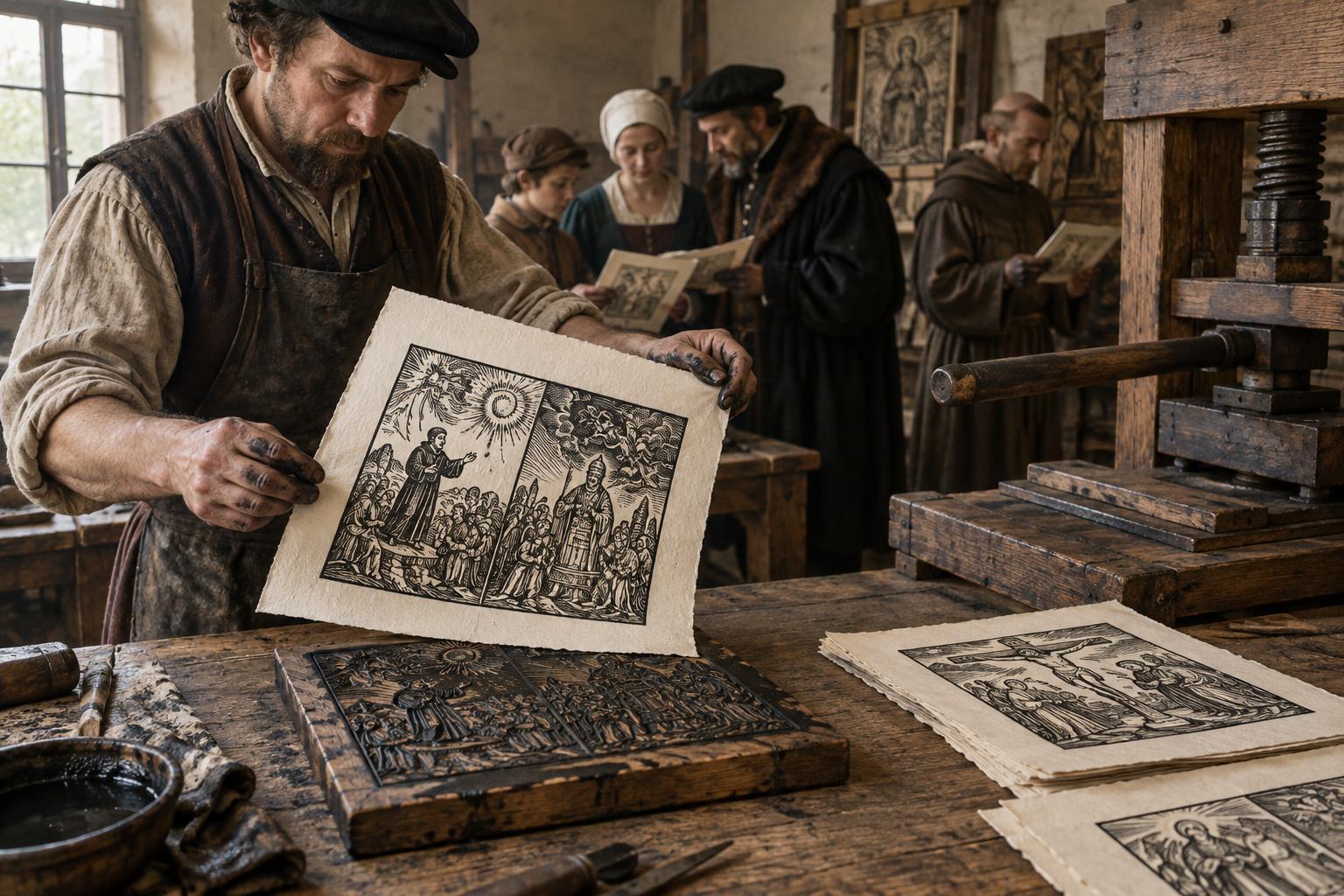
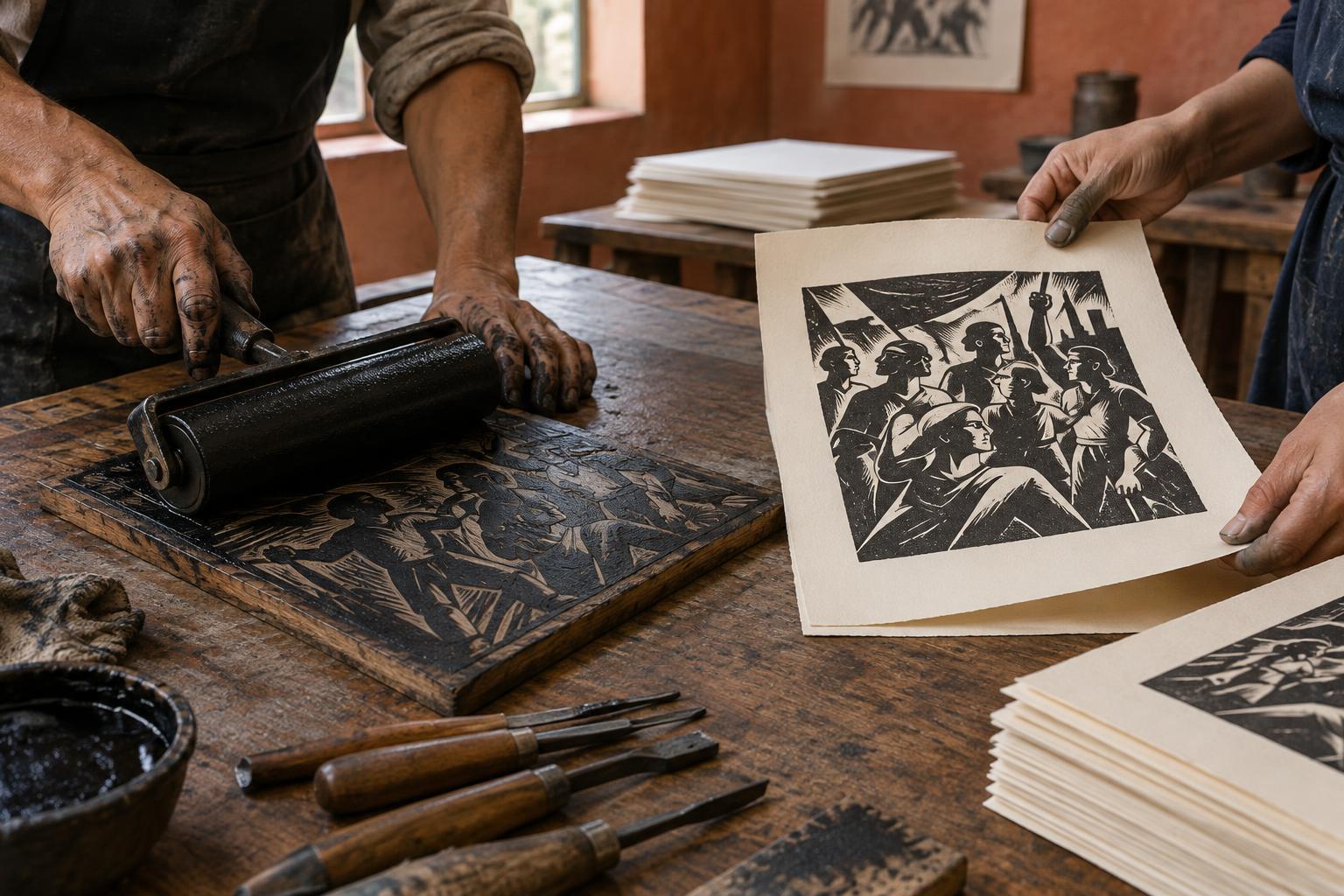
Relief processes such as woodcut and linocut suited much of the TGP’s work. An artist cuts away parts of a block, inks the raised surface and presses it against paper. The resulting contrasts can make figures, gestures and lettering legible at a glance. Relief printing also allows an image to be printed repeatedly, a useful feature when copies are intended for circulation.
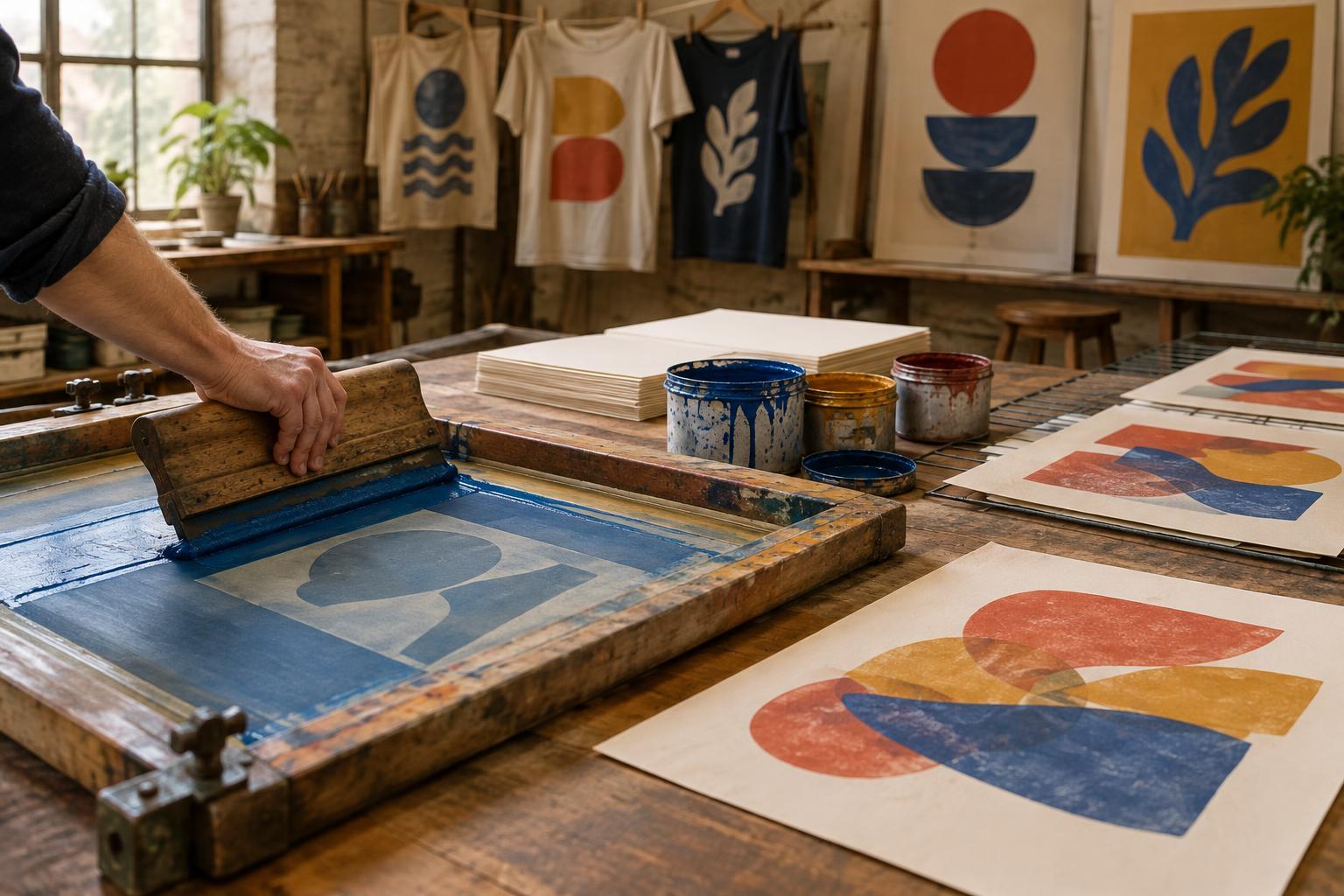
The workshop’s output was not limited to one process, and technique alone did not make a print effective. An artist still had to decide what a viewer might notice first, how words and images would work together, and whether the composition made sense from a distance or in the hand. A small illustration for a publication asks something different of its viewer than a poster on a wall. In both cases, the planned destination helped shape the image.
Collaboration and circulation
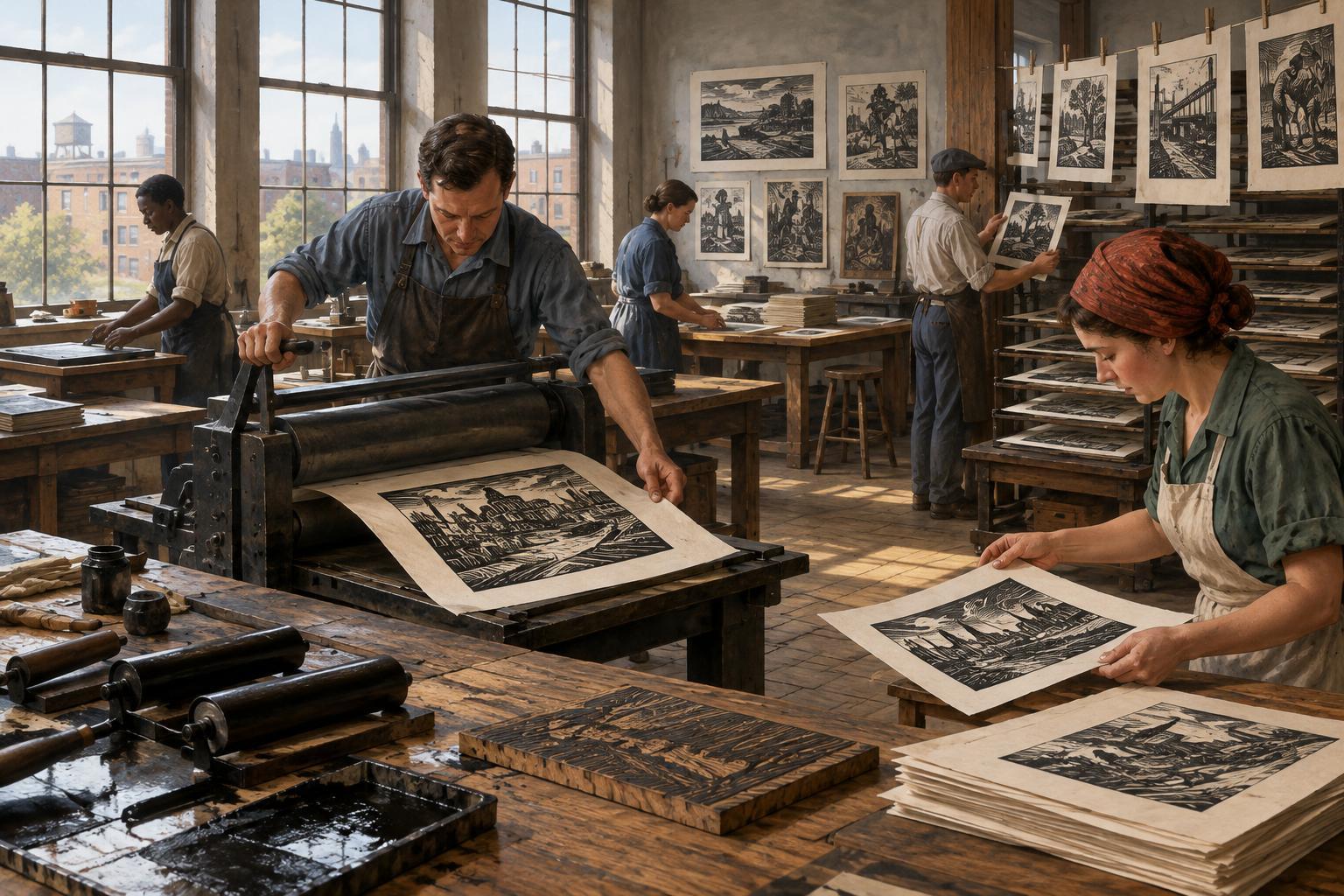
The word taller means workshop, and that shared setting mattered. Artists could exchange ideas, prepare blocks or stones, print editions and respond to requests for images. Some works spoke directly to particular campaigns or organizations; others addressed broader experiences of injustice and resistance. Collaboration did not erase individual artists’ decisions, but it placed those decisions within a collective effort.
A political print needs more than a compelling image: it needs a route to its viewers. Posters, pamphlets and other reproducible formats offered ways to carry work outside conventional exhibition spaces. That did not mean every image reached everyone, or that viewers agreed with its argument. Paper, printing time and distribution all set limits. The TGP’s example is therefore as much about planning where a print will go as it is about designing what appears on its surface.
A conversation beyond Mexico
The workshop’s concerns were rooted in Mexican life, yet its membership and connections crossed borders. American artist Elizabeth Catlett worked with the TGP and made images centered on Black women’s lives and histories. Her work offers a reminder that political printmaking need not speak for only one place or one community. Artists can share tools and working methods while bringing distinct subjects and perspectives to them.
That breadth is one reason to look at TGP prints individually rather than treat them as interchangeable examples of “propaganda.” Consider who or what is shown, what action the image invites, and who might have encountered it. Look, too, for quieter choices: a face given dignity, a crowd shown acting together, or an ordinary object made central to a larger argument. Political intent can be expressed through composition and subject matter as well as through slogans.
What printmakers can learn from the TGP
The TGP’s history offers a useful starting point for a contemporary studio exercise. Choose a local issue you understand, then write down a specific audience and a plausible place for the finished print. Make two small sketches: one that depends on a caption and one that communicates mainly through shapes and contrast. Test them at their intended viewing size before cutting a block or preparing another matrix.
This exercise does not require adopting the workshop’s politics or imitating its visual style. Its lesson is the connection between purpose, process and circulation. The number of copies, the paper, the image’s scale and the way it will be shared are not merely finishing details. For the artists of the Taller de Gráfica Popular, such decisions helped turn printmaking into a form of public participation.