An unusual place in printmaking
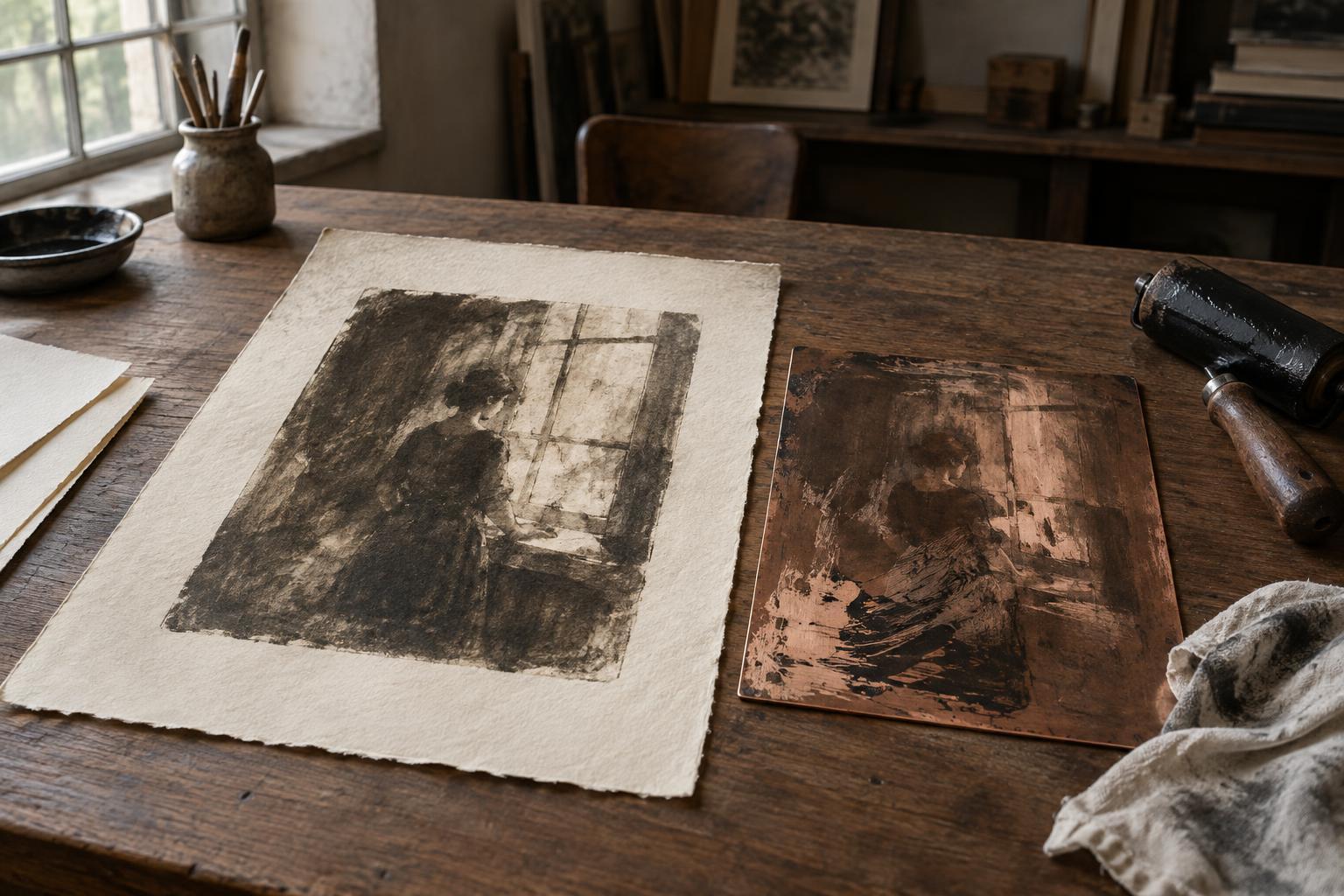
A carved block or etched plate holds an image that can be inked and printed again. A monotype works differently. The artist generally draws or paints with ink on a smooth, unmarked surface, places paper over it, and applies pressure to transfer the image. Much of the ink leaves the surface during that first pull. A second impression may be possible, but it is usually paler and visibly different.
This makes the monotype both a print and a challenge to the idea of an edition. Its image is reversed in transfer, shaped by pressure and dependent on how the ink releases. Those features distinguish it from a drawing made directly on paper, even when the finished work has a similarly immediate, hand-worked appearance. The method offers an artist the movement of painting with the surprise of printing.
Castiglione and the early monotype
The seventeenth-century Italian artist Giovanni Benedetto Castiglione is closely associated with early monotypes. He worked with ink on a smooth plate, removing and shifting it to form an image before printing. Rather than relying on lines cut into metal, he could develop figures and atmosphere from areas of light and dark. The plate served as a temporary working surface, not a permanent record of the design.
That distinction matters when looking at an impression. A dark region might come from ink left broadly on the plate; a highlight might come from ink wiped away before printing. The resulting image could have the rich tones viewers might associate with other intaglio prints, yet its marks could not simply be re-inked in the same arrangement. Castiglione’s work demonstrated that a print could be valued for an image that happened only once.
Degas and the expressive plate
In the nineteenth century, Edgar Degas made extensive use of monotype, exploring subjects including performers, interiors and urban scenes. He used the method in different ways. An image could be built by adding ink to a light surface, or drawn out of a dark layer by wiping ink away. These approaches gave him room to move between sharp marks, broad shadows and soft transitions within a single print.
Degas also sometimes worked further on printed impressions with other media. This complicates any simple division between print and drawing: the transferred image could become a starting point rather than a finished endpoint. For a viewer, a monotype’s blurred edges or uneven passages are not necessarily flaws. They can reveal decisions made quickly on the plate, as well as changes that occurred when the ink met the paper.
Why artists keep returning to it
Later artists have continued to use monotype as a way to test images without committing to a repeatable matrix. A simple setup can begin with a smooth plate, suitable ink, paper and a means of applying even pressure. Artists may roll out a thin field of ink and lift it with cloth, brushes or other tools. Others work by placing ink only where they want the image to appear. The choices are broad, but the first transfer remains a decisive moment.
For someone exploring printmaking history through practice, a small monotype can make that history tangible. Create one image by adding ink, then another by removing it from a rolled-out layer. Compare the first impressions with any faint second pulls, sometimes called ghost prints. The exercise helps explain why artists from Castiglione to Degas found the process useful: it preserves the physical act of transfer while leaving space for images that cannot be repeated exactly.