A New Way to Make a Print
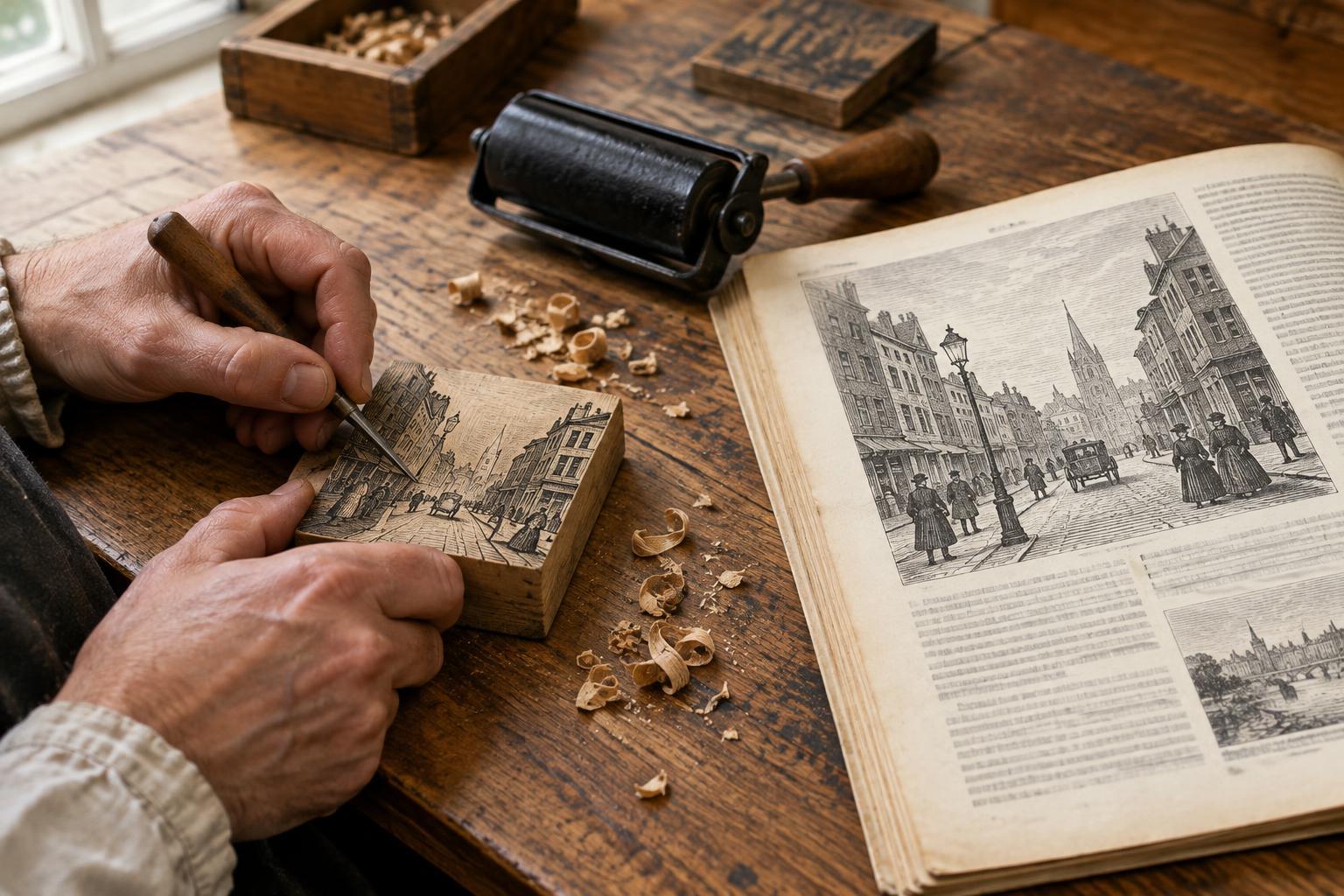
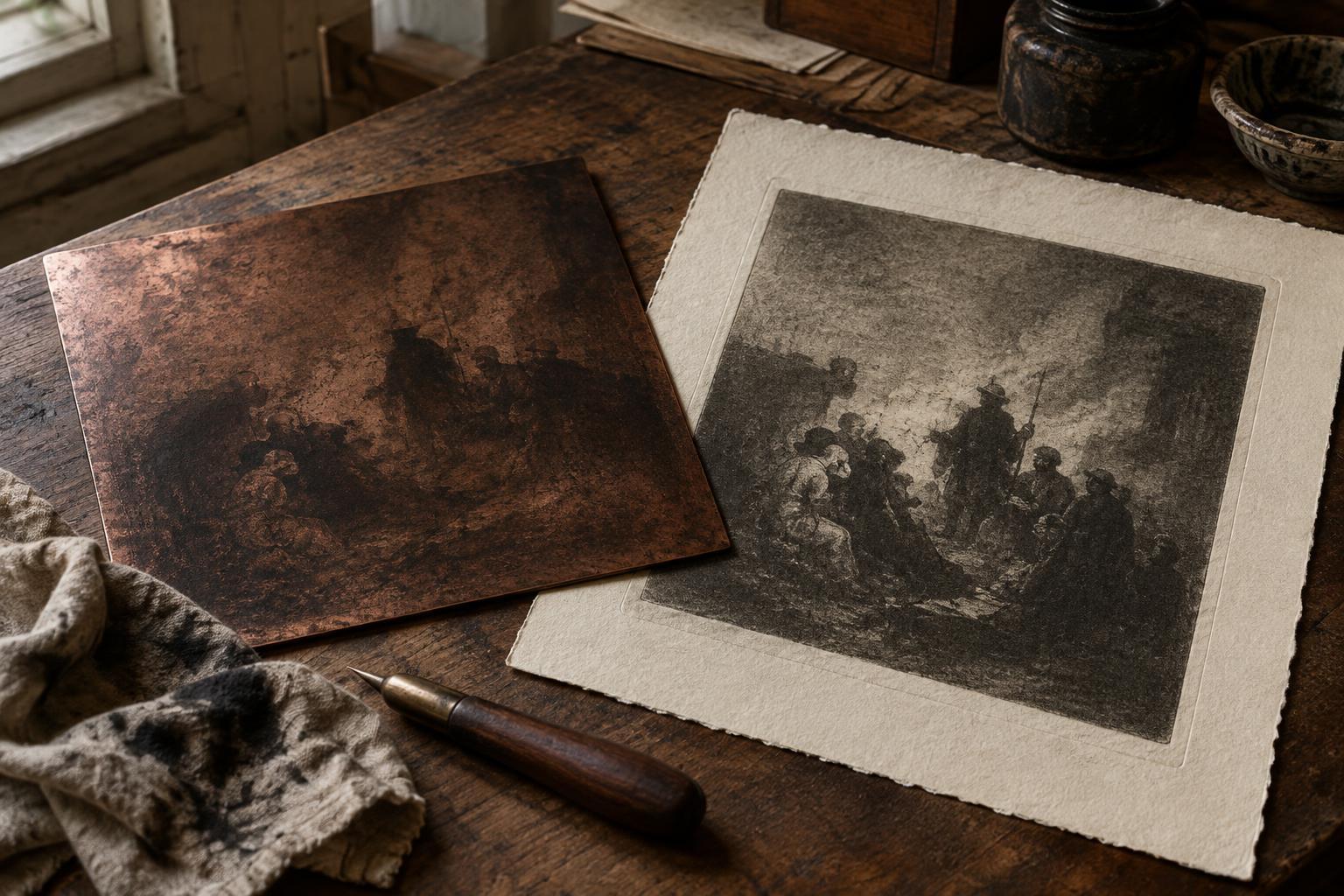
Before lithography, a printer making an image generally had to cut, carve or etch a printing surface. A woodcut holds ink on its raised areas; an engraving or etching holds ink in recessed lines. Lithography offered a different approach. Its image sits on a nearly flat surface, so the artist can draw without translating every mark into a groove or a ridge.
Alois Senefelder developed the process in Bavaria in the 1790s while looking for a practical way to reproduce his writing. His experiments with limestone, greasy drawing materials, water and ink led to a method suitable for both text and pictures. The name comes from Greek words for stone and writing. Although later lithographs were also made on metal plates, stone remained closely associated with the process and its early history.
How Drawing on Stone Becomes a Print
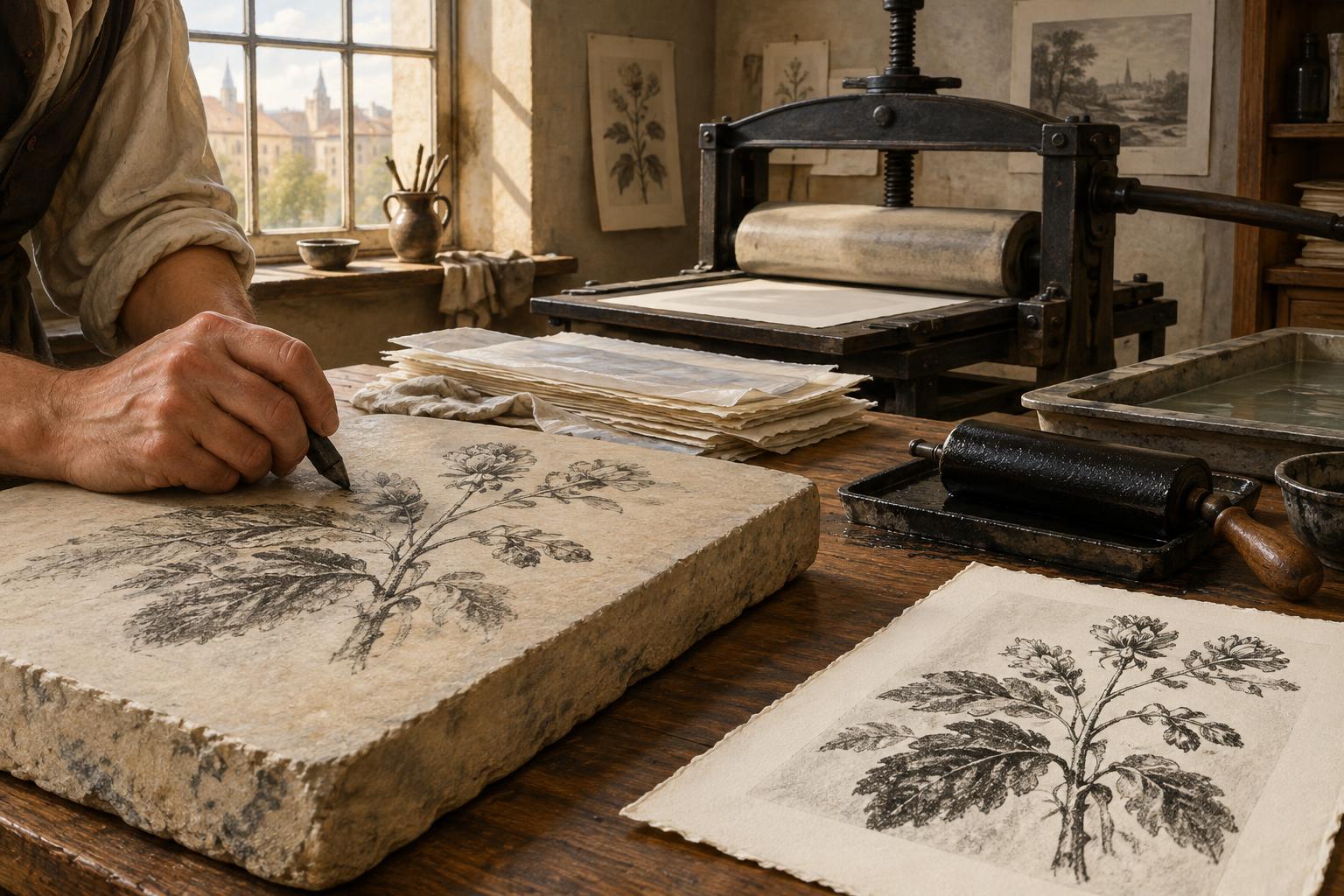
Traditional stone lithography begins with a smooth slab of limestone. The artist draws on it using a greasy crayon or liquid material called tusche. These tools can produce fine lines, broad washes and grainy tones that resemble marks made on paper. The stone is then treated so the drawn areas accept oily printing ink while the untouched areas attract water and resist that ink.
During printing, the surface is dampened and rolled with ink before paper is pressed against it. Keeping the balance between moisture and ink takes care and practice; the simple phrase “oil and water do not mix” explains the principle, but not every step needed to prepare and print a reliable image. Because the stone prints from a flat surface, lithography is described as a planographic process.
One detail can surprise beginners: a direct drawing on the stone prints in reverse. Artists who need readable lettering must plan for that reversal or use a transfer method. The need to think ahead is part of the craft, even though the drawing itself can feel unusually immediate.
Why Artists Took Notice
Lithography spread beyond its initial practical uses as printers and artists recognized what its drawn marks could do. Compared with cutting a woodblock or engraving a metal plate, drawing with crayon on stone offered a familiar gesture. An artist could vary pressure, build shadow with repeated strokes, or work with a fluid tusche wash. This did not make lithography effortless: preparing stones and pulling consistent impressions required skilled collaboration. It did, however, give artists a direct way to shape the printed image.
The medium also suited circulation. A drawing on stone could yield multiple impressions, allowing images to reach viewers beyond the owners of a single painting or drawing. Artists used lithography for stand-alone prints, illustrated books, portraits and public-facing work. Its development was tied not only to artistic expression but also to the practical businesses of printing and publishing.
From Expressive Prints to City Posters
Francisco Goya explored lithography late in his life. His series commonly called The Bulls of Bordeaux shows how animated crayon marks could convey movement and atmosphere. In nineteenth-century France, Honoré Daumier used lithography extensively for images connected with the illustrated press. His example shows a different strength of the medium: its ability to carry sharp observations to a broad readership.
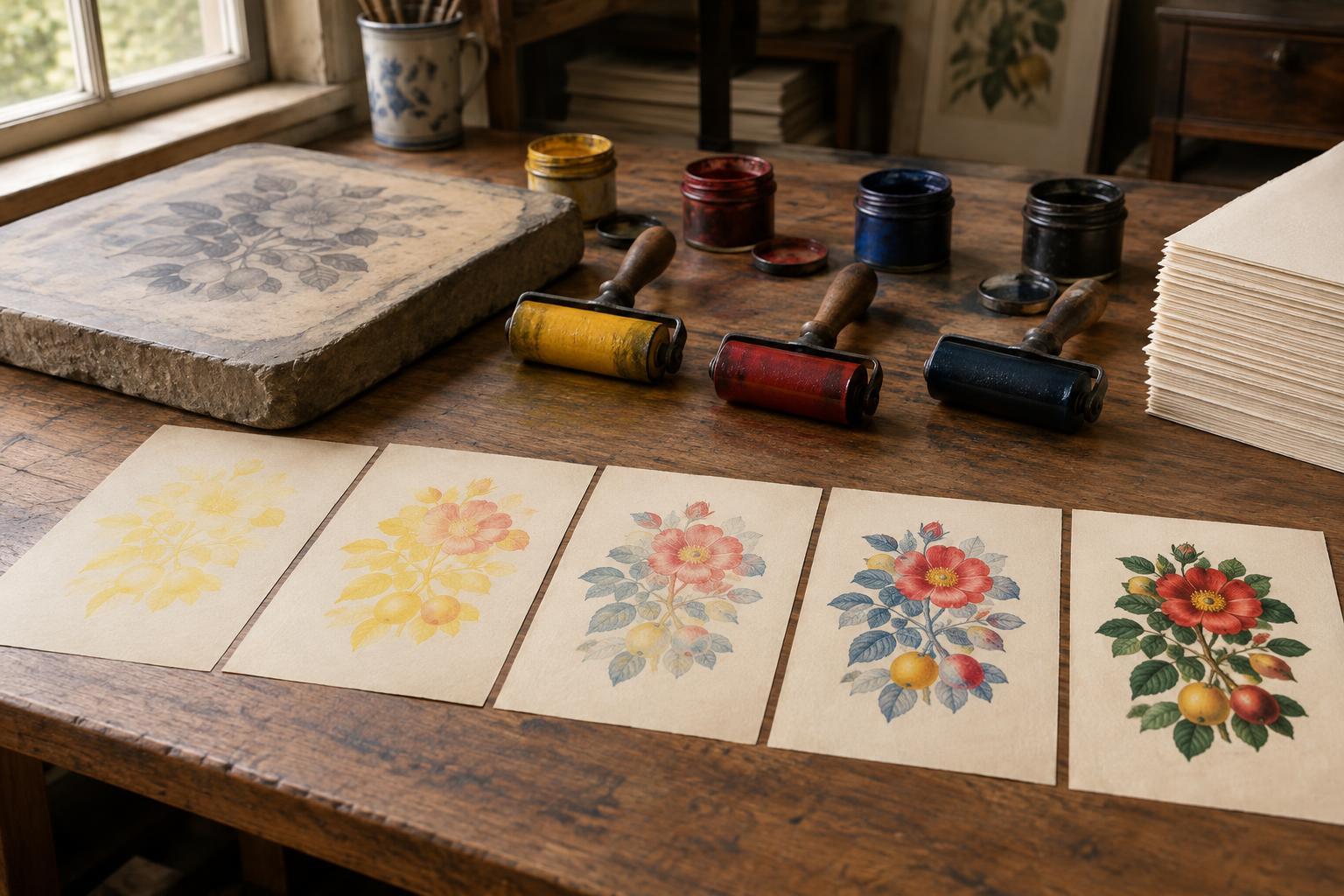
Artists continued to find new uses for lithography as printing methods developed. Toward the end of the nineteenth century, Henri de Toulouse-Lautrec made memorable color lithographic posters. Their bold shapes and lettering were designed to work at a glance in a public setting, quite unlike a print meant for close inspection in a portfolio. These examples do not form a single straight line of progress. They show how the same basic process could serve an intimate drawn image, a published commentary or a striking advertisement.
What Its History Reveals
Lithography’s invention changed more than the mechanics of printmaking. It opened a route between an artist’s hand and a repeatable image while leaving room for the printer’s expertise. When looking at a lithograph, notice whether its lines seem soft, scratchy or emphatic; whether tones resemble a wash or a field of crayon; and how the composition might have been intended to circulate.
For a beginner, comparing a lithograph with a woodcut or etching is a useful way into this history. Look for differences in the character of the marks rather than trying to identify a process by subject alone. Senefelder’s method endured because it could adapt: first as a practical means of reproduction, then as a medium artists used to draw, communicate and experiment in print.