A plate could remain a work in progress
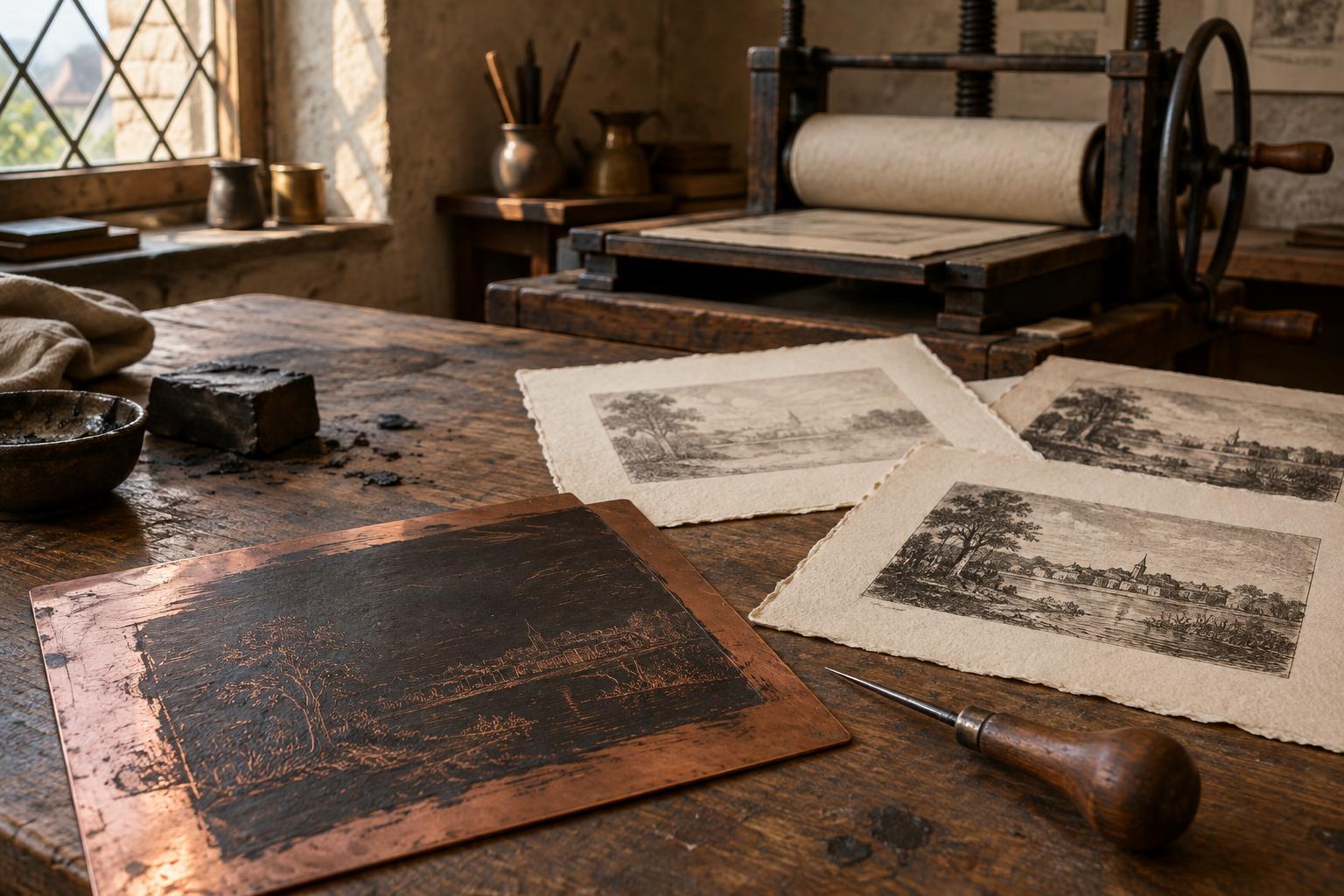
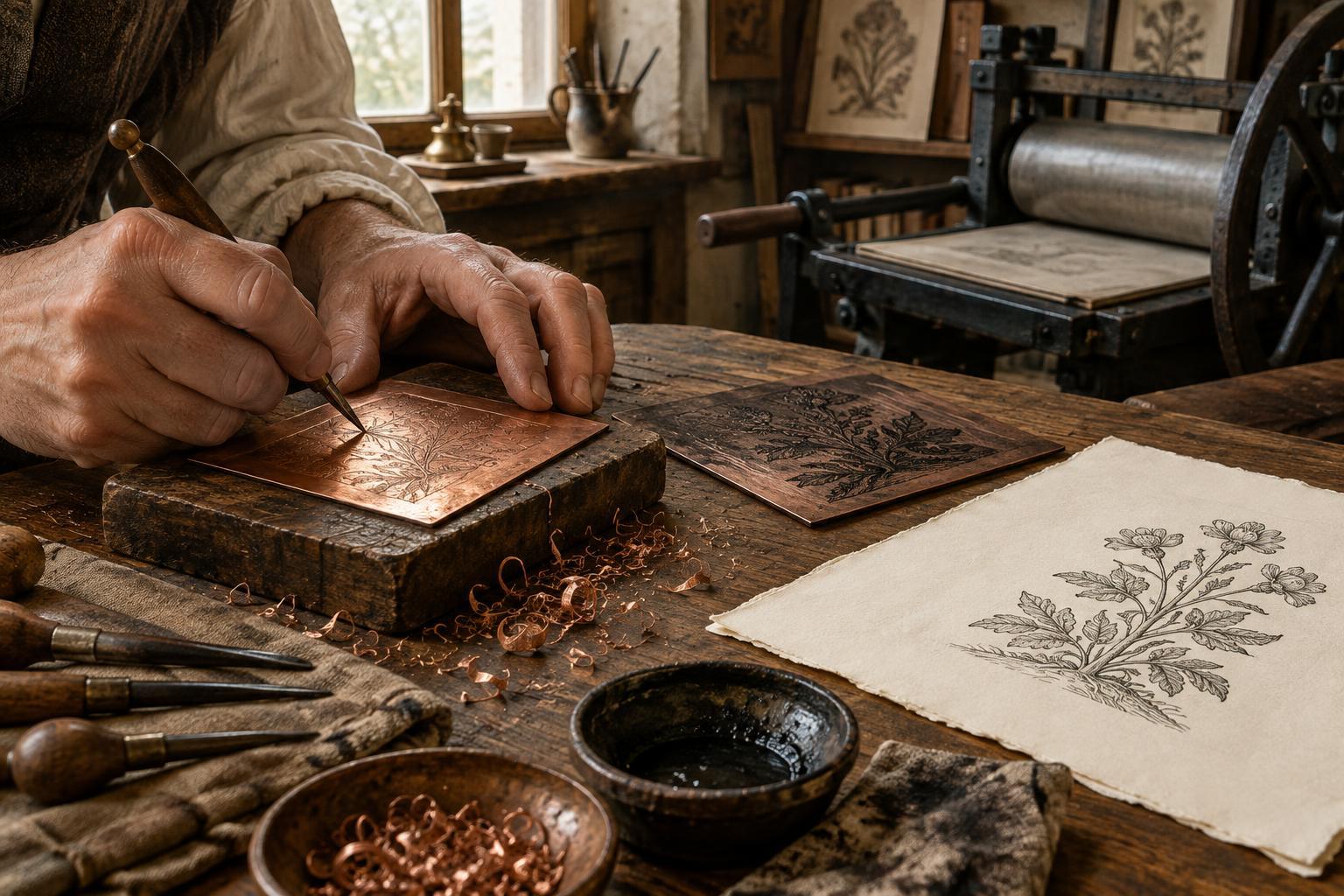
An etching begins with a metal plate coated in a protective ground. The artist draws through the ground, exposing metal where the lines should be. Acid bites those exposed lines; ink held in them transfers to damp paper under pressure. The resulting impression shows the image in reverse. For Rembrandt, this process was not necessarily a straight path from drawing to finished print. A plate could be printed, examined and worked on again.
Printmakers call a recognizable stage in a plate’s development a state. If an artist adds lines or removes part of the design, impressions made after that alteration belong to a different state. A state is not the same thing as an edition, nor does it tell us exactly how many impressions were pulled. It gives us a way to describe lasting changes to the printing surface.
Rembrandt used more than acid-bitten etching lines. He also worked directly into plates with drypoint, a needle technique that raises a slight ridge of metal, or burr, beside the cut. Burr can hold ink and produce a soft, dark line, but it gradually wears down as the plate is printed. He could therefore change an image both by deliberately reworking its plate and through the changing character of marks already on it.
What revision could accomplish
Revising a plate was more than correcting a mistake. Adding dense lines could deepen a shadow; clearing an area could make a figure easier to see. Either move could redirect the viewer’s attention. Because a plate already carried an image, a new mark also entered into conversation with the earlier ones. Rembrandt could keep much of a composition while changing its mood or its center of gravity.
The Three Crosses makes this especially vivid. In later impressions from a substantially revised state, dark passages and altered figures transform the scene’s visual balance. The event remains recognizable, yet the heavier shadows and reworked surroundings can make the image feel more turbulent. Comparing states is useful here because the differences cannot be explained simply as a printer using more or less ink: the plate itself changed.
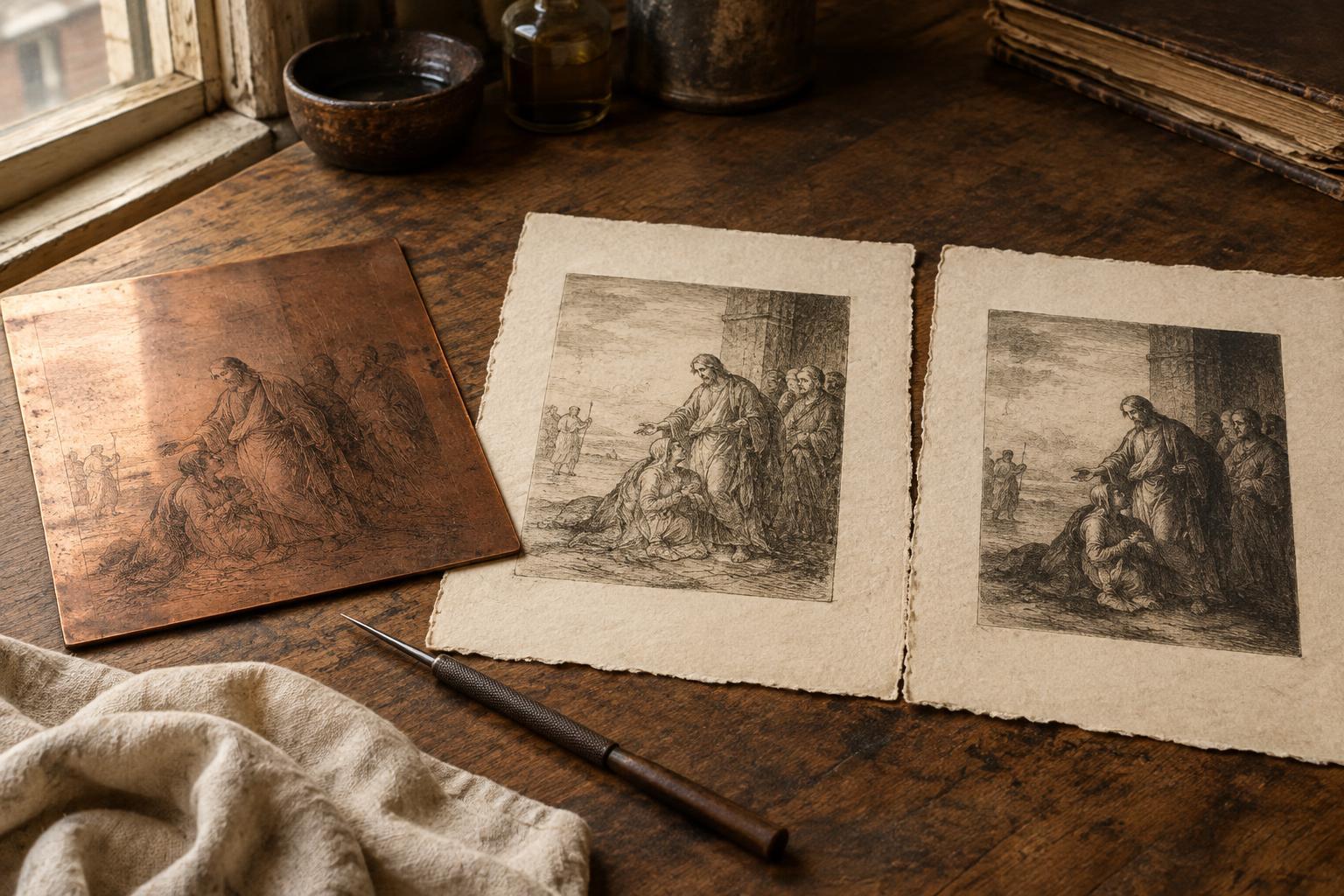
In Christ Presented to the People, Rembrandt also made significant revisions, including the removal of foreground figures in a later state. That change opens up space before the central scene. It demonstrates how subtraction can be as decisive as adding detail. A figure that disappears from the plate no longer competes for attention in subsequent impressions.
A changed plate is not the only source of variation
Two impressions from the same state can look surprisingly different. Before printing, the plate is inked and then wiped so that ink remains chiefly in its lines. Leaving a thin film of ink on the surface, often called plate tone, can give an open area a veil of gray. Wiping the same area more cleanly can make it appear brighter. Paper color and the condition of delicate drypoint burr can also affect what a viewer sees.
These differences matter when looking at reproductions. A darker photograph does not necessarily show a later state, and a smoky background does not by itself prove that new lines were cut. To identify a revision, look for a changed feature that would persist across impressions: a figure added or removed, an altered outline, or a new group of lines. Then look separately at qualities that may vary from impression to impression, such as broad tones and the richness of soft lines.
This distinction makes the idea of a single, definitive image less useful. A print can have a history on the plate and a history in the act of printing. Both shape the impression in front of us.
How to look closely at two states
Start with the largest shapes. Has a foreground been cleared? Has a dark area expanded? Next, follow the edges of important figures and architectural features. Small additions there may change which parts appear to advance or recede. Finally, compare areas that contain drypoint: a velvety line may be especially noticeable in some impressions without indicating a new design.
If you are trying this with images in a book or a museum collection, use captions to check that you are comparing the same plate and, where stated, different states. Keep the images at similar sizes before judging detail. Describing what you can actually see—“the foreground figures are absent” rather than “Rembrandt wanted the scene to feel empty”—helps separate observation from interpretation.
For a printmaker, the lesson is practical as well as historical. Proofing a plate need not mark the end of a design. An impression can reveal where a shadow overwhelms a face or where removing detail might clarify the subject. Rembrandt’s revised etchings show that a printed image can be a record of decisions made over time, not just the repeatable result of one finished plate.