Why images mattered in a dispute over words
The Protestant Reformation is often told through texts: sermons, pamphlets and translations of the Bible. Yet printed pictures were also part of the debate. In sixteenth-century Europe, a sheet bearing a woodcut could present a biblical scene, praise a reformer or criticize a religious practice. Images offered a quick point of entry into arguments that might otherwise require a lengthy explanation.
That did not mean pictures communicated a single, obvious message to everyone. Captions, sermons and conversation helped viewers interpret them. A person who could not read a pamphlet might still encounter its image in a workshop, market or household and hear someone explain it aloud. Prints worked within a culture of both reading and listening, rather than replacing either one.
How a woodcut could carry an argument
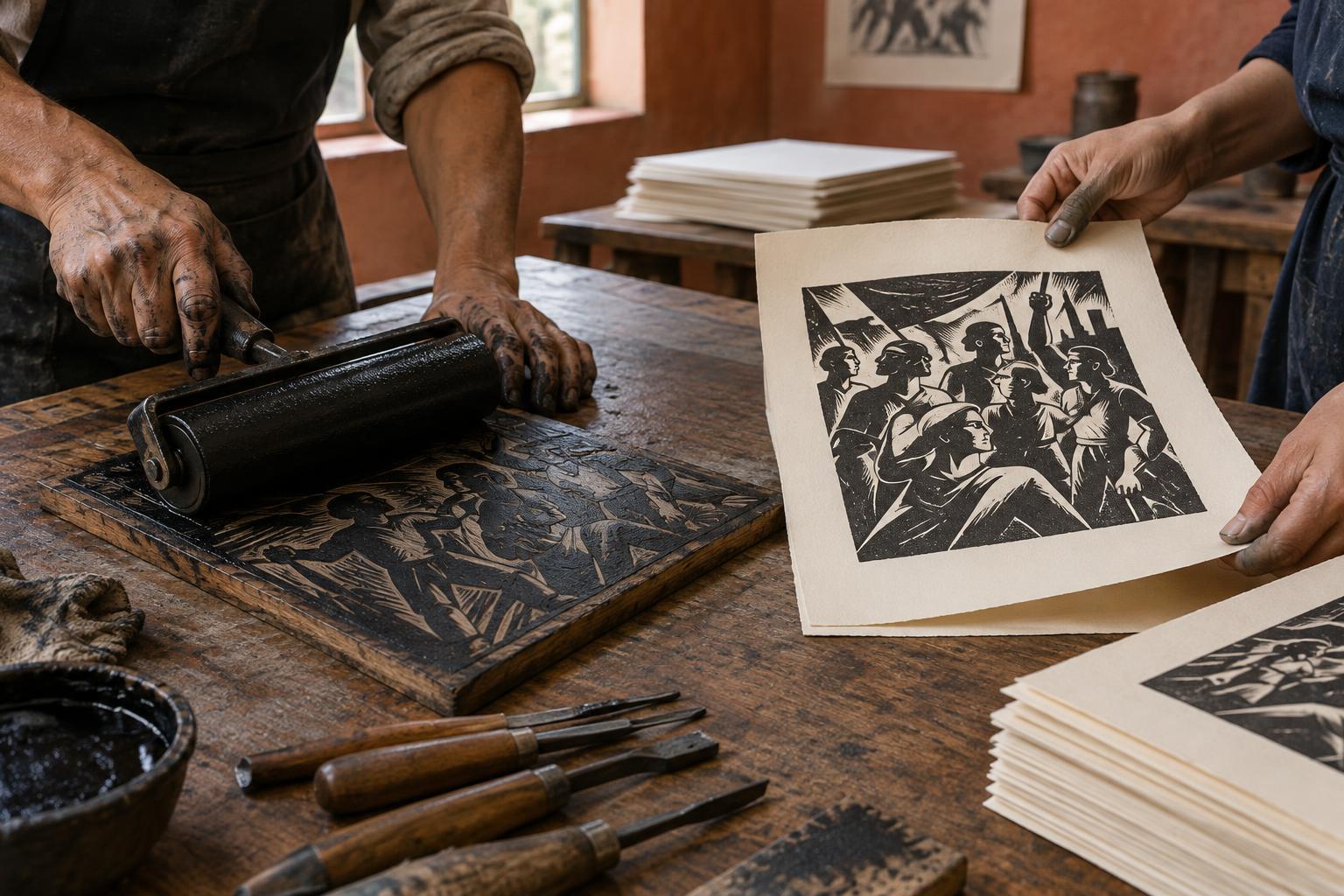
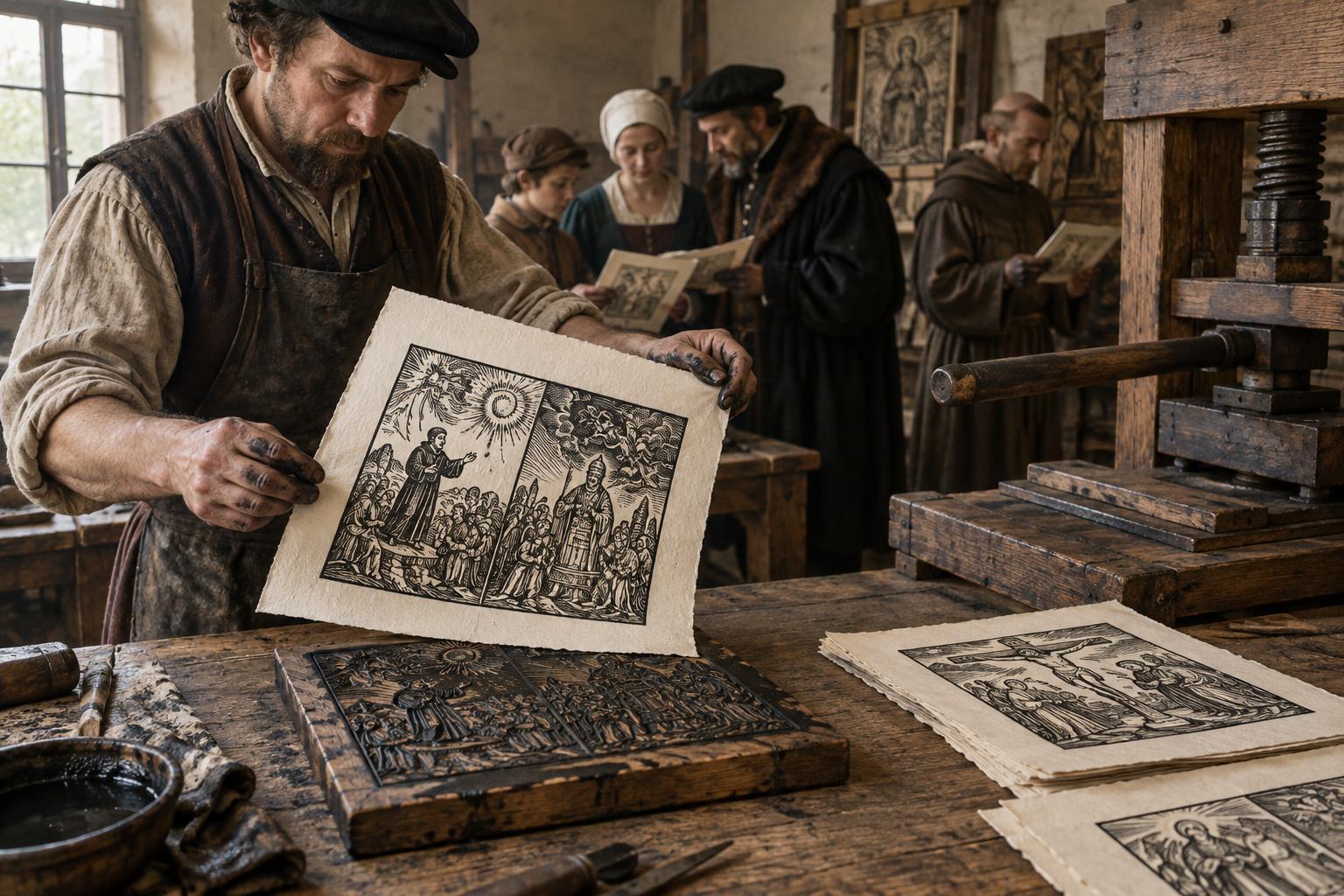
Woodcut was especially useful for producing images intended to travel. An artist or block cutter removed the areas of a wooden block that would remain white, leaving raised lines to receive ink. The block could then be printed on paper and, in many cases, combined with type. Once prepared, the same design could appear in multiple impressions, though blocks wore down and printers could alter or reuse them.
A single sheet might pair a bold picture with a short verse or caption. A book could place images beside passages that directed the reader’s attention. Reformation-era prints often used contrasts that were easy to grasp: two figures, two kinds of worship or two opposing outcomes. Such visual structures could make a complicated position feel immediate. They also deserve scrutiny, because a persuasive contrast may leave out important context.
Artists, patrons and competing views
The workshop associated with Lucas Cranach the Elder provides a well-known example of close ties between printmaking and the Reformation in German-speaking lands. Its images included portraits and religious subjects that helped make reformers and their ideas recognizable. But the story is larger than any one artist or workshop. Printers, publishers, patrons and purchasers all influenced which designs were made and circulated.
Nor did Protestants share one view of religious imagery. Some valued pictures that taught biblical stories while objecting to particular uses of images in worship. Others argued for more sweeping removal of religious images. Catholic communities also used prints to teach, encourage devotion and defend their positions. Looking at printed images from different sides makes it harder to mistake the print medium itself for a Protestant invention or a Protestant monopoly.
From the printing workshop to the viewer
A print’s effect depended on where it went and who saw it. Sheets could be sold separately, bound into books or kept with other papers. Some were inexpensive compared with painted works, but price, distribution and access varied. An image printed in one place might be carried elsewhere, copied in another workshop or adapted for a new audience. Its meaning could shift along the way.
Printed images also had limits. A picture could attract attention without changing anyone’s convictions, and a design familiar in one region might be unknown in another. Rules governing printing, local religious loyalties and the availability of skilled workers all affected what appeared. Rather than imagining a message spreading unchanged across Europe, it is more useful to picture many local exchanges between makers, sellers and viewers.
How to look at a Reformation print today
Begin with what is visible. Where does your eye go first? Are people shown at the same scale, or does one figure dominate? Look for repeated shapes, gestures and contrasts between light and dark. Then consider any text: does it identify the scene, explain a symbol or tell the viewer what judgment to make? In a woodcut, notice how the cutter uses broad black areas and narrow white gaps to keep a design legible.
Next, ask what you cannot learn from the image alone. Who paid for it? Was it a separate sheet or part of a book? Is the impression you are seeing an early printing or a later reuse of the block? Those questions may not all have answers, but they keep the print connected to its making and circulation. As a studio exercise, sketch a simple image with two contrasting scenes, then write two different captions for it. The change in meaning is a useful reminder: in Reformation printmaking, the message lived not only in the carved block but also in the words and circumstances around it.