Start with the purpose of the review
Before choosing prints, find out what the reviewer expects. A school interview, a studio visit and an exhibition conversation may call for different selections. Check any stated limits on the number or size of works, whether prints should be loose or mounted, and how much time you will have. If the instructions are unclear, prepare a compact selection that you can show without a lengthy setup.
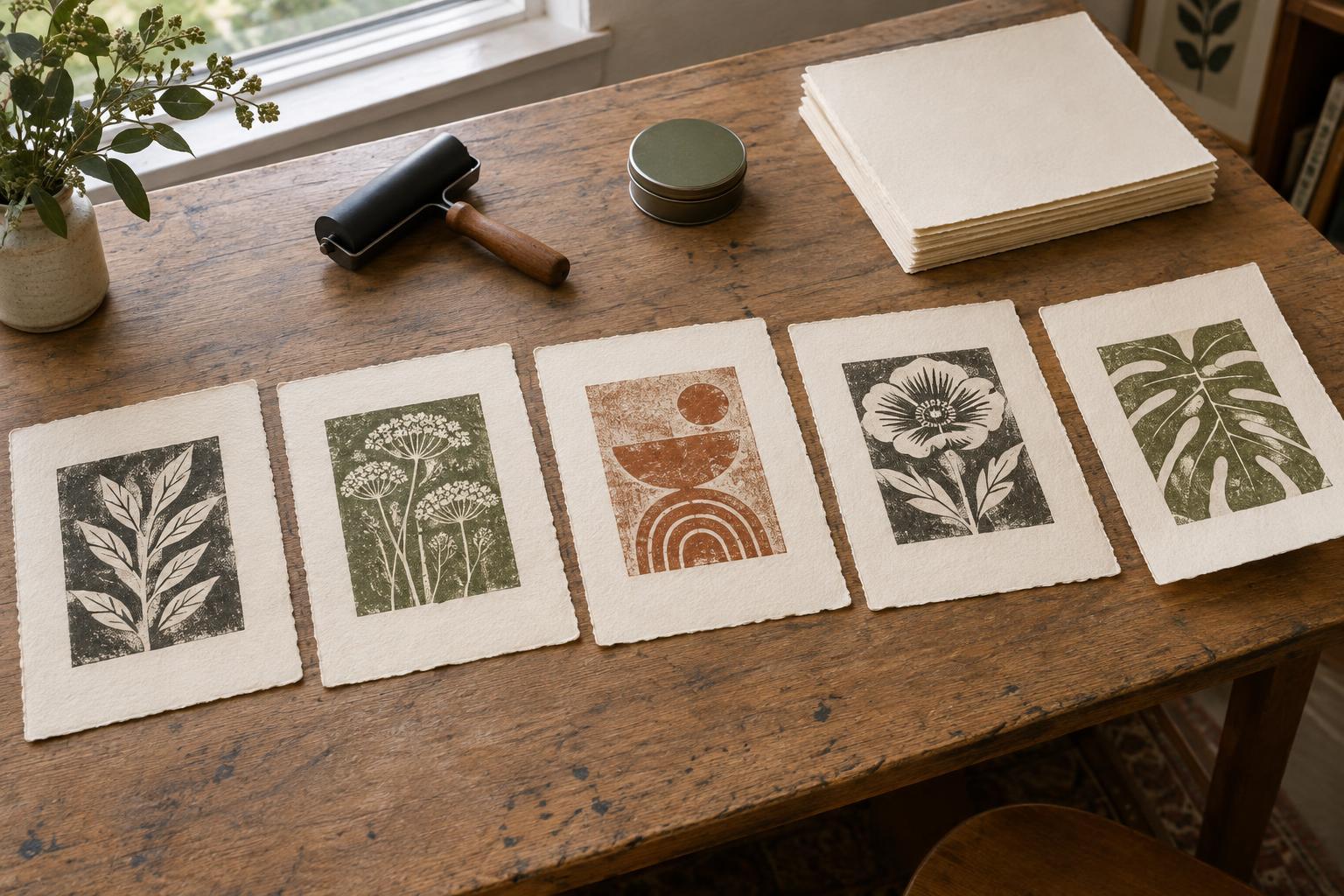
Decide what you want the portfolio to communicate. You might want to show sustained work on one subject, range across techniques, or the development of an idea through several stages. This aim gives you a reason to include each print. A portfolio need not contain every successful impression you have made; it should help someone understand how you make decisions.
Edit the prints as a group
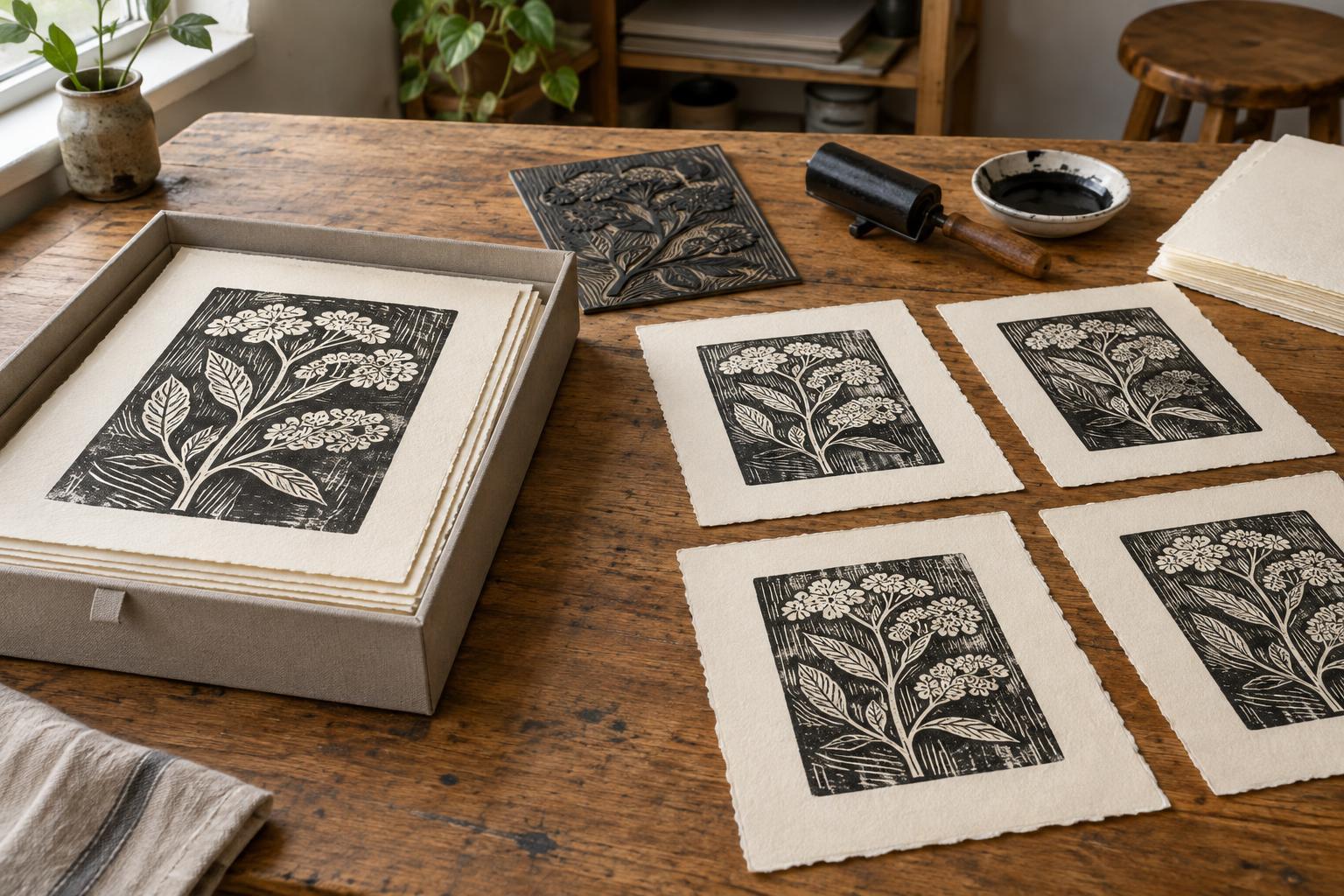
Lay out possible works where you can see them together. Look for prints that reward a closer look and contribute something distinct to the group. Two similar impressions may both be strong, but showing both is most useful when their differences reveal a choice about color, plate state, paper or inking. Otherwise, one may give the other more room to stand out.
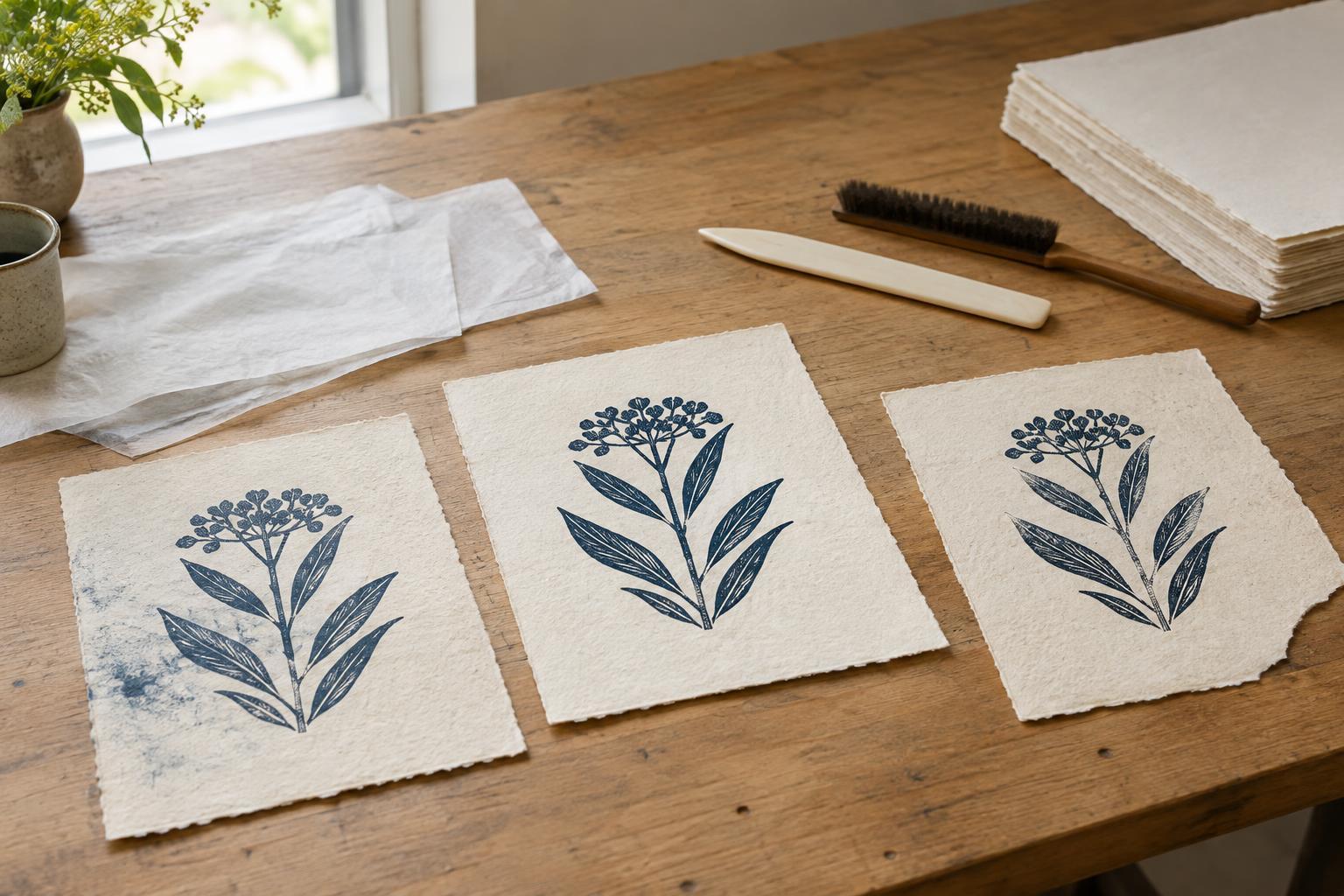
Include experiments when they clarify your process, not simply to prove how much work you have done. A proof beside a finished print can prompt a useful conversation about revision. Be ready to identify it as a proof rather than an editioned impression. If you work in several methods, you do not have to represent each one equally. Choose the work that best supports the purpose of this review.
Ask someone to look at your tentative selection without a long explanation. Notice which prints they return to and where they lose the thread. Their response is not a verdict, but it can reveal gaps in the sequence or details you have stopped noticing.
Check condition and prepare clear information
Inspect each print in good, even light. Look for fingerprints, stray ink, tears, dents, curling and marks that may have occurred after printing. Check that any signature, title or edition notation is accurate and consistent with your own records. Do not try an unfamiliar cleaning or flattening method just before the review; it is better to present a work honestly than risk damaging it in a last-minute repair.
Prepare a simple identification sheet for each work or for the portfolio as a whole. Include the title, technique, image or sheet dimensions as appropriate, and the year if that information is relevant to your practice. Note whether an impression is part of an edition, an artist’s proof or a working proof. If a print combines methods, name the main processes in terms you can explain. Keep this information easy to find without making the reviewer read a long statement before seeing the work.
Plan the sequence and protect the work
An order can create a useful path through the portfolio. Open with a print that represents the work you want to discuss, then group related pieces so changes in subject, scale or technique feel intentional. Consider placing quieter prints between visually dense ones. End with work that leaves a clear sense of your direction rather than an unrelated extra piece. Number a private checklist so you can restore the order after the review.
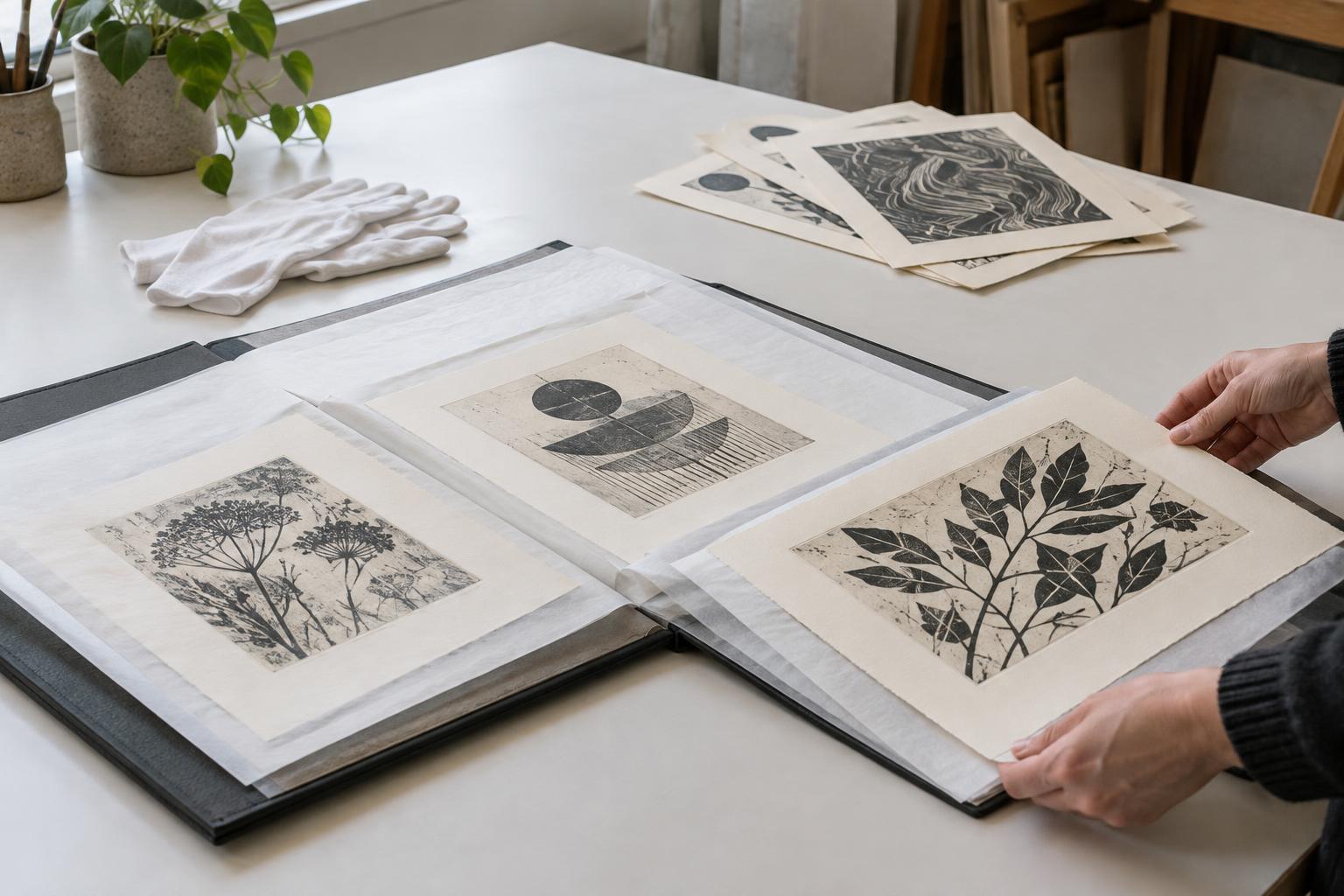
Pack prints in a clean, rigid portfolio or other enclosure that supports their full sheets. Use suitable protective materials between surfaces that might rub or transfer ink, and check that impressions are thoroughly dry before packing. If a print is mounted, make sure it sits securely and can be viewed without awkward handling. Avoid tape, clips or fasteners touching the printed surface. Practice opening the portfolio and turning through the sheets on a clear table; a sequence that works on the studio floor may be cumbersome in a small meeting space.
Prepare to talk, then make space to listen
For each print, prepare a short explanation of what you were trying to do and one or two decisions that shaped the result. You might discuss why you chose a particular paper, changed an image between states or kept a variation within an edition. Specific choices are usually more useful to discuss than a general claim that a piece was difficult. You can also identify a question you are still exploring.
During the review, allow time for the viewer to look before explaining everything. Keep a small notebook handy for feedback, but do not let note-taking interrupt the conversation. If someone asks about a mark or an edition decision, answer plainly, including what you might handle differently next time. Afterward, record which order worked, which questions recurred and whether any print needed more context. Those notes can guide both your next portfolio edit and your next session in the studio.