What does an edition promise?
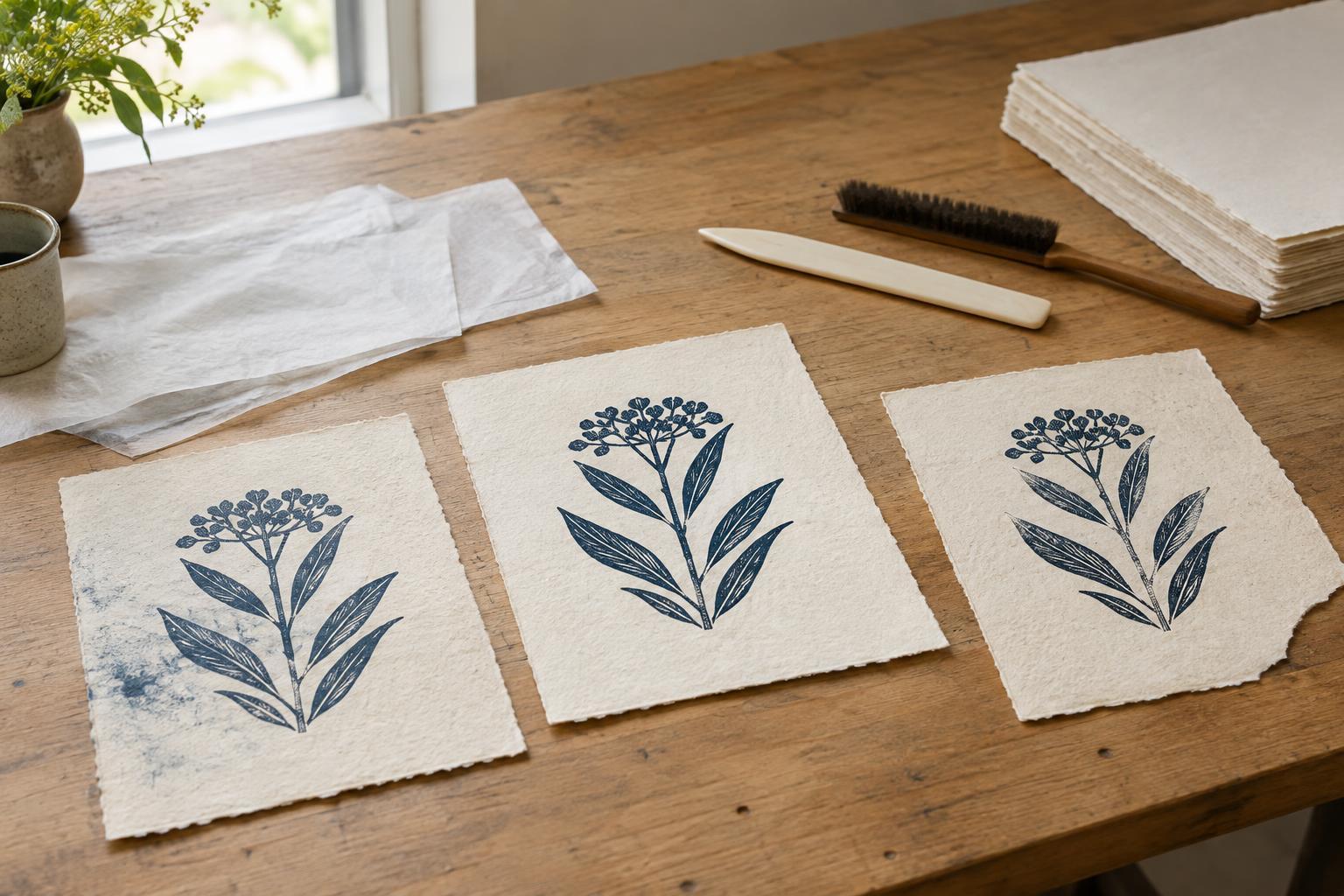
An edition is a group of prints made from the same image according to a plan. In a limited edition, the artist decides on a maximum number of edition prints and does not exceed it. In an open edition, no maximum is set in advance; the artist may print more when needed. Neither format makes a print more or less thoughtful. The difference is the commitment you make about future impressions.
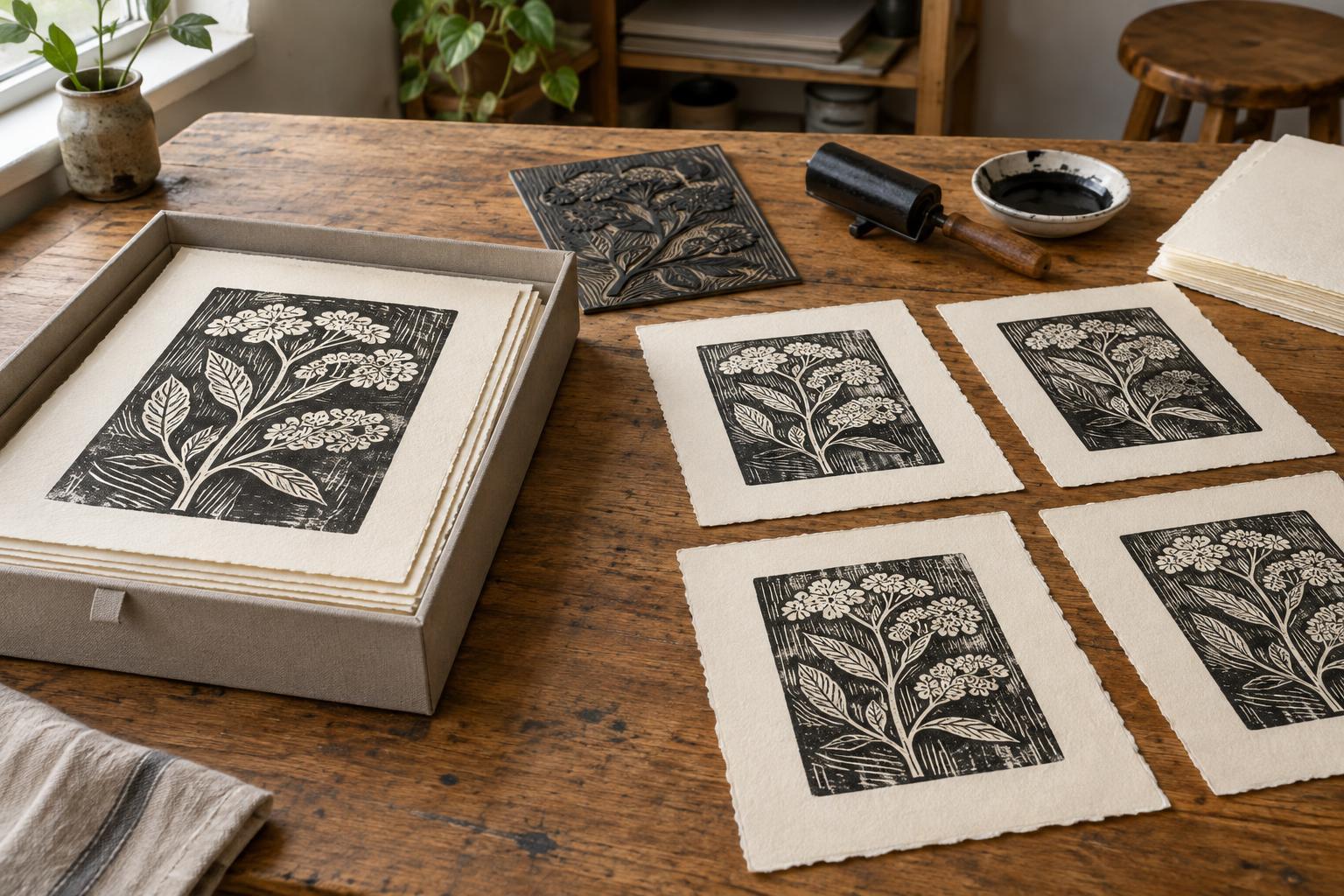
A limited edition might be marked 7/30, meaning the seventh print in an edition of thirty. Those numbers identify its place in the edition, not a quality ranking. An open-edition print can still be signed, dated and carefully made; it simply should not be presented as though its quantity is fixed.
Match the format to the way you work
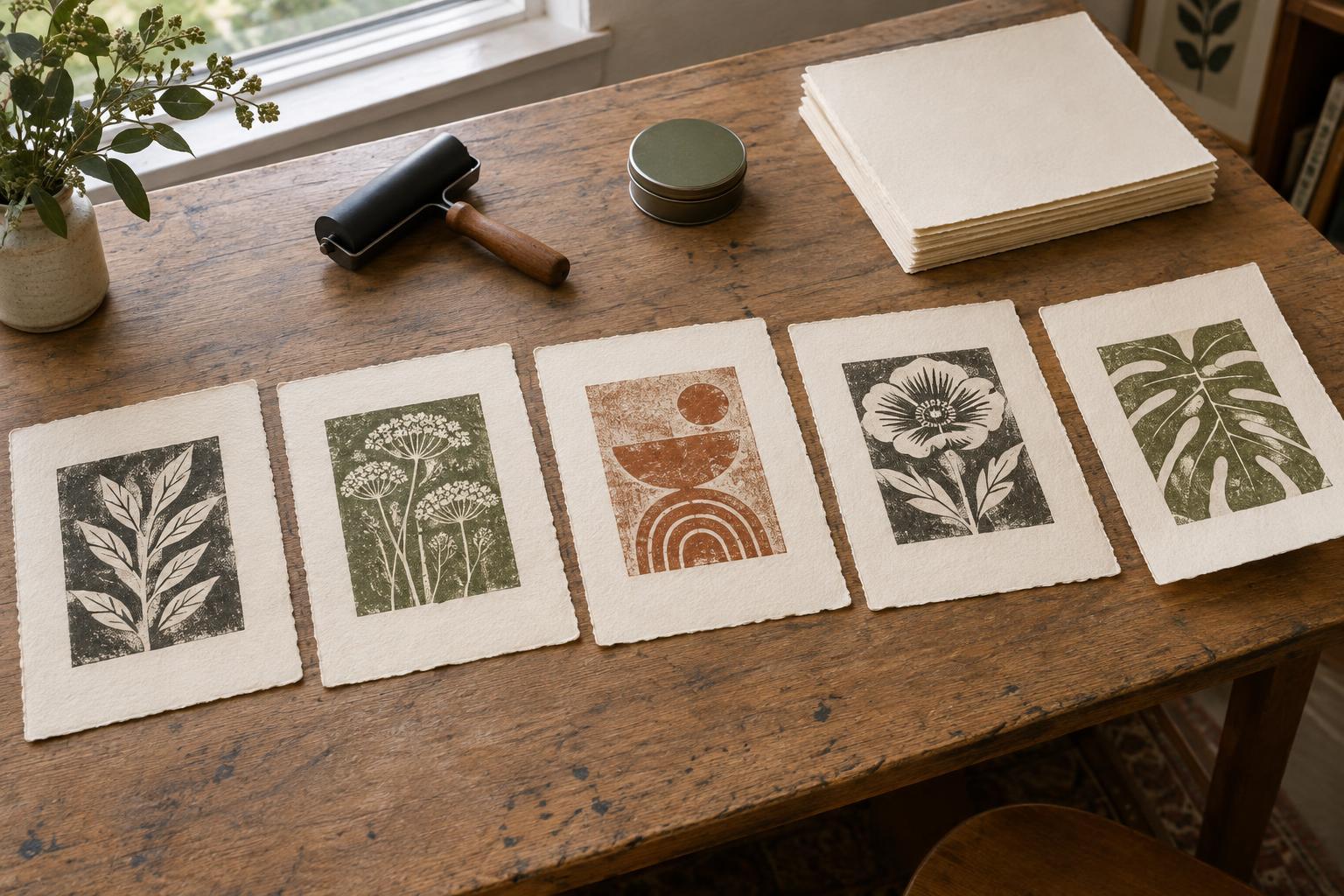
Choose an open edition when you want to keep an image available without predicting demand. It can suit repeatable processes, affordable small prints or designs you expect to revisit. Printing in modest batches lets you replenish a selection without storing a large stack. Even with an open edition, keep notes on the paper, ink, color and method you use so later batches remain consistent—or so you can describe their differences accurately.
A limited edition can help you give a project a clear endpoint. It may suit a print that takes considerable handwork, uses materials you have in a finite supply or belongs to a tightly defined series. Set the limit at a number you can realistically print and assess. If the process allows variation, decide before numbering how much variation you will accept within one edition.
Consider your capacity as well as the image. A promised edition of fifty does not require you to print all fifty immediately, but you should know whether you can make comparable impressions later. A plate may wear, a screen may change, or a particular paper may become hard to replace. If consistency is uncertain, a smaller edition or clearly identified batches may be easier to manage.
Define what belongs in the edition
Before printing a limited edition, write down its defining features: image size, color arrangement, printing matrices, paper and any important hand-finishing. This working description gives you a reference when you judge each impression. Minor differences are part of many hand-printing processes, but a deliberate change in colorway, scale or materials may be clearer as a separate edition or variant. State what changed rather than assuming a buyer will recognize it.
Keep proofs distinct from numbered edition prints. Test prints help you adjust registration, ink or pressure; not every test needs to become a finished work. If you retain artist’s proofs or other finished impressions outside the numbered edition, decide how many there will be and label and record them consistently. A limited number is easier to understand when the total number of finished prints is not a surprise.
For an open edition, the record can be simpler but remains useful. Note when you printed each batch and what materials you used. If a later batch looks noticeably different, describe it as a new version or batch rather than relying on the shared image to explain everything.
Present the print clearly
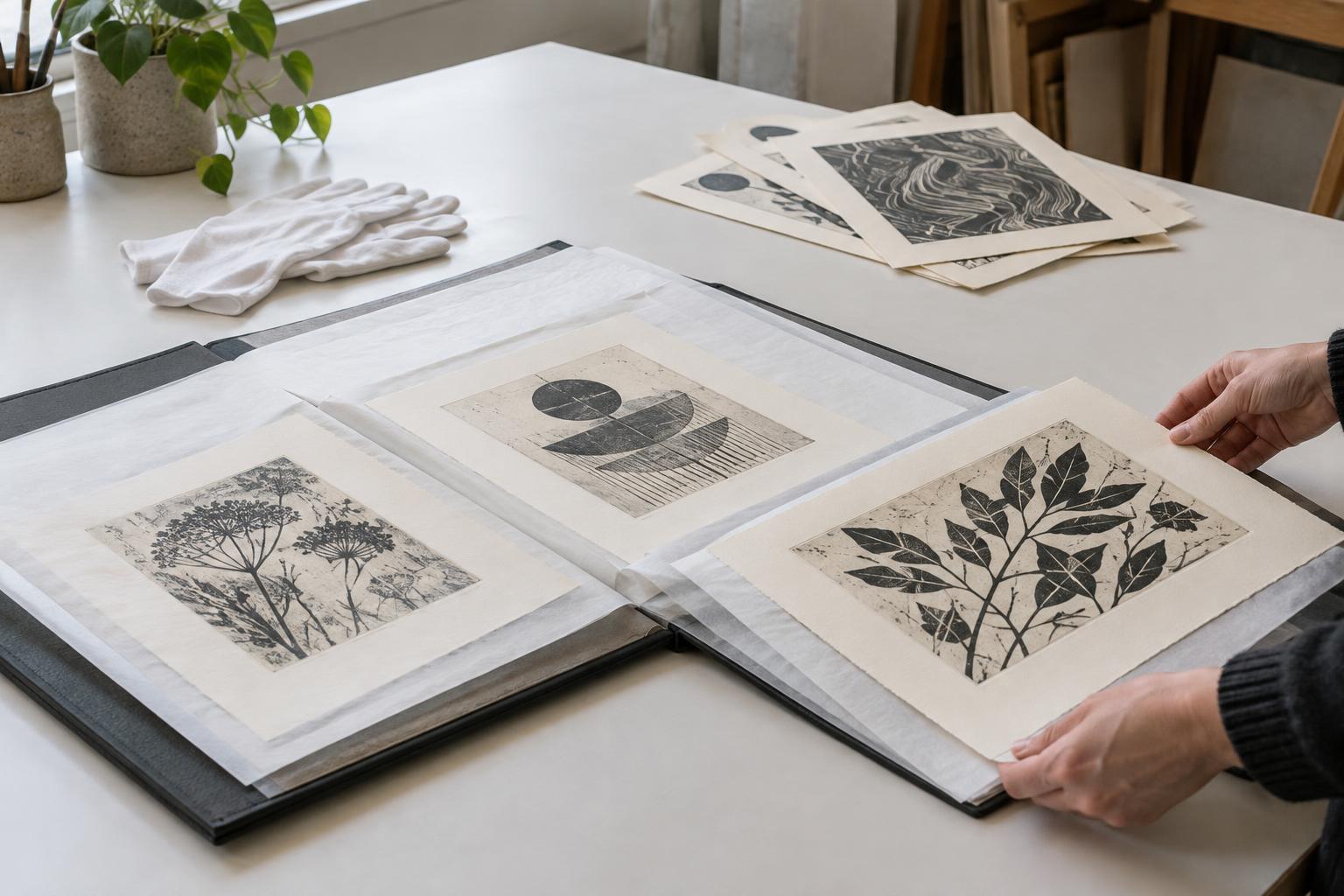
Once a print is fully dry, put identifying information where it can be read without crowding the image. Depending on your process and preference, that may include the title, signature, year and, for a limited edition, its edition number. Use a consistent placement across a batch. If you work on very small sheets or prefer not to mark the front, an accompanying note can carry the details.
A short description should answer the questions a viewer cannot settle by looking: Is the edition open or limited? What medium and paper were used? Are there separately labeled proofs or variants? If you offer a limited edition before every impression is printed, say how many are planned rather than implying they already exist. Clear presentation helps people compare prints without treating edition size as a substitute for looking at the work itself.
Make the decision before the first finished print
You do not need a complicated system to begin. For a small project, make one page of notes with the image description, edition format, materials, intended number if limited, and a place to log each finished print. Number limited-edition impressions only after you have inspected them and decided they belong in the edition. Store rejected or experimental prints separately to avoid confusion later.
If you are unsure which format fits, ask what you most want to preserve: the ability to print the image again, or the certainty of a defined total. An open edition leaves room to respond to continued interest. A limited edition sets a boundary you can explain and uphold. The right choice is the one you can produce consistently, document honestly and describe in plain language.