The distinction starts with the matrix
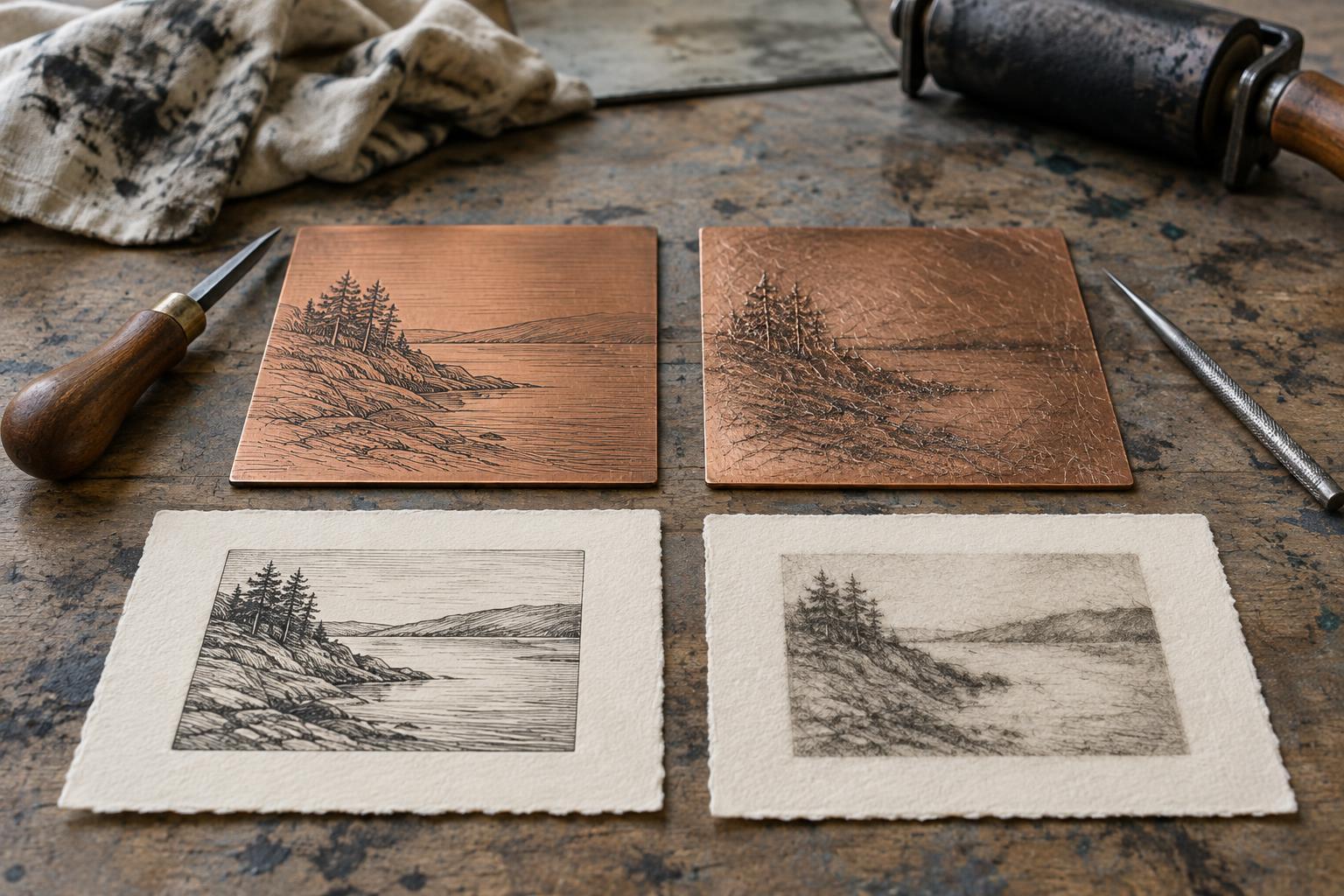
A print begins with a matrix: the surface that carries an image onto paper. It might be a metal plate, a carved block, a stencil or a smooth sheet used for painting. In many printmaking methods, the matrix holds a design that can be printed repeatedly. Monotypes and monoprints depart from that expectation in different ways.
For a monotype, the artist usually makes an image in ink or paint on a smooth, unmarked surface, then transfers it to paper. The surface does not retain a fixed version of the image for another full printing. For a monoprint, the matrix does retain some repeatable part of the design, but the artist changes another part for each impression. Those changes might come from varied inking, added marks, stencils or different colors.
The terms are sometimes used loosely, and a finished print may not reveal exactly how it was made. A useful question is not simply “Are these two prints different?” but “What, if anything, could be printed again from the matrix?”
Why a monotype cannot be repeated exactly
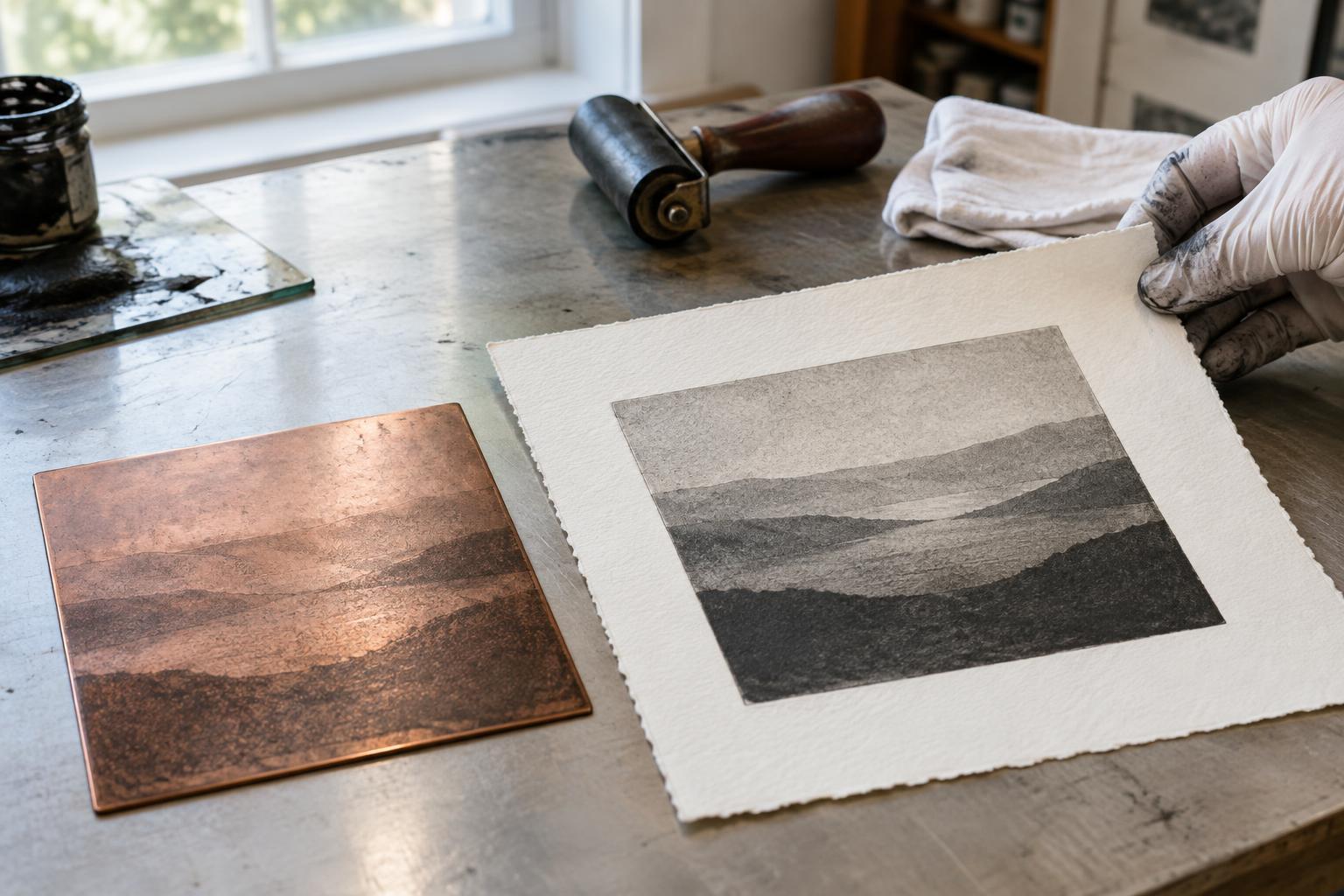
Imagine rolling ink across a smooth plate and drawing into it with a cloth or cotton swab. The light marks you remove and the dark areas you leave behind form an image. When you place paper over the plate and apply pressure, much of that image moves to the paper. You can re-ink the plate and make another drawing, but you cannot pull the same complete image from the plate again.
Some ink may remain after the first pull. A second impression made from that residue is often called a ghost print. It can echo the first image while appearing paler or losing fine detail. The ghost is useful material for further drawing or layered printing, but it is not an identical second copy.
Monotype encourages decisions made in the moment. Pressure, ink thickness, wiping and the paper’s contact with the plate all affect the result. The artist can plan a composition, yet the act of transfer remains part of the image-making process.
How a monoprint keeps a repeatable element
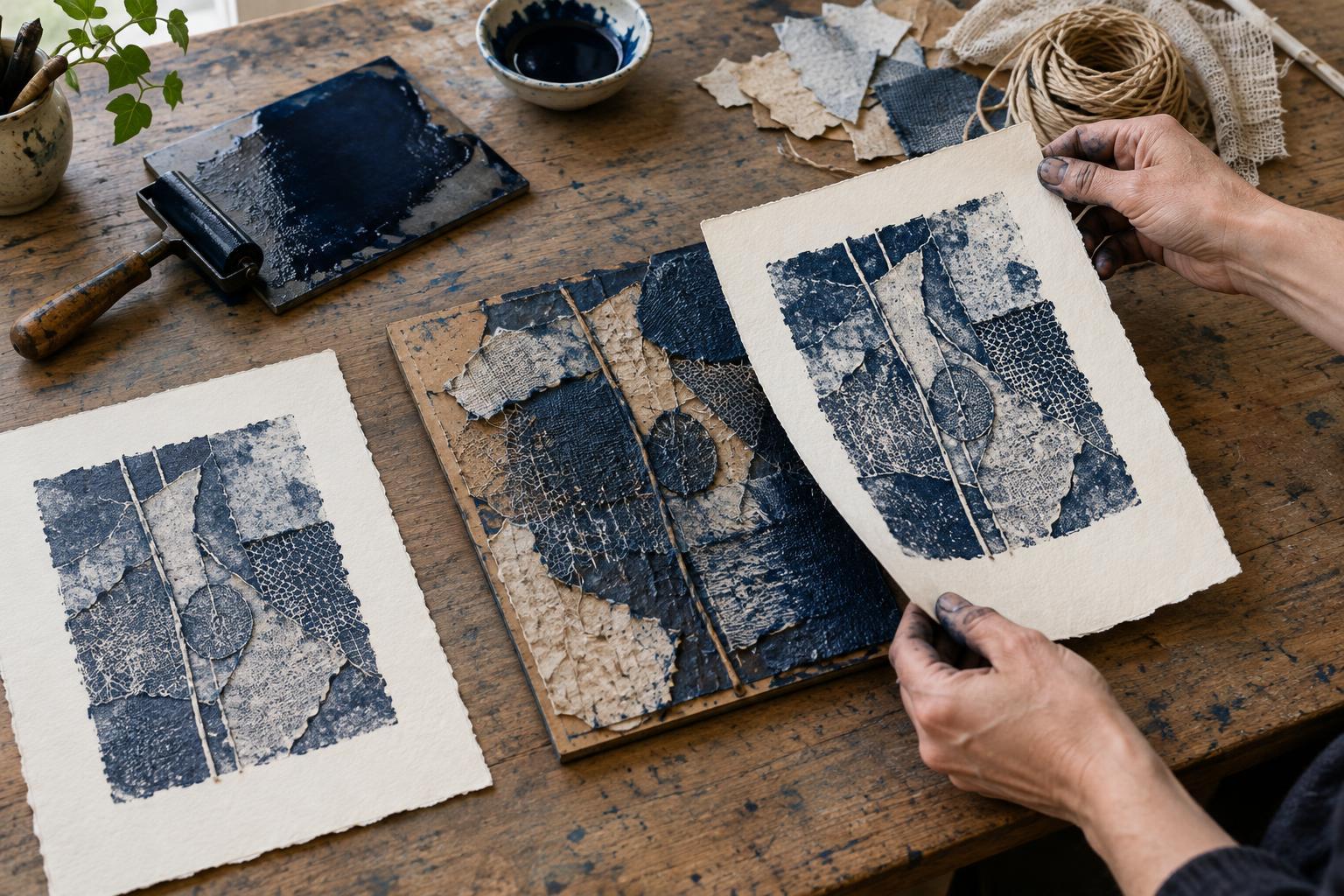
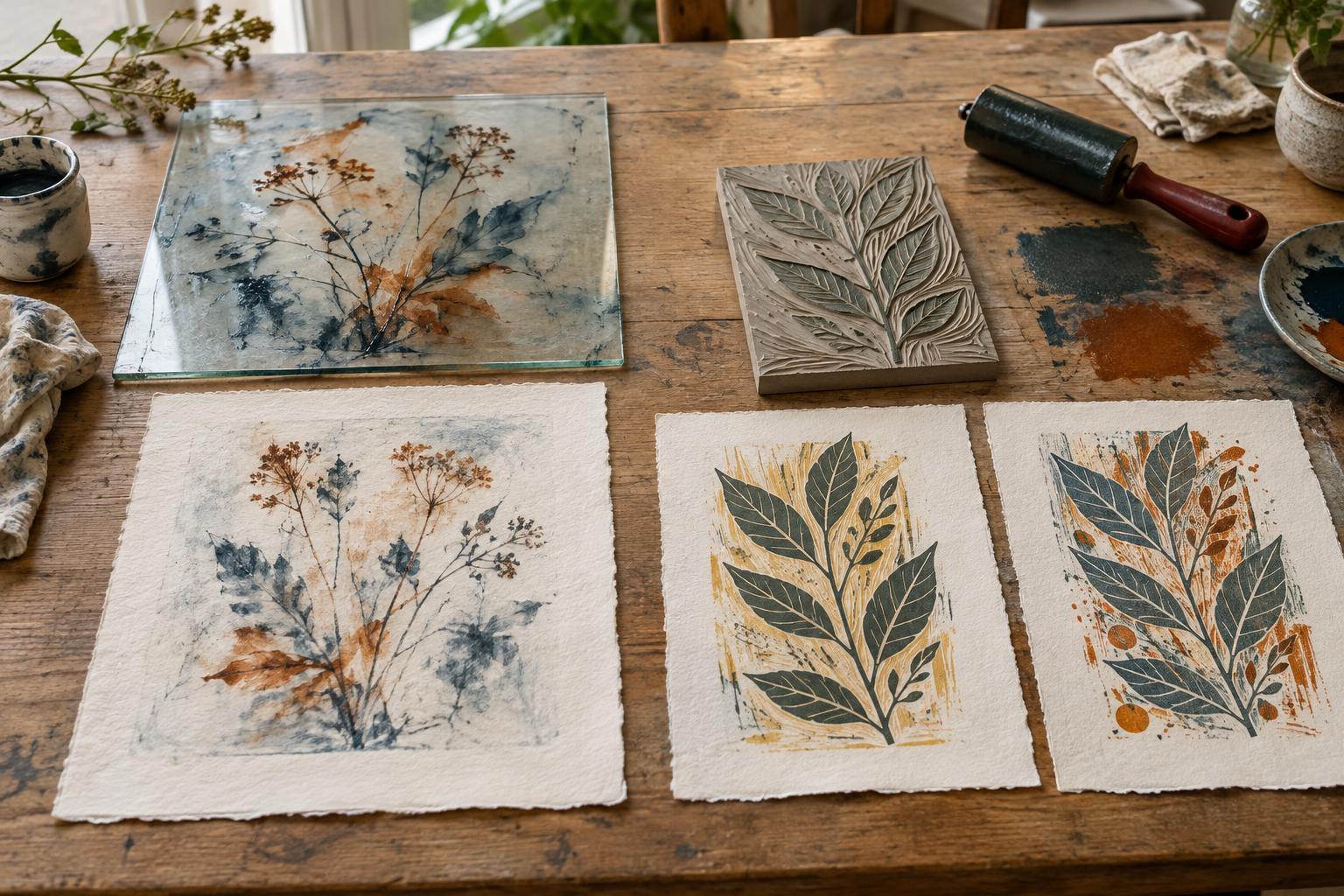
A monoprint begins with a matrix that could produce a recognizable element more than once. Consider a carved block showing a leaf outline. If you print the block with a different arrangement of color or hand-painted marks each time, every impression is distinct, while the carved outline remains available for the next pull. A fixed stencil combined with changing marks offers another way to work.
The repeatable element does not have to dominate the image. It might be a small shape, texture or line structure that ties a group of prints together. This makes monoprinting useful for exploring variations: you can hold one decision steady and test others. Unlike a conventional edition intended to look consistent, variation is part of the plan.
Try both approaches in one session
To try a monotype, use a smooth, nonporous printing surface with safe edges, ink suited to the surface and paper, a roller, and a tool for lifting or moving ink. Follow the ink maker’s handling and cleanup directions. Roll out a thin layer, draw into it, lay paper on top, and press evenly with a baren, the back of a spoon or a press if you have one. Lift a corner to check the transfer before removing the sheet. Then try a ghost pull without re-inking and compare the two impressions.
For a simple monoprint, make a reusable stencil from sturdy paper or thin card. Print its shape several times, changing the surrounding colors or marks on the plate before each pull. Keep the stencil’s position consistent if you want to see clearly what stays the same. Alternatively, move it deliberately to see how much variation the image can absorb while still feeling like part of a series.
Let each sheet dry as recommended for the ink you chose. On the back, note the materials and the order of your experiments. These notes can help you connect an unexpected effect to a particular amount of ink, type of mark or printing pressure.
Describing and presenting the finished prints
When presenting the work, describe its process as precisely as you can. “Monotype with a ghost impression” tells a viewer something different from “monoprint from a carved block with varied inking.” If you combine methods, name the parts you used rather than forcing the print into a single category.
Because variation is expected, numbering a group as if it were an edition of matching impressions may be misleading. You can instead label individual works with titles and process notes, or identify a related series without implying that its sheets are identical. Whether you work from an empty plate or a repeatable image, the point is to notice what changed—and make that change an intentional part of the print.