A print began as a shared undertaking
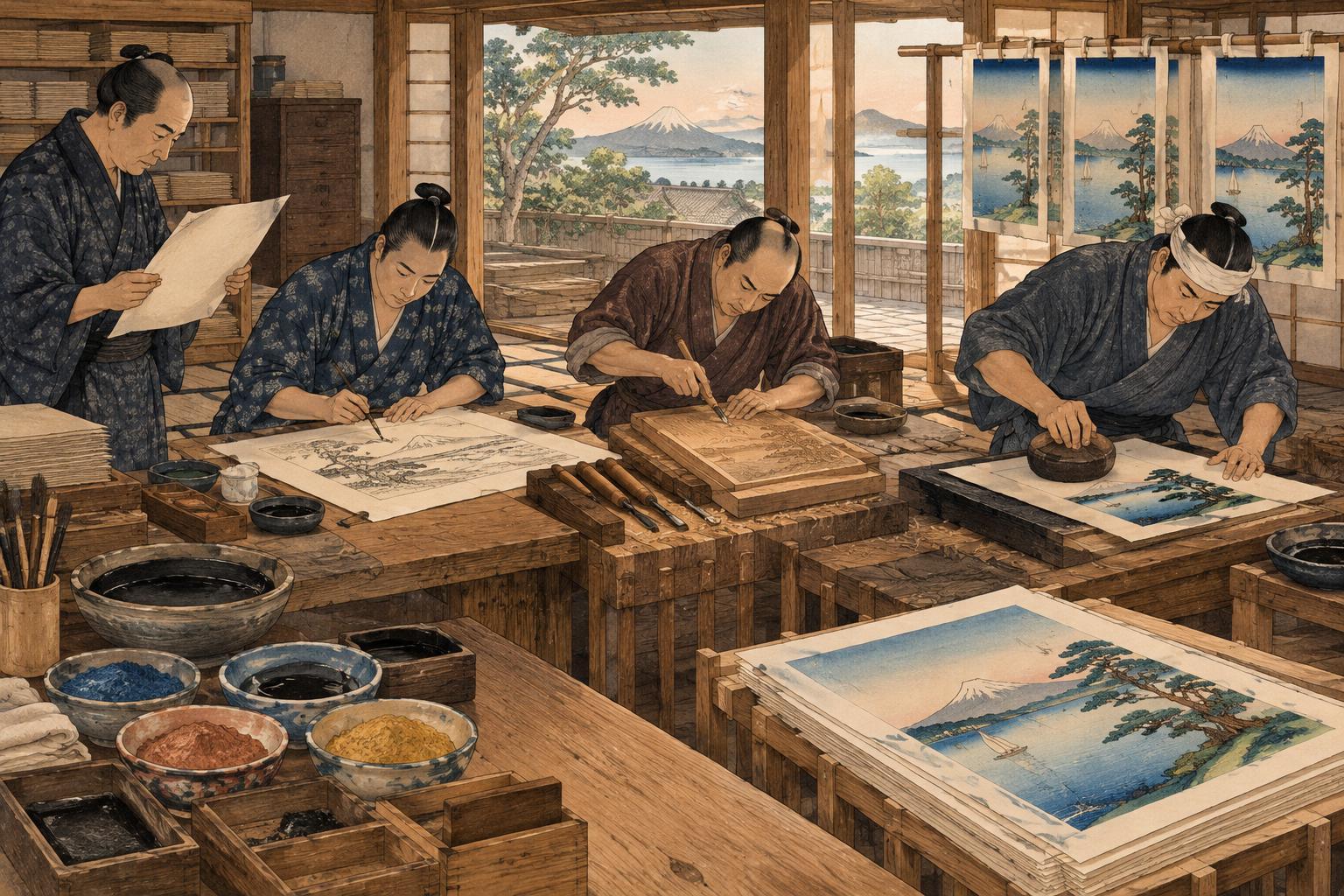
Many ukiyo-e woodblock prints were made through a division of labor rather than by one person working alone. A publisher organized the project, an artist supplied the design, a carver cut the blocks, and a printer used those blocks to produce sheets. The arrangement varied by period and workshop, but these four roles offer a useful way to understand how a design became an edition.
That distinction matters when looking at a finished print. The artist’s name may be the most prominent, yet the clarity of a line or the softness of a color transition also reflects skilled decisions made at other stages. Each impression is part of a repeatable process, but it is not simply a mechanical copy of a drawing.
The publisher shaped the project
The publisher brought the people and materials together. Depending on the project, they might commission a subject, arrange for blocks and paper, oversee production, and distribute the finished prints. Publishers also had to consider what buyers might want, whether that was an image of a performer, a fashionable figure or a landscape. Their choices helped determine which designs reached print.
Because blocks could be used to make multiple impressions, the publisher had a reason to protect them and to plan how an edition would be produced. A design could also change during production: colors might be adjusted, and later impressions could differ from earlier ones as blocks wore or printing decisions changed. A printed image is therefore evidence not only of artistic invention but also of workshop planning.
The artist made a design for carving
The artist planned the composition, including its figures, outlines, patterns and areas of color. The drawing had to work as a woodblock print: fine marks needed to remain legible after carving, and color areas had to be separable into printable layers. This was a different problem from making a single finished drawing, even though the drawing was central to the result.
To prepare the main outline block, a drawing on thin paper could be pasted face down onto the wood. The carver then followed the visible lines as material was cut away. This process often consumed the drawing used for the block, which helps explain why a surviving print is not the same object as the artist’s original design. In a multi-color print, impressions from the outline block could guide the planning of additional color blocks.
The carver translated lines into blocks
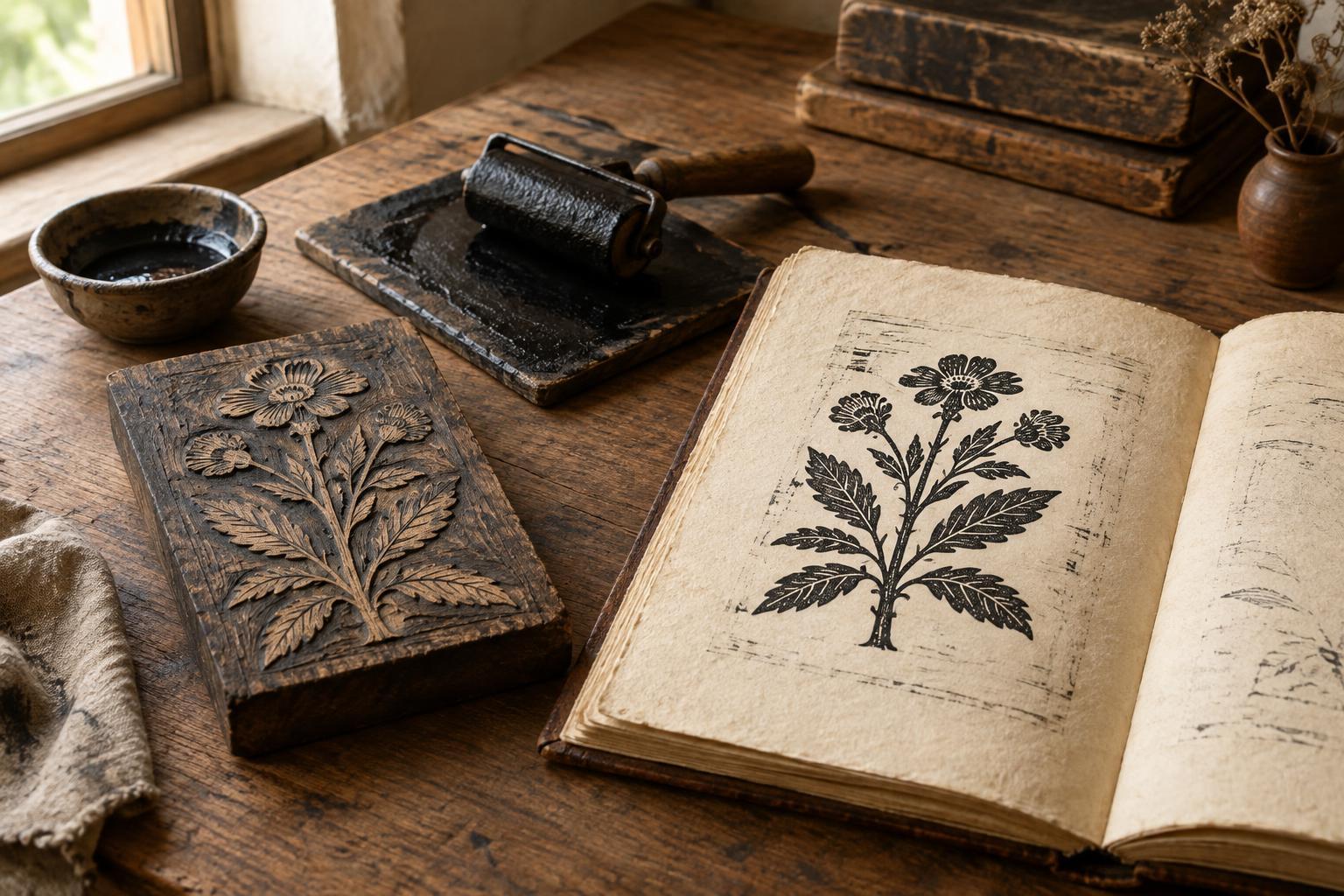
The carver removed wood from around the lines and shapes that needed to print, leaving those areas raised. The main outline, or key block, carried much of the design’s structure. Separate blocks supplied colors. A carver had to judge how closely a line could be cut, how small a detail would survive repeated printing, and where one area ended and another began.
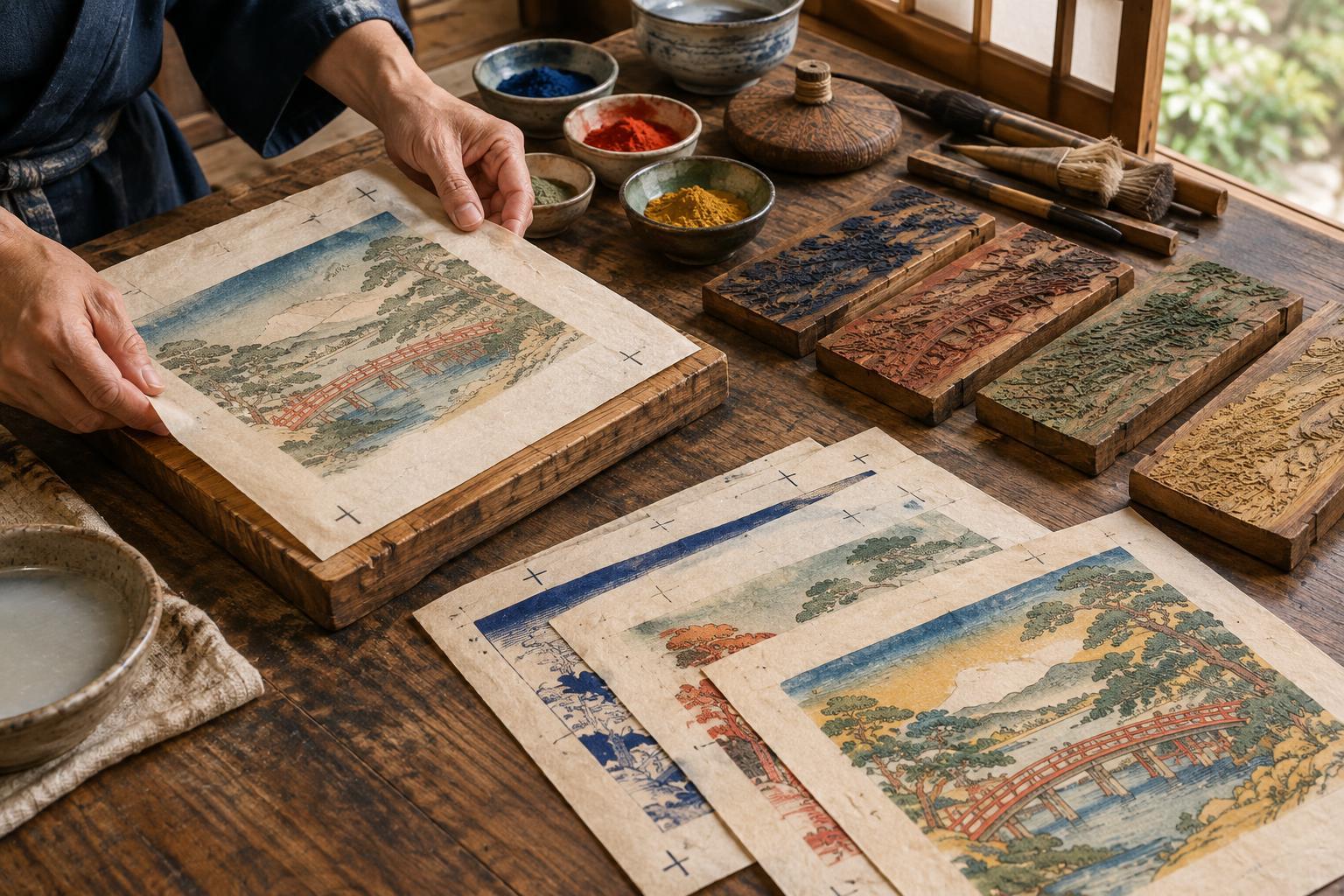
Multi-color printing also required reliable registration: each block’s impression had to meet the others in the intended place. Registration marks called kento helped position the paper consistently. Precision here affected more than neatness. If an outline shifted against a color area, a face, garment or roofline could look noticeably different. The blocks made repetition possible, but careful carving made that repetition convincing.
The printer brought the image to life
The printer applied color to a block, placed the paper against its registration marks, and rubbed the back with a baren to transfer the image. This sequence was repeated with other blocks until the design was complete. Traditional printing commonly used water-based color on dampened washi paper, though materials and methods could vary. Keeping the paper at a workable moisture level helped the printer achieve even impressions and accurate alignment.
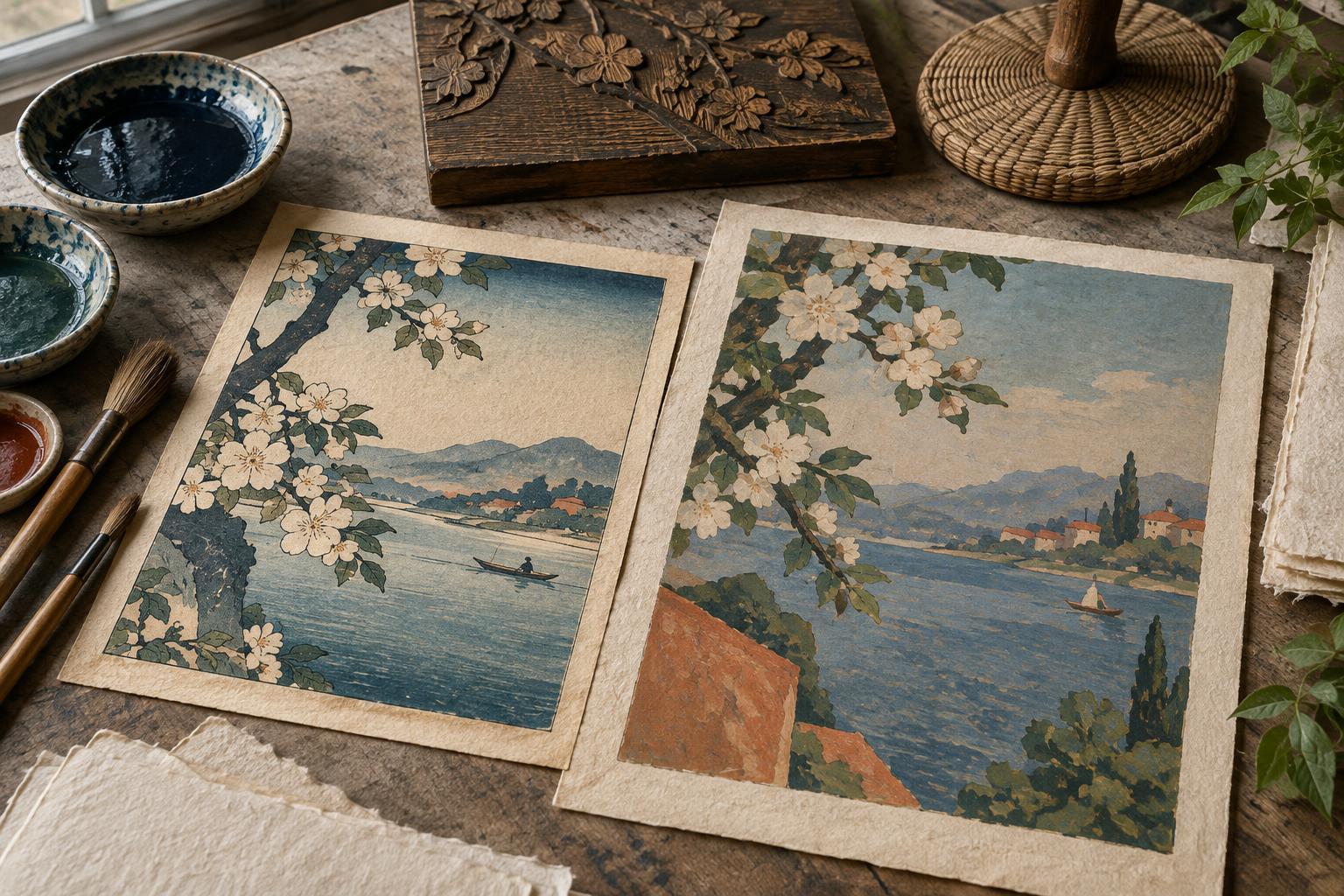
Printing called for interpretation as well as consistency. The printer could control how strongly a color appeared, where a gradation faded, and how smoothly an area was covered. Compare two impressions of the same design, if you have the opportunity: differences in color, alignment or wear may become visible. They are a reminder that an ukiyo-e print passed through many hands. The publisher set a project in motion, the artist devised an image, the carver made it printable, and the printer gave each sheet its final appearance.