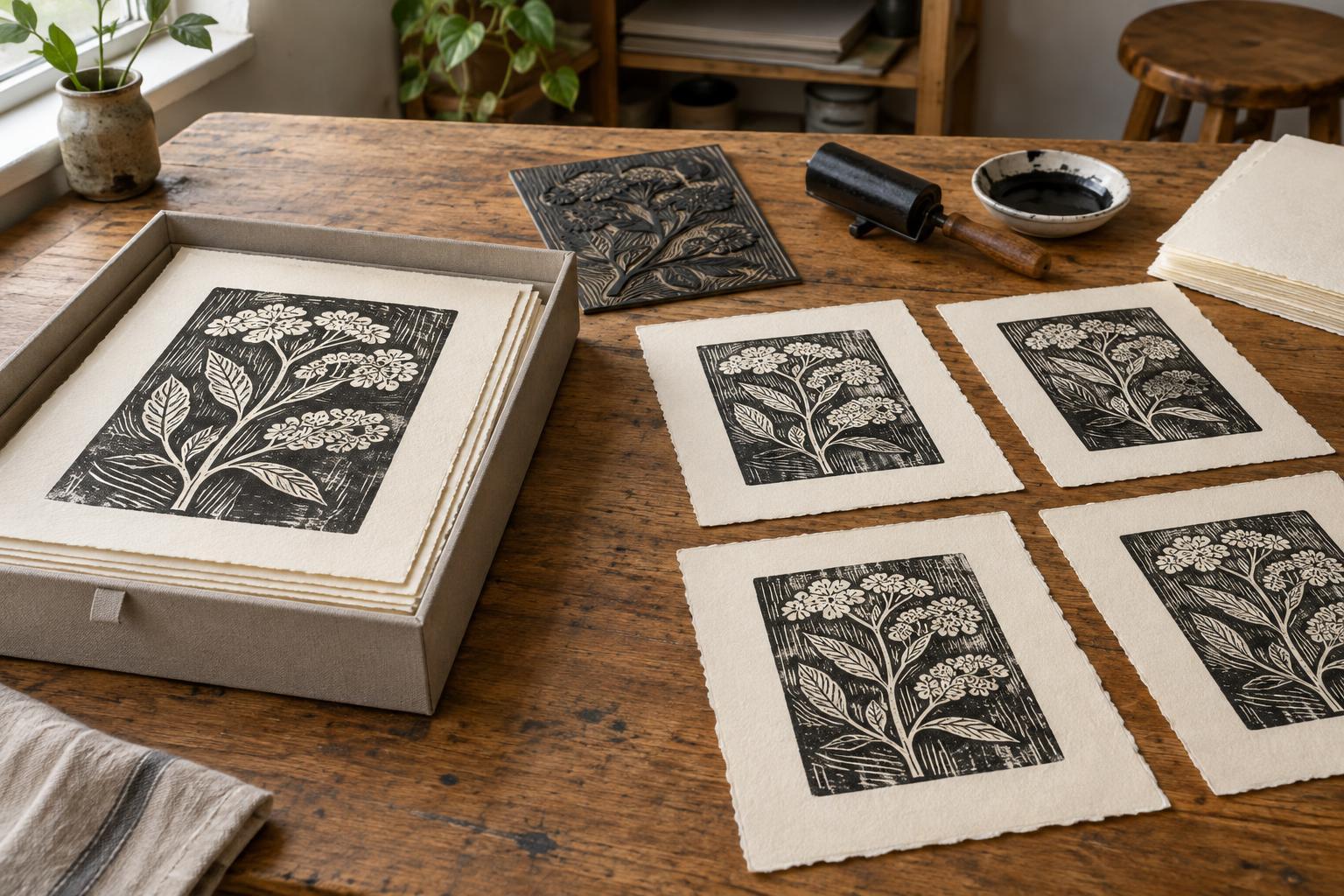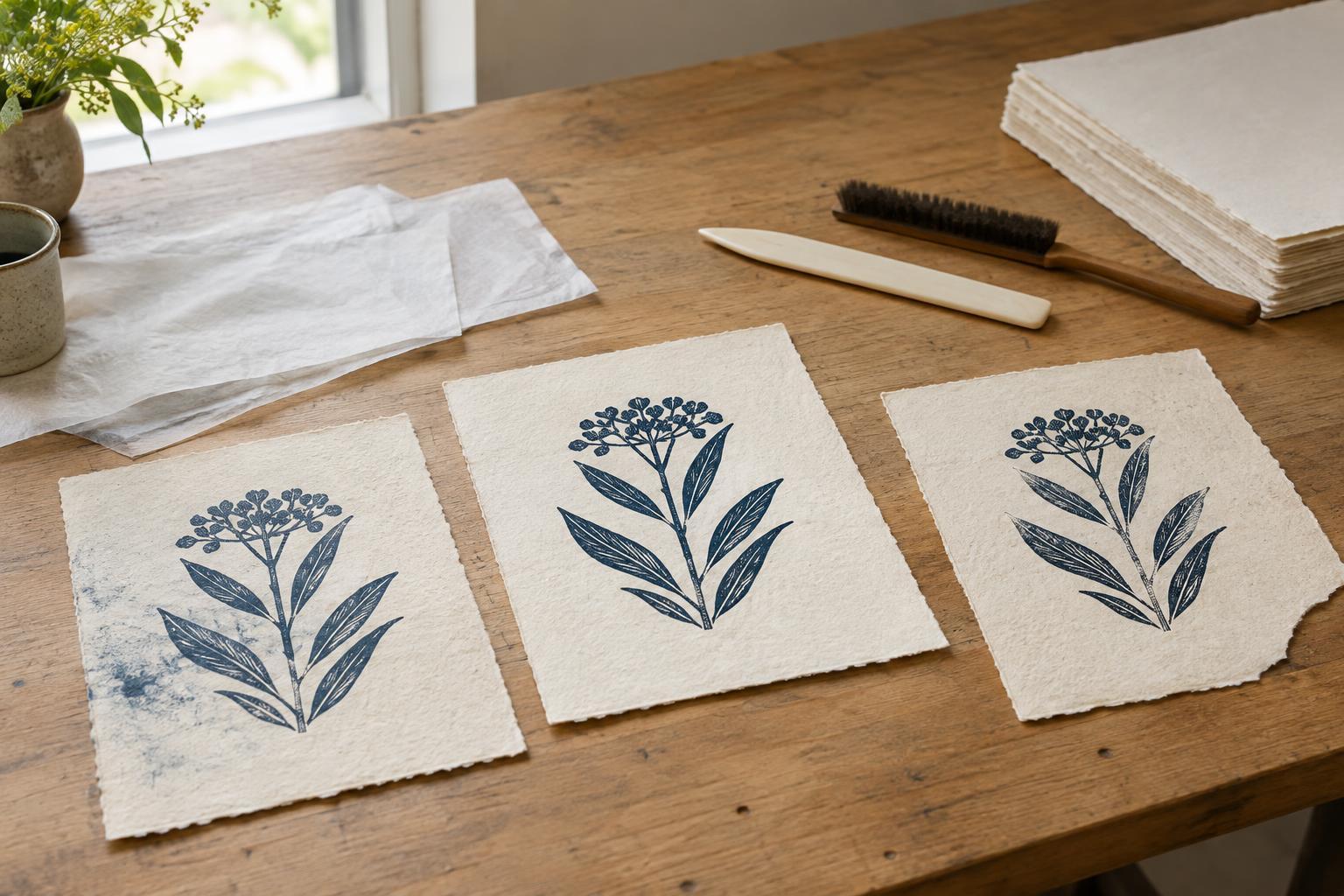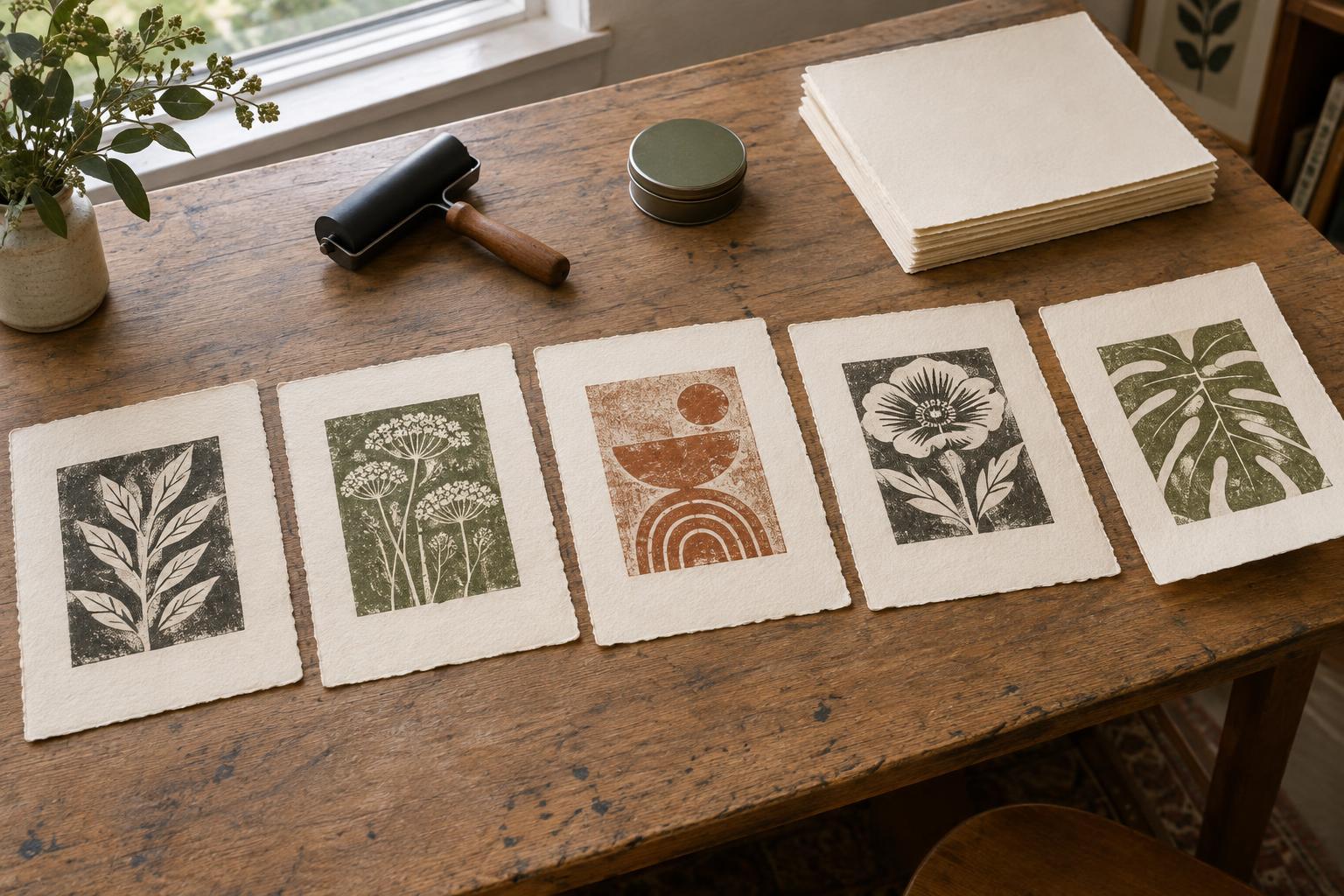
Start with a print that is ready to store
An archival portfolio protects unframed prints from handling, dust, and light, but it cannot make a damp or unstable print safe to put away. Let ink and any added media dry fully before stacking or enclosing the work. A surface that feels dry may still be vulnerable to pressure or transfer, particularly if the ink was applied thickly. If you are unsure, leave the print in a clean, protected drying area longer and test a separate proof before placing edition prints together.
Handle prints by their margins with clean, dry hands, and keep food, drinks, and wet studio materials away from the sorting table. Support a large sheet with both hands or a clean board rather than lifting it by one corner. Before storage, note any existing cockling, scuffs, or offset ink so you can distinguish those marks from changes that happen later.
Choose materials that fit the work
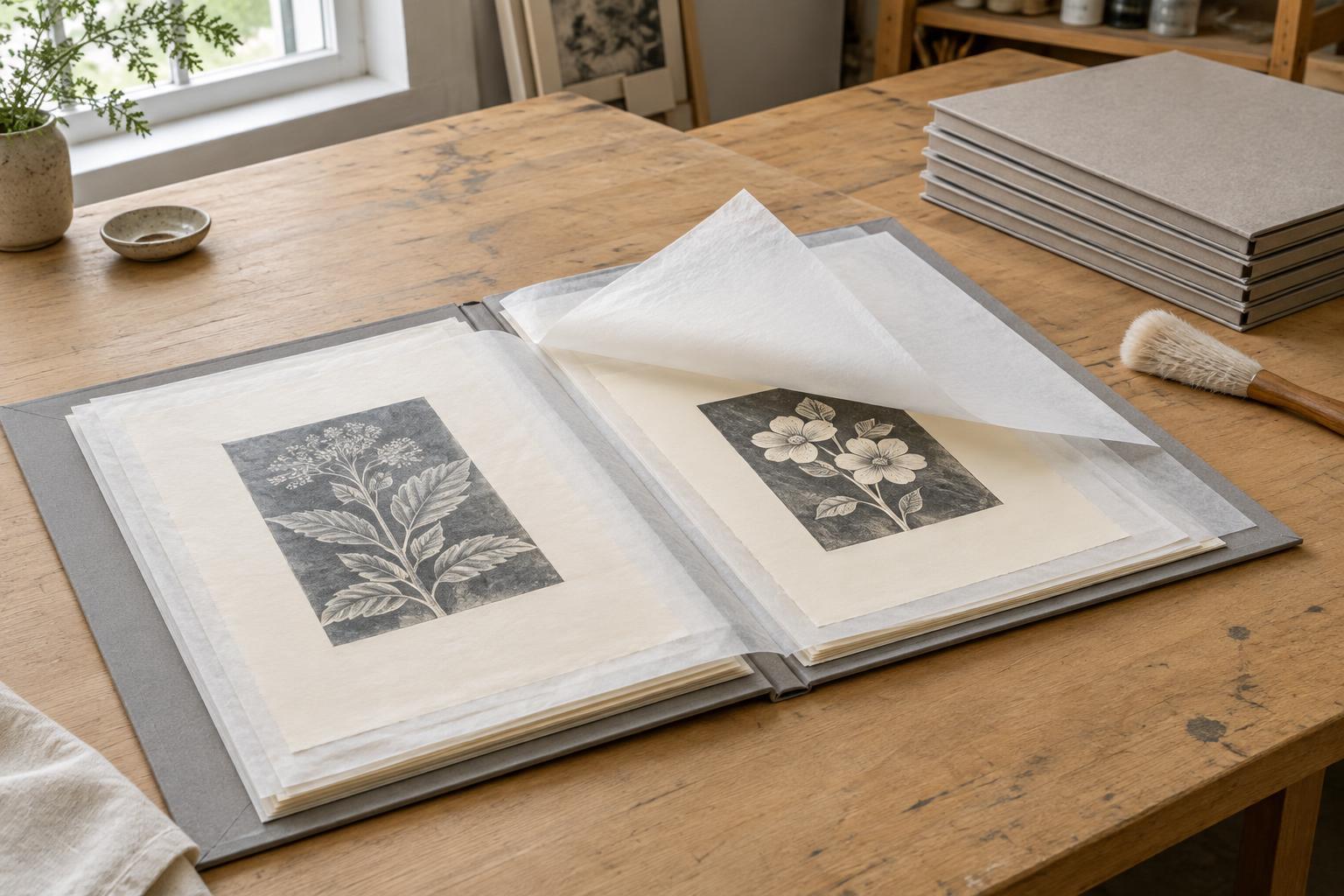
Look for a sturdy portfolio or archival storage box that is larger than the paper, including any deckled edges. The sheets should lie flat without being squeezed against the sides. Acid-free, lignin-free folders or interleaving sheets provide a useful barrier between prints. Materials sold as archival vary, so check the maker’s description rather than relying on the label alone.
Not every artwork needs the same enclosure. Buffered papers suit many works on paper, but direct contact with alkaline materials may be unsuitable for some processes, including cyanotypes. If you do not know how a particular print will respond, use a suitable unbuffered enclosure and keep uncertain materials from touching the image. Clear sleeves made from polyester, polyethylene, or polypropylene can help with viewing and handling; avoid PVC. For a delicate, powdery, or easily marked surface, a sleeve that touches the image may do more harm than a folder.
Build a simple filing system for editions
Place each print in its own folder when space and budget allow. If prints must share a portfolio, separate them with appropriately sized archival sheets and avoid putting one image face-to-face with another. Do not attach a print to its folder with ordinary tape, adhesive corners, or clips. Label the outside of the folder instead of writing on the artwork or placing a loose label against its image.
A useful folder label records the title, process, paper size, edition number or proof designation, and any handling note such as “surface sensitive.” Keep a separate inventory that records where each print is stored and whether it is available, reserved, or already placed elsewhere. This prevents repeated handling just to check an edition number. Arrange folders in a consistent order—by project, size, or edition—and leave enough space to lift one without dragging it across its neighbors.
Store the portfolio without putting pressure on the prints
Keep portfolios in a clean, dry place away from direct sunlight, leaks, radiators, and large swings in temperature or humidity. A shelf or drawer is better than the floor. Lay large portfolios flat and do not pile heavy supplies on top. Smaller, well-supported folders can sometimes stand upright in a suitable box, provided they cannot slump or bend.
Avoid overfilling a portfolio. Tight packing can abrade surfaces and make sheets difficult to remove, while an oversized, loosely filled case may let them slide. Use a rigid support when moving a portfolio of large prints, and carry it level. If the work must travel, treat the portfolio as one layer of protection, not as a substitute for a sturdy outer container.
Make inspection part of the routine
Check stored work occasionally in good light, especially after a move or a change in the storage space. Look for new marks, transferred ink, curling, signs of moisture, or damage to folders. Remove any print that appears affected and address the storage condition before returning it. When showing work to someone, bring out one folder at a time and provide a clear surface on which to view it.
A good portfolio system does not have to be elaborate. It should give every print enough room, keep vulnerable surfaces from rubbing, and let you locate a specific impression without searching through the entire edition. Those habits make unframed prints easier to share now and simpler to frame or present later.