Understand what light can change
A print does not need to hang in direct sun to be affected by light. Over time, exposure can fade some inks, shift colors and discolor paper. The effect depends on the materials in the print and the amount of light it receives. Damage is usually cumulative and cannot be undone by putting the work back in the dark.
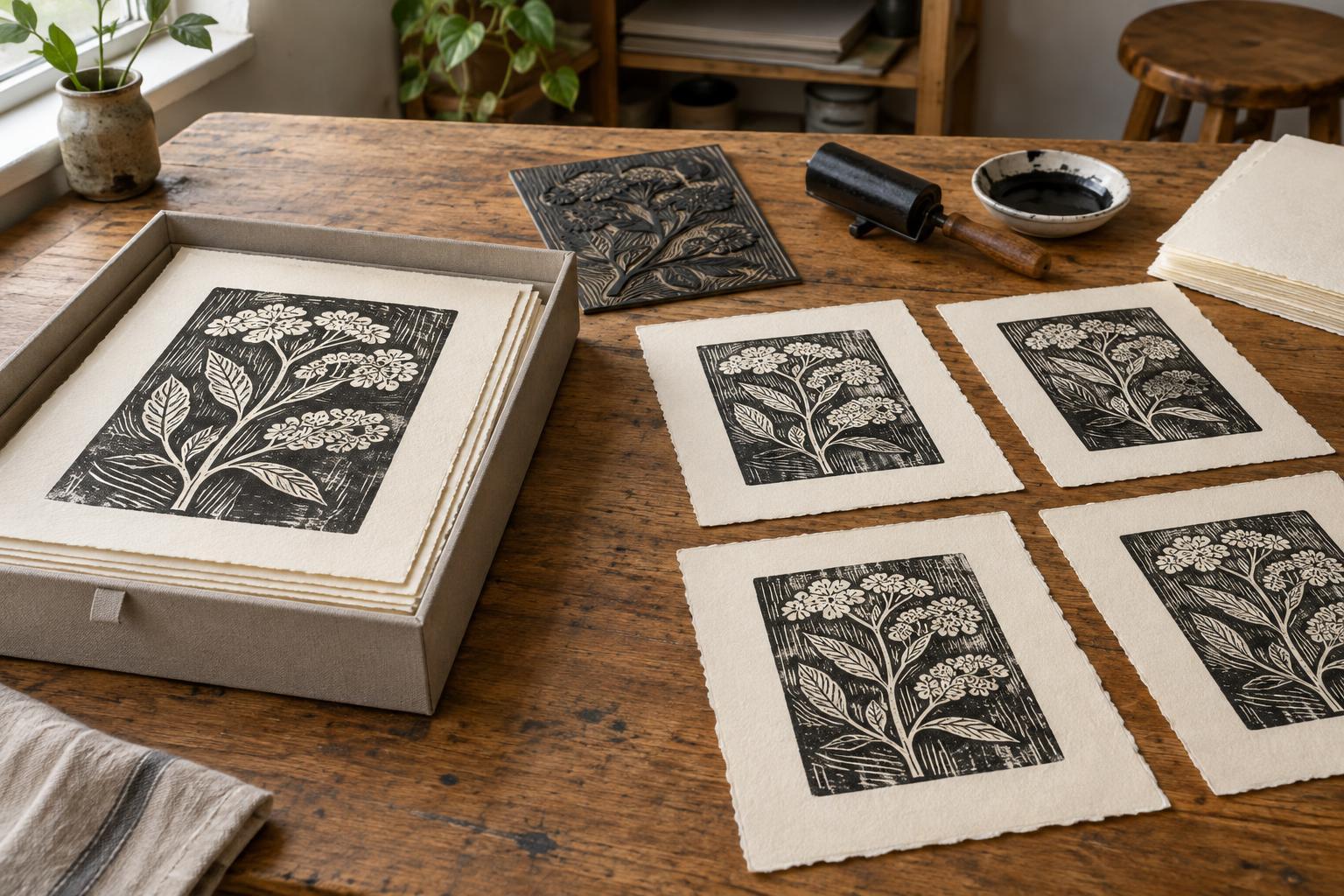
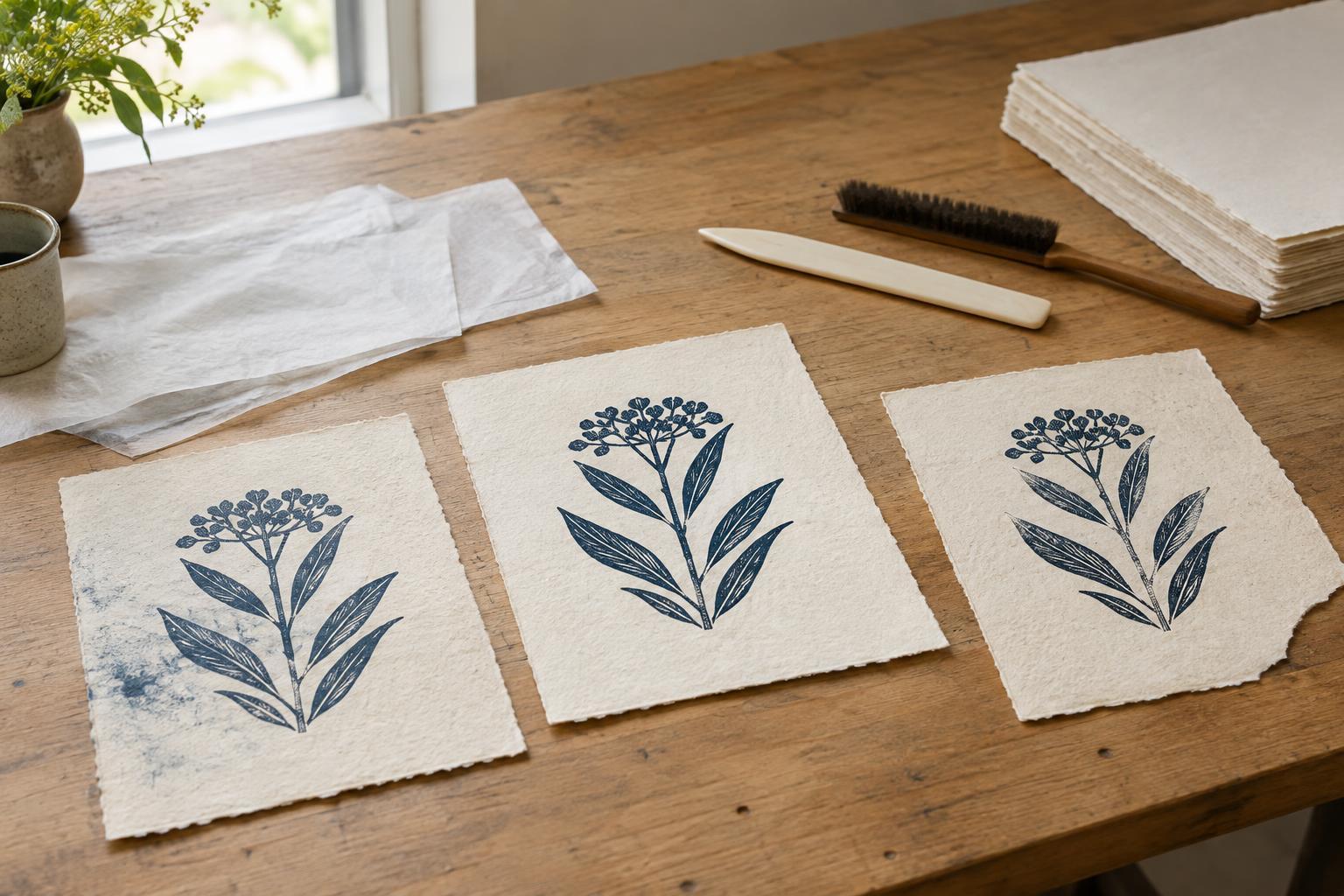
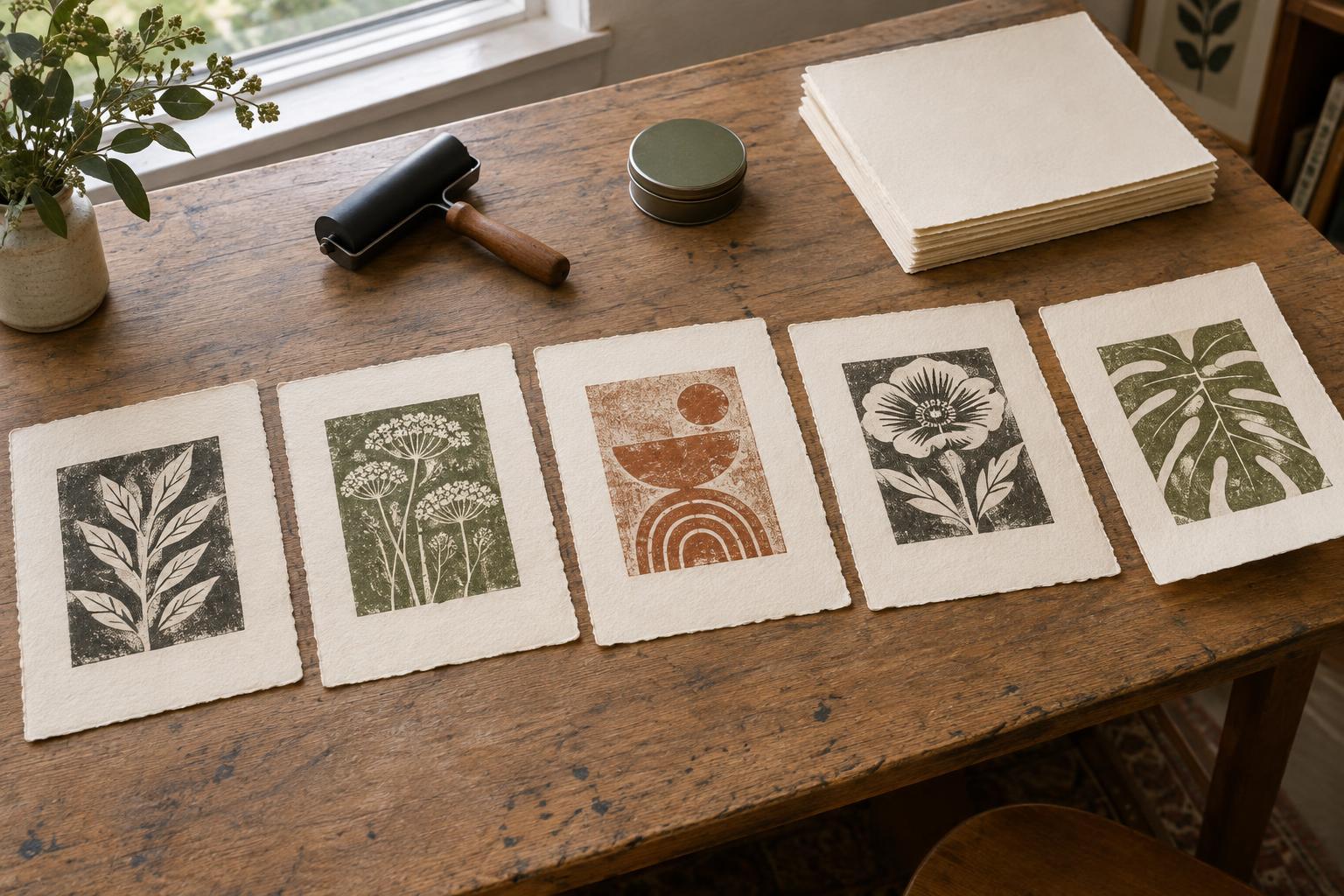
Printmaking adds a few variables. A relief print made with one dark ink on sturdy paper may age differently from a multicolor screenprint or a hand-colored etching. Even impressions from the same edition can have different display histories. If you do not know how stable an ink or paper is, treat the print as light-sensitive rather than assuming it will remain unchanged.
Choose the wall before the frame
The simplest way to reduce exposure is to choose a spot that receives no direct sunlight at any time of day. Check the wall in the morning and afternoon: a place that looks shaded when you hang the print may receive a bright patch later. A hallway or an interior wall is often a better choice than a position opposite a large window.
Daylight is not the only consideration. Aim for enough room light to see the work comfortably, rather than placing a dedicated bright lamp close to it. If you use a picture light, keep it from warming the frame and switch it off when the print is not being viewed. Curtains, blinds and sensible lighting habits help, but they do not make continuous display risk-free.
Frame to protect the print, not just decorate it
Glazing that filters ultraviolet light can reduce one source of damage, whether you choose suitable glass or acrylic. It does not block every part of visible light that might affect a print, so it works best alongside careful placement and limited exposure. Ask a framer what protection a particular glazing offers rather than relying on a vague label.
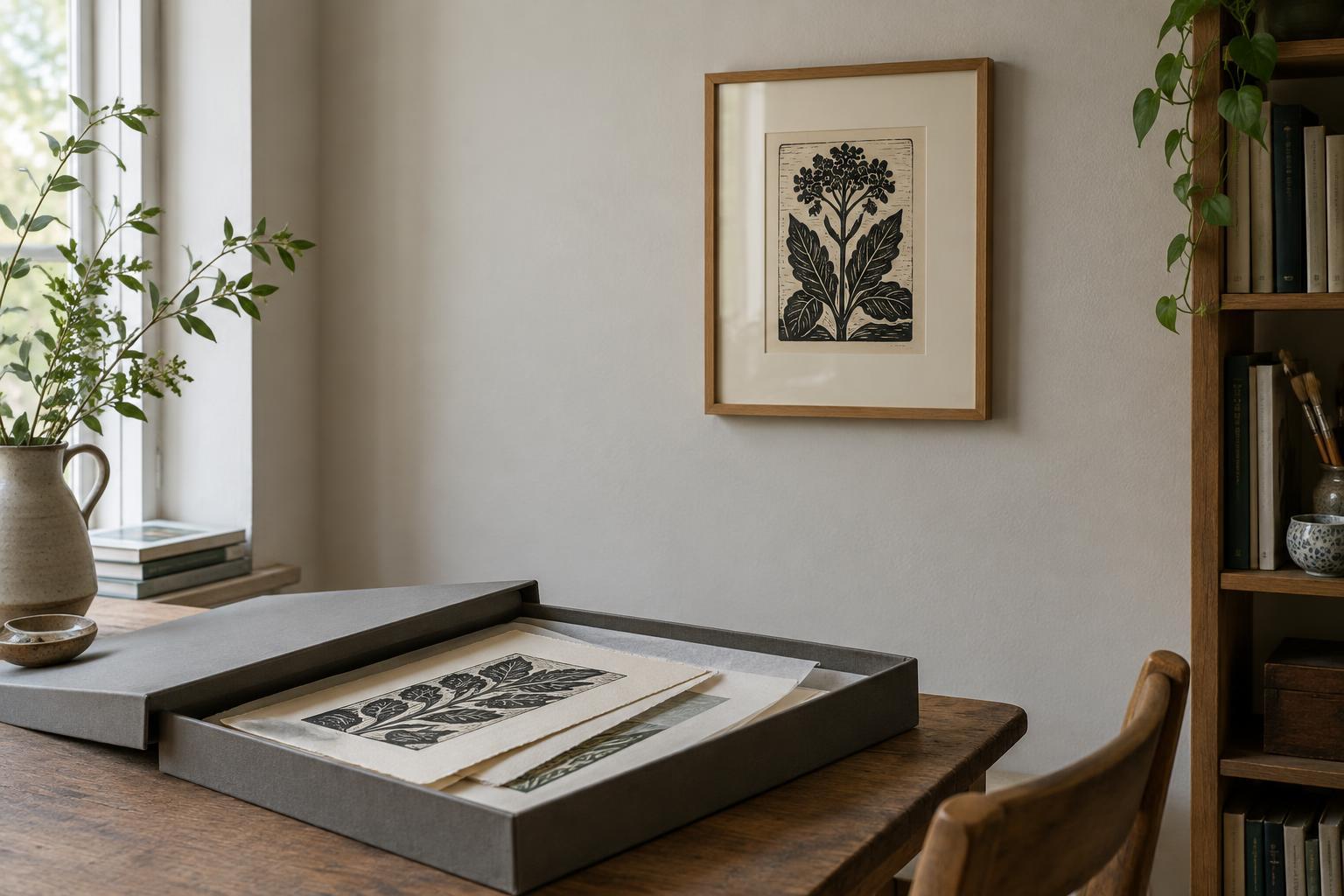
Keep the printed surface from touching the glazing. A window mat or a suitable spacer can create that separation. Choose conservation-quality, acid-free or appropriately buffered mounting materials for the particular work, and avoid taping the print directly to a backing with ordinary household tape. Adhesives can stain paper, become difficult to remove or pull at its surface. For a valuable or fragile print, ask a qualified conservator or experienced conservation framer about a reversible mounting method.
A frame also needs to suit the artwork. Acrylic is lighter than glass, but static can be a concern for prints with loose or friable surface material. Neither glazing nor a sealed-looking frame excuses a damp location: keep framed prints away from condensation, leaks and persistently humid walls.
Rotate what you show
If you own several prints, display a few at a time and store the rest in the dark. Rotation gives you a changing wall without leaving every work exposed continuously. There is no single safe display period for every print; a particularly delicate or irreplaceable piece deserves a more cautious approach than a replaceable study print.
When a print comes off the wall, remove it from direct light and store it with support. Flat storage in an archival-quality folder or box helps protect unframed sheets from dust, bending and unnecessary handling. If a print remains framed, store it upright in a stable, dry place where the glazing cannot be struck. Label the outside of its storage enclosure so you need not open it repeatedly to find the right work.
Make display decisions part of edition care
Edition planning does not end when the ink dries. Keep a simple record of each impression’s paper, ink, hand-coloring and display history, especially if different impressions have been framed in different ways. Note any fading or paper discoloration you observe without treating a photograph as an exact color reference; lighting and cameras can make comparisons misleading.
For a print you have made yourself, consider keeping an impression out of the light as a reference when your edition size allows. For a print you have collected, the most useful question is not whether it can be displayed with zero risk, but how much exposure is reasonable for your enjoyment of it. A shaded wall, thoughtful frame and periods in storage let the work be seen while reducing avoidable light damage.