Before the Brocade Print
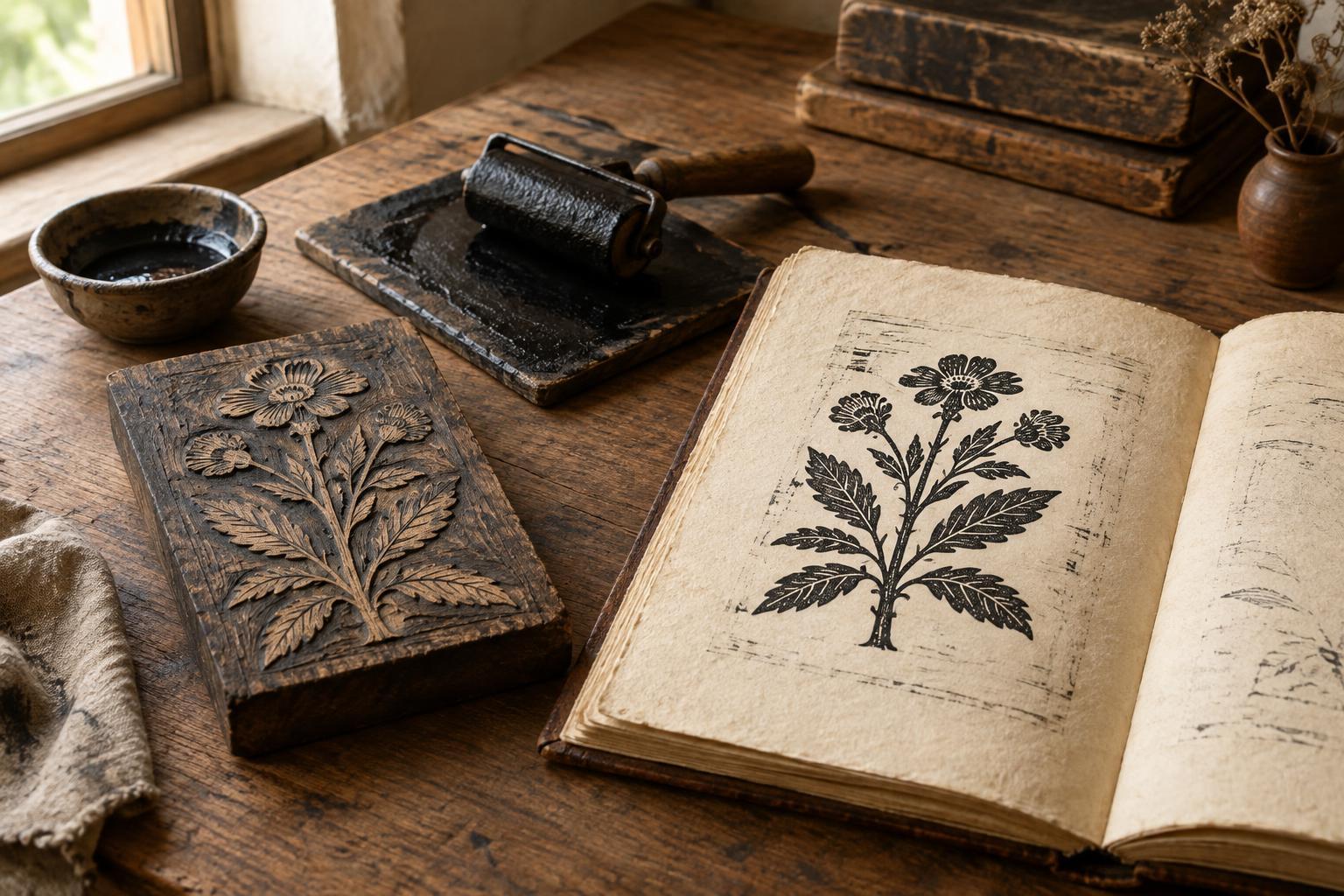
Japanese woodblock prints did not begin in full color. Earlier Edo-period prints were often made from a single block and colored by hand, or printed with a small number of color blocks. These approaches could produce striking images, but they offered a different range of choices from a print assembled out of many precisely aligned layers.
During the 1760s, prints using multiple color blocks became increasingly prominent. The artist Suzuki Harunobu is closely associated with this development, particularly through his elegant designs for privately commissioned picture calendars. The new prints came to be called nishiki-e, or “brocade pictures,” a name that evokes their rich, woven-looking combinations of color and pattern. Harunobu was an important figure in their rise, though the technique grew from earlier practices rather than appearing all at once.
Color Required a Coordinated Workshop
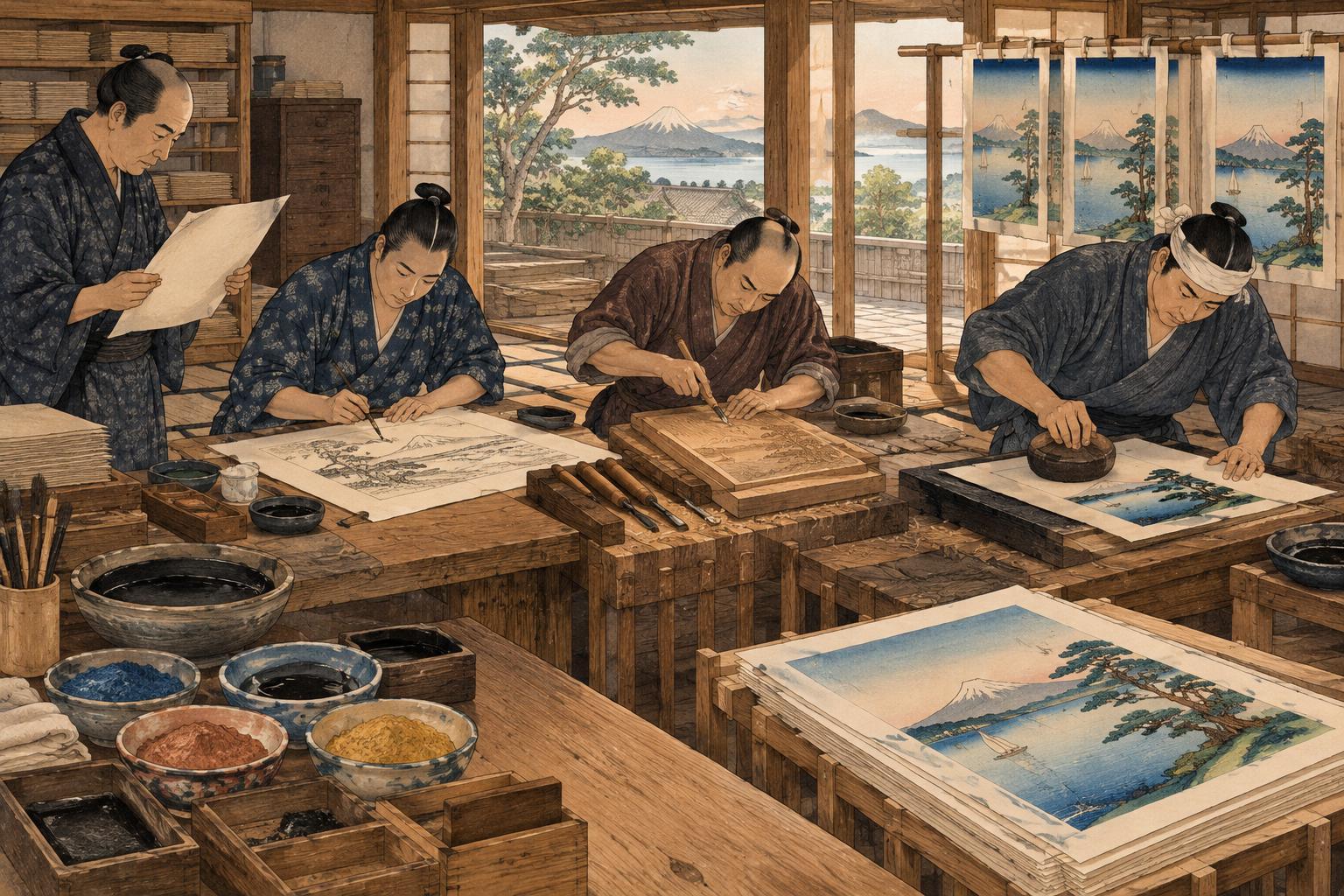
A nishiki-e print was usually a collaborative work. An artist supplied the design; a block carver translated it into wood; a printer applied color and made impressions; and a publisher often organized and financed production. The division of labor meant that a successful image depended not only on a compelling drawing, but also on decisions about carving, pigment, paper and the order of printing.
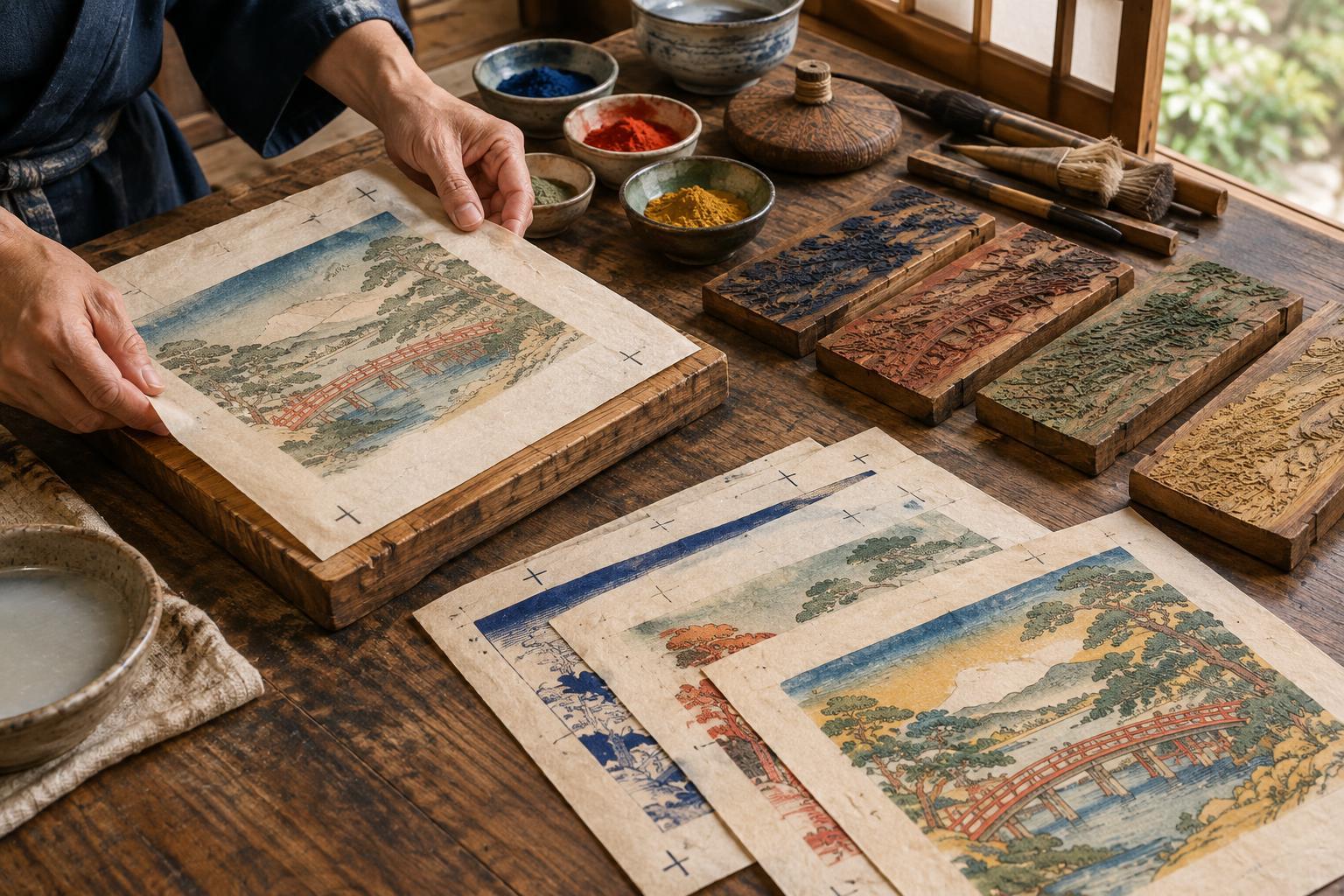
Typically, a keyblock established the main outlines, while additional blocks carried individual colors or selected areas of a design. Printers used registration marks, called kentō, to position each damp sheet consistently as it moved from block to block. They transferred the image by rubbing the back of the paper with a baren. Even small shifts in alignment could change an expression, interrupt a pattern or leave a visible gap between colors.
Color was not simply a matter of adding more blocks. A printer could vary an impression by changing the amount of pigment, moisture or pressure, and could create a gradation by wiping color unevenly across a block. These choices gave a flat printed surface subtle depth. They also mean that impressions made from the same set of blocks need not look exactly alike.
What Full Color Made Possible
With more colors available, designers could give greater attention to textiles, interiors, seasons and atmosphere. A robe might carry several distinct patterns; a background could separate figures from their surroundings without relying on heavy outlines. Color could guide the eye toward a face or gesture, or establish a mood through a restrained palette rather than an abundance of bright hues.
These possibilities suited a wide range of subjects, including fashionable figures, actors, stories and, later, landscapes. Color helped make familiar subjects visually fresh, while the repeatable printing process allowed designs to circulate beyond a single painting or drawing. A print’s appearance still depended on production choices and cost: extra blocks and careful printing took work, and not every nishiki-e used a large number of colors.
The term “full color” is therefore best understood as a description of expanded creative potential, not a promise that every hue was present. Some of the most effective prints use a limited group of colors with great precision. Others draw much of their impact from the relationship between colored areas and the exposed paper.
A Turning Point Worth Looking at Closely
Nishiki-e became an important format within ukiyo-e, the broad tradition often associated with images of urban life, performance and travel. It helped establish the layered color printing that many viewers now recognize as a hallmark of Japanese woodblock art. Later artists and workshops developed their own approaches to its possibilities; the history of the format is larger than any one designer.
When looking at a nishiki-e print, try following one color across the image. Where does it repeat, and where does it stop? Look next at the edges where two colors meet, or where a colored shape sits against an outline. Those details reveal the planning behind an image that may initially seem effortless. Full-color woodblock printing transformed what artists could show, but its enduring fascination lies just as much in how many hands brought each impression into register.