A line drawn through a protective ground
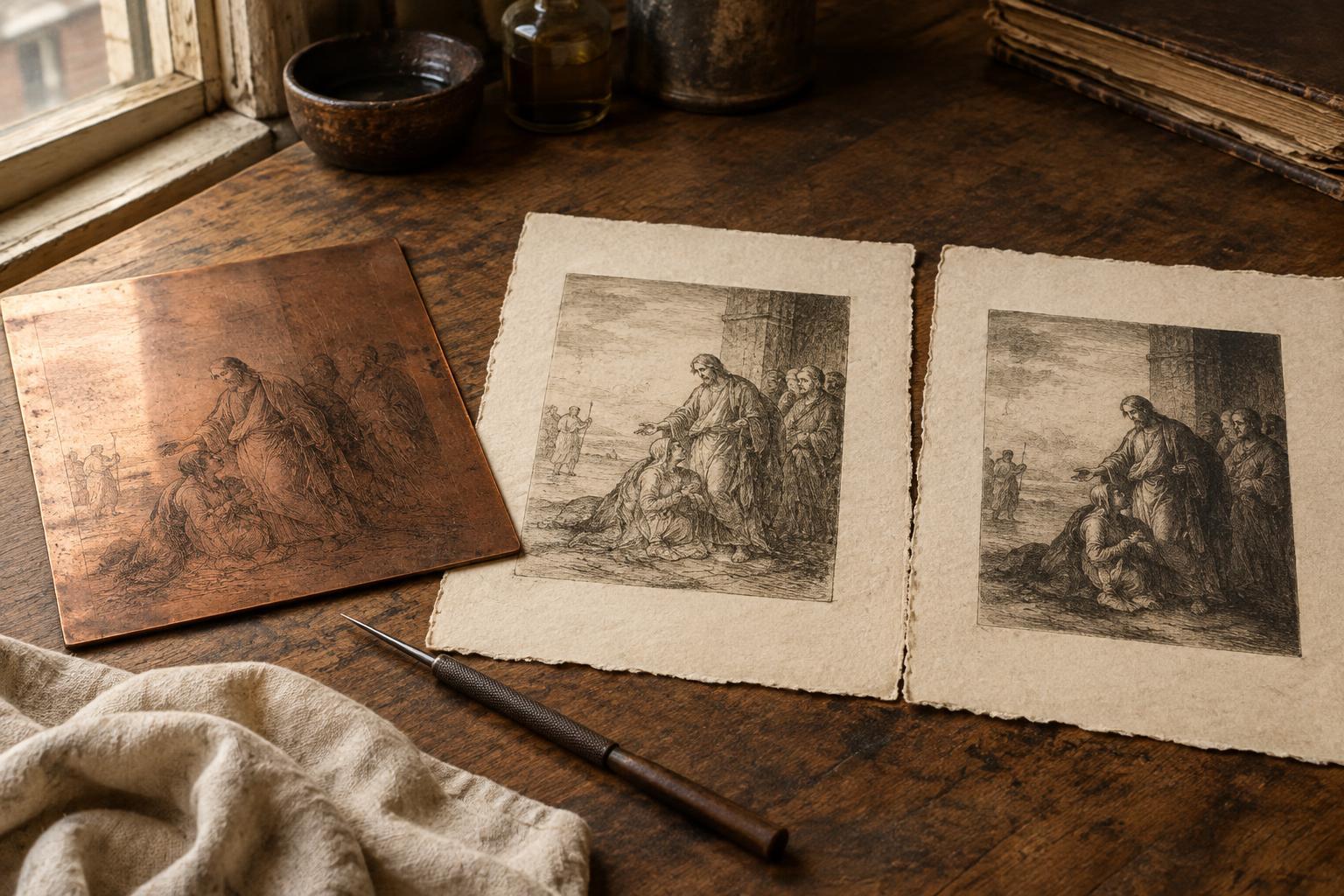
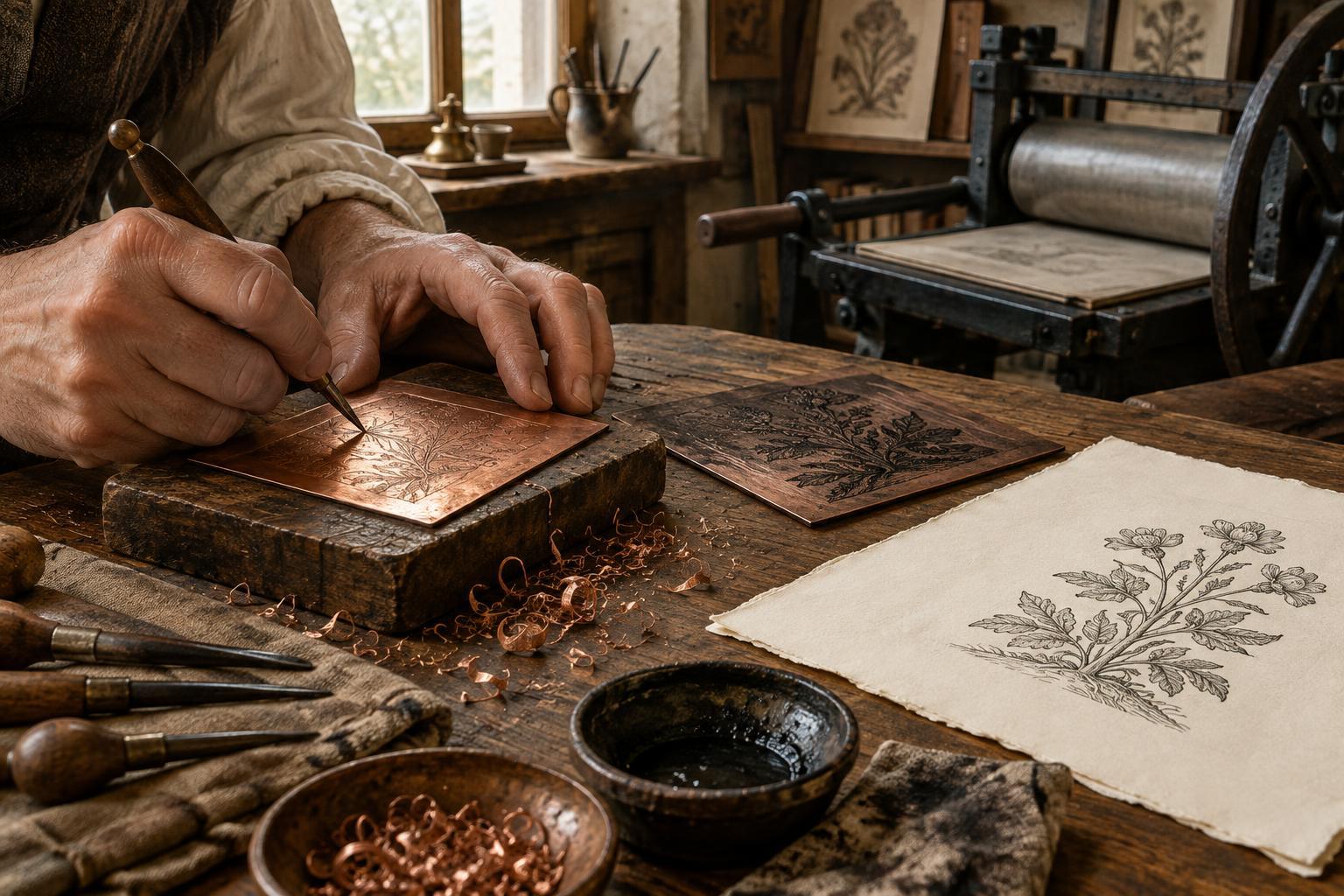
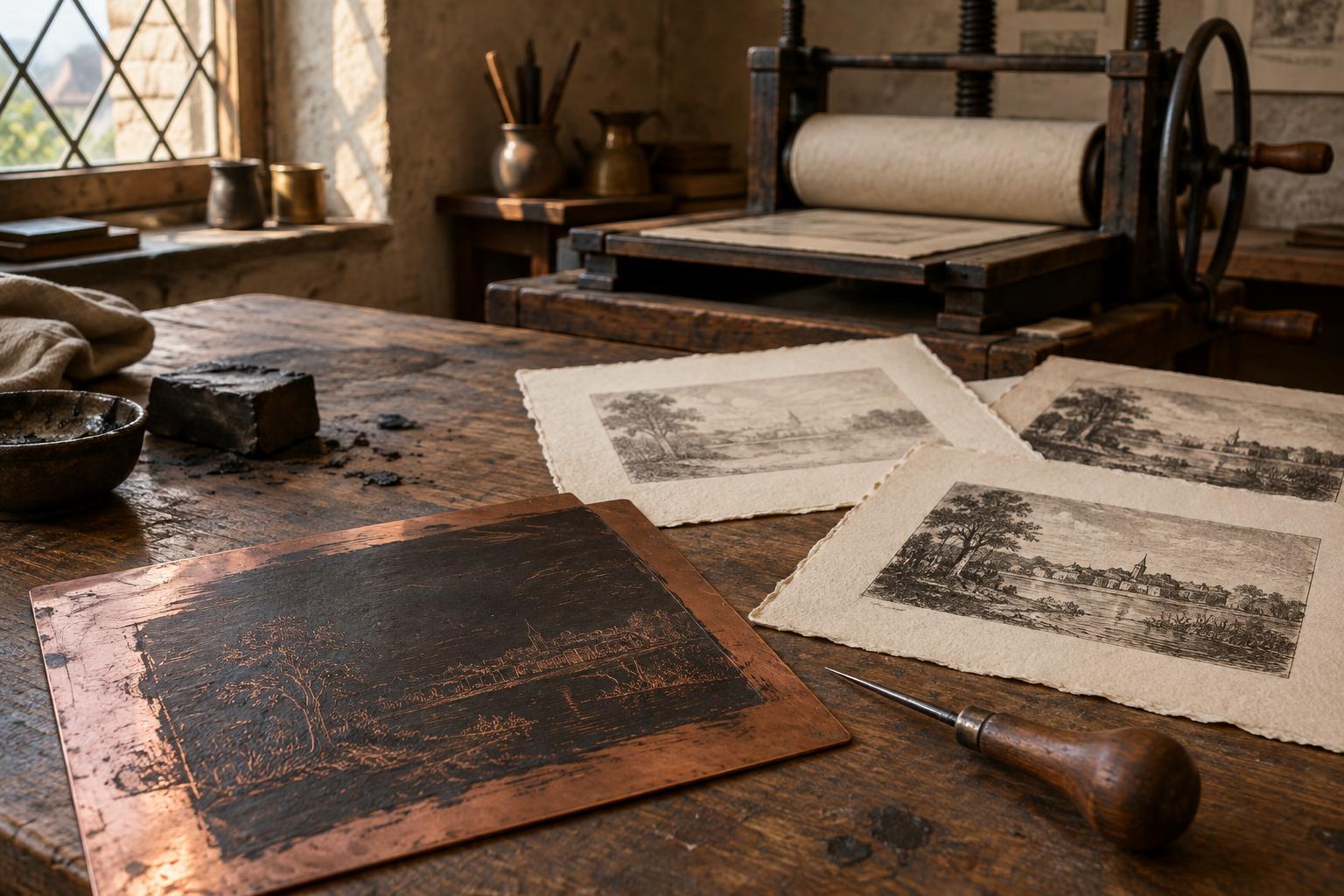
Etching is an intaglio process: ink sits in recessed lines on a metal plate, and pressure transfers it to dampened paper. To make those lines, a printmaker covers the plate with an acid-resistant ground and draws through it with a pointed tool. An acid bath bites into the exposed metal. The artist then removes the ground, inks the plate and wipes its surface before printing. Unlike a burin used for engraving, the etching needle need not cut deeply into metal. It can move with a freedom closer to drawing.
That difference helps explain etching’s appeal, but the process did not begin as a ready-made fine art. Metalworkers already used related methods to decorate objects, including armor. In early modern Europe, artists and craftspeople adapted this way of marking metal to plates made for printing. The change was more than technical: a decorated object stayed largely in one place, while a plate could produce impressions that traveled.
From decorated metal to printed images
Daniel Hopfer, a metalworker active in Augsburg in the early sixteenth century, is closely associated with the earliest etchings made as prints. His work shows how skills could cross between trades: knowledge of resistant coatings and biting metal could serve both ornament and images on paper. Other artists, including Albrecht Dürer, also experimented with etching. Their involvement placed the technique among the options available to artists who wanted to make reproducible images.
Early etchers often worked on iron, a material familiar to armorers but prone to corrosion. Copper later became a common choice for printmaking plates. These changes were not a simple march toward one perfect method. A plate’s metal, the ground, the strength and timing of the bite, and the printer’s wiping could all affect the result. Etching developed through workshop decisions as well as through the intentions of celebrated artists.
Why artists valued the etched line
Engraving remained important throughout this period. Its clean, controlled lines could carry remarkable detail, but making them required cutting the plate directly with a burin. In etching, the needle opened the ground rather than carving the metal. An artist could sketch contours, vary the density of shading and revise a composition by returning a plate to the ground and acid. The process suited artists who wanted their printed lines to retain some of the movement of a drawing.
Etching was not effortless or completely spontaneous. Lines could bite too shallowly or too deeply, and acids and grounds demanded care. Artists could also combine methods on one plate, adding engraved lines or drypoint marks after etching. The resulting prints resist a tidy division between techniques. What mattered was the expanding range of choices: a print could be carefully planned yet still convey an searching, lively hand.
Callot, Rembrandt and the possibilities of the plate
By the seventeenth century, etching supported very different artistic approaches. Jacques Callot developed highly controlled lines suited to crowded scenes and small figures. His prints demonstrate that etching could be precise, not only loose or sketchlike. Rembrandt used it for portraits, landscapes and narrative scenes, often combining etching with drypoint and other marks. Across his work, dense shadows and open areas of paper could become active parts of an image.
A metal plate could also change after its first impressions were printed. An artist might add lines, alter a shadow or remove a passage, creating a new state of the print. Inking and wiping introduced further differences between impressions from the same state. These variations do not mean every impression was improvised; they show that a print was the outcome of decisions made at several stages, from drawing and biting to printing.
A medium for making and circulating art
Etching gave artists a way to develop images on a plate and share them beyond the studio. Prints could be kept, exchanged or collected, allowing viewers to encounter an artist’s work without seeing a painting or drawing firsthand. Yet making multiple impressions did not make each print identical or eliminate skilled labor. Plates had to be prepared and printed, and their condition could change with use.
For a viewer today, the history is visible in the marks. A flowing contour may suggest the needle’s path through a ground; closely spaced lines may build a shadow; a velvety accent may come from drypoint added to an etched plate. Looking for those choices reveals why etching became an artist’s medium: it joined the reach of a reproducible image to the particular decisions of a hand at work.