A carved block for a repeatable page
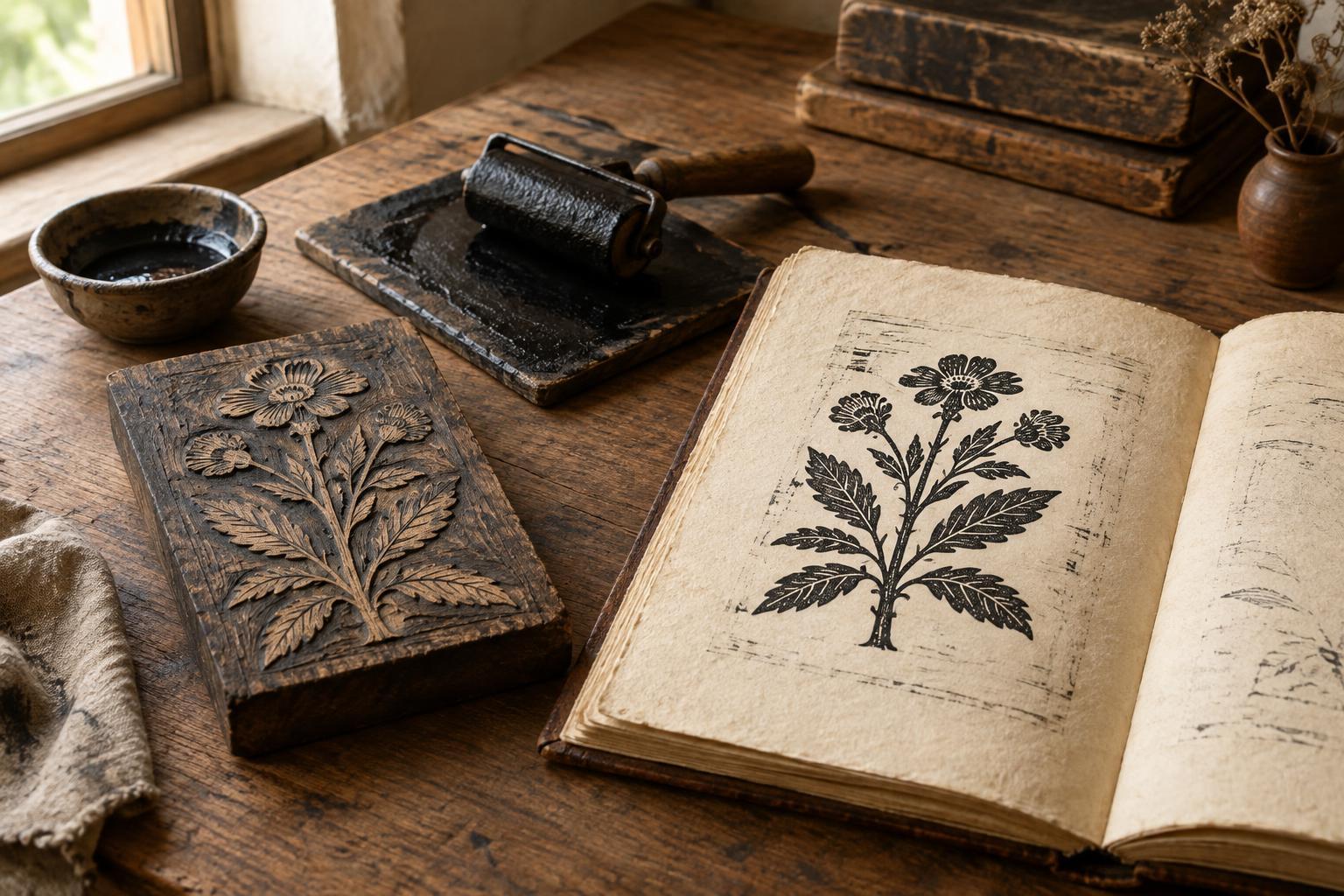
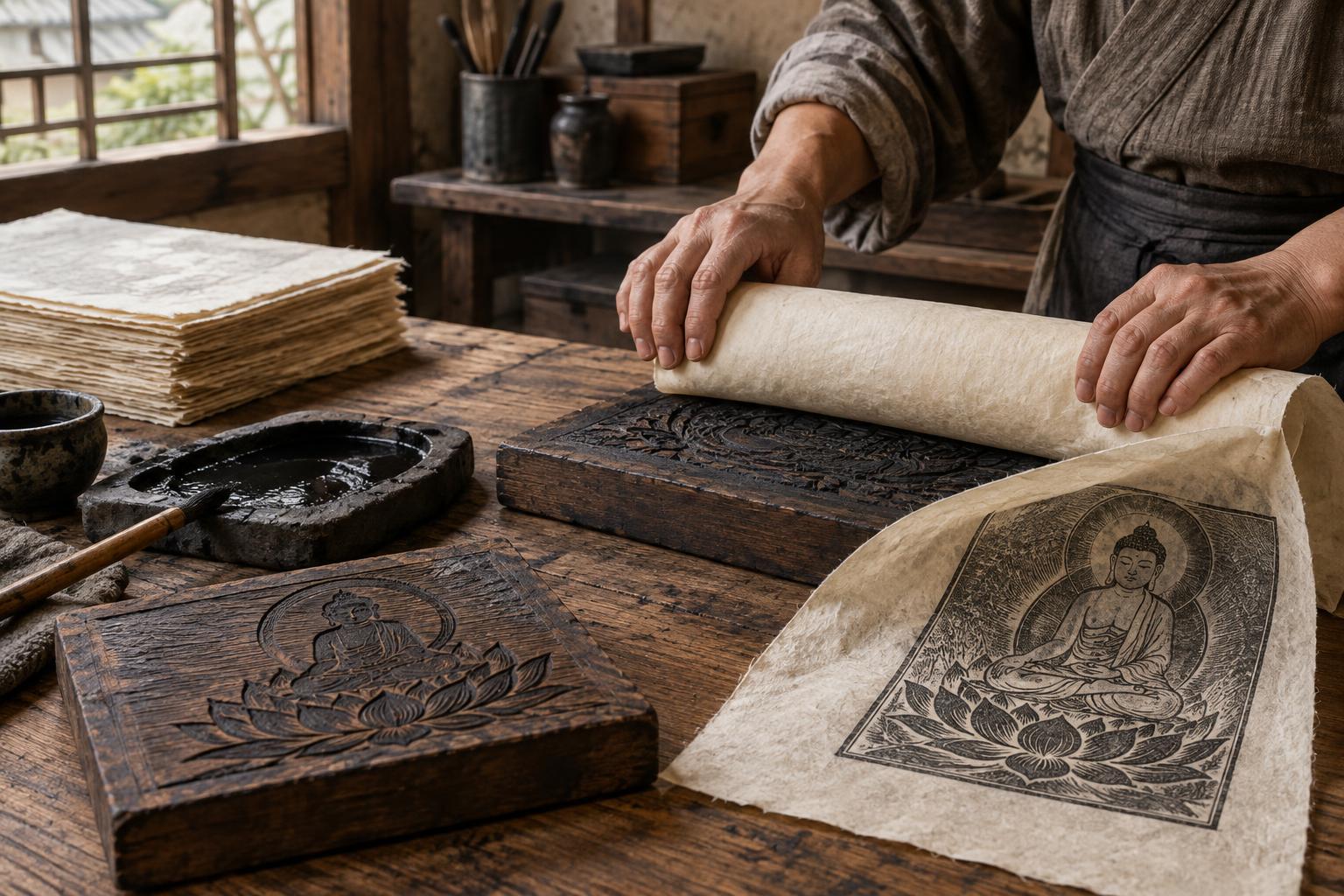
In woodblock printing, a craftsperson cuts away the parts of a wooden surface that should remain unprinted. The raised areas hold ink and transfer an image to paper. For a page of writing, every character must appear in reverse on the block so that it reads correctly in the impression. A design could be prepared from a written or drawn model before carving, allowing the printer to preserve the character of brushwork as well as the content of the page.
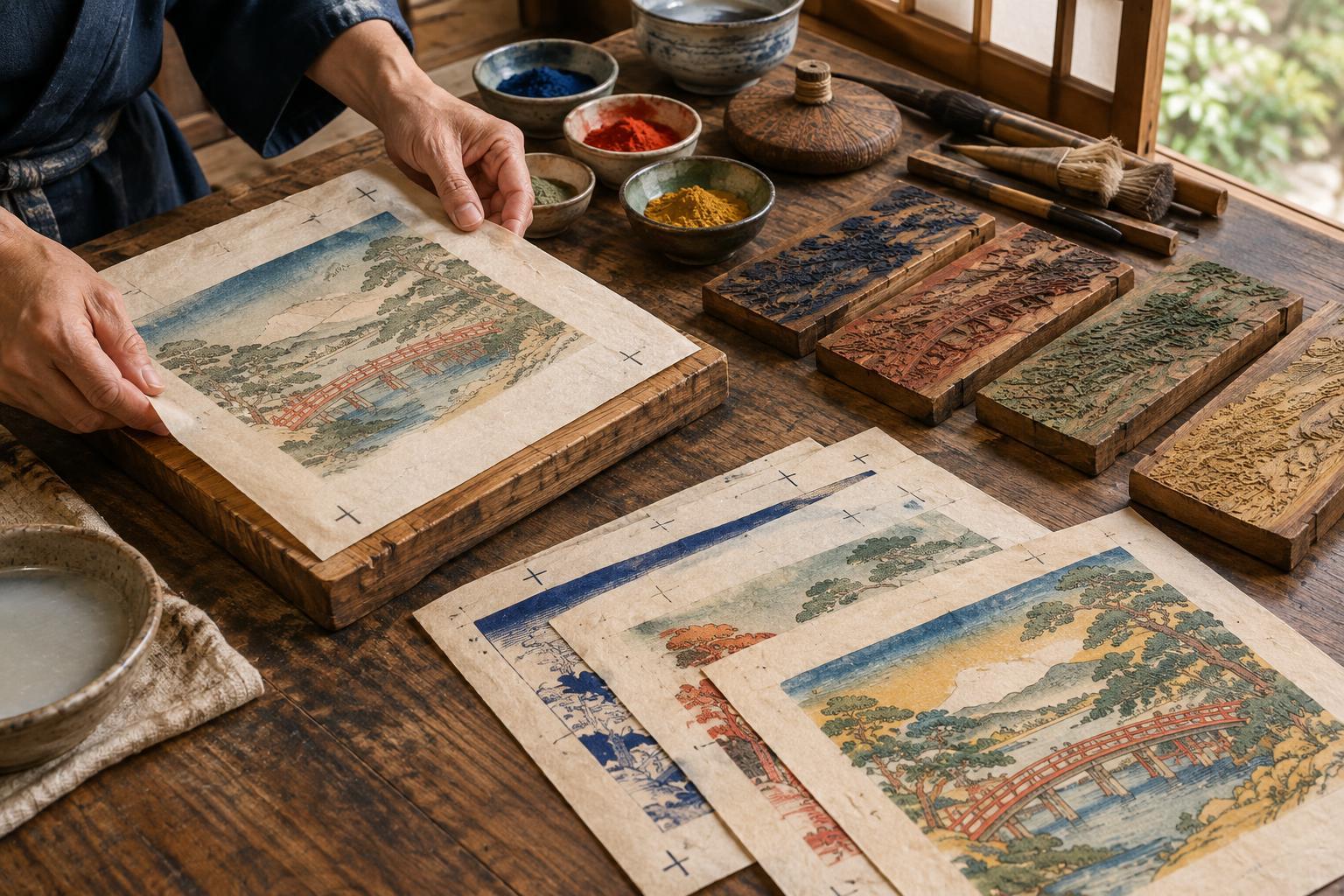
Printing still required work after the block was carved. The printer inked its raised surface, laid paper over it, and rubbed the back of the sheet to make contact. Pressure, ink, and paper all affected the result: too much ink could blur fine strokes, while uneven rubbing could leave pale areas. Once a block was ready, however, it could produce multiple impressions without rewriting the entire page each time. That repeatability made the method useful for texts and images intended to circulate.
Why religious printing mattered
Buddhist communities in China valued the copying and sharing of sacred writing. Printed sheets offered one way to reproduce scriptures, short devotional texts, and images associated with worship or teaching. A printed object could be read, displayed, carried, or given to someone else. Its meaning lay not only in the words or picture, but also in the act of making and distributing it.
Religious demand did not mean that every print was made in the same place or for the same audience. A long scripture and a small devotional sheet called for different decisions about page size, layout, and labor. Nor did printing immediately replace manuscripts: writing by hand and printing from blocks existed alongside one another. Carving took skill and time, so a block made most sense when its design would be used for more than a single impression.
Text and image on the printed surface
Woodblock printing could bring writing and illustration into a shared visual plan. A carved image might introduce a text, identify a sacred figure, or help shape a viewer’s response before reading began. Borders, columns, and open spaces also mattered. They guided the eye across the sheet and gave dense passages of writing a visible structure.
A celebrated surviving example is the Chinese printed Diamond Sutra from the ninth century. Its illustrated opening scene places figures around the Buddha before the scripture text begins. It shows how ambitious a religious print could be: the reader encounters an image and then moves into the words. It should not, though, be treated as a blueprint for every early printed work. Surviving objects represent only a portion of what people made, used, and kept.
What survives—and what we cannot know
Dating the first use of woodblock printing is difficult. Paper can be damaged or discarded, and a surviving impression may have been printed well after its block was carved. The oldest objects available to study therefore mark points in the surviving record, not necessarily the moment the technique was invented. Early religious prints are especially valuable evidence, but they do not prove that printing began solely for religious purposes.
When looking at a reproduction of an early print, examine the relationship between its marks. Are the lines of the image bold enough to remain clear beside the characters? Where does a border separate one part of the page from another? Do repeated forms look consistent, or do variations in inking and pressure show through? Such questions connect the print’s message to the physical choices required to make it.
A small exercise in historical looking
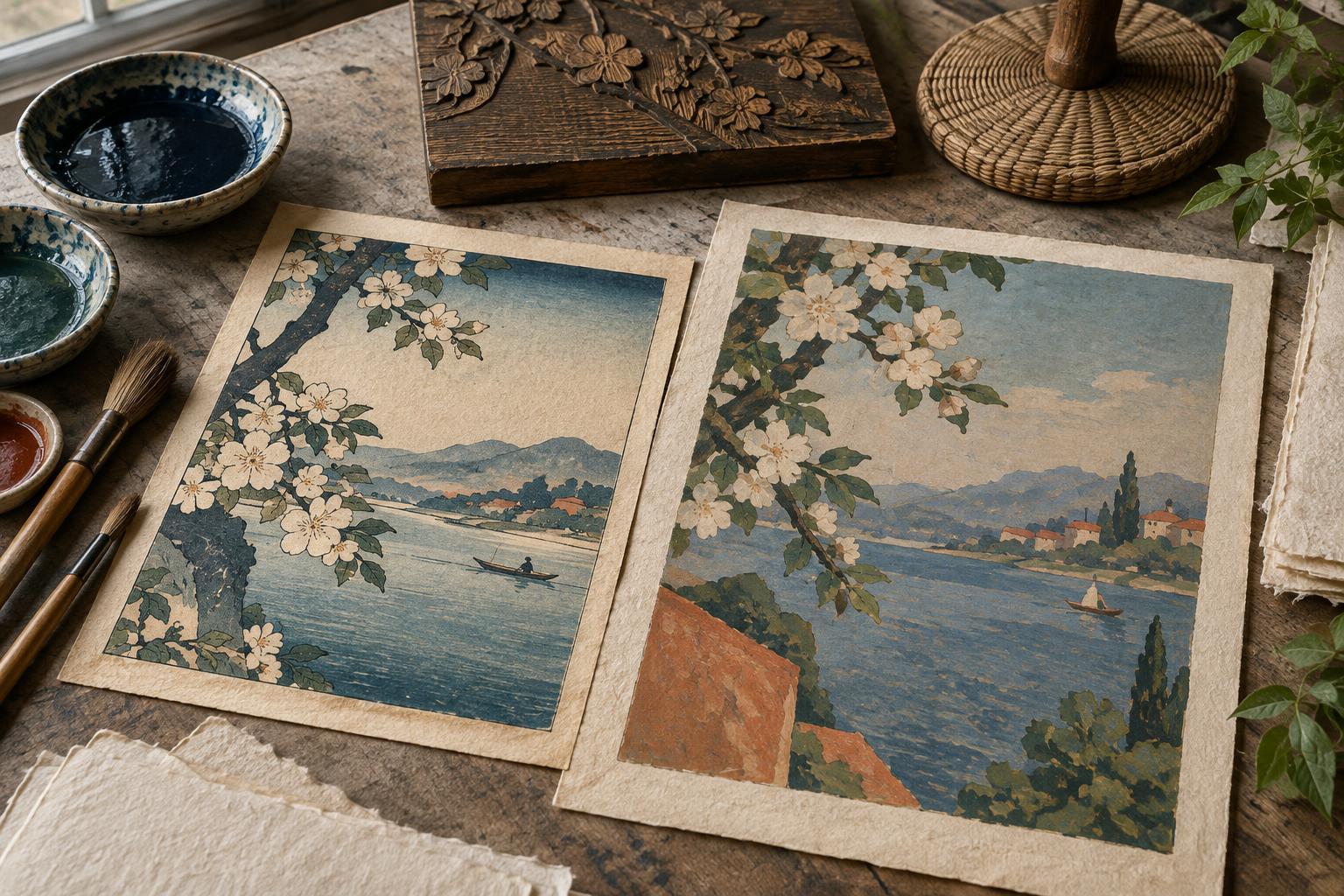
To appreciate those choices firsthand, plan a simple page with a short, original sentence and one small image. Make two sketches: one with the image above the words and another with it beside them. Then cut a simple image into a beginner-friendly relief block, leaving broad raised shapes rather than fine detail. Print it on a few kinds of practice paper and add the sentence by hand afterward.
This exercise does not recreate an early Chinese workshop. It does make the problems of spacing, legibility, and ink transfer easier to see. Compare the impressions before choosing a favorite: a crisp image may suit one paper, while a softer impression may sit more comfortably beside handwriting on another. Early printed religious works reward the same close attention to how a page was designed, made, and encountered.