A craft with roots in metalworking
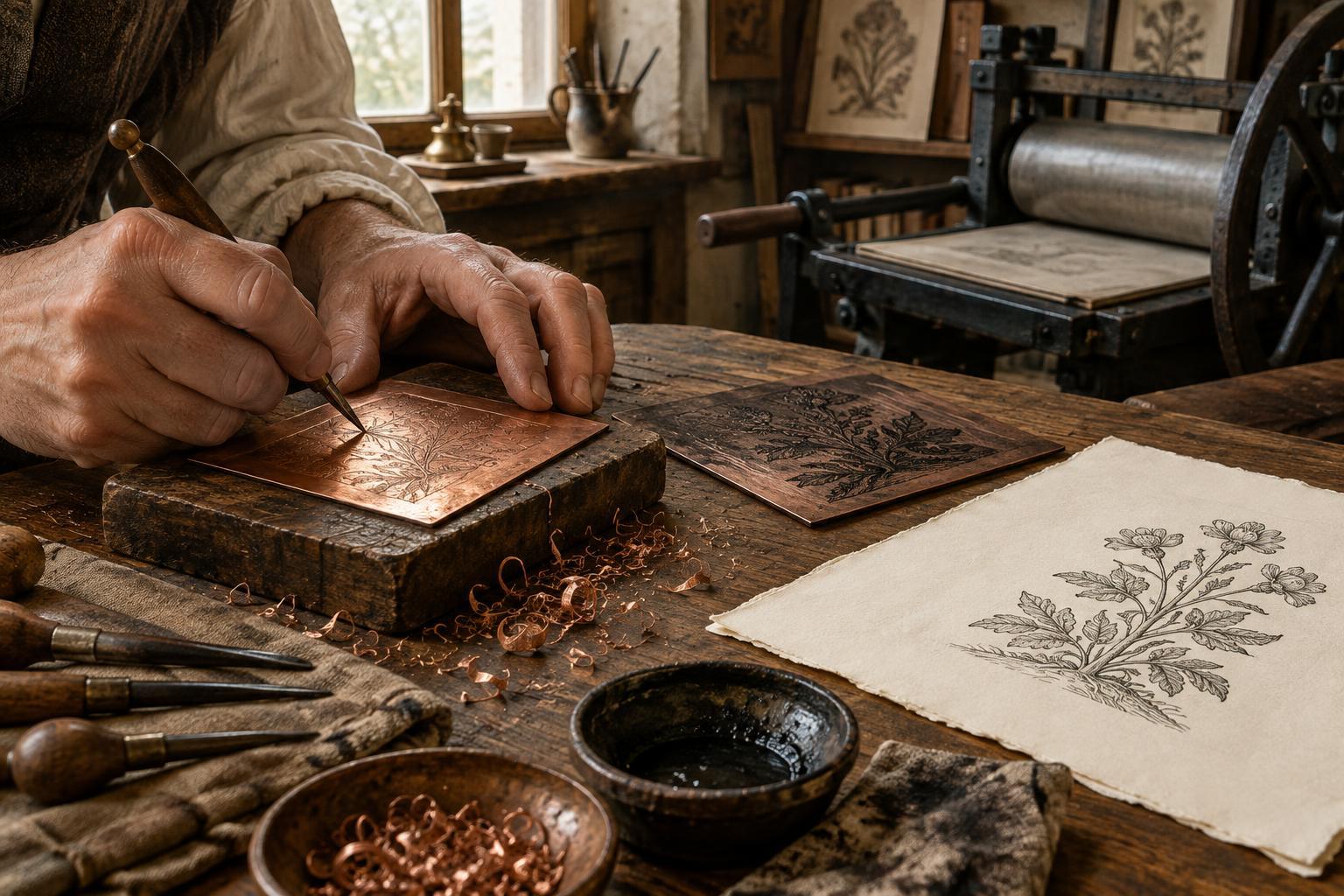
Copperplate engraving became an important form of image-making in Renaissance Europe, but its tools and habits were familiar to metalworkers. Goldsmiths already cut lines and patterns into metal to decorate objects or prepare designs. The burin, a sharp steel tool pushed by hand, could make a clean groove in a copper plate as well as in a piece of jewelry. Skills such as controlling pressure, turning a curved line and building tone from closely spaced marks carried naturally between these kinds of work.
The connection does not mean that one goldsmith invented engraving on paper, or that every early printmaker began at a jeweler’s bench. Practices developed across workshops and places, and surviving prints reveal only part of that story. What the connection does explain is why some early engravings show such confidence in small, exacting marks. Their makers understood metal as a surface that could hold an intricate design.
How a copper plate becomes a print
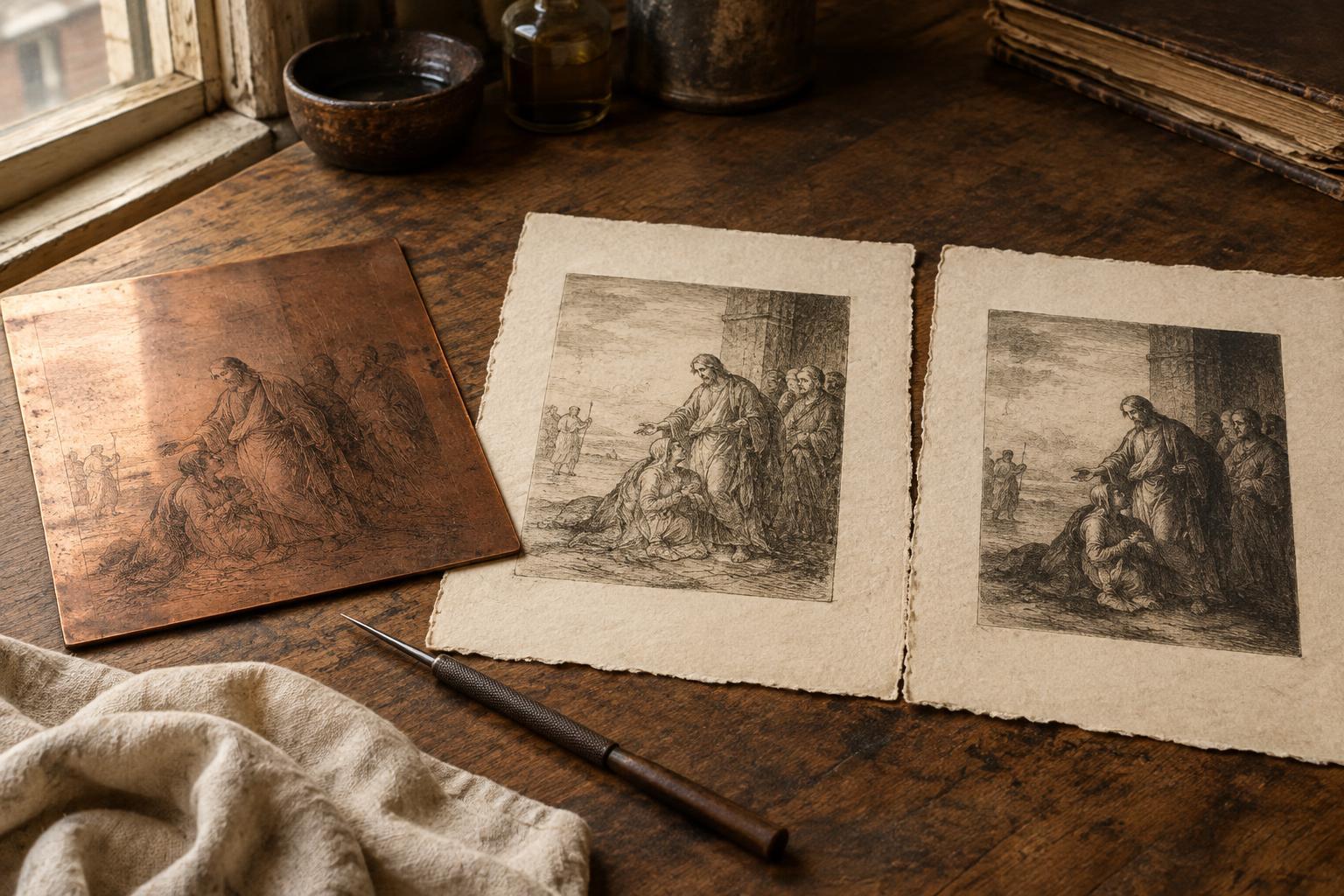
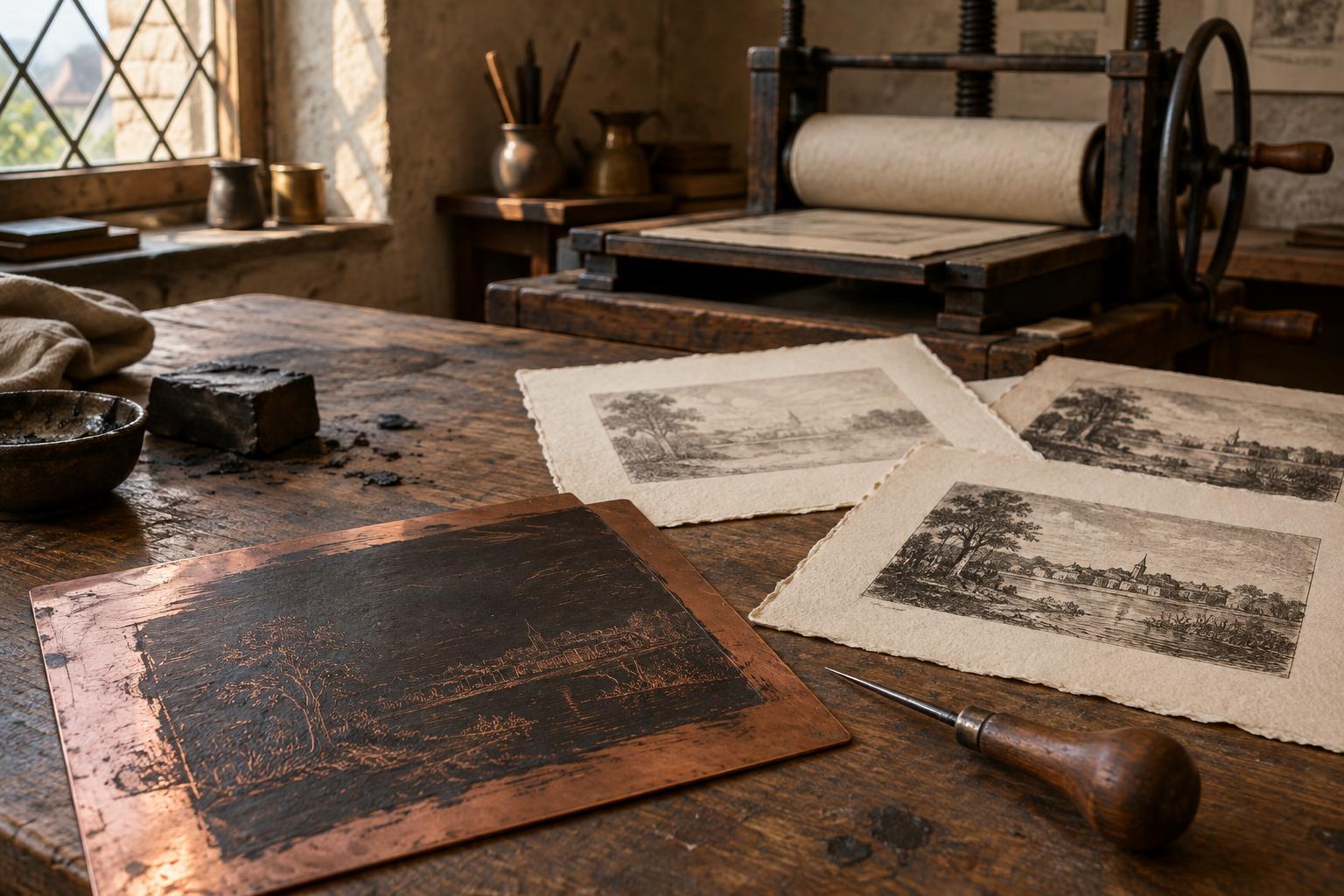
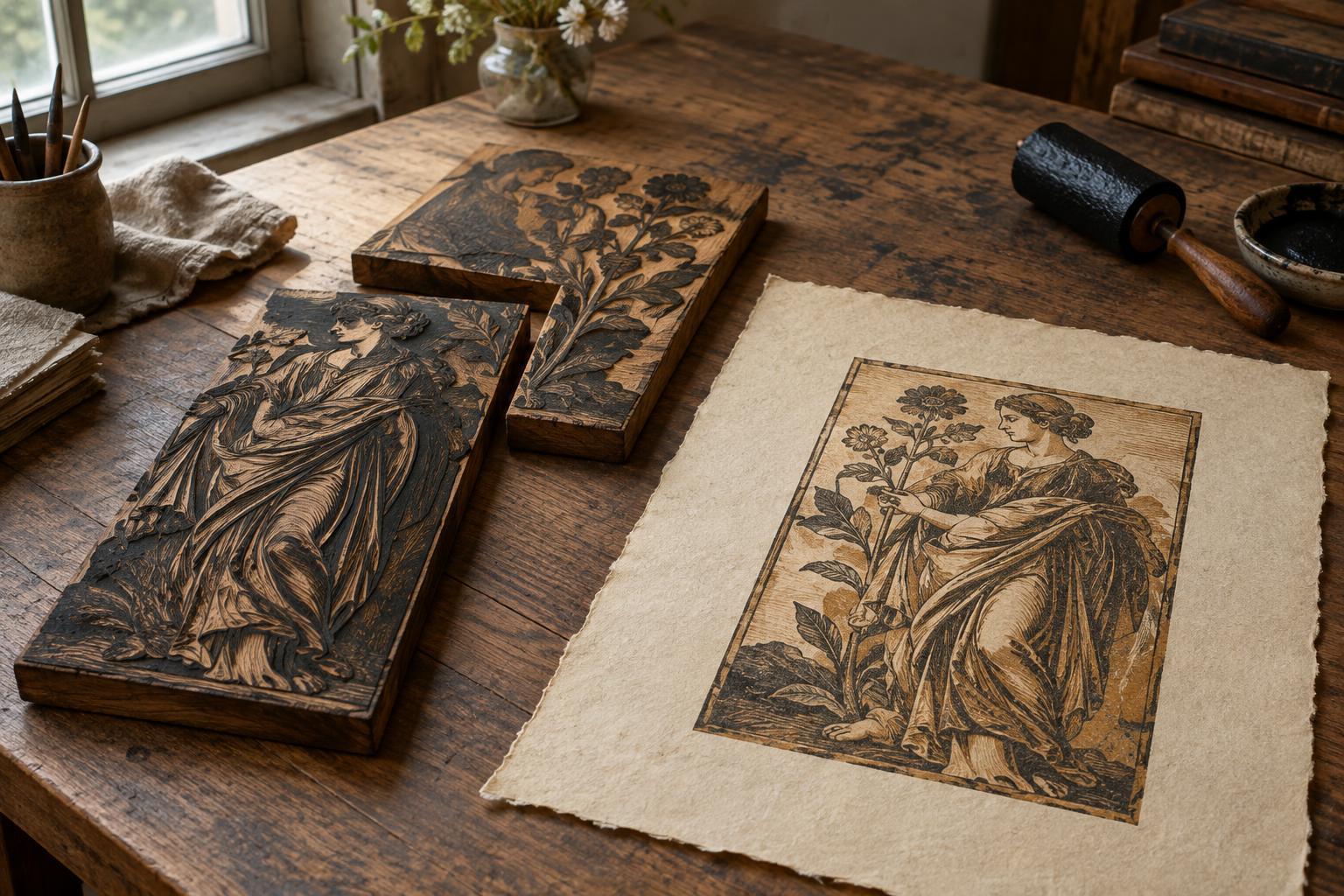
In engraving, the artist cuts the image directly into a smooth metal plate. A burin removes a narrow shaving of copper as it moves, leaving a groove. To print the plate, the printer spreads ink across its surface, works ink into the grooves and wipes the top clean. Dampened paper is laid over the plate and passed through a press under pressure. The paper picks up ink from the recessed lines. This is an intaglio process: unlike a woodcut, the marks that print lie below the surface.
The method rewards planning. A cut line is difficult to remove cleanly, and the print appears reversed from the image on the plate. Engravers could vary a line’s width and depth, then use parallel strokes and cross-hatching to suggest shadow, texture and volume. Fine lines made engraving well suited to detailed figures, drapery and ornamental forms. The character of the finished print also depended on inking, wiping, paper and pressure, so impressions from the same plate need not look identical.
When prints became artworks in their own right
By the later fifteenth century, engravers in parts of Europe were using the medium for images intended to be seen on paper, not merely as records of metalwork designs. Martin Schongauer’s prints, for example, demonstrate how a carefully organized network of lines could give figures weight and movement. Albrecht Dürer later developed engraving’s possibilities for complex compositions and finely judged contrasts. Their prints invited close looking at both the subject and the maker’s command of the tool.
Engraving also gave an image a different reach from a single painting or decorated object. A plate could produce multiple impressions, which could be carried, collected or studied away from the workshop where they were made. Artists could encounter compositions and ways of drawing through printed sheets. Yet a print was not simply a mechanical copy: cutting the plate required decisions about which contours mattered and how color or light would be translated into lines.
A shared visual language across workshops
The Renaissance workshop was a place of exchange as well as individual invention. Prints offered a practical way to circulate religious subjects, classical themes, ornamental patterns and approaches to the human figure. Some engravers developed their own compositions; others interpreted designs associated with another artist. Looking at a Renaissance print therefore raises useful questions: who conceived the image, who cut the plate, and how did the engraver adapt the design to marks that would print clearly?
Those distinctions matter because engraving has its own visual language. A painter might soften a shadow with a gradual change of color, while an engraver must construct it from lines and the spaces between them. The burin can describe a crisp architectural edge or a delicate fold, but every effect has to be planned within that vocabulary. Reproductive prints could spread an artist’s ideas while also showing the engraver’s skill in translation.
What to look for in an early engraving
When viewing an engraving, begin with the direction of its lines. Follow a curved stroke around a shoulder or a cluster of hatching into a dark area. Notice where the engraver leaves bare paper to create light, and where lines become dense enough to give a surface depth. At the edge of many impressions, a faint indentation from the plate shows where press pressure pushed the paper around the copper.
Also remember that a surviving sheet is one impression, not the plate itself or every print ever taken from it. Inking and wiping can change the appearance of a line, while repeated printing can gradually affect a plate. Thinking about both the hand that cut the copper and the work of printing it helps explain engraving’s Renaissance appeal: it joined precise metalworking to the possibility of making an image that could travel.