What a mat does for a print
A mat is more than a decorative border. In a frame, it helps keep the printed sheet away from the glazing, provides a stable support behind it, and creates a visual pause between the image and its surroundings. For an editioned print, the border can also protect space for a signature, edition number, or other marks on the paper.
Archival matting aims to make those benefits last without permanently changing the print. Materials touching the sheet should be suitable for long-term storage, and attachments should be minimal and removable by an experienced person. No mat can compensate for damp conditions, strong light, or careless handling, but thoughtful choices can reduce avoidable damage.
Choose boards with the print in mind
A basic mat package has a window mat in front and a backing board behind the print. Look for boards sold for conservation use, rather than relying on the phrase “acid-free” alone. Rag board and conservation-grade boards are common options; product descriptions should make clear what the board contains and how it is intended to be used. Standard cardboard and ordinary foam board are not good choices for direct, long-term contact with original art.
Some conservation boards are buffered with an alkaline reserve, while others are unbuffered. For many contemporary prints on paper, either may be appropriate, but the choice can depend on the paper, inks, and any hand-applied media. If the work includes unusual materials or its condition is uncertain, ask a qualified conservator or experienced framer before choosing materials. Keep offcuts or packaging labels so you can record what went into the finished mat.
Plan the window before cutting
Measure the paper as well as the printed image. Decide whether the full sheet edge should remain visible, especially if it has a deckle edge, plate mark, or handwritten information. A window that slightly overlaps a plain paper margin can hold the composition together visually, but it should not cover details that matter to the artist or collector. The lower border is sometimes made a little deeper than the others for balance; that is a design choice, not a preservation rule.
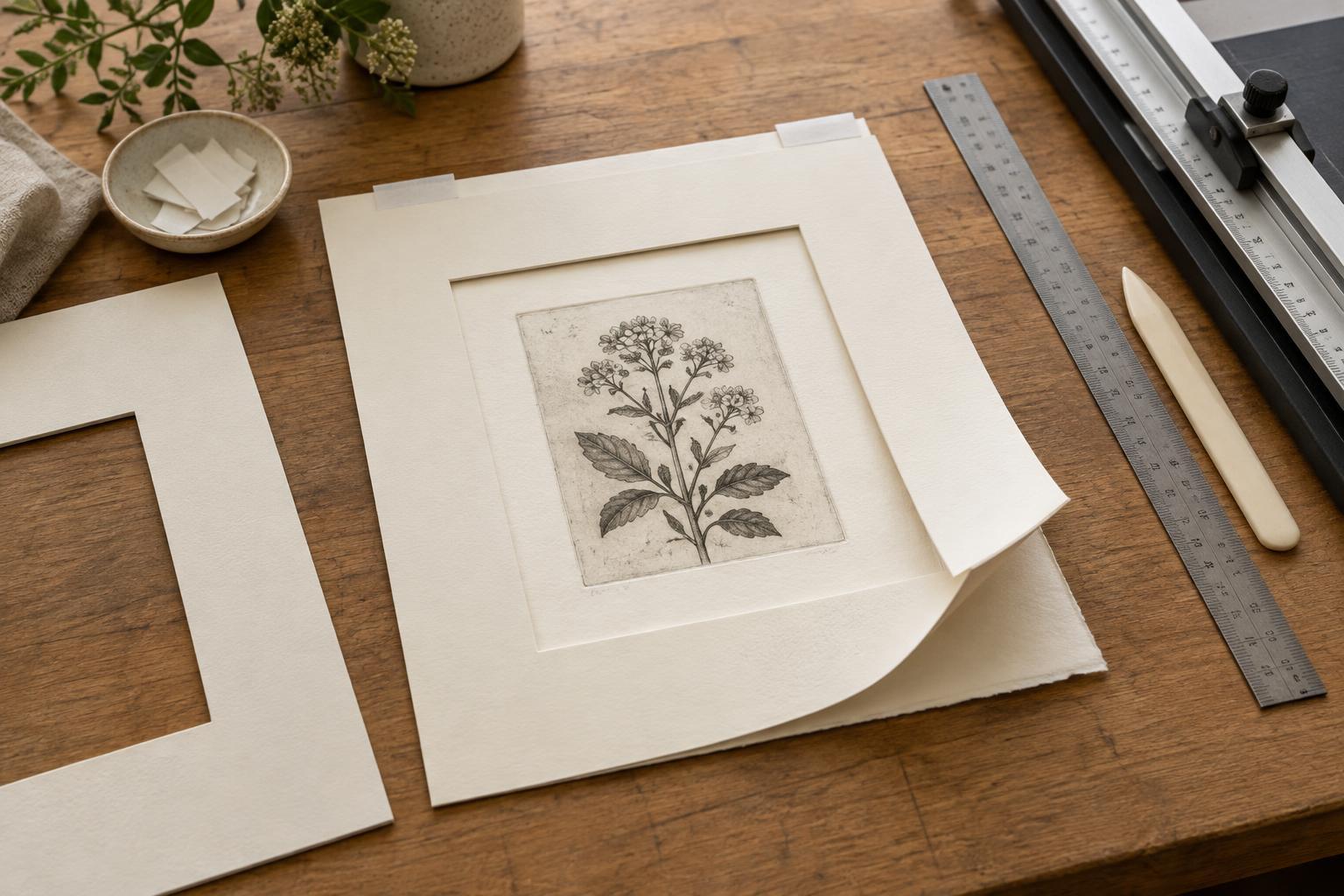
Work out the window size on a sketch before cutting board. Lay the print on a clean surface, position an uncut sheet of mat board over it, and check the view from a normal viewing distance. Leave enough space around the opening for the board to remain sturdy. Cut with a sharp blade and a stable straightedge or mat cutter, then inspect the opening for rough fibers. Practice on spare board first if clean bevels are new to you.
Support the sheet without trapping it
A print should be able to expand and contract slightly as conditions change. Avoid gluing the whole sheet to the backing board, and do not put household tape, pressure-sensitive mounting tape, or adhesive directly across the printed surface. For many sound works on paper, small hinges made from suitable Japanese paper and wheat-starch paste offer a relatively unobtrusive way to attach the upper edge to a support. Hinges require care: too much paste or a poorly placed hinge can distort or tear the paper.
If you have not hinged original art before, practice on expendable paper rather than learning on a valuable print. Photo corners or other edge-support methods may be useful in some mat designs when they do not press into the image or mark the sheet. Fragile, curled, unusually thick, or hand-colored prints may need a different approach. When in doubt, leave the work unattached and seek conservation guidance rather than forcing it flat.
Finish for display or storage
Before closing the mat package, remove loose cut fibers and check that the print sits straight. Handle the sheet with clean, dry hands, supporting it from below rather than lifting it by a corner. If the matted print will be framed, ensure there is a dependable gap between the art and the glazing. A sufficiently deep window mat or suitable spacer can provide that separation; textured ink or a raised paper surface may need extra clearance.
Keep the finished print away from direct sunlight, heat sources, and persistently damp areas. For unframed storage, protect the matted work in an appropriately sized enclosure so its corners do not catch or bend. Note the print’s title, edition details, dimensions, and mat materials separately from the artwork. A mat is most successful when it presents the image clearly while making future inspection, reframing, and careful removal possible.